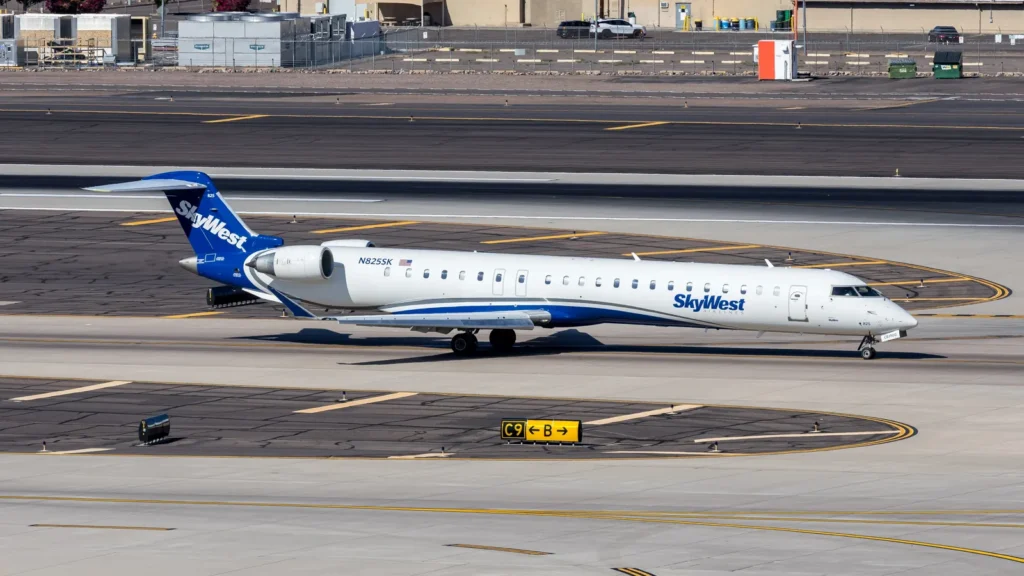
The Fifth U.S. Circuit Court of Appeals has affirmed a jury’s verdict in a landmark harassment lawsuit against SkyWest Airlines, definitively rejecting the airline’s argument that direct evidence of a harasser’s training was required by statute. This pivotal ruling, published on July 10, 2026, solidifies the principle that employers can be held liable for workplace harassment, even when direct proof of an individual’s participation in prevention training is not presented, so long as a reasonable inference can be drawn from company policy and practice. The decision underscores the critical importance of robust anti-harassment policies, thorough investigations, and a genuine commitment to fostering a respectful workplace environment, setting a significant precedent for HR departments nationwide.
The Genesis of the Litigation: A Case of Alleged Harassment
The case, formally known as EEOC v. SkyWest Airlines, Inc., originated from a lawsuit filed by the U.S. Equal Employment Opportunity Commission (EEOC) on behalf of a former SkyWest employee who alleged severe workplace harassment. While specific details of the harassment were not extensively detailed in the appellate court’s summary, the gravity of the allegations was sufficient to prompt a federal lawsuit under Title VII of the Civil Rights Act of 1964. Title VII prohibits discrimination based on race, color, religion, sex (including sexual harassment), and national origin, and it mandates that employers take reasonable steps to prevent and correct harassment. The EEOC’s involvement signals that the alleged harassment was considered severe or pervasive enough to alter the conditions of employment, creating a hostile work environment.
Workplace harassment remains a persistent issue across industries, despite decades of legal protections and corporate efforts. According to the EEOC’s enforcement statistics, thousands of charges alleging harassment are filed annually. For instance, in fiscal year 2023, the EEOC received 28,414 charges of harassment, with sex-based harassment (including sexual harassment) accounting for a substantial portion. These numbers, while fluctuating, consistently highlight the ongoing challenge employers face in creating truly harassment-free environments. The financial and reputational costs associated with such claims can be devastating, making proactive prevention and diligent response mechanisms imperative for any organization.
A Detailed Chronology of the Legal Battle
The path to the Fifth Circuit’s affirmation was protracted, spanning several years and involving multiple legal proceedings:
- Initial Allegations (Undisclosed Date): The exact date of the alleged harassment is not specified in the appellate brief, but it led to the former employee leaving SkyWest Airlines. The nature of the harassment was severe enough to prompt formal action.
- Internal Complaint and Investigation: The plaintiff reported the harassment internally to SkyWest management. The airline subsequently conducted an investigation, which would later be scrutinized by both the district court and the appellate court. The courts characterized this investigation as "feeble," implying a lack of diligence and a failure to genuinely uncover the truth, which proved detrimental to SkyWest’s defense.
- EEOC Intervention: Following the internal process, the former employee filed a charge with the EEOC. After its own investigation and conciliation efforts, the EEOC determined there was reasonable cause to believe harassment had occurred and that SkyWest had failed to adequately address it. The EEOC then filed a lawsuit on the plaintiff’s behalf in the Northern District of Texas, acting as a federal enforcement agency to enforce Title VII.
- District Court Trial and Verdict (Early 2020s): The case proceeded to a jury trial in the Northern District of Texas. The jury heard extensive evidence regarding the alleged harassment, SkyWest’s response, and the company’s anti-harassment policies and practices. Crucially, the jury found in favor of the plaintiff, concluding that harassment had occurred and that SkyWest was liable. Furthermore, the jury determined that SkyWest had acted with malice or reckless indifference, warranting the imposition of punitive damages.
- Initial Damages Award: The jury initially awarded the plaintiff a substantial sum of over $2 million in damages. This figure was notably high, with the EEOC announcing at the time that it represented the "largest ever obtained via jury trial" in the Northern District of Texas for such a case. This substantial award sent a clear message regarding the jury’s assessment of SkyWest’s culpability and the severity of the misconduct.
- Reduction Due to Statutory Caps: Title VII, while allowing for significant damages, imposes statutory caps on compensatory and punitive damages based on the size of the employer. For larger employers (more than 500 employees), the cap is typically $300,000. Consequently, the initial jury award of over $2 million was reduced to comply with these federal statutory limits. While reduced, the award still represented a significant financial penalty for the airline and a notable victory for the plaintiff and the EEOC.
- SkyWest’s Appeal: Dissatisfied with the district court’s judgment, SkyWest Airlines appealed to the Fifth U.S. Circuit Court of Appeals. The airline primarily challenged the jury’s finding of malice or reckless indifference, arguing that there was insufficient evidence to support it, particularly concerning whether the alleged harasser had received harassment prevention training.
- Fifth Circuit Affirmation (July 10, 2026): After reviewing the arguments and the trial record, the Fifth Circuit upheld the district court’s verdict. The appellate court found no error in the jury’s conclusions, specifically rejecting SkyWest’s argument about the lack of direct evidence for the harasser’s training and affirming that the company’s investigation was indeed inadequate.
The Fifth Circuit’s Scrutiny: Malice, Reckless Indifference, and Inadequate Investigations
The core of the Fifth Circuit’s decision rested on two critical findings: SkyWest’s malice or reckless indifference and the inadequacy of its internal investigation. These elements are crucial for the imposition of punitive damages under Title VII.
Malice or Reckless Indifference in Training
SkyWest contended that without direct evidence proving the co-worker who engaged in harassment had received specific harassment prevention training, the jury could not reasonably conclude that the company acted with malice or reckless indifference. However, the Fifth Circuit, aligning with the district court, unequivocally rejected this narrow interpretation. The court highlighted the testimony of a SkyWest HR employee, who stated that every employee at the company received harassment prevention training. This testimony, the court ruled, was sufficient for a reasonable jury to infer that the co-worker in question had indeed received such training.

This aspect of the ruling is particularly significant for employers. It suggests that a company cannot simply claim ignorance or lack of direct proof regarding an individual employee’s training if it has a documented, company-wide training policy and an HR professional can testify to its universal application. The burden shifts to the employer to demonstrate why an employee would not have received such training, rather than requiring the plaintiff to produce direct evidence for each individual. This strengthens the expectation that employers’ training programs are not just theoretical but are effectively implemented and universally applied. When an employee, despite receiving training, engages in harassment, and the employer fails to adequately address it, it can be viewed as a manifestation of reckless indifference.
"Feeble Attempt to Uncover the Truth": The Investigation’s Downfall
Equally damning was the Fifth Circuit’s assessment of SkyWest’s internal investigation. The court agreed with the lower court’s finding that the investigation into the plaintiff’s claims "reflected a feeble attempt to uncover the truth." This characterization was pivotal, as a lack of good-faith effort in investigating and remedying harassment is often a key factor in establishing employer liability for punitive damages.
An effective internal investigation is the cornerstone of an employer’s defense against harassment claims. Legal experts consistently advise HR departments to conduct investigations that are:
- Prompt: Initiated immediately upon receiving a complaint.
- Thorough: Interviewing all relevant parties, reviewing all pertinent documents, and gathering all available evidence.
- Impartial: Conducted by neutral parties, free from bias or pre-judgment.
- Confidential: To the extent possible, to protect all parties involved.
- Well-documented: Maintaining detailed records of interviews, findings, and remedial actions.
- Conclusive: Reaching a determination and implementing appropriate remedial measures.
SkyWest’s investigation evidently fell short on several, if not all, of these fronts. The court’s strong language ("feeble attempt") indicates that the investigation was perceived as perfunctory, designed perhaps more to create a paper trail than to genuinely resolve the issue or protect the aggrieved employee. This failure to conduct a diligent and good-faith investigation directly contributed to the jury’s ability to infer that SkyWest failed to make good-faith efforts to comply with Title VII, thereby justifying the punitive damages award.
Supporting Data and Broader Legal Context
The principles affirmed by the Fifth Circuit are deeply rooted in Title VII jurisprudence. The U.S. Supreme Court, in cases like Kolstad v. American Dental Association (1999), clarified that punitive damages in Title VII cases can be awarded when an employer engages in discriminatory practices "with malice or with reckless indifference to the federally protected rights of an aggrieved individual." This "malice or reckless indifference" does not require egregious misconduct but rather a disregard for the protected rights, which can manifest in failing to train, failing to investigate, or tolerating known harassment.
The EEOC, as the primary enforcer of federal anti-discrimination laws, frequently emphasizes the importance of effective preventive measures and prompt remedial action. Their guidance documents and enforcement priorities consistently highlight that employers must do more than simply have policies on paper. They must actively implement them, train employees, and respond effectively to complaints. The SkyWest ruling serves as a powerful judicial affirmation of these EEOC tenets.
Moreover, this case is not an isolated incident. Numerous court decisions across the country reinforce the need for robust HR procedures. For example, in a case from the 7th Circuit, Doe v. Oberweis Dairy (2018), an employer was found liable for sexual harassment due to its inadequate response to a minor employee’s complaints, even after multiple reports. Such cases collectively build a formidable body of law that holds employers to a high standard of care in preventing and addressing workplace harassment.

Inferred Statements and Reactions
While SkyWest Airlines did not immediately respond to requests for comment following the Fifth Circuit’s decision, their reaction can be logically inferred. The upholding of a jury verdict, even with reduced damages, signifies a legal defeat and carries significant financial and reputational implications. SkyWest likely views the outcome with disappointment and will need to assess its internal policies and training programs to prevent future litigation. An appeal to the U.S. Supreme Court is technically possible but often unlikely for cases that primarily involve factual findings and the application of established legal principles rather than novel questions of law.
Conversely, the U.S. Equal Employment Opportunity Commission would undoubtedly welcome this ruling. It validates their enforcement efforts and strengthens their ability to advocate for victims of workplace harassment. The EEOC’s previous statement regarding the initial jury award being the largest in the Northern District of Texas underscores their commitment to securing substantial remedies for aggrieved individuals and sending a strong message to employers. This affirmation by a federal appellate court reinforces the power of jury verdicts in holding employers accountable.
Legal experts and HR professionals across the country will likely view this decision as a stark reminder of their responsibilities. As one attorney previously advised HR Dive, a thorough investigation offers protections to various parties and requires extensive documentation. This includes formally memorializing the investigation’s conclusions and ensuring that any remedial actions are robust and effective. The SkyWest case now serves as a high-profile example of the consequences when these best practices are not adequately followed.
Broader Impact and Implications for Employers
The Fifth Circuit’s ruling in EEOC v. SkyWest Airlines, Inc. carries profound implications for employers across all sectors, particularly for human resources departments:
1. Reinforcement of Training Efficacy and Documentation
The decision highlights that merely having a harassment prevention training program is insufficient. Employers must ensure the training is effective, consistently delivered to all employees, and meticulously documented. The fact that an HR employee’s general testimony about company-wide training was enough to infer that a specific harasser received it places a significant burden on employers. It implies that if a company claims an employee didn’t receive training, they would need strong, direct evidence to counter the inference of a universal policy. This reinforces the need for clear training logs, attendance records, and regular refreshers.
2. The Criticality of Thorough Investigations
The court’s description of SkyWest’s investigation as a "feeble attempt" is a powerful warning. It underscores that perfunctory or biased investigations are not only ineffective but can also expose employers to significant liability, including punitive damages. HR departments must ensure their investigations are prompt, impartial, comprehensive, and well-documented. This includes interviewing all relevant witnesses, reviewing all evidence, maintaining confidentiality, and taking appropriate remedial action. A failure to genuinely seek the truth can be interpreted as a lack of good faith and reckless indifference to employees’ rights.
3. Understanding Punitive Damages and Statutory Caps
The case is a potent reminder of the financial risks associated with workplace harassment. While the initial $2.17 million jury award was capped under Title VII, the fact that a jury found malice or reckless indifference to warrant such a sum should alarm employers. It signifies a fundamental failure in upholding anti-harassment principles. HR professionals must understand the conditions under which punitive damages can be awarded and recognize that inadequate responses to harassment complaints dramatically increase this risk.

4. Evidentiary Standards in Litigation
The ruling clarifies that circumstantial evidence can be highly persuasive in harassment cases. The court’s acceptance of an HR employee’s general testimony to infer individual training demonstrates that juries are empowered to draw reasonable inferences from company policies and practices. This means employers cannot rely on a lack of direct, irrefutable proof to escape liability if their overall conduct and policies suggest negligence or indifference.
5. Cultivating a Culture of Accountability
Beyond legal compliance, the SkyWest decision emphasizes the importance of fostering a workplace culture where harassment is not tolerated, reporting is encouraged, and swift, decisive action is taken against perpetrators. When employees perceive that their complaints are not taken seriously, or that management is indifferent to harassment, it erodes trust and can lead to broader cultural problems, increased turnover, and ultimately, costly litigation. A robust compliance framework must be supported by a genuine commitment from leadership.
6. Proactive Risk Management
The case serves as a call for proactive risk management. Employers should regularly review and update their anti-harassment policies, conduct mandatory and effective training for all employees (including managers), and ensure their HR teams are adequately resourced and trained to conduct thorough investigations. Regular audits of these processes can help identify weaknesses before they lead to legal challenges.
In conclusion, the Fifth Circuit’s affirmation in EEOC v. SkyWest Airlines, Inc. is more than just a legal victory for a former employee; it is a powerful reaffirmation of employer responsibilities under Title VII. It sets a clear standard for what constitutes a good-faith effort in preventing and addressing workplace harassment, warning that anything less can result in severe financial penalties and reputational damage. For HR departments, the message is unequivocal: vigilance, thoroughness, and genuine commitment to a harassment-free workplace are not merely best practices but legal imperatives.