HCLTech, a prominent global technology company, has unveiled a significantly differentiated compensation structure for its incoming fresh graduates, with top-tier talent commanding salaries up to four times higher than those at the entry level. This strategic move underscores a profound shift in the company’s talent acquisition philosophy, prioritizing specialized skills in emerging technologies over a uniform approach. The pinnacle of its campus pay scale now stands at an impressive Rs 18 lakh per annum, a stark contrast to the Rs 4.5 lakh offered at the foundational level, reflecting a rapidly evolving landscape in the Indian IT services sector where niche capabilities are increasingly valued.
The company has successfully concluded its fresher hiring drive for the financial year 2027, having engaged with engineering campuses across India since July. Ram Sundararajan, Chief People Officer at HCLTech, indicated that the total intake is projected to remain consistent with the previous fiscal year, targeting approximately 11,000 new graduates. However, this numerical stability belies a fundamental re-evaluation of talent, where the inherent value attached to diverse skill sets has become the decisive factor in compensation. This differentiation is not merely incremental but represents a structural recalibration in how technology firms are building their future workforce.
The Rise of the Elite Engineer Cadre: A Premium on Frontier Technologies
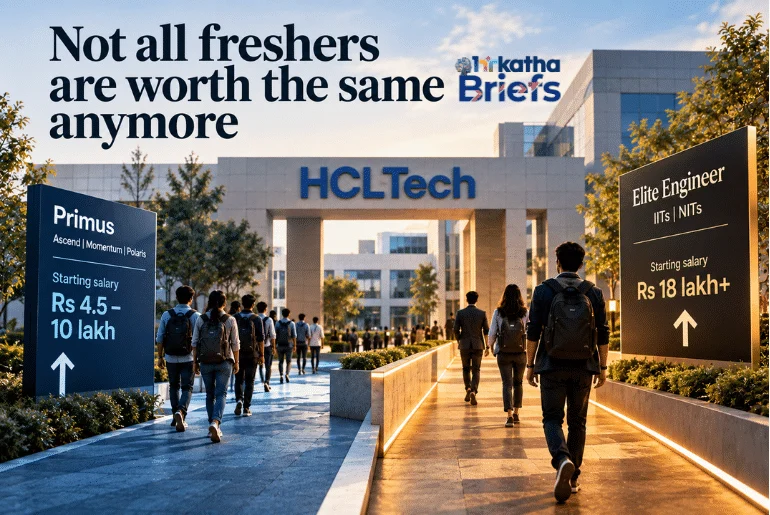
At the forefront of this new compensation paradigm is HCLTech’s "Elite Engineer" cadre, a program that has seen considerable scaling up this year. Graduates selected for this coveted tier, drawing exclusively from India’s premier institutions like the Indian Institutes of Technology (IITs) and National Institutes of Technology (NITs), are being onboarded into critical, frontier technology domains. These areas include the highly specialized and globally strategic fields of semiconductors and silicon engineering, advanced Artificial Intelligence (AI), sophisticated data engineering, physical AI and robotics, and the nascent yet revolutionary domain of quantum computing. The starting salary for these Elite Engineers is a robust Rs 18 lakh per annum, a testament to the acute demand and scarcity of expertise in these cutting-edge sectors.
Sundararajan articulated the rationale behind this pivot, stating, "The company is pivoting to a skills-based hiring approach with focus on emerging technologies that are in demand with clients globally." He further emphasized that the Elite Engineer programme "continues to play an important role in our strategy to build future-ready talent." This statement highlights HCLTech’s proactive stance in aligning its talent strategy with its business objectives, particularly in securing high-value contracts and delivering complex solutions in an intensely competitive global market. The investment in these elite graduates is a direct reflection of client demands for innovative solutions in areas that promise significant technological disruption and competitive advantage.
The Primus Program: Nurturing a Broad Talent Base Through Strategic Partnerships
While the Elite Engineer program targets the apex of specialized talent, HCLTech maintains a comprehensive approach to talent acquisition through its long-standing Primus program. This initiative involves strategic partnerships with over 60 engineering colleges nationwide, granting these institutions priority in the company’s hiring process. The Primus program is designed to bridge the gap between academic curricula and industry requirements, fostering a talent pipeline that is "industry ready." HCLTech actively collaborates with these partner colleges, offering guidance on curriculum development, conducting expert mentorship sessions, organizing technology talks, and facilitating hackathons on campus. These engagements are crucial in equipping students with practical skills and an understanding of real-world industry challenges.
Candidates from Primus colleges undergo a rigorous multi-stage assessment process. This evaluation typically includes tests on cognitive ability, coding proficiency, technical skills, and English language proficiency, followed by a series of interviews. Based on their performance in these assessments, successful candidates are categorized into one of three distinct tiers: Ascend, Momentum, or Polaris. The salary structure for these tiers begins at Rs 4.5 lakh per annum for the Ascend tier, escalating up to Rs 10 lakh per annum for the Polaris tier. Even at its highest level, the Polaris tier for Primus graduates remains below the entry-level compensation for the Elite Engineer cadre. This tiered compensation model within the Primus program further reinforces the company’s commitment to differentiating salaries based on evaluated skills and potential, rather than a flat rate for all fresh graduates.
Broader Implications: A Shifting Paradigm in Talent Valuation
The pronounced salary differential between the Elite Engineer cadre and even the highest-paid Primus tier signals a fundamental recalibration in how campus talent is being valued across the technology industry. For a company like HCLTech, which anticipates hiring a consistent number of freshers year-on-year, this widening salary range speaks volumes about the evolving priorities. While an engineering degree remains the foundational entry ticket, it is increasingly the scarcity and direct relevance of specialized skills – particularly in emerging and frontier technologies – that dictate the compensation package a company is prepared to offer.
This trend is not unique to HCLTech but reflects a broader, industry-wide phenomenon in the Indian IT services sector. For decades, Indian IT companies were known for mass hiring, absorbing large cohorts of engineering graduates and providing extensive on-the-job training. However, the accelerating pace of digital transformation, the advent of AI, machine learning, cloud computing, and now quantum and semiconductors, has necessitated a more targeted approach. Clients globally are demanding specialized expertise to navigate their own digital journeys, pushing IT service providers to invest heavily in talent capable of delivering high-value, niche solutions.
The Indian IT Landscape and the Skill Gap
The Indian IT services industry, a cornerstone of the nation’s economy, has long been a global powerhouse. Valued at over $245 billion in 2023, it continues to grow, albeit with evolving demands. Historically, the industry has thrived on its vast pool of engineering talent. However, a significant skill gap has emerged between traditional engineering curricula and the dynamic requirements of the modern tech landscape. Reports from industry bodies like NASSCOM consistently highlight the shortage of professionals proficient in advanced analytics, AI/ML, cybersecurity, and cloud architecture. This gap is particularly acute in cutting-edge areas such as semiconductor design and quantum computing, where specialized academic programs and research facilities are still developing.
The shift by companies like HCLTech towards highly differentiated salaries is a direct response to this skill gap and the intense competition for scarce talent. Global technology giants and well-funded startups are also vying for these specialized skills, driving up compensation expectations. By offering premium salaries, HCLTech aims to attract and retain the brightest minds capable of driving innovation and competitive advantage in these high-growth segments. This strategy also positions HCLTech to secure more lucrative projects that require deep expertise, moving beyond commoditized services.
Impact on Educational Institutions and Future Graduates
This evolving hiring strategy places significant pressure and opportunity on India’s educational ecosystem. For elite institutions like IITs and NITs, it reaffirms their role as incubators of top-tier engineering talent, particularly in research-intensive and specialized domains. These institutions are increasingly focused on integrating advanced curricula in AI, data science, robotics, and even quantum mechanics, aligning with industry needs.
For the vast network of other engineering colleges, particularly those partnering with companies through programs like Primus, the challenge and opportunity lie in enhancing industry readiness. HCLTech’s engagement with Primus colleges, including curriculum guidance and mentorship, is crucial. It underscores the need for these institutions to move beyond theoretical learning and incorporate practical, project-based experiences, hackathons, and certifications in in-demand technologies. Graduates from these colleges will need to demonstrate not just academic proficiency but also a clear aptitude for specific technical skills and problem-solving. The tiers within the Primus program (Ascend, Momentum, Polaris) serve as a clear indicator to colleges and students alike that even within a broader talent pool, skill differentiation translates directly into varying compensation levels. This incentivizes students to pursue advanced learning and specialization early in their academic careers.
Competitive Dynamics and Talent Wars
The move by HCLTech is indicative of a broader trend in the Indian IT sector, where companies are increasingly engaged in a "talent war" for specialized skills. Peer companies such as Tata Consultancy Services (TCS), Infosys, Wipro, and Cognizant are also adapting their hiring and compensation models to secure talent in critical areas. While specific figures vary, the underlying principle of rewarding niche expertise with higher pay is becoming a universal truth. This competitive landscape means that companies cannot afford to offer undifferentiated salaries, especially for skills that are in high demand globally. Failure to offer competitive compensation can lead to higher attrition rates, impacting project delivery and overall business growth.
Furthermore, this strategy is an investment in HCLTech’s future capabilities. By building a strong cadre of Elite Engineers in areas like semiconductors and quantum computing, the company aims to broaden its service offerings and solidify its position as a leader in emerging technologies. This proactive approach ensures that HCLTech remains agile and relevant in a rapidly changing technological environment, capable of delivering complex, high-value solutions to its global clientele. The investment in human capital, particularly in these cutting-edge fields, is expected to yield significant returns in terms of innovation, client satisfaction, and market share.
Conclusion: The Future is Skills-Driven
HCLTech’s bold move to introduce widely differentiated fresher salaries marks a pivotal moment in the Indian IT talent landscape. It unequivocally signals that while an engineering degree remains a fundamental prerequisite, it is the specific, in-demand, and often scarce skills in frontier technologies that truly determine a graduate’s market value. This strategic recalibration, driven by global client demands and the imperative for digital innovation, will likely reshape how educational institutions prepare their students and how aspiring engineers approach their career development. The era of generic engineering degrees commanding uniform salaries is giving way to a more nuanced, skills-driven paradigm, where continuous learning, specialization, and a keen understanding of emerging technological trends are paramount for career success and lucrative compensation. HCLTech’s approach positions it at the forefront of this transformation, building a future-ready workforce capable of navigating and leading the next wave of technological evolution.