The State of AI Integration: Bridging the Expectation Gap
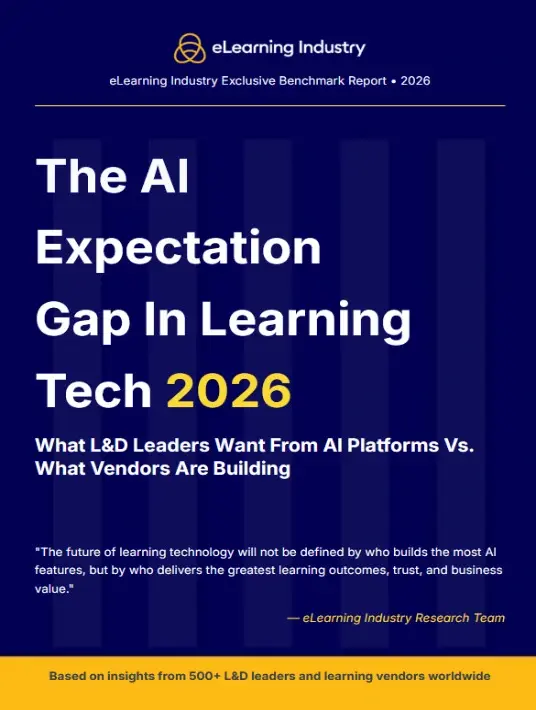
A primary finding of the 2026 report is the emergence of what researchers call the "AI Expectation Gap." This phenomenon describes a growing disconnect between the features being developed by learning technology vendors and the actual needs of L&D practitioners. While vendors are aggressively integrating generative AI to automate content creation and administrative tasks, buyers are increasingly prioritizing user experience (UX), system interoperability, and measurable business outcomes.
The report suggests that AI has reached a level of market saturation where it is viewed as an "expected capability" rather than a "primary differentiator." In the current market, simply having AI features is no longer enough to secure a contract. Instead, L&D leaders are evaluating platforms based on how AI enhances the overall learning ecosystem. This shift reflects a maturing market where the "hype cycle" has plateaued, giving way to a more pragmatic approach to technology procurement.
A Chronology of AI Adoption in L&D (2023–2026)
To understand the current state of adoption, it is necessary to examine the timeline of how AI permeated the L&D sector over the last three years.
- 2023: The Era of Experimentation. Following the public release of advanced large language models, L&D professionals began using AI primarily for "low-stakes" tasks. This included generating course outlines, drafting emails, and summarizing long-form content. Adoption was largely bottom-up, driven by individual curiosity rather than organizational strategy.
- 2024: The Rise of Generative Tools. Vendors began rapidly integrating "wrappers" around existing AI models. The market saw a surge in AI-powered video generation and automated quiz creators. However, concerns regarding data privacy and "hallucinations" (inaccurate AI outputs) led to a cautious approach among enterprise-level buyers.
- 2025: Strategic Pilot Programs. Organizations moved toward formalizing AI use. L&D departments started implementing pilot programs for personalized learning paths and skills gap analysis. This period was marked by the first major push for "AI Literacy" within HR departments.
- 2026: The Pragmatic Integration. The current phase is characterized by a focus on "Trust and ROI." As the eLearning Industry report indicates, 64% of organizations are now in the early implementation or exploration stages. The emphasis has shifted from what AI can do to what AI should do to drive specific business KPIs.
Data Analysis: Adoption Rates and Buyer Priorities
The benchmark data provides a granular look at the current speed of adoption. Despite the ubiquity of AI in the news, the internal reality for many corporations is one of steady, cautious progress. The finding that nearly two-thirds of organizations are still in the "early" stages of implementation suggests that the "AI Revolution" is a marathon rather than a sprint.
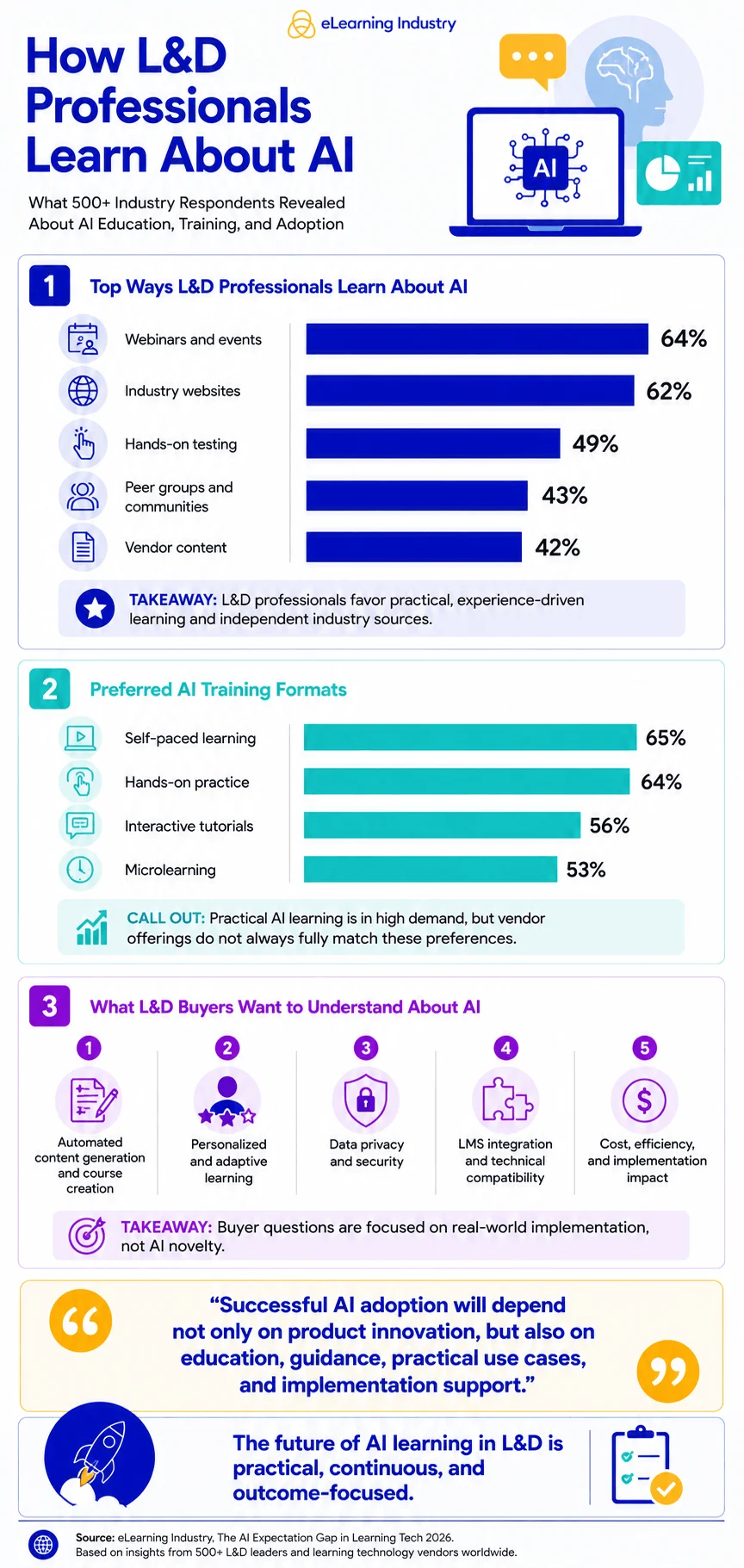
One of the most significant data points in the report involves the prioritization of personalization. Approximately 65% of L&D buyers identified personalized learning paths as their top priority. They seek systems that can analyze a learner’s current skill set, career goals, and past performance to curate a bespoke educational experience. Conversely, vendors have historically over-invested in automated content generation. This misalignment suggests that while vendors are focused on the supply side of learning (creating content faster), buyers are focused on the demand side (ensuring the right content reaches the right person).

Furthermore, the report highlights that "AI Trust" is becoming the next competitive battleground. Buyers are no longer impressed by the complexity of an algorithm; they are concerned with its transparency, security, and ethical governance.
How L&D Professionals Are Closing the Knowledge Gap
As the technology evolves, the methods by which L&D professionals acquire AI expertise have become more diverse. The report identifies four primary channels for learning:
1. Vendor-Led Education
As learning management systems (LMS) and learning experience platforms (LXP) incorporate AI, vendors have been forced to step into the role of educators. Buyers now expect more than a product manual; they require webinars, case studies, and onboarding sessions that demonstrate how AI features solve specific business problems. This "educational selling" helps bridge the gap between technical capability and practical application.
2. Peer-to-Peer Communities and Social Learning
Professional networks, particularly LinkedIn and specialized L&D forums, have become vital hubs for real-time knowledge sharing. Practitioners often trust the "lived experience" of their peers over marketing materials. Discussions frequently center on "prompt engineering" for instructional design, navigating internal IT security reviews, and managing the change management aspects of AI adoption.
3. Formal Certification and Structured Training
There has been a notable increase in the demand for formal AI certifications tailored for HR and L&D. These programs provide a foundational understanding of AI ethics, data governance, and strategic implementation. By pursuing structured learning, L&D leaders are ensuring they have the credentials to lead digital transformation initiatives within their broader organizations.
4. Iterative Hands-On Experimentation
The "learn by doing" philosophy remains a cornerstone of AI adoption. Many L&D teams are running small-scale experiments—such as using AI to translate training materials into multiple languages or employing chatbots for "just-in-time" performance support. These pilot projects allow teams to fail fast, learn, and refine their strategies before committing to large-scale capital expenditures.
Official Responses and Industry Perspectives
Industry analysts suggest that the "AI Expectation Gap" is a healthy sign of a maturing market. "We are seeing a shift from ‘AI for the sake of AI’ to ‘AI for the sake of the learner,’" says one industry consultant cited in discussions surrounding the report. "L&D leaders are becoming more sophisticated buyers. They are asking about data privacy, they are asking about the ‘black box’ of algorithmic decision-making, and they are asking for proof of engagement."
On the vendor side, the response has been a pivot toward "Responsible AI." Major learning tech providers are increasingly emphasizing their commitment to ethics and transparency. This includes providing "explainable AI" features that show users why a certain course was recommended or how a specific skill score was calculated.
Broader Implications: The Future of the L&D Role
The rapid adoption of AI has profound implications for the career trajectories of L&D professionals. The role is shifting from "Content Creator" to "Learning Architect" and "Data Strategist."
- From Content to Curation: As AI takes over the heavy lifting of content production, L&D professionals will spend more time curating high-quality resources and ensuring they align with organizational goals.
- Emphasis on Human-Centric Skills: As technical tasks become automated, "human-only" skills—such as emotional intelligence, leadership coaching, and complex problem-solving—will become more valuable. The L&D professional of 2026 must be able to facilitate the "human" side of the workplace that AI cannot reach.
- Strategic Business Alignment: With AI providing better data on learning ROI, L&D is moving from a "cost center" to a "value creator." Professionals who can interpret AI-driven analytics to show how training improves the bottom line will find themselves with more influence at the executive table.
Conclusion: Navigating the Path Forward
The eLearning Industry 2026 benchmark report serves as a critical roadmap for an industry in flux. While the "AI Expectation Gap" presents a challenge, it also offers an opportunity for L&D professionals to take the lead in defining what effective, ethical, and impactful learning looks like in the modern age.
Success in this new era will not be determined by who has the most advanced tools, but by who can best integrate those tools into a coherent strategy that prioritizes the learner experience and delivers tangible business results. As organizations move past the initial phase of AI exploration, the focus must remain on continuous education, trust-building, and the pursuit of measurable value. The companies that successfully marry technological innovation with a deep understanding of human learning will be the ones that thrive in the years to reach.