The professional landscape for Learning and Development (L&D) experts is undergoing a significant transformation as digital audio platforms become primary vehicles for industry influence and organizational growth. In an era where traditional white papers and corporate blogs often struggle to capture the attention of busy executives, the podcast medium has emerged as a critical tool for L&D leaders to disseminate research, challenge legacy methodologies, and advocate for innovative educational technologies. However, as the podcasting ecosystem matures, industry data suggests that technical expertise alone is no longer a sufficient passport to the microphone. Hosts and producers are increasingly prioritizing guests who can translate complex pedagogical theories into actionable, high-stakes narratives that resonate with a global workforce.
The Strategic Shift Toward Audio Thought Leadership
The rise of the "knowledge economy" has necessitated a more dynamic form of professional communication. According to industry analysis, the number of active podcasts globally has surpassed 4 million, with business and educational categories seeing some of the most consistent growth in listener retention. For the L&D professional—ranging from Chief Learning Officers (CLOs) to Instructional Designers—this represents a shift from internal service provision to external market influence.
The motivation for entering the podcasting space is multi-faceted. While personal branding is a frequent driver, the broader implications include the ability to shape the discourse around workplace AI adoption, talent retention, and organizational resilience. By securing guest spots on influential shows, L&D leaders can bypass traditional media gatekeepers to reach niche audiences of HR directors, EdTech buyers, and C-suite executives directly.
A Chronological Framework for Podcast Guesting Success
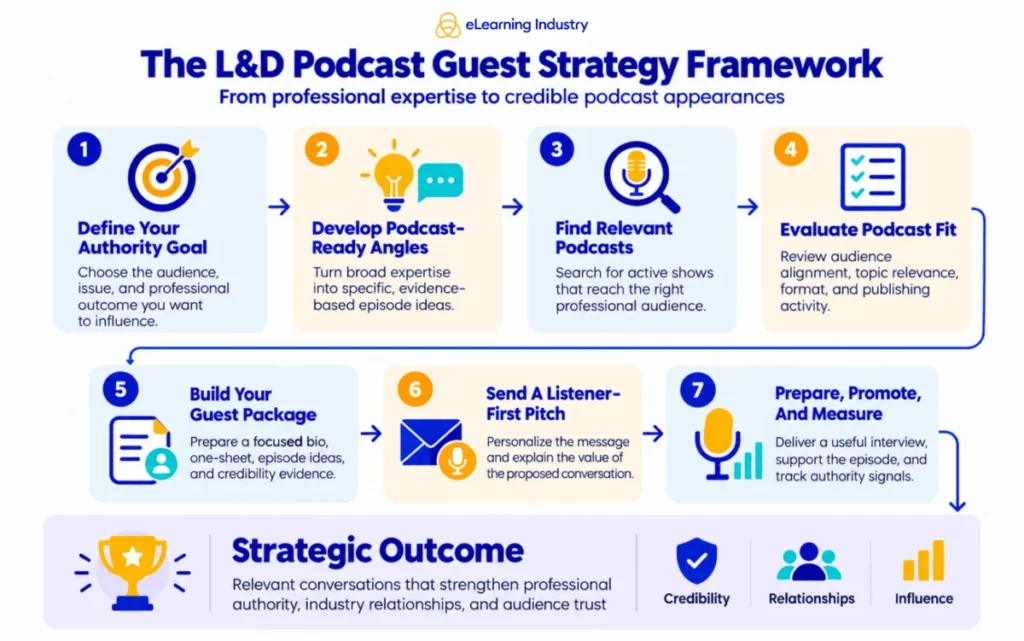
Securing a position on a high-impact podcast is rarely the result of a single email. It requires a disciplined, chronological approach that mirrors a professional marketing campaign. This process typically unfolds over a four-to-six-week cycle:

Phase 1: Identification and Alignment (Weeks 1-2)
The initial phase involves the rigorous mapping of the podcast landscape. Experts recommend moving beyond "vanity metrics" like total downloads to focus on audience alignment. An L&D professional specializing in enterprise-scale AI implementation, for instance, would find more value in a niche show with 500 loyal HR tech listeners than a general business podcast with 50,000 casual listeners. During this period, the professional must listen to past episodes to understand the host’s interviewing style and the technical depth expected by the audience.
Phase 2: The Narrative Pivot (Week 3)
The transition from a "subject matter expert" to a "podcast guest" occurs when a broad topic is refined into a specific, tension-filled angle. In the L&D sector, topics such as "Leadership Training" are often considered too saturated. A successful pivot would instead focus on "Why Middle Management Training Fails Without Executive Reinforcement." This phase involves building a "One-Sheet"—a professional media kit that includes a focused bio, suggested talking points, and evidence of past speaking engagements.
Phase 3: The Outreach Campaign (Week 4)
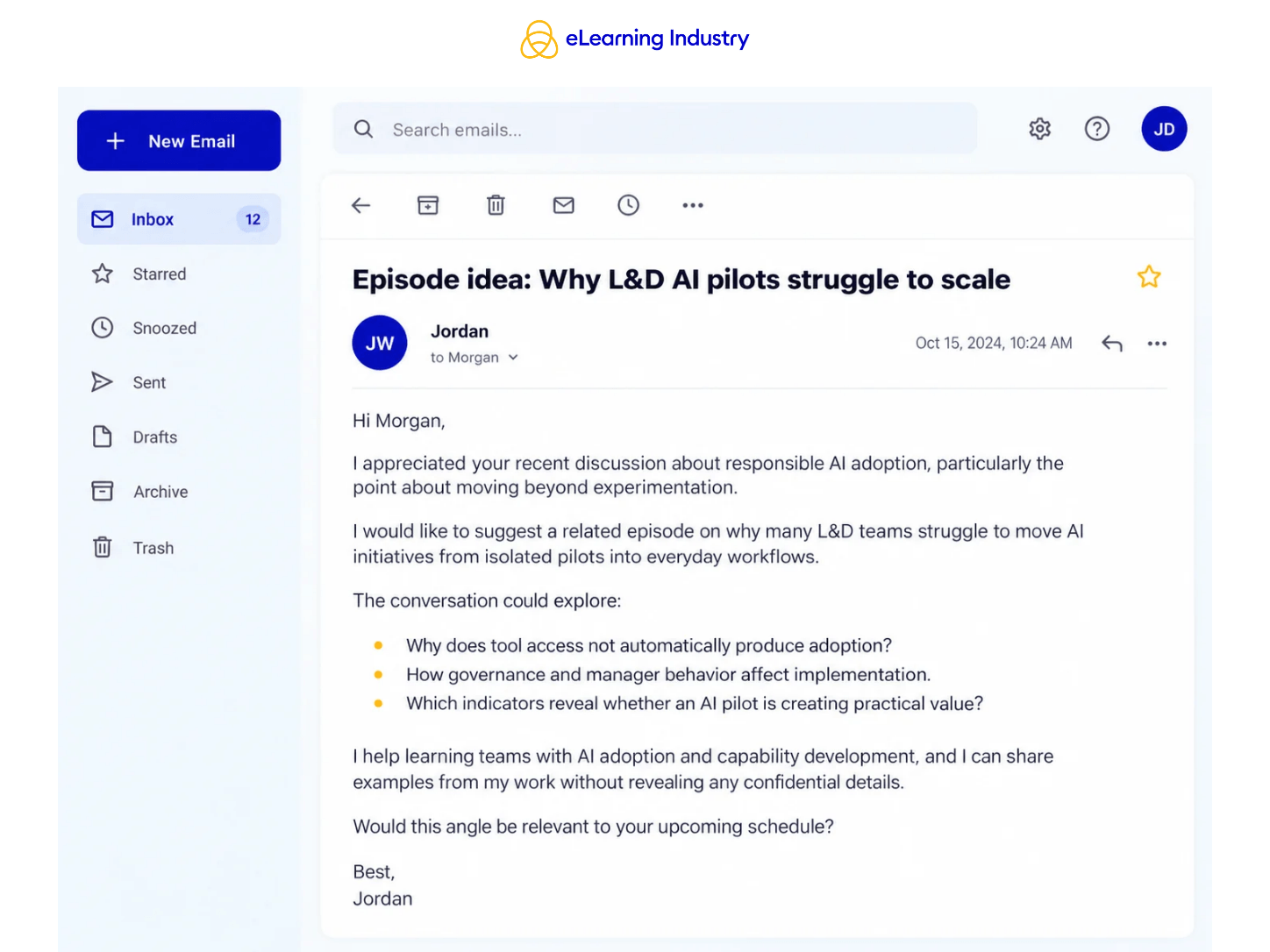
The pitching phase is where many L&D professionals falter by using automated or generic templates. Journalistic standards for outreach require a "listener-first" approach. A successful pitch must demonstrate a deep understanding of the show’s existing content and offer a unique perspective that fills a current gap in the host’s programming.
Phase 4: Preparation and Recording (Week 5)
Preparation involves more than reviewing notes. It requires a technical audit of recording equipment and the distillation of expertise into "soundbites" that do not sacrifice nuance. Experts suggest preparing three core messages, each supported by a real-world case study or a data point.
Phase 5: Amplification and Measurement (Week 6 and beyond)
Once the episode is live, the strategy shifts to asset maximization. The audio content is repurposed into LinkedIn articles, newsletters, and internal corporate training materials, ensuring the initial effort yields long-term authority.

Supporting Data: The Impact of Audio on Professional Credibility
Data from B2B marketing studies indicate that podcast listeners are among the most affluent and educated demographics in the digital space. Furthermore, audio consumption creates a "parasocial" bond between the guest and the listener that text-based media cannot replicate. For L&D professionals, this translates to higher trust levels when proposing large-scale organizational changes or new technology investments.
A 2023 survey of HR and L&D decision-makers revealed that nearly 60% of respondents use podcasts to stay updated on industry trends. This high consumption rate among "buyers" of L&D services makes podcast guesting a high-ROI activity for consultants and EdTech founders. The data also suggests that guests who provide specific "outcome-based" insights—such as how a specific training intervention reduced turnover by a measurable percentage—receive significantly more post-show engagement than those who speak in theoretical terms.
Industry Perspectives: What Hosts Really Want
Interviews with podcast producers in the workplace and education sectors reveal a consistent demand for "provocative clarity." Producers often report that the most common reason for rejecting an L&D guest is the tendency to use "corporate speak" or overly academic jargon that fails to engage a mobile-first audience.
"We aren’t looking for a resume in audio form," says one prominent EdTech podcast host. "We are looking for a guest who can identify a friction point in the industry and provide a roadmap for solving it. The best guests are those who can disagree with the status quo while providing the data to back up their dissent."
This sentiment is echoed by talent leaders who view podcast appearances as a vetting mechanism. A guest who can articulate a complex learning strategy clearly and persuasively on a podcast is often viewed as more capable of leading a real-world digital transformation than one who relies solely on credentials.
Broader Implications for the L&D Field
The integration of podcast guesting into a professional L&D strategy has broader implications for how knowledge is managed within the global workforce. As L&D professionals become more adept at public-facing communication, the "siloed" nature of corporate training is beginning to dissolve. Insights that were once trapped within internal Learning Management Systems (LMS) are now being shared across industries, fostering a more collaborative approach to solving the global skills gap.
Furthermore, the rise of AI in content creation means that human-centric audio content is becoming more valuable. While AI can write a blog post about "The Future of Work," it cannot replicate the nuanced, experience-based dialogue of two experts discussing the ethical implications of AI in a podcast setting. For L&D professionals, the podcast microphone represents a way to "future-proof" their influence against automation.
Fact-Based Analysis of Performance Metrics
To ensure a podcast strategy is effective, L&D professionals must move beyond tracking "likes" and "shares." A sophisticated analysis of impact includes:
- Direct Lead Generation: Tracking inquiries from organizations or partners who specifically mention the podcast appearance.
- Network Growth Quality: Monitoring the seniority and relevance of new LinkedIn connections following an episode release.
- Secondary Content Performance: Measuring the engagement rates of blog posts or white papers that utilize the podcast audio as a primary source.
- Invitation Velocity: A successful appearance on one show often leads to invitations from others, creating a "flywheel effect" of authority.
Conclusion: The Future of the L&D Voice
The "How To Get On Podcasts: L&D Guest Strategy Guide" serves as a blueprint for a new era of professional advocacy. In a crowded digital marketplace, the ability to command attention through spoken expertise is becoming a non-negotiable skill for those at the forefront of organizational learning. By treating podcast guesting as a strategic operation rather than a series of ad-hoc interviews, L&D professionals can ensure their insights reach the ears of those most capable of implementing change.
As the industry continues to evolve, the distinction between "doing the work" and "talking about the work" will continue to blur. For the modern L&D leader, the podcast guest strategy is not merely a promotional tactic; it is an essential component of a comprehensive approach to modern leadership and global knowledge sharing. The professionals who master this medium will be the ones who define the future of how we learn, work, and grow in an increasingly complex economic environment.