
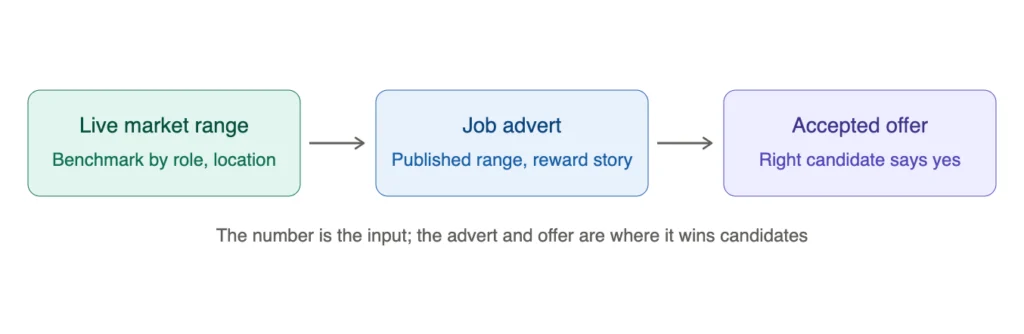
In an increasingly competitive global talent market, the strategic deployment of salary benchmarking data has become a critical differentiator for organizations striving to attract and secure top talent. Merely possessing market compensation figures is insufficient; the art lies in translating these insights into compelling job advertisements and ultimately, irresistible employment offers. This nuanced approach is more vital than ever, as widespread talent shortages persist across industries, compelling employers to refine their recruitment strategies.
The Modern Talent Landscape: A War for Skills
The global workforce currently faces unprecedented challenges, marked by a pronounced scarcity of skilled professionals. According to ManpowerGroup’s 2026 Global Talent Shortage Survey, a staggering 72% of employers are reporting significant difficulty in finding candidates with the requisite skills, a figure that has steadily climbed over the past decade. This challenge is exacerbated by the rapid evolution of technology, particularly the ascendancy of Artificial Intelligence (AI) skills, which now claim the top spot among in-demand competencies. As a result, most organizations find themselves vying for the same limited pool of high-caliber candidates, making every aspect of the recruitment process, especially the compensation package, a decisive factor.
The CEO and co-founder of HR DataHub, David Whitfield, whose platform monitors real-time job market data, emphasizes that understanding current market offerings, rather than relying on outdated survey figures, is paramount. His perspective highlights a critical shift: the competitive landscape is defined by what employers are advertising right now, not what they reported months or even a year ago. This dynamic environment necessitates a comprehensive guide on how to integrate salary benchmarks seamlessly from initial job advertisements to final offer acceptance, ensuring the right candidates apply and a higher percentage convert.
Understanding Salary Benchmarking: More Than Just a Number
At its core, salary benchmarking is the systematic process of comparing an organization’s compensation and benefits structure against external market data. Its primary objective is to ascertain whether current pay rates are fair, competitive, and justifiable within the broader industry and geographic context. This process provides a clear indication of where an organization’s proposed offer stands—whether it is positioned above, at, or below the market median—thereby enabling a deliberate, evidence-backed decision on compensation strategy.
It is crucial to distinguish salary benchmarking from an annual pay review. While often conducted concurrently, benchmarking serves as the foundational evidence, while a pay review is the internal mechanism for implementing changes based on that evidence. Benchmarking, however, should not be confined to an annual cycle. It ought to be an ongoing practice, particularly when crafting new offers or attempting to fill hard-to-recruit roles. For talent acquisition specialists, the central question benchmarking answers is: Will a strong candidate be sufficiently impressed by the advertised compensation to submit an application?
The Mechanics of Effective Salary Benchmarking
The process of salary benchmarking typically involves several key steps:
- Role Definition and Matching: This is the most critical initial step. Organizations must accurately define the duties, responsibilities, and level of the role in question, rather than solely relying on generic job titles. A "Marketing Manager" in one company might have vastly different responsibilities and require different skill sets than in another, necessitating a granular comparison based on actual function.
- Data Sourcing: Once the role is defined, relevant salary data is pulled from trusted sources. These can include traditional compensation surveys conducted by consulting firms, governmental labor statistics, or increasingly, live job advert data platforms that aggregate real-time postings.
- Filtering and Refinement: The raw data is then filtered by crucial factors that influence compensation. These typically include geographical location (which can dramatically alter pay scales), industry sector, company size, and the specific, in-demand skills required for the position. For instance, an AI specialist in Silicon Valley will command a significantly different salary than one in a less tech-dense region, even within the same industry.
- Output Analysis: The output is usually presented as a salary range, often detailing lower quartile (25th percentile), median (50th percentile), and upper quartile (75th percentile) figures. This range illustrates the spread of what employers are currently paying for comparable roles.
The organization’s decision on where to position its offer within this range is strategic. Factors such as the urgency of the hire, the rarity of the skills, the company’s financial health, and its overall talent philosophy will influence this choice. The fresher and more precise the data, the stronger the justification for the chosen compensation figure, providing a robust defense against queries from hiring managers or counter-offers from candidates.
From Data to Deal: Strategies for Accepted Offers
Translating raw benchmarking data into compelling offers that candidates readily accept requires a multi-faceted approach, extending beyond merely stating a competitive base salary.
-
Benchmark the Total Reward Package:
Candidates evaluate "total reward," not just base pay. Therefore, benchmarking must encompass the entire compensation and benefits spectrum. A salary of $48,000 might seem lower than a $50,000 offer, but if the former includes a robust retirement match, comprehensive health benefits, generous paid time off, and hybrid work flexibility, its overall value proposition can be significantly superior. Studies by various HR consulting firms consistently show that non-cash benefits, particularly flexibility and professional development opportunities, are increasingly weighted by candidates, often outweighing a marginal increase in base salary. Neglecting to benchmark these elements leads to a misjudgment of an offer’s true market competitiveness. Organizations must quantify the value of these benefits to present a holistic, attractive package. -
Embrace Transparency: Publish Salary Ranges:
In 2026, publishing salary ranges in job advertisements is rapidly becoming standard practice, driven by legislative mandates in some regions and candidate expectations in others. A vague descriptor like "competitive salary" now often signals opacity or an attempt to conceal an uncompetitive offer, prompting strong candidates to bypass such postings. A specific, market-aligned salary range, however, conveys transparency, signals that due diligence has been performed, and builds trust even before the first interview. This proactive disclosure aligns with a growing demand for pay equity and clarity, as evidenced by a 2025 LinkedIn survey revealing that job seekers are 50% more likely to apply to roles with salary information. Platforms like Ongig’s job description software aid teams in embedding clear, compliant salary ranges and comprehensive reward details directly into postings. -
Articulate the Value Proposition Clearly:
A salary range, by itself, is a number devoid of context. If an organization’s compensation figure appears anomalous compared to market expectations, it is imperative to provide a clear, concise, and credible explanation. This might involve highlighting a genuine skills premium, a higher cost-of-living adjustment for a specific location, or a structured progression path that promises significant pay increases within the first year. However, integrity is key; overselling or misrepresenting the compensation story can quickly erode candidate trust. Recruiters and hiring managers must be equipped to articulate the "why" behind the numbers, drawing upon resources like Ongig’s guide on how to write job descriptions to craft compelling, candidate-centric language. -
Leverage Non-Base Pay Levers for Fixed Budgets:
When base salary budgets are capped—for instance, if average salary budget increases for 2026 are around 3.4%, as reported by The Conference Board’s 40th annual Salary Increase Budgets survey—organizations rarely win bidding wars on base pay alone. This necessitates benchmarking and strategically adjusting other compensation levers. Reallocating budget towards a more generous retirement match, a clearer and more attractive bonus structure, additional paid time off, or enhanced flexibility (e.g., a four-day work week, fully remote options) can make a significant difference. In high-volume sectors like retail, non-cash benefits such as employee discounts, robust training programs, and a strong, recognizable employer brand often exert more influence than marginal increases in base pay. These elements, though seemingly small, can tip the scales for candidates weighing multiple offers. -
Targeted Allocation of Resources:
Spreading compensation budget evenly across all open roles is a common, yet often counterproductive, mistake. This approach risks overpaying for easily filled positions while simultaneously underpaying for critical, hard-to-fill roles, leading to a "leak" of valuable candidates. Benchmarking during recruitment offers the crucial insight needed to identify which roles genuinely lag the market and which are adequately compensated. For example, a team-lead position lagging market pay by 8% will invariably struggle to attract talent, whereas an administrative role perfectly aligned with the median might not. Despite this, Mercer’s analysis indicates that 83% of US employers still distribute salary increase budgets uniformly across the organization, rather than directing resources to high-demand skills or critical talent gaps. This undifferentiated approach effectively starves the very openings where talent acquisition efforts need to be most aggressive and strategically funded.
Live Job Advert Data: Sharpening Salary Strategy
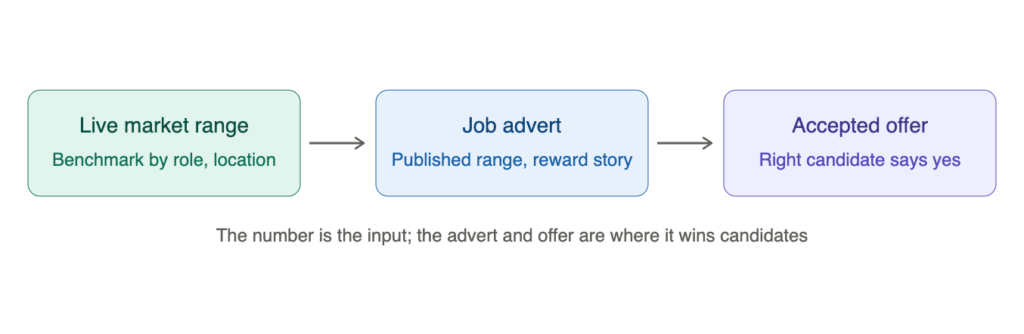
A pivotal evolution in salary benchmarking is the shift from traditional, often annualized, survey data to real-time, live job advert data. While a survey reflects what a role paid at the time of data collection (which could be months or a year prior), live job postings provide a snapshot of current market offerings. This distinction is particularly critical when making individual offers in fast-moving sectors or for highly sought-after skills. Traditional surveys capture "what was," whereas advertised data reflects "what is."
The primary trade-off with live advertised data is that it showcases what employers offer to attract talent, not necessarily what existing employees earn, and it may lack formal leveling structures found in traditional surveys. However, for active hiring, this immediate, unfiltered view of the competitive landscape is often more relevant because it mirrors precisely what a candidate is seeing and evaluating today.
The practical benefit is a move away from benchmarking base pay in isolation. Platforms leveraging live job advert data, such as HR DataHub, allow organizations to pull current salary ranges by role and location across thousands of geographies. This capability enables a holistic comparison of base-pay-only figures against the fuller total reward picture that candidates are actually comparing, a contrast that often silently determines the success or failure of an offer.
A Worked Example: Navigating Geographic Pay Differentials
Consider the scenario of hiring a Regional Operations Manager in two distinct markets: New York City and a broader national footprint. Relying on a single, blended national survey average would inevitably lead to overpaying in one market while simultaneously losing candidates in the other due to underpayment.
Live data reveals a stark difference. According to recent Glassdoor data, a Regional Operations Manager in New York City commands an average salary of approximately $133,235, with a typical range spanning $105,323 (25th percentile) to $171,087 (75th percentile). In contrast, the national average for the same role stands at roughly $123,905, with a range of $98,293 to $158,695.
This illustrates a substantial $10,000 gap at the midpoint, with the lower end of New York’s range exceeding the national median. Consequently, these must be treated as two distinct offers. For the national market, an organization could confidently set a base salary near the $124,000 midpoint, augment it with a strong benefits package, and outline a clear progression path to senior operations roles in the job advertisement. For the New York City position, however, a $124,000 base salary would be perceived as significantly low, effectively screening out qualified candidates. Here, the base salary must be adjusted towards the upper end of the local range, with the advertisement emphasizing the comprehensive package and career growth opportunities.
This tailored approach, informed by granular, location-specific live data, ensures both roles are filled competitively without incurring unnecessary costs in either market, as each offer precisely matches the market expectations against which candidates are evaluating. Similar logic applies internationally; platforms like HR DataHub provide live job advert data filtered by role and location in markets such as the UK, enabling organizations to move beyond blended averages and price each role accurately to its specific market.
Common Pitfalls in Salary Benchmarking
Despite its critical importance, salary benchmarking is frequently plagued by a handful of avoidable errors:
- Outdated Data: Relying on annual surveys that are six months to a year old in a rapidly changing market (especially for tech or highly specialized roles) renders the data largely irrelevant.
- Mismatched Roles: Benchmarking against roles with similar titles but vastly different responsibilities, required skills, or organizational levels leads to inaccurate comparisons and flawed compensation strategies.
- Ignoring Total Reward: Focusing solely on base salary without accounting for the full spectrum of benefits, bonuses, and non-monetary perks provides an incomplete and often misleading picture of competitiveness.
- Geographic Blind Spots: Applying a national or regional average indiscriminately across diverse local markets with varying costs of living and talent availability leads to overpayment in some areas and underpayment in others.
- Lack of Internal Equity Consideration: While external competitiveness is vital, neglecting internal pay equity can lead to dissatisfaction among existing employees, even if new hires are competitively paid.
- Failure to Communicate Value: Simply presenting a number without articulating the rationale, the full benefits package, or career progression opportunities diminishes the perceived value of the offer.
- Infrequent Benchmarking: Limiting benchmarking to an annual exercise misses critical market shifts and competitive pressures that emerge throughout the year.
Broader Implications for Organizations
Effective salary benchmarking extends its impact beyond mere candidate attraction. It plays a crucial role in retention, employer branding, and fostering a culture of fairness and transparency.
- Retention: The same market view that informs competitive offers for new hires also identifies where existing employee pay has fallen behind. Proactively addressing lagging internal salaries before an employee seeks external opportunities is demonstrably more cost-effective than attempting to counter an outside offer after a resignation has been tendered. This proactive approach strengthens internal pay equity and defensibility, reducing unwanted attrition.
- Employer Branding: Organizations known for fair, transparent, and competitive compensation packages build a stronger employer brand. This reputation not only attracts talent but also signals a commitment to employee value, enhancing overall organizational standing.
- Diversity, Equity, and Inclusion (DEI): Transparent salary ranges and data-driven compensation decisions are fundamental to DEI initiatives. They help mitigate unconscious bias in salary negotiations and ensure equitable pay practices across different demographics.
- Business Strategy: In a talent-constrained economy, a robust compensation strategy, underpinned by accurate benchmarking, directly supports business objectives. It ensures critical roles are filled efficiently, maintains productivity, and allows for strategic investment in high-impact areas.
Expert Perspectives and Industry Commentary
HR leaders and compensation specialists widely concur that the shift towards real-time data and transparency marks a significant evolution in talent management. "The days of relying solely on annual, static surveys are fading," notes Sarah Chen, a Senior Compensation Analyst at a leading tech firm. "Candidates, especially younger generations, expect transparency and want to understand the full value of an offer. Our role is to provide that clarity, backed by the freshest data possible." Recruiters, too, emphasize the tangible benefits. "When we can present a well-researched, market-aligned salary range upfront, our conversion rates for initial interviews jump significantly," states Mark Davies, a Talent Acquisition Manager. "It establishes trust and signals that we respect the candidate’s time."
The Future of Compensation Data
Looking ahead, the landscape of compensation data will likely become even more dynamic and integrated. The proliferation of AI and machine learning will enable more sophisticated predictive analytics, allowing organizations to anticipate market shifts rather than merely reacting to them. The integration of compensation data with broader HR analytics platforms will provide a holistic view of talent management, linking pay directly to performance, retention, and business outcomes. The emphasis on total reward will continue to grow, with personalized benefits packages becoming more commonplace.
Attract Better Candidates With Real Salary Data
The number presented on a job advertisement serves as a powerful communication tool, conveying far more than a mere figure. It signals to a candidate whether an organization has conducted its due diligence, whether the role merits their valuable time and consideration, and ultimately, whether pursuing further conversation is worthwhile. In an era defined by intense competition for talent, mastering the art and science of salary benchmarking is not merely a best practice; it is a strategic imperative for organizational success.
For organizations operating in the UK, HR DataHub offers a powerful solution, providing live job advert data filterable by role, location, and specific skills. This ensures that the compensation figures presented in job advertisements accurately reflect current market realities, rather than relying on potentially stale survey data from the previous year. Leveraging such tools enables HR teams to make confident, data-driven pay decisions, attracting the right talent and securing a competitive edge in the global talent market. David Whitfield, CEO and co-founder of HR DataHub, with over two decades of experience in HR and Reward, remains a staunch advocate for empowering organizations with the data needed to make smart, defensible compensation decisions efficiently.






