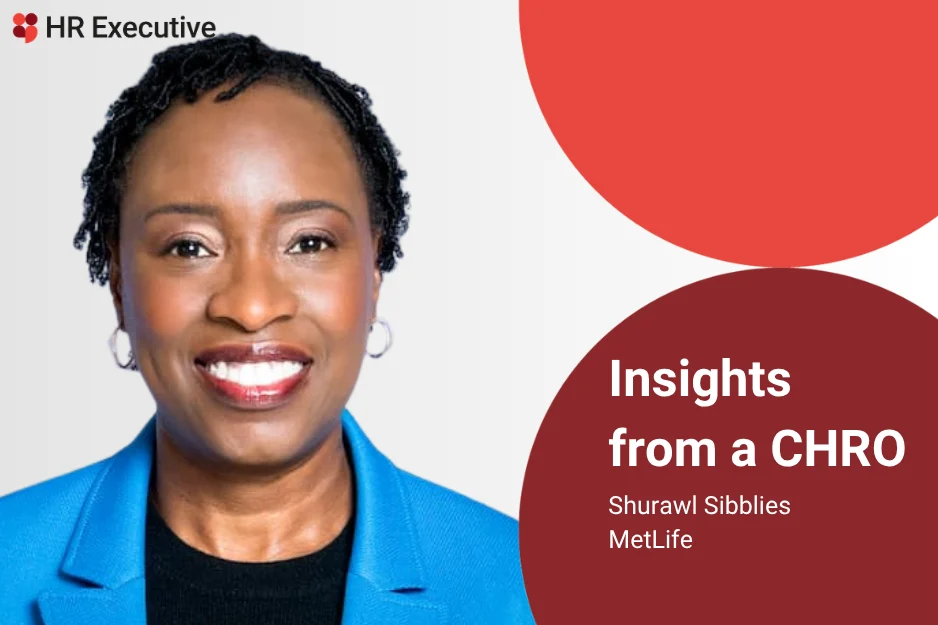
HR leaders globally are currently grappling with an intricate web of challenges unleashed by the rapid advancement of artificial intelligence (AI). This transformative technology is reshaping the fundamental dynamics of the workplace, prompting urgent questions about managing employee anxieties regarding potential AI-driven job displacement, strategically anticipating and addressing nascent skill requirements, and diligently upholding trust as the relationship between employees and employers undergoes profound changes. Amidst this significant uncertainty, Shurawl Sibblies, Chief Human Resources Officer (CHRO) at MetLife, advocates for a strategic approach that eschews radical reinvention in favor of amplifying established, core HR principles: proactive employee listening, transparent leadership, organizational humility, and fostering a culture of workforce agility.
The AI Revolution and its Impact on the Workforce Landscape
The current era is often characterized as the Fourth Industrial Revolution, driven by the convergence of digital, physical, and biological spheres, with AI at its epicentre. The proliferation of AI technologies, particularly generative AI models that gained widespread public attention in late 2022, has accelerated the discussion around automation’s impact on employment, productivity, and the future of work. For HR departments, this translates into a unique set of pressures and opportunities.
Historically, technological advancements have always reshaped labor markets. From the agricultural revolution to the industrial age and the subsequent information age, each wave brought shifts in job roles, requiring new skills and creating new industries. However, the speed and pervasiveness of AI present a potentially unprecedented pace of change. A 2023 report by Goldman Sachs estimated that generative AI could expose 300 million full-time jobs to automation across major economies, with some roles being fully automated and others augmented. Conversely, the World Economic Forum’s Future of Jobs Report 2023 predicted that AI could create 69 million new jobs while eliminating 83 million, resulting in a net loss of 14 million jobs globally by 2027. This dual narrative of creation and displacement underscores the complexity facing HR leaders.
For organizations like MetLife, a global financial services company with a significant workforce, navigating this shift is not merely an operational task but a strategic imperative. Sibblies, who rejoined MetLife in 2024 after a seven-year stint from 2012 and a period in HR leadership at American Express, brings a seasoned perspective to these evolving challenges. Her recent insights shared with HR Executive provide a blueprint for effective HR leadership in this AI-driven epoch.
Employee Sentiment: A Mix of Optimism and Concern
When contemplating the sentiments within her own workforce regarding AI-driven job security, Sibblies anticipates a blend of optimism and concern. This reflects broader industry trends. Numerous surveys indicate a divided employee outlook. For example, a 2023 PwC survey found that 52% of employees globally expect AI to significantly change their job in the next five years, with a notable portion expressing worry about job displacement, while others see it as an opportunity for skill enhancement and career growth.
This duality is natural during periods of significant technological upheaval. The unknown often breeds anxiety, yet the potential for efficiency, innovation, and relief from mundane tasks can also inspire excitement. Sibblies stresses that in this environment, a "culture of listening" becomes paramount. Understanding employees’ specific fears, hopes, and questions is the foundational step for HR to develop relevant strategies and communications. Ignoring these sentiments risks alienating the workforce and undermining efforts to integrate AI effectively.
Transparency and Communication as Cornerstones of Trust
A significant hurdle for HR leaders is the inherent uncertainty surrounding AI’s long-term impact on job roles. The precise extent of job loss or creation in the coming years remains largely speculative, even for experts. In this context, Sibblies emphasizes that "transparency and clear communication" are non-negotiable. This involves being explicit about what the company knows, as well as being equally clear about what remains unknown.
This level of candidness is crucial for building and maintaining trust. When organizations position AI as an "enabler" – a tool designed to augment human capabilities, improve processes, and free up employees for more strategic and creative work – rather than solely a cost-cutting measure, it helps assuage fears. Communicating the company’s intentions, such as building employees’ skills and capabilities, and empowering them with "agency in how we change the way we work," fosters confidence.
This iterative process requires humility from leadership. Acknowledging that the organization is in "learn mode" and does not possess all the answers, but is committed to learning alongside its employees, humanizes the transition. It creates a psychological safety net, encouraging employees to embrace new tools and processes without fear of failure. Furthermore, recognizing and rewarding employees who demonstrate adaptability and willingness to experiment with new technologies reinforces a positive learning culture. This approach not only manages expectations but also actively engages employees as partners in the AI journey, rather than passive recipients of change.
Ethical AI and the Primacy of Human Judgment
The integration of AI into organizational processes extends beyond operational efficiency to profound ethical considerations. Questions arise about data privacy, algorithmic bias, fairness in decision-making, and accountability. Sibblies highlights that designing AI strategies must prioritize building trust with employees, not just achieving efficiency gains. This starts with a clear articulation of "responsible use."
Companies must define their "guardrails" around AI implementation, outlining what they stand for and how they intend to operate ethically and safely. This involves establishing principles such as:
- Transparency in AI usage: Employees should understand when and how AI is being used in their work or in decisions affecting them.
- Accountability: Clear lines of responsibility must be drawn, ensuring that humans remain accountable for decisions made or supported by AI.
- Bias mitigation: Proactive measures to identify and address potential biases in AI algorithms are essential to ensure fairness and equity.
- Human oversight: Emphasizing that human judgment remains critical and cannot be fully replaced by AI. As Sibblies notes, "AI begins with understanding patterns exist – but that doesn’t replace human judgment."
This commitment to ethical AI use, coupled with clear communication about how much "the human needs to be in the loop," helps alleviate concerns about AI making autonomous, potentially unfair, or opaque decisions that impact careers or work lives. It reinforces the value of human intellect and intuition in a technologically advanced environment.
The Skills Development Conundrum: Cultivating Learning Agility
Perhaps one of the most pressing challenges for HR in the age of AI is developing a workforce skills model when the "destination keeps moving." The rapid evolution of AI means that the specific skills required today may be obsolete tomorrow, and new, unforeseen skill demands will constantly emerge. This fluidity renders traditional, static skills training models less effective.
Sibblies posits that "what’s old is new again" in this context. The core fundamentals of "learning agility and adaptability" become paramount. Instead of focusing on mastery in a single, static role, the emphasis shifts to cultivating a mindset of continuous learning and flexibility. The goal is to empower employees to be confident in "learn mode," comfortable with ambiguity, and open to acquiring new competencies throughout their careers.
This necessitates a significant investment in reskilling and upskilling initiatives. According to a LinkedIn Learning report, 79% of learning and development professionals believe it’s cheaper to reskill current employees than to hire new ones. Companies are increasingly looking at internal mobility and creating pathways for employees to transition into new roles that require AI-related skills or roles augmented by AI. This also means fostering ‘human’ skills – creativity, critical thinking, emotional intelligence, and complex problem-solving – which are inherently difficult for AI to replicate and will become even more valuable in an AI-augmented workplace. Organizations must design learning ecosystems that support on-demand learning, micro-learning, and experiential learning, allowing employees to continuously update their skill sets in response to evolving demands.
Economic Implications: Balancing Productivity Gains with Workforce Investment
The question of how companies should handle productivity gains derived from automation is a contentious one. Should organizations exclusively "pocket the productivity gains" by automating roles and reducing workforce size, or should they invest meaningfully in "finding relevant career paths for displaced workers"?
Sibblies acknowledges that "every company needs to do what’s right for their objectives and according to their values." While some companies might prioritize immediate cost savings, others recognize the long-term benefits of investing in their workforce. The latter approach can also yield significant productivity gains, not just through automation but through a more engaged, skilled, and adaptable workforce.
This decision reflects a company’s fundamental values regarding its employees and its role in society. Companies that prioritize workforce investment and reskilling demonstrate a commitment to their people, which can enhance employer brand, boost employee morale, and foster a more resilient and innovative culture. In an increasingly competitive talent landscape, a reputation for responsible AI adoption and employee development can be a powerful differentiator. Conversely, a purely transactional approach to AI implementation, focused solely on cost reduction, risks alienating employees, damaging reputation, and potentially stifling long-term innovation.
The Evolving Role of HR: From Administrator to Strategic Navigator
The advent of AI is fundamentally transforming the role of HR. No longer merely an administrative function, HR is increasingly positioned as a strategic navigator, guiding organizations through unprecedented technological and cultural shifts. This demands a new set of competencies for HR professionals themselves, including:
- Technological Literacy: A foundational understanding of AI technologies and their potential applications and implications.
- Data Analytics: The ability to leverage data to understand workforce trends, predict future skill needs, and measure the impact of HR initiatives.
- Change Management Expertise: Proficiency in leading organizational change, fostering adaptability, and managing employee transitions.
- Ethical Leadership: Championing responsible AI practices and ensuring human-centric approaches to technology integration.
HR’s strategic involvement in AI deployment is crucial from the outset. By partnering with IT, operations, and business leaders, HR can ensure that AI initiatives are not only technologically sound but also human-centric, aligned with organizational values, and conducive to a thriving employee experience. This involves proactive workforce planning, talent development, culture shaping, and ethical governance.
In conclusion, the journey through the age of AI is complex and fraught with unknowns. However, as MetLife’s CHRO Shurawl Sibblies eloquently articulates, the path to clarity and successful navigation lies not in abandoning foundational HR principles, but in amplifying them. Active listening, radical transparency, humble leadership, and an unwavering focus on developing learning agility are not merely best practices; they are indispensable strategies for building trust, fostering adaptability, and ultimately, ensuring that humanity thrives alongside technology in the evolving workplace. The future of work will be defined not just by the sophistication of AI, but by the wisdom and empathy with which organizations and their HR leaders manage its integration.