
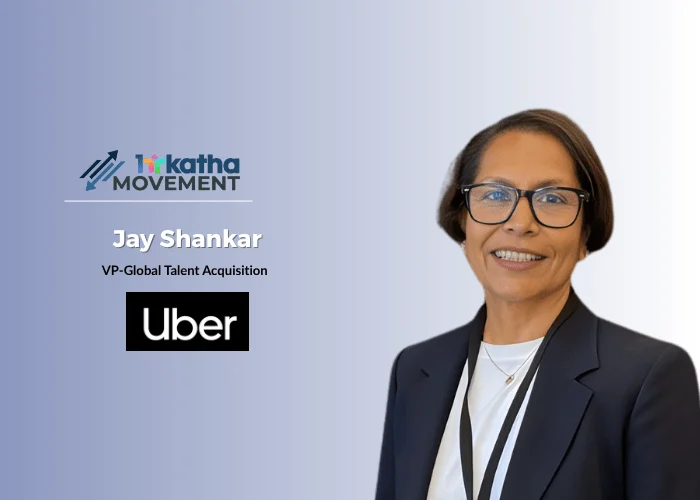
Uber, the global technology giant renowned for its ride-hailing and food delivery services, has announced the appointment of Jay Shankar as its new Vice President of Global Talent Acquisition. This strategic move positions Shankar at the helm of Uber’s worldwide recruiting strategy, a critical function as the company continues its ambitious scaling across diverse business units and geographical markets. The appointment underscores Uber’s unwavering commitment to attracting, developing, and retaining top-tier talent in an increasingly competitive global technology landscape.
A Strategic Appointment for Global Expansion
The role of Vice President, Global Talent Acquisition, is pivotal for a company of Uber’s scale and growth trajectory. With operations spanning numerous countries and a diversified portfolio that includes ride-sharing, food delivery (Uber Eats), freight, and nascent ventures into autonomous technology and other mobility solutions, Uber’s talent needs are complex and multifaceted. Shankar’s mandate will involve overseeing the entire talent acquisition lifecycle, from employer branding and candidate experience to advanced recruiting analytics and pipeline development, ensuring that Uber can effectively source and onboard the specialized skills required to fuel its innovation and operational excellence. This includes navigating the unique challenges of hiring across different regulatory environments, cultural contexts, and technological demands.
Shankar herself shared the news of her new role on LinkedIn, articulating the motivations behind her decision to join Uber. She conveyed that she was not merely seeking "just another opportunity" but rather "a place where I could continue learning, build alongside great people, and help shape the future." This statement offers insight into the strategic alignment between Shankar’s personal career aspirations and Uber’s ambitious vision, highlighting the company’s draw as a hub for innovation and impact. Her emphasis on learning, collaborative building, and future-shaping resonates with the dynamic, fast-paced environment characteristic of leading technology firms, particularly one like Uber that frequently operates at the intersection of technological advancement and societal change.
Shankar’s Distinguished Career Trajectory
Jay Shankar brings an extensive and highly relevant background to Uber, cultivated over more than two decades in senior talent acquisition and leadership roles across some of the world’s most prominent technology companies. Her career path demonstrates a consistent progression through increasingly complex and globally-focused responsibilities, equipping her with a deep understanding of the intricacies involved in scaling talent operations for hyper-growth enterprises. This cumulative experience will be invaluable in guiding Uber’s talent strategy during a period of sustained expansion and technological evolution.
Transforming Talent Acquisition at Amazon
Prior to joining Uber, Shankar spent nearly eight transformative years at Amazon, a period during which she held several senior leadership positions within the talent acquisition domain. Most recently, she served as Vice President, Global Talent Acquisition, at Amazon, a role that saw her lead significant talent acquisition transformation initiatives and oversee global corporate recruiting. Her purview at Amazon was vast, encompassing a diverse array of critical business units. This included the highly competitive and rapidly expanding Amazon Web Services (AWS), a dominant force in cloud computing; Amazon Advertising, a burgeoning segment of the company’s revenue; and entertainment entities like IMDb, Prime Video, Amazon Music, and Amazon Studios.
Furthermore, Shankar was responsible for talent acquisition across Amazon’s pioneering Devices and Services division, which includes groundbreaking products like Alexa, Ring (smart home security), Zoox (autonomous vehicles), and Project Kuiper (Amazon’s satellite internet constellation project). Her involvement also extended to Artificial General Intelligence (AGI) initiatives, underscoring her experience in securing talent for some of the most cutting-edge and future-defining technological endeavors. The sheer scale and technological diversity of these Amazon divisions mean that Shankar possesses unparalleled expertise in recruiting for highly specialized roles, managing immense hiring volumes, and implementing innovative talent strategies across a global footprint. Her experience in "talent acquisition transformation" at Amazon suggests a track record of modernizing recruiting processes, leveraging data and technology to improve efficiency, and enhancing the candidate and hiring manager experience—skills that will be directly applicable and highly beneficial at Uber.
Leadership Roles Across Diverse Tech Giants
Before her significant tenure at Amazon, Shankar honed her leadership capabilities over three years at Adobe, another software industry titan. At Adobe, she was responsible for leading global customer experience and customer care functions for its Digital Experience and Digital Media businesses. While distinct from direct talent acquisition, this role provided Shankar with critical insights into customer-centric operations, service delivery, and the importance of a strong talent pipeline to support customer satisfaction and retention—perspectives that are highly valuable in any leadership position, including talent strategy. Managing global customer-facing functions for products like Adobe Creative Cloud and Adobe Experience Cloud requires a profound understanding of operational efficiency, technological infrastructure, and the ability to build high-performing teams, all of which indirectly contribute to a comprehensive understanding of human capital management.
Earlier in her career, Shankar held senior leadership positions at Innovative Interfaces, a company specializing in library automation software. Her roles there included Senior Vice President – Customer Support and R&D, and Senior Vice President – Services and Support. In these capacities, she oversaw a broad spectrum of critical functions, including global support, engineering, IT, professional services, and recurring revenue. This experience showcases her versatility in managing diverse operational units and her ability to integrate technology, customer service, and business development functions to drive overall company success. Leading R&D functions would have provided her with a direct appreciation for the specialized talent required for product innovation and technological development.
Her professional journey also includes more than 11 years at BMC Software, an enterprise software company, where she progressively advanced through multiple leadership roles. This extended tenure at a mature software firm indicates a deep understanding of corporate structure, long-term strategic planning, and the cultivation of talent within an established organizational framework. Shankar commenced her leadership career with roles at Extricity, an e-business platform provider, and the globally renowned professional services network, PricewaterhouseCoopers (PwC), laying a strong foundation in diverse business environments.
Academic Foundation and Professional Development
Complementing her extensive practical experience, Jay Shankar holds a robust academic background. She earned an MBA in Marketing from Penn State University, providing her with a strategic business acumen that is vital for aligning talent acquisition with overarching corporate objectives. Furthermore, she has completed an Executive Programme at the prestigious Stanford University Graduate School of Business, signaling a commitment to continuous learning and leadership development at the highest levels of professional education. This combination of academic rigor and hands-on experience positions her as a well-rounded and highly capable leader for Uber’s global talent initiatives.
The Critical Role of Global Talent Acquisition in a Scaling Enterprise
For a company like Uber, which operates at a global scale and is constantly innovating, the talent acquisition function is not merely a support service but a strategic business imperative. Uber’s workforce, estimated to be over 29,000 employees globally (as of late 2023, excluding its vast network of independent contractors), is the engine that drives its technological advancements, operational efficiency, and market expansion. The rapid pace of technological change, particularly in areas like artificial intelligence, machine learning, and autonomous systems, necessitates a continuous influx of specialized engineers, data scientists, product managers, and operational experts.
A robust global talent acquisition strategy is crucial for several reasons:
- Competitive Advantage: Attracting the best talent directly translates into a competitive edge, enabling faster innovation and superior product development.
- Market Expansion: As Uber expands into new geographies or launches new services (e.g., grocery delivery, pharmacy delivery), a strong talent team is needed to rapidly build localized teams that understand specific market dynamics and regulatory frameworks.
- Culture and Diversity: Talent acquisition plays a vital role in shaping company culture and fostering diversity, equity, and inclusion (DE&I) by ensuring equitable hiring practices and building representative teams.
- Employer Brand: The hiring process is often the first significant interaction a potential employee has with a company. A seamless and positive experience reinforces Uber’s employer brand, crucial for attracting future talent.
- Cost Efficiency: Effective talent acquisition reduces time-to-hire and improves the quality of hires, ultimately leading to lower recruitment costs and increased productivity.
Uber’s Ambitious Growth Agenda and Talent Imperatives
Uber’s strategic priorities are deeply intertwined with its ability to secure top talent. The company continues to invest heavily in its core ride-hailing and delivery platforms, optimizing algorithms, enhancing user experience, and expanding its merchant and driver/courier networks. Beyond these core businesses, Uber is also exploring future growth vectors. The development of autonomous vehicle technology through its partnerships, while having seen shifts in strategy, still requires high-caliber engineering and research talent. Furthermore, the company’s commitment to sustainability and electric vehicle adoption within its fleet presents new challenges and opportunities for specialized hiring.
For example, Uber’s ongoing efforts to enhance its mapping technology, improve safety features, and expand into new verticals like healthcare transportation or drone delivery (future concepts) all rely on a strong foundation of skilled professionals. The gig economy model also presents unique talent acquisition challenges, requiring sophisticated strategies to attract and retain independent contractors while simultaneously building out a robust corporate workforce to support and manage these complex ecosystems.
Industry Context: The Fierce Battle for Tech Talent
Jay Shankar’s appointment comes at a time when the global tech talent market remains intensely competitive, despite recent industry-wide layoffs that have somewhat eased the demand in specific areas. The scramble for highly skilled engineers, AI/ML specialists, cybersecurity experts, and cloud architects persists. Major tech companies, including Google, Microsoft, Amazon, Meta, and a plethora of well-funded startups, are all vying for the same limited pool of elite professionals.
Current trends in talent acquisition include:
- Focus on Skills-Based Hiring: Moving beyond traditional credentials to prioritize demonstrable skills and competencies.
- Hybrid Work Models: Adapting recruiting strategies to support remote and hybrid workforces, expanding talent pools beyond geographical limitations.
- Data-Driven Decisions: Utilizing advanced analytics to optimize sourcing, screening, and hiring processes.
- Emphasis on DE&I: Integrating diversity, equity, and inclusion into every stage of the talent acquisition pipeline to build more representative teams.
- Candidate Experience: Prioritizing a positive and transparent experience for candidates to enhance employer branding and attract top choices.
Shankar’s background at Amazon, a company known for its rigorous hiring processes and innovative approaches to talent management, positions her well to navigate these complex market dynamics and implement best practices at Uber.
Inferred Reactions and Strategic Outlook
While Uber has not released an official statement beyond the internal announcement, industry observers and those familiar with the company’s strategic priorities would likely underscore the significance of Shankar’s appointment. A hire of this caliber indicates Uber’s deep commitment to strengthening its human capital foundation.
An inferred statement from Uber’s Chief People Officer or a senior executive might emphasize: "Jay’s unparalleled experience in scaling global talent functions for some of the world’s most innovative companies makes her an invaluable addition to Uber’s leadership team. Her proven ability to attract, develop, and retain top talent across diverse technological domains will be instrumental as we continue to expand our reach, innovate our products, and build the future of mobility and delivery."
Similarly, industry analysts might view this appointment as a clear signal of Uber’s long-term growth ambitions. "Bringing in a talent acquisition leader with Jay Shankar’s pedigree from Amazon is a power move for Uber," noted one hypothetical analyst. "It suggests they are not just looking to fill roles but to fundamentally transform their talent engine, ensuring they can outcompete rivals for the critical skills needed to dominate future markets like autonomous delivery and advanced AI integration."
Shankar’s own statement about seeking a place to "continue learning, build alongside great people, and help shape the future" reflects the appeal of Uber’s mission. For a seasoned executive, the opportunity to contribute to a company that is consistently pushing boundaries and redefining industries is a powerful draw, indicative of Uber’s ability to attract top-tier leadership.
Implications for Uber’s Workforce and Culture
Jay Shankar’s leadership is expected to have several key implications for Uber’s workforce and organizational culture:
- Enhanced Global Talent Pipeline: With her expertise, Uber can anticipate a more robust and diverse talent pipeline, capable of meeting the demands of its expanding global operations and technological advancements.
- Optimized Hiring Processes: Shankar’s background in "talent acquisition transformation" at Amazon suggests an emphasis on data-driven, efficient, and candidate-centric hiring processes, potentially leading to faster and higher-quality hires.
- Strategic Alignment with Business Goals: Her strong business acumen, honed through an MBA in Marketing and diverse operational roles, will likely ensure that talent acquisition strategies are closely aligned with Uber’s overarching business objectives and growth areas.
- Focus on Specialized Skills: Given her experience across AWS, Devices, and AGI at Amazon, Uber can expect a renewed focus on attracting highly specialized talent in areas critical to its future, such as AI, machine learning, robotics, and complex logistics optimization.
- Reinforced Employer Brand: A highly efficient and positive talent acquisition experience, spearheaded by an industry veteran, will further strengthen Uber’s employer brand, making it an even more attractive destination for top professionals globally.
- Impact on Diversity and Inclusion: Leaders with Shankar’s extensive experience often champion diversity and inclusion initiatives within hiring, recognizing their importance for innovation and business success. This could translate into more targeted programs at Uber to foster a more inclusive workforce.
In conclusion, Jay Shankar’s appointment as Vice President, Global Talent Acquisition, is a significant strategic move for Uber. Her extensive experience leading talent functions at tech giants like Amazon and Adobe, coupled with her deep understanding of global operations and technological innovation, positions her as a formidable leader for Uber’s ambitious growth plans. As Uber continues to navigate the complexities of global expansion, technological evolution, and intense competition for talent, Shankar’s leadership will be instrumental in ensuring the company builds and sustains the high-caliber workforce necessary to shape the future of mobility and delivery worldwide.








