JBM Packaging marked a significant achievement on April 11, celebrating the graduation of Billy Campbell from its "Better Lives" workplace coaching program. Campbell is the first individual hired by the company after successfully completing its pioneering in-prison training initiative at the London Correctional Institution (LoCI) in London, Ohio. This milestone underscores the profound impact of "second chance" hiring programs, demonstrating their capacity to foster successful reintegration, address workforce challenges, and generate substantial benefits for individuals, businesses, and society.
A Groundbreaking Initiative at LoCI
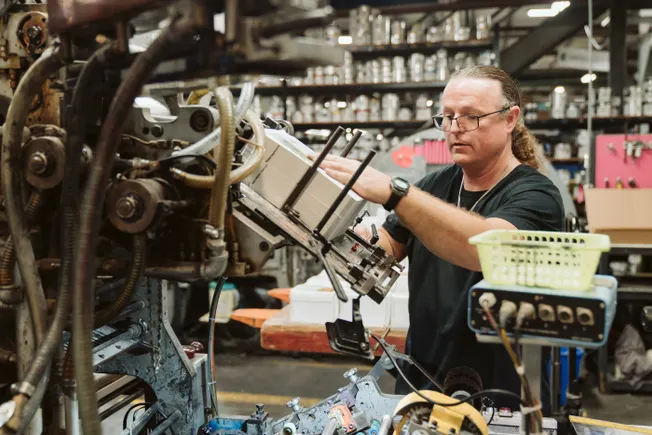
JBM Packaging, a leading manufacturer, developed the comprehensive training program at LoCI with the explicit goal of equipping incarcerated individuals with valuable technical skills, thereby creating a direct pathway to full-time employment upon their release. The program represents a unique collaboration between a private sector company and a correctional facility, illustrating an innovative approach to rehabilitation and workforce development. To facilitate practical learning, JBM invested in installing advanced envelope manufacturing equipment within the correctional institution. Participants engage in rigorous training as machine adjusters, dedicating approximately 32 hours per week for a period ranging from six to twelve months prior to their anticipated release. This intensive, hands-on experience ensures that individuals are not only theoretically proficient but also practically adept, ready to contribute effectively from day one.
Billy Campbell stands as the inaugural success story of this particular in-prison program. Having been hired full-time by JBM Packaging, he has now completed approximately a year of employment, demonstrating the program’s efficacy in facilitating sustained professional engagement. His journey culminated in the recent graduation from the "Better Lives" program, which provides ongoing support and coaching for reintegrated employees, addressing a spectrum of personal and professional development needs.
The Transformative Power of Opportunity: Billy Campbell’s Account
Campbell’s experience illuminates the critical importance of such initiatives. In an interview with Packaging Dive, a sister publication to HR Dive, he articulated the profound impact of the training: "It did give me a solid foundation when I was able to leave the prison, so that I could work for JBM Packaging and be an asset to the company." He further underscored the pervasive challenge faced by formerly incarcerated individuals, stating, "It’s really hard to get a job" upon release. The certainty of employment, therefore, provided immense relief: "It felt good to know one was awaiting, because after leaving prison you don’t know what to expect." This sentiment highlights the psychological burden of uncertainty that often accompanies reintegration, a burden significantly alleviated by programs like JBM’s.
Beyond the professional skills, the program offered crucial financial stability. JBM Packaging’s commitment to paying participants a fair wage during their in-prison training proved to be a "big stepping stone," according to Campbell. He revealed that he had accumulated over $5,000 through the program, a sum that enabled him to purchase essential items immediately upon release, including a car, a phone, and appropriate clothing. This starkly contrasts with the typical scenario where many individuals leave prison with minimal funds, often just "$25, $30 and a bus ticket," which provides "next to nothing" for restarting their lives. This financial cushion is instrumental in reducing immediate post-release stressors and fostering a smoother transition back into society.
Despite having prior factory experience, Campbell’s role as a packaging machine technician at JBM was his first foray into packaging manufacturing. He applies the intricate skills learned daily, describing the work as deceptively complex: "It seems like an easy concept, but it’s very complex… You constantly have to make adjustments and [monitor] pressures." His mastery of these skills, learned through hands-on training and subsequent workplace experience, demonstrates the high-value technical proficiency gained through the program.
Addressing a National Challenge: The Second Chance Movement
Campbell’s story resonates with a broader national conversation surrounding criminal justice reform and workforce development. The challenges faced by formerly incarcerated individuals in securing stable employment are well-documented. The inability to earn a living wage is strongly correlated with poverty and, critically, with recidivism – the tendency of a convicted criminal to reoffend. National statistics paint a grim picture: nearly 75% of people released from prison remain unemployed a full year after their release. This alarming figure was a central theme at the April 9 Second Chance Forum in Washington, D.C., an event held during "Second Chance Month" to highlight initiatives driving success for individuals and businesses.
Dane Linn, Senior Vice President of Corporate Initiatives at The Business Roundtable, emphasized at the forum that this high unemployment rate is "not because they’re not qualified. Not because there aren’t any jobs in this country – we have millions of open positions in this country," but primarily due to the persistent stigma associated with a criminal record. This societal barrier often prevents qualified individuals from accessing opportunities, perpetuating a cycle of disadvantage.
However, a growing number of businesses, particularly in the manufacturing sector grappling with ongoing labor shortages, are recognizing the immense potential of "second chance" hiring. Despite this growth, speakers at the forum noted that the number of participating companies remains relatively small compared to the vast pool of formerly incarcerated individuals available for employment. Julie Benadum, Executive Vice President at Randstad USA, eloquently put it: "The reality is, there are plenty of people that are available if we open our eyes to understand where those people are sitting."
The Business Case for Second Chance Hiring
Beyond the social imperative, there is a compelling business case for employing formerly incarcerated individuals. Data consistently debunks negative stereotypes, revealing positive outcomes for companies. Approximately 85% of human resources professionals report that employees with criminal records perform at the same level or even better than those without. JBM Packaging’s own experience corroborates this finding, with the company reporting comparable performance and, notably, lower employee churn among its fair chance hires.
This trend is widely observed across businesses that implement second-chance hiring programs. Joe Fuller, a professor of management practice at Harvard Business School, highlighted this at the Second Chance Forum: "Someone who’s been judicially involved, they are 70% less likely to turn over than someone who isn’t." This reduced turnover translates into significant cost savings for businesses, as Fuller added, "Turnover is really expensive," encompassing recruitment, onboarding, and training costs. By tapping into this motivated talent pool, companies can achieve greater workforce stability and efficiency.
JBM Packaging’s Holistic "Better Lives" Program
JBM Packaging’s commitment to second-chance hiring extends far beyond initial employment. The company has cultivated a comprehensive "Better Lives" workplace initiative, offering a variety of holistic services designed to support employees’ long-term success and well-being. These services include personalized life coaching, conflict resolution training, guidance on effective teamwork, assistance with practical reintegration challenges like purchasing a vehicle, and fostering healthy relationships. This multi-faceted approach acknowledges that successful reintegration requires more than just a job; it demands support for personal growth and social adjustment.
JBM Packaging has been a pioneer in this space, hiring formerly incarcerated individuals for many years even before establishing the on-site prison training program. Currently, out of its 162 employees, approximately 40% are fair chance employees, demonstrating a deep-seated organizational commitment to this hiring philosophy. The LoCI machine adjuster training program, inaugurated with Billy Campbell, has now seen three individuals successfully complete the rigorous training, with hopes for a fourth by the end of the year. Collectively, participants in the LoCI program have already produced over 1 million envelopes, showcasing their tangible contribution while still incarcerated.
Broader Implications and Future Outlook
The success of JBM Packaging’s program carries significant implications for workforce development, criminal justice reform, and corporate social responsibility. Economically, these initiatives help address persistent labor shortages in sectors like manufacturing, bolstering local economies by integrating individuals into the tax-paying workforce and reducing reliance on public assistance programs. The reduction in recidivism rates directly translates to safer communities and substantial savings in incarceration costs, which are considerable (e.g., the average annual cost of incarceration in a federal prison can exceed $30,000 per inmate).
Socially, second-chance hiring programs foster a sense of dignity, purpose, and belonging for individuals who have paid their debt to society. They challenge prevailing stigmas, promoting a more inclusive and equitable society. JBM’s model, integrating in-prison training with post-release support, serves as a powerful blueprint for other businesses and correctional systems seeking to implement similar transformative programs. Such partnerships are crucial for scaling these initiatives nationwide.
Billy Campbell’s earnest wish underscores the vast unmet need: "I wish there was more programs out there like that. There’s a lot of people [in prison] that are very educated… but they don’t really have the opportunity." His words are a testament to the untapped potential within incarcerated populations and a call to action for businesses, policymakers, and communities to expand these vital pathways to reintegration and economic empowerment. JBM Packaging’s milestone with Billy Campbell is not just a company success; it is a beacon of hope, illustrating how strategic, empathetic initiatives can lead to profound individual transformations and contribute meaningfully to societal betterment.