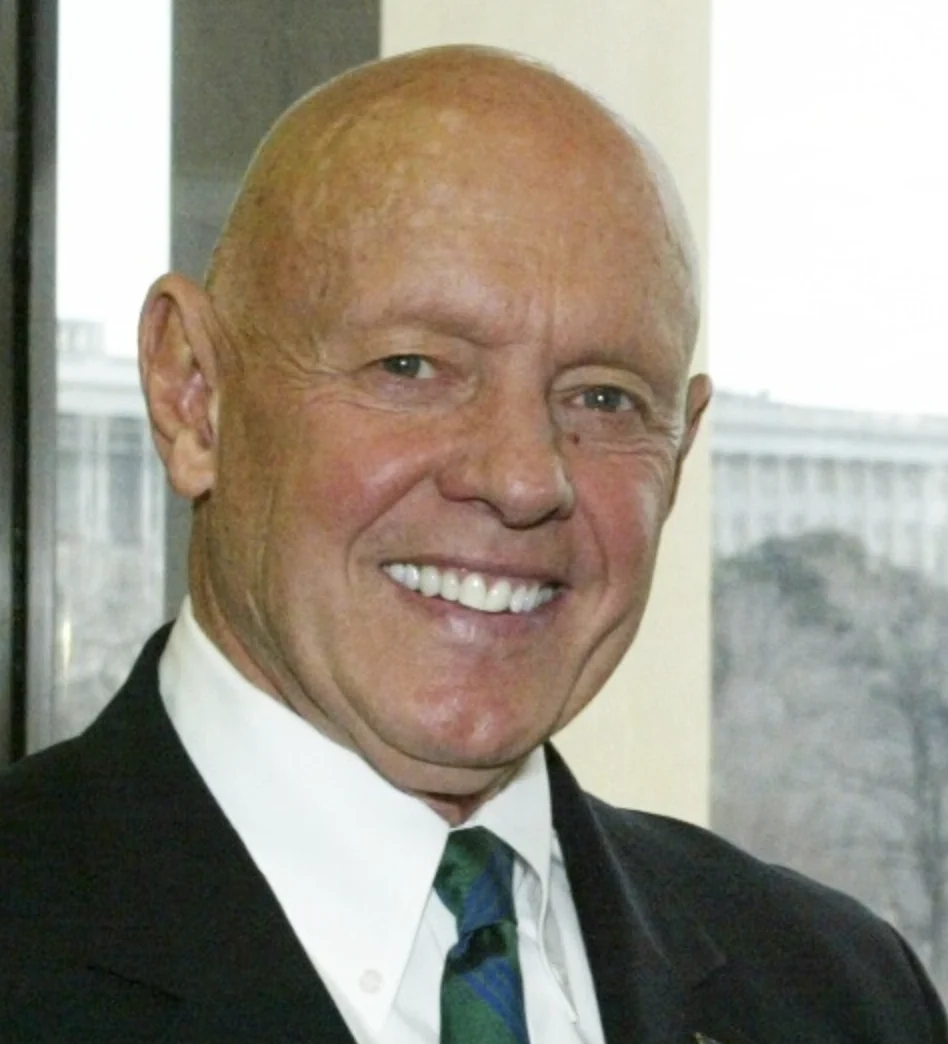
A recent compilation by Heather Barbour Fenty for Ongig, a platform dedicated to transforming job descriptions to attract diverse talent, spotlights over 50 inclusive quotes on diversity and inclusion from a wide array of influential figures. This extensive collection, drawn from CEOs, world leaders, writers, actors, and activists, serves as a powerful testament to the multifaceted and universally recognized importance of fostering environments where differences are not only acknowledged but celebrated. The quotes underscore that diversity and inclusion (D&I) are no longer merely ethical considerations but fundamental pillars for business success, societal progress, and individual flourishing in an increasingly interconnected world.
The Business Imperative: Diversity and Inclusion in the Workplace
The corporate landscape has undergone a significant transformation, with D&I evolving from a compliance checkbox to a strategic business imperative. Organizations that champion diversity in their workforce consistently demonstrate superior performance, innovation, and resilience. This sentiment is echoed by leaders who have witnessed firsthand the tangible benefits of an inclusive culture.
Bo Young Lee, Uber’s Chief Diversity and Inclusion Officer, emphasizes, "D&I needs to be something that every single employee at the company has a stake in." This highlights a shift from top-down directives to a shared organizational responsibility, where D&I is woven into the very fabric of corporate culture. The financial and reputational risks associated with a lack of diversity are becoming increasingly apparent. Ayana Parsons, a Korn Ferry Board Leader, warns, "We’re at a moment in time when companies aren’t going to tolerate not having a diverse slate; it truly puts them at risk." This reflects a growing market demand and investor expectation for diverse leadership and workforces.
Beyond mere representation, the true value lies in the unique contributions individuals bring. Charles K Poole, an author, articulates this succinctly: "You can’t categorize diversity based on what a person looks like. It’s what that person can do for the organization." This perspective moves beyond superficial demographics to acknowledge the rich tapestry of skills, experiences, and perspectives that diverse individuals offer. Megan Smith, former Chief Technology Officer of the United States, notes, "We know that diversity can sometimes be more uncomfortable because things are less familiar — but it gets the best results." This acknowledges the initial challenges of integrating diverse viewpoints while affirming the ultimate benefit.
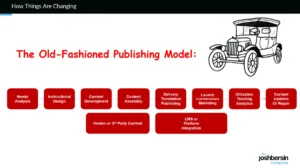
Indeed, research consistently supports these assertions. A 2018 McKinsey report, "Delivering Through Diversity," found that companies in the top quartile for gender diversity on executive teams were 21% more likely to outperform on profitability, and those in the top quartile for ethnic and cultural diversity were 33% more likely to outperform. Similarly, a Deloitte study revealed that diverse companies have 2.3 times higher cash flow per employee. These statistics corroborate Josh Bersin’s observation that "Companies that embrace diversity and inclusion in all aspects of their business statistically outperform their peers."
Leaders like Alan Joyce, CEO of Qantas, attest to D&I’s role in navigating challenges: "We have a very diverse environment and a very inclusive culture and those characteristics got us through the tough times. Diversity generated a better strategy, better risk management, better debates, and better outcomes." Brian Ka Chan, a human rights activist, succinctly calls D&I "a competitive advantage that a smart leader would not overlook." Inga Beale, former CEO of Lloyd’s London, points out the often-overlooked necessity of discussing D&I at the highest levels, stating, "Many conversations about diversity and inclusion do not happen in the boardroom because people are embarrassed at using unfamiliar words or afraid of saying the wrong thing — yet this is the very place we need to be talking about it." She underscores the innovation and market success that diverse teams unlock.
The focus extends beyond hiring to retention and creating a sense of belonging. Andrea Barrica, CEO and co-founder of Oschool, reminds us, "What’s often ignored is that diversity is not only a pipeline or recruiting issue. It’s an issue of making the people who do make it through the pipeline want to stay at your company." Soichiro Honda, the Japanese engineer, offered timeless advice: "If you hire only those people you understand, the company will never get people better than you are. Always remember that you often find outstanding people among those you don’t particularly like." This powerful statement champions open-mindedness in talent acquisition.
Finally, a crucial distinction is drawn by psychologist Bill Crawford: "Diversity, or the state of being different, isn’t the same as inclusion. One is a description of what is, while the other describes a style of interaction essential to effective teams and organizations." This highlights that mere demographic variety is insufficient; active inclusion is the mechanism through which diversity yields its benefits. Poet Juan Felipe Herrera encapsulates the broader humanistic goal: "Diversity really means becoming complete as human beings — all of us. We learn from each other. If you’re missing on that stage, we learn less. We all need to be on that stage."
Beyond Demographics: The Power of Diverse Thought
While often associated with visible characteristics, diversity fundamentally encompasses a spectrum of backgrounds, experiences, and, crucially, ways of thinking. This "diversity of thought" is increasingly recognized as a potent catalyst for innovation and problem-solving.
Stephen R. Covey, the renowned American educator and author, famously stated, "Strength lies in differences, not in similarities." This principle resonates deeply with the concept of cognitive diversity, where varied perspectives lead to more robust solutions. Commander Spock’s iconic Star Trek philosophy, "Infinite diversity in infinite combinations… symbolizing the elements that create truth and beauty," extends this idea to a universal scale, celebrating the boundless potential arising from unique individual contributions.
Filmmaker Ava Duvernay cautions against a superficial approach: "When we’re talking about diversity, it’s not a box to check. It is a reality that should be deeply felt and held and valued by all of us." This emphasizes the need for authentic engagement rather than performative gestures. Mahatma Gandhi’s wisdom, "Our ability to reach unity in diversity will be the beauty and the test of our civilization," elevates the discussion to a societal level, positioning D&I as a benchmark for collective maturity.
Azizah Al-Hibri, an American philosopher, envisions an integrated future: "The minute we become an integrated whole, we look through the same eyes and we see a whole different world together." This speaks to the transformative power of genuine inclusion. Sundar Pichai, CEO of Alphabet, affirms the practical benefits: "A diverse mix of voices leads to better discussions, decisions, and outcomes for everyone." Apple CEO Tim Cook echoes this, stating, "If you believe, as we believe, that diversity leads to better products, and we’re all about making products that enrich people’s lives, then you obviously put a ton of energy behind diversity the same way you would put a ton of energy behind anything else that is truly important."
American writer Jacqueline Woodson frames diversity as a shared journey: "Diversity is about all of us, and about us having to figure out how to walk through this world together." Max de Pree, another American writer, highlights the reciprocal nature of inclusion: "We need to give each other the space to grow, to be ourselves, to exercise our diversity. We need to give each other space so that we may both give and receive such beautiful things as ideas, openness, dignity, joy, healing, and inclusion." These perspectives underscore that fostering diversity is an active, ongoing process requiring mutual respect and intentional effort.
Political figures also contribute to this narrative. Robert Kennedy’s assertion, "Ultimately America’s answer to the intolerant man is diversity," positions diversity as a fundamental democratic value and a bulwark against extremism. Peace activist William Sloane Coffin Jr. offers a stark warning: "Diversity may be the hardest thing for a society to live with, and perhaps the most dangerous thing for a society to be without." These quotes emphasize diversity’s role not just in prosperity but in stability.
Arlan Hamilton, founder of Backstage Capital, offers a powerful business-focused call to action: "If you haven’t hired a team of people who are of color, female, and/or LGBT to actively turn over every stone, to scope out every nook and cranny, to pop out of every bush, to find every qualified underrepresented founder in this country, you’re going to miss out on a lot of money when the rest of the investment world gets it." This illustrates the untapped potential and market opportunities inherent in broader inclusion. Ola Joseph, author and speaker, offers a concise definition: "Diversity is not how we differ. Diversity is about embracing one another’s uniqueness." This shift in focus from mere difference to active acceptance is crucial.
Proverbs like "A lot of different flowers make a bouquet" (Muslim origin) and Catherine Pulsifer’s "We are all different, which is great because we are all unique. Without diversity life would be very boring," provide simple yet profound metaphors for the beauty and richness that diversity brings. Cultural historian Thomas Berry further notes, "Diversity is the magic. It is the first manifestation, the first beginning of the differentiation of a thing and of simple identity. The greater the diversity, the greater the perfection."
Klaus Schwab, founder of The World Economic Forum, connects D&I to broader corporate responsibility: "Corporate social responsibility is measured in terms of businesses improving conditions for their employees, shareholders, communities, and environment. But moral responsibility goes further, reflecting the need for corporations to address fundamental ethical issues such as inclusion, dignity, and equality." Politician Hillary Clinton articulates the delicate balance required: "What we have to do… is to find a way to celebrate our diversity and debate our differences without fracturing our communities."
Maya Angelou’s timeless advice, "It is time for parents to teach young people early on that in diversity there is beauty and there is strength," points to the foundational role of education in nurturing inclusive mindsets. Former U.S. President Jimmy Carter provides a powerful analogy: "We have become not a melting pot but a beautiful mosaic. Different people, different beliefs, different yearnings, different hopes, different dreams." This mosaic vision celebrates distinct identities contributing to a richer whole.
The Nuance of Inclusion: Making the Mix Work
While diversity represents the composition of a group, inclusion describes the extent to which each individual feels valued, respected, and empowered to participate fully. The distinction is critical for translating diverse representation into tangible benefits.
Viola Davis, the acclaimed actress and producer, urges a refined focus: "We have to stop thinking about diversity and start thinking about inclusion." Civil rights activist Jesse Jackson famously declared, "Inclusion is not a matter of political correctness. It is the key to growth." Perhaps the most widely cited metaphor distinguishing the two comes from American activist Verna Myers: "Diversity is being invited to the party; inclusion is being asked to dance." This simple yet powerful analogy perfectly captures the essence of active engagement.
Gucci CEO Marco Bizzarri reinforces this in the corporate context: "Diversity and inclusion, which are the real grounds for creativity, must remain at the center of what we do." Pat Wadors, Chief People Officer at Procore, highlights the reciprocal benefits: "When we listen and celebrate what is both common and different, we become a wiser, more inclusive, and better organization." Actor George Takei encourages a mindset of acceptance: "We should indeed keep calm in the face of difference and and live our lives in a state of inclusion and wonder at the diversity of humanity."
Andres Tapia, Global Diversity & Inclusion Solutions Leader, offers another concise definition: "Diversity is the mix. Inclusion is making the mix work." This underscores the active effort required. Alexis Herman, an American politician, states the practical case: "Inclusion and fairness in the workplace . . . is not simply the right thing to do; it’s the smart thing to do." Nellie Borrero, Senior Global Inclusion & Diversity Lead at Accenture, emphasizes leadership’s role: "Diversity is a fact, but inclusion is a choice we make everyday. As leaders, we have to put out the message that we embrace, and not just tolerate, diversity."
Inga Beale reinforces the importance of dialogue: "We all have the ability to promote a culture of acceptance and inclusion — and that is something I believe every leader has a responsibility to do. It starts with having a dialogue until we are all comfortable and no longer have the fear of saying the wrong thing." IBM Executive Claudia Brind-Woody takes it further: "Inclusivity means not ‘just we’re allowed to be there,’ but we are valued. I’ve always said: smart teams will do amazing things, but truly diverse teams will do impossible things." This speaks to the elevated potential of genuinely inclusive environments. Jesse Jackson further simplifies the ultimate goal: "When everyone is included, everyone wins."
Desmond Tutu, the South African Anglican bishop, offers a deeply moral perspective: "I would not worship a God who is homophobic […] I would refuse to go to a homophobic heaven. No, I would say, ‘Sorry, I would much rather go to the other place.’" This powerfully links inclusion to fundamental human dignity and spiritual values.
Inspirational Calls for a More Inclusive World
The journey towards full diversity and inclusion is often fueled by inspirational calls to action, urging individuals and societies to move beyond tolerance to full acceptance and celebration. Ann Northrop, a journalist, articulates this aspiration: "Don’t tolerate me as different. Accept me as part of the spectrum of normalcy." This shifts the paradigm from enduring difference to integrating it as a natural state.
Adam Grant, an American science author and professor, provides practical guidance: "To get real diversity of thought, you need to find the people who genuinely hold different views and invite them into the conversation." This proactive approach is essential for tapping into true cognitive diversity. While famously attributed to Winston Churchill, the quote "Diversity is the one true thing we all have in common. Celebrate it every day" (often paraphrased or misattributed, but its sentiment remains powerful) encapsulates the universal nature of human difference.
Hagir S. Elsheikh, an entrepreneur and author, positions inclusion as a reflection of collective aspiration: "Inclusion is not a favor we do for others—it’s a reflection of the world we want to live in." Aaron Bruce, Chief Diversity Officer at ArtCenter College of Design, advocates for a global perspective: "I keep it global, every day of the week, I keep it global every time that I speak. I keep it global with the knowledge I seek. I keep it global, global, global."
The moral imperative is underscored by statements like, "Indulge your taste for diversity and inclusion. Declare that you are a force for good and will not settle to accept what is unjust for humanity. Dare to say that you will be a difference maker and help change the narrative for generations to come." The critical role of women in leadership is also highlighted: "Without women’s full inclusion at the decision making table, we cannot have any healthy decision making that is good for men and women alike." Liz Fosslien, an author, offers a popular distinction: "Diversity is having a seat at the table, inclusion is having a voice, and belonging is having that voice be heard."
Malala Yousafzai, the education activist, champions empowerment: "I raise up my voice — not so I can shout but so that those without a voice can be heard… we cannot succeed when half of us are held back." Melinda Gates, a philanthropist, points to the broader societal impact: "When we invest in women and girls, we are investing in the people who invest in everyone else." Michelle Emson, a public speaker and human rights activist, links self-acceptance to acceptance of others: "Just like the pebble, we are all unique. When we can come to accept, love, and respect, our own uniqueness then, just maybe, we can come to accept the uniqueness of others."
Kimberlé Williams Crenshaw, an American civil rights advocate, highlights the necessity of an intersectional lens: "If you don’t have a lens that’s been trained to look at how various forms of discrimination come together, you’re unlikely to develop a set of policies that will be as inclusive as they need to be."
Cultural Diversity and Global Harmony
Cultural diversity is a cornerstone of human civilization, enriching societies through varied traditions, languages, and perspectives. Mahnaz Afkhami, an Iranian-American human rights activist, envisions a future where "We have the ability to achieve, if we master the necessary goodwill, a common global society blessed with a shared culture of peace that is nourished by the ethnic, national and local diversities that enrich our lives."
Dr. Martin Luther King, Jr.’s enduring call to action resonates deeply: "Make a career of humanity. Commit yourself to the noble struggle for equal rights. You will make a better person of yourself, a greater nation of your country, and a finer world to live in." Alex Wilmot-Sitwell, a partner at Perella Weinberg Partners’ Advisory, emphasizes the competitive edge of embracing diverse talent: "If you haven’t got the best talent, you’re not going to be the best. If you’re not representing properly the available pool of talent, then you’re missing an opportunity."
Robert Alan, an American writer and social activist, beautifully articulates the unifying power of cultural exchange: "Cultural differences should not separate us from each other, but rather cultural diversity brings a collective strength that can benefit all of humanity." He adds, "Intercultural dialogue is the best guarantee of a more peaceful, just and sustainable world." Audre Lorde, an American writer and civil rights activist, identifies the true barrier to unity: "It is not our differences that divide us. It is our inability to recognize, accept, and celebrate those differences."
Yo-Yo Ma, the French-Born American Cellist and United Nations Messenger of Peace, states, "Our cultural strength has always been derived from our diversity of understanding and experience." Josefa Iloilo, former President of Fiji, expresses a hope for maturity: "We need to reach that happy stage of our development when differences and diversity are not seen as sources of division and distrust, but of strength and inspiration." Sun Tzu, the ancient Chinese military philosopher, offers a complex view: "Where unity is missing between individuals, the resolution may be simple, but where diversity of interest is dictated by the underlying social, economic, political, or other structure of an interaction or relation, the problem of consensus and cooperation can become correspondingly complex." This highlights the need for sophisticated approaches to manage diverse interests.
Edward Kennedy, a prominent American politician, provides a unifying message: "What divides us pales in comparison to what unites us." This emphasizes common humanity despite differences. The necessity of commitment is reiterated by the idea that "Diversity requires commitment. Achieving the superior performance diversity can produce needs further action — most notably, a commitment to develop a culture of inclusion. People do not just need to be different, they need to be fully involved and feel their voices are heard."
Bobby Wagner, an American Football Linebacker, speaks to the responsibility of those who achieve success: "All the knowledge that I get, all the access that I get, I try to pass that down. And not open a door, and close it behind me. But open a door and see how many people behind me that I can pull in with me, and start showing the value of diversity, the value of having that different perspective than yours." This exemplifies active allyship. The sentiment "It’s really important to share the idea that being different might feel like a problem at the time, but ultimately diversity is a strength" offers encouragement.
The omnipresence of diversity is noted: "We are, at almost every point of our day, immersed in cultural diversity: faces, clothes, smells, attitudes, values, traditions, behaviors, beliefs, rituals." This highlights that diversity is not an abstract concept but a lived reality. The progression of inclusivity is also observed: "As diversity becomes part of the larger conversation, we’re going to see more industries become more inclusive."
The dangers of intolerance are starkly presented: "Extremist movements are driven by their inability to tolerate the basic human fact of pluralism. They refuse to accept the natural cultural and religious diversity of our world, seeking to impose their own beliefs and behaviors as a universal pattern for humanity." This underscores the fragility of peace without respect for diversity. The pursuit of equitable growth is emphasized: "Our goal of poverty eradication and of inclusive growth that embraces the disadvantaged and marginalized sections of society can be achieved when our actions are guided by a social conscience and are not devoid of sensitivity."
Christine Lagarde, President of the European Central Bank, reflects on leadership styles: "I hate to say there are female and male ways of dealing with power, because I think each of us has a male and a female part. But based on my own experience, women will tend to be inclusive, to reach out more, to care a little more." Filmmaker Ava Duvarney offers a critical perspective on true inclusivity: "As long as you’re in an environment where the worth of the project isn’t based on the project but what its predecessors did, it’s not truly inclusive." Narendra Modi, Prime Minister of India, defines meaningful growth: "I believe growth should be constant, sustained and inclusive. It’s only meaningful if these three things are there. Otherwise they’re just economic figures."
The Ongoing Journey: Confronting Bias and Fostering Belonging
The path to a truly diverse and inclusive world is continuous, requiring introspection and active effort to dismantle biases. As Albert Einstein wisely noted, "Everybody is a genius. But if you judge a fish by its ability to climb a tree, it will live its whole life believing that it is stupid." This parable serves as a powerful reminder of how conventional metrics or narrow expectations can stifle potential.
Jacob Nordby, an author, celebrates the unconventional: "Blessed are the weird people: poets, misfits, writers, mystics, painters, troubadours for they teach us to see the world through different eyes." This highlights the value of those who challenge norms and offer fresh perspectives. Theresa McHenry, VP HR of Microsoft Americas, points to the crucial step of recognizing impact: "The point isn’t to get people to accept that they have biases, but to get them to see [for themselves] that those biases have negative consequences for others."
Robert Fulghum’s analogy of crayons offers a simple, accessible lesson: "We could learn a lot from crayons; some are sharp, some are pretty, some are dull, while others bright, some have weird names, but they all have learned to live together in the same box." Even popular culture, like Star Trek, has embraced this philosophy: "Embrace diversity: don’t hate on her because she is green."
The compilation also includes short, impactful statements. Margaret Mead, the cultural anthropologist, wisely observed, "Always remember that you are unique. Just like everyone else." An unknown author offers a profound thought: "Everyone person is a new door to a different world." Zabeen Hirji, a global advisor, provides a succinct summary: "Diversity is a fact. Inclusion is an act." Industrialist Henry Ford’s famous quote, "Coming together is the beginning. Keeping together is progress. Working together is success," can be reinterpreted as a roadmap for D&I initiatives. Sadhguru, an author, provides a spiritual perspective: "By domination you will not know life, only by inclusion you will know life." Stuart Milk, a human rights activist, issues a clear warning: "We are less when we don’t include everyone."
The literature further enriches this understanding. Dr. Melanie Lotfali’s children’s book, "A Perfect Chord," uses the metaphor of musical notes, stating, "Each bird’s note was different from the others. Each note was beautiful. Together they made the perfect chord." This elegantly illustrates how individual uniqueness contributes to a harmonious whole. Karla Starr’s "Can You Learn to Be Lucky?" explores the impact of unseen biases, concluding that "Exposure to different people and experiences opens doors that would otherwise remain closed," underscoring the critical role of varied perspectives in fostering opportunity.
Conclusion: A Call to Continuous Action
The diverse voices captured in Ongig’s compilation resonate with a singular message: diversity and inclusion are essential for creating thriving workplaces, robust societies, and a more equitable world. From the boardroom to the classroom, and across cultures and generations, the principles of valuing difference and ensuring belonging are gaining irreversible momentum. As Ongig continues its mission to transform job descriptions to attract diverse talent, these quotes serve as both inspiration and a practical guide, reminding us that the pursuit of D&I is not a destination but a continuous journey—one that promises greater innovation, stronger communities, and a richer human experience for all.