Organizational culture, far more than a mere set of platitudes or a mission statement, represents the deeply embedded values, behaviors, and norms that define how individuals within an entity interact, collaborate, and make decisions. It is the invisible architecture that shapes the employee experience, influences leadership styles, and ultimately dictates how a company operates, particularly in moments when explicit rules are absent. When an organization successfully cultivates a strong, positive culture, it demonstrably leads to enhanced relationships, more informed decision-making, accelerated innovation, and superior business outcomes. Conversely, a neglected or toxic culture can severely impact everything from employee engagement and retention to customer loyalty and brand reputation, posing a significant risk to long-term sustainability and growth.
This article delves into the profound meaning of organizational culture, elucidates its foundational role in fostering high-performing enterprises, and outlines practical, actionable strategies for nurturing it in tangible ways. Whether an organization is in the process of refining an existing culture or embarking on the crucial task of building one from the ground up, understanding these principles is paramount to shaping a workplace environment where every individual can genuinely flourish and contribute.
Defining the Bedrock: What is Organizational Culture?
At its core, organizational culture encompasses the shared values, beliefs, attitudes, and practices that characterize an organization and guide its members’ behavior. It is the collective personality of a company, manifesting in its internal dynamics, communication styles, and the unwritten rules that govern daily operations. This pervasive influence extends to how employees perceive their workplace, interact with colleagues and leaders, and approach their tasks. A robust organizational culture is not merely a pleasant byproduct; it actively connects employees to a larger purpose, fosters deep engagement, and serves as a powerful catalyst for achieving superior business results.
The Undeniable Impact of Culture on Business Performance
The notion that culture is a "soft" aspect of business has long been debunked by extensive research and real-world evidence. Today, organizational culture is recognized as a strategic asset, directly correlating with an organization’s ability to attract and retain talent, adapt to market changes, and outperform competitors.
According to a study by Deloitte, 94% of executives and 88% of employees believe a distinct workplace culture is important for business success. Furthermore, companies with strong, positive cultures consistently report higher levels of employee engagement, which in turn leads to increased productivity and profitability. Gallup research indicates that highly engaged teams show 21% greater profitability. Beyond financial metrics, a healthy culture fosters psychological safety, encouraging employees to take risks, share ideas, and openly communicate, which are critical components of innovation. Conversely, a toxic culture is a primary driver of employee turnover, with studies showing that poor culture can increase voluntary attrition rates significantly, costing businesses billions annually in recruitment and training expenses.
The Evolution of Culture as a Strategic Priority
The perception of organizational culture has evolved considerably over the past century. Early management theories, such as scientific management, focused primarily on efficiency and process, often viewing employees as cogs in a machine. The human relations movement in the mid-20th century began to recognize the importance of employee morale and social dynamics. However, it was not until the late 20th and early 21st centuries, driven by global competition, technological advancements, and a growing understanding of human psychology in the workplace, that culture ascended to its current status as a C-suite agenda item.
Today, in an era characterized by rapid change, remote work, and heightened social consciousness, leaders are increasingly realizing that culture is not just an HR initiative but a fundamental driver of strategy, resilience, and competitive advantage. The ability to articulate, embody, and continuously reinforce a desired culture has become a hallmark of successful leadership, impacting everything from mergers and acquisitions to digital transformations and crisis management.

The 10 Pillars of a Robust Organizational Culture: A Strategic Framework
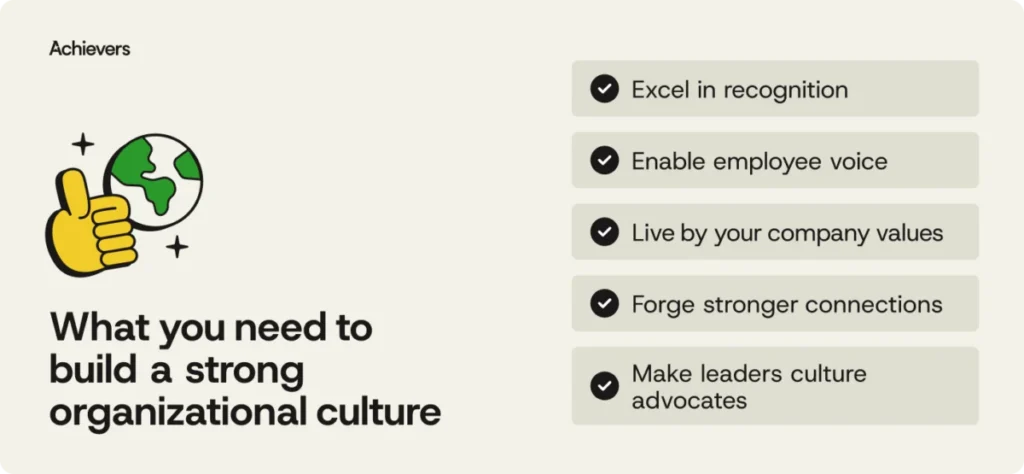
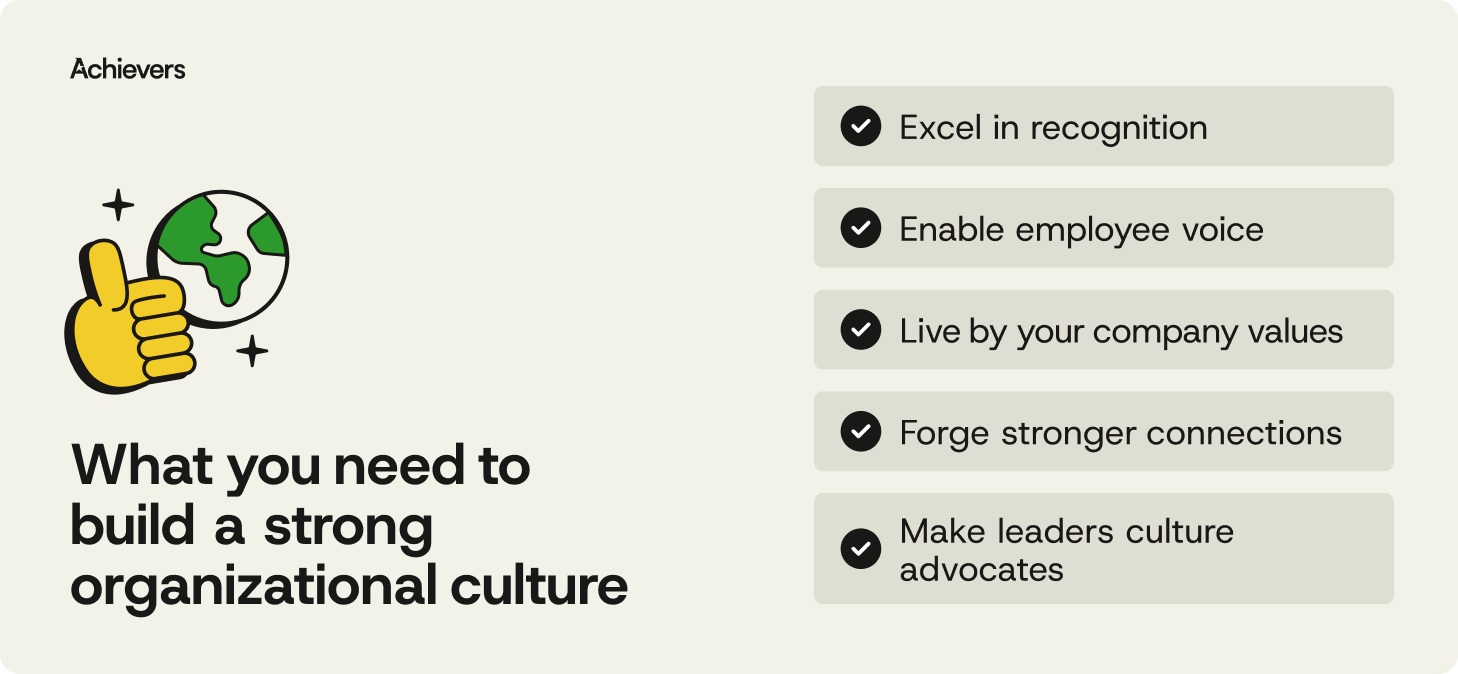
Building an exceptional organizational culture is not an accidental occurrence; it is a deliberate, ongoing process of construction, nurturing, and reinforcement. The most successful workplaces are meticulously shaped around a set of core attributes that translate aspirational intentions into concrete, daily actions. Here’s a detailed exploration of the key strategies that differentiate thriving cultures from those that remain merely theoretical.
1. Champion a Culture of Pervasive Recognition
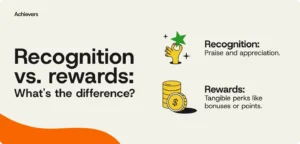
Recognition transcends the occasional commendation; it is a consistent, meaningful exchange that validates employees’ contributions and affirms their value. When recognition is woven into the daily operational fabric, it acts as a powerful enhancer of connection, a significant booster of engagement, and a direct driver of performance. Human psychology dictates that individuals are inclined to repeat behaviors that are acknowledged and rewarded. Therefore, establishing accessible and frequent mechanisms for recognition, empowering everyone from frontline managers to peer colleagues, is crucial. Employee recognition is not an optional add-on; it forms the fundamental baseline for a culture where individuals feel seen, genuinely heard, and deeply appreciated. Data from Bersin by Deloitte indicates that companies with effective recognition programs experience 31% lower voluntary turnover rates.
2. Empower and Amplify Employee Voice
Employees possess a wealth of insights, ideas, and perspectives. The true power of employee voice lies not just in soliciting feedback but in actively listening and, critically, acting upon what is heard. When employees witness their input leading to tangible organizational improvements, engagement levels rise, trust solidifies, and the overall culture strengthens. Utilizing diverse channels such as regular surveys, open forum discussions, one-on-one conversations, and suggestion platforms is essential for amplifying employee voice and staying attuned to their priorities. The imperative is to avoid letting feedback languish; instead, organizations must "close the loop" by communicating progress and demonstrating how employee contributions effect real change. Gallup research shows that organizations that effectively act on employee feedback experience 4.6 times higher employee engagement.
3. Cultivate Leaders as Culture Stewards
Organizational culture does not reside in policy manuals; it is vividly demonstrated through the everyday actions and decisions of its leadership. Managers, in particular, hold immense power to either foster or undermine cultural values. Equipping them with robust tools and comprehensive training in areas such as recognition, constructive feedback, coaching, and active listening is non-negotiable. These are not merely "nice-to-have" skills but integral components of a leader’s core responsibilities. When leaders consistently embody the desired culture, employees are naturally inclined to follow suit. Conversely, any divergence between leadership rhetoric and action is quickly perceived. Building accountability for cultural stewardship into leadership roles ensures that managers actively shape, rather than passively observe, the organizational culture. According to Gallup, approximately 70% of the variance in employee engagement is directly attributable to the manager.
4. Embody and Live Organizational Values
Company values should never be relegated to mere decorative posters in a breakroom. They must serve as living principles that guide how individuals work, lead, and make critical decisions. To embed values effectively, organizations must consistently reward and recognize employees who exemplify them in their daily conduct. Performance evaluations should explicitly reference these values, and they must be integrated into hiring processes, onboarding programs, and leadership development initiatives. Values only acquire power when they translate into actionable behaviors; otherwise, they remain abstract corporate jargon. A culture anchored in lived values cultivates trust, promotes consistency, and significantly strengthens team alignment. PwC reports that 89% of workers believe it’s important for companies to have a strong purpose and values.
5. Prioritize and Forge Stronger Interpersonal Connections
Work environments are significantly enhanced when individuals feel connected rather than isolated. A vibrant culture thrives on robust employee connection, extending beyond immediate teams to encompass the entire organization. Fostering opportunities for employees to build meaningful relationships through initiatives like mentorship programs, social gatherings, interest-based groups, or cross-functional projects is vital. This is particularly critical in remote and hybrid work models, where spontaneous interactions by the water cooler are less frequent. Strong workplace relationships are direct drivers of engagement, collaboration, and overall well-being, simultaneously making the work experience more fulfilling. Research from the Harvard Business Review indicates that employees with strong social connections at work are more engaged and productive.
6. Champion Continuous Learning and Development
Organizational growth is inextricably linked to the growth of its people. A flourishing culture provides employees with genuine opportunities for professional development, encompassing formal training programs, challenging "stretch" assignments, and personalized coaching. Demonstrating an investment in employees’ success cultivates reciprocal commitment to the company. Moreover, a steadfast focus on learning ensures that the business remains agile, continually infused with fresh perspectives, and well-prepared for the evolving future of work. This commitment extends beyond traditional career ladders, focusing on building transferable skills relevant both presently and prospectively. Growth-minded employees are the engine of growth-ready businesses. LinkedIn Learning’s 2019 Workplace Learning Report found that 94% of employees would stay longer at a company if it invested in their learning and development.
7. Integrate Culture from Day One: The Onboarding Imperative
First impressions are formative in shaping the employee experience. From the initial recruitment phase through comprehensive onboarding, culture must be a central and explicit focus. Organizations should strive to hire individuals whose personal values align with the company’s established culture and set clear expectations regarding cultural manifestations from the outset. Onboarding should transcend administrative tasks and technical setups; it represents the primary opportunity to demonstrate to new hires that they have joined an organization that genuinely cares. Early successes, such as making new employees feel welcomed, connected, and valued, are crucial for driving long-term engagement and establishing a solid foundation for a strong culture. The Brandon Hall Group reports that effective onboarding can improve new hire retention by 82%.
8. Personalize the Employee Experience for Deeper Impact
Recognizing that employees are not monolithic in their motivations, a truly impactful culture avoids a one-size-fits-all approach. Personalizing the employee experience involves understanding the unique drivers of each individual – from their preferred recognition methods to their specific professional growth aspirations – and tailoring support to meet these diverse needs. Leveraging data and insights enables the creation of more meaningful, rather than merely standardized, experiences. Personalized recognition, flexible career pathways, and thoughtfully designed support systems convey to employees that they are valued as individuals, not merely as headcount. This individualized approach is instrumental in building enduring loyalty and commitment. Salesforce research suggests that 80% of employees would be more productive if their work experience was more personalized.
9. Prioritize Mental Health and Holistic Well-being
Peak performance is unattainable when employees are experiencing burnout or poor mental health. A high-performing culture recognizes employee well-being as a core business priority, not a peripheral initiative. This involves offering comprehensive mental health resources, fostering safe spaces for open dialogue about stress and burnout, and actively promoting work-life balance through practical implementation, not just policy statements. Leaders must model healthy habits, and managers should actively encourage the establishment of healthy boundaries. Investing in employee well-being demonstrably drives engagement, reduces turnover, and cultivates a culture where employees feel genuinely cared for. The World Health Organization estimates that depression and anxiety disorders cost the global economy US$ 1 trillion each year in lost productivity.
10. Champion and Celebrate Diversity, Equity, and Inclusion (DEI)
Diversity is not a compliance checkbox; it is a profound competitive advantage. Cultures that actively recognize, embrace, and celebrate diversity consistently exhibit stronger performance, elevated engagement, and superior innovation capabilities. This journey begins with establishing a workplace where individuals feel psychologically safe to express their authentic selves, and where differences are not merely tolerated but genuinely valued. Diversity, Equity, and Inclusion (DEI) must be seamlessly integrated into every facet of the organization, including hiring practices, recognition programs, leadership development, and employee growth initiatives. When employees experience a profound sense of belonging, they are not only more likely to remain with the organization but also to thrive, contributing significantly to the business’s overall success. McKinsey & Company’s research highlights that ethnically diverse companies are 35% more likely to outperform their industry competitors, and gender-diverse companies are 15% more likely.
Measuring and Sustaining Culture: The Continuous Commitment
The journey of building a strong organizational culture is iterative and requires continuous attention. Organizations must establish clear metrics to monitor cultural health, such as employee engagement scores, retention rates, feedback survey participation, and DEI metrics. Regular pulse surveys, exit interviews, and stay interviews provide invaluable qualitative data. Furthermore, leaders must consistently reinforce cultural messages, celebrate successes, and address deviations swiftly and transparently. Sustaining culture also involves adapting it to evolving internal and external environments, ensuring it remains relevant and resonant with the workforce.
The Role of Technology in Culture Building
In the modern enterprise, technology plays an increasingly pivotal role in enabling and amplifying cultural initiatives. Platforms designed for employee recognition facilitate widespread, timely, and meaningful acknowledgments. Advanced survey tools enable organizations to gather comprehensive employee feedback and identify actionable insights. Learning management systems (LMS) support continuous development, while internal communication platforms foster connections across dispersed teams. These technological solutions act as vital infrastructure, helping organizations translate their cultural aspirations into daily habits and measurable progress.
Expert Perspectives and Future Outlook
Industry analysts and organizational psychologists consistently emphasize that culture will remain a critical differentiator in the competitive global marketplace. As automation and artificial intelligence reshape the nature of work, the human elements of connection, purpose, and belonging, nurtured by a strong culture, will become even more valuable. The future of work demands organizations that are not just efficient but also empathetic, inclusive, and adaptive – characteristics inherently tied to a thriving organizational culture.
Conclusion
Building a flourishing organizational culture is not a discrete project with a defined endpoint; it represents an ongoing, strategic commitment to recognizing, listening to, and holistically supporting employees. When culture is intentionally designed and meticulously nurtured, employees feel genuinely valued, deeply connected, and powerfully motivated to perform their best work. This symbiotic relationship between a vibrant culture and high-performing individuals ultimately translates into sustained business success. Organizations that proactively invest in their culture do not merely discuss its importance; they embed it into their operational DNA, ensuring that every employee feels seen, heard, and appreciated, leading to a thriving enterprise where people and profits both prosper.