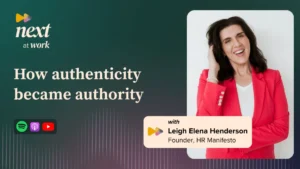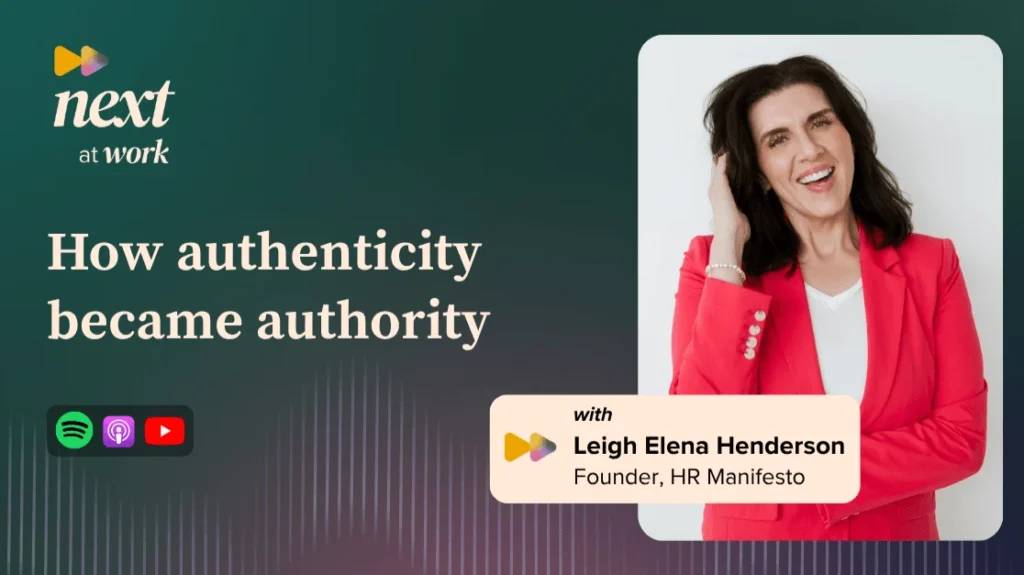
In an era increasingly defined by transparency and the search for meaningful work, Leigh Elena Henderson, the visionary behind HR Manifesto, has emerged as a leading voice challenging conventional corporate wisdom and advocating for a fundamental shift in how Human Resources is perceived and practiced. With an audience exceeding two million across various social media platforms, Henderson’s candid insights, honed over two decades as an HR executive at Fortune 100 giants like GE Aviation and Lockheed Martin, offer a stark, unfiltered perspective on corporate toxicity, the systemic undervaluing of HR expertise, and the transformative potential of authenticity in leadership. Her recent appearance on Workable’s "Next at Work" podcast, hosted by Brendan Jeannetti, delved into these critical issues, providing a roadmap for HR professionals and leaders seeking to navigate the complexities of the modern workplace with integrity and strategic impact.
The Genesis of a Movement: From Corporate Exodus to Social Media Phenomenon
Leigh Elena Henderson’s journey to becoming a viral sensation and a beacon for workplace truth-telling is rooted in a pivotal career shift. After nearly 20 years ascending the corporate ladder, culminating in executive HR roles within highly structured environments, Henderson faced an unexpected termination from a startup in 2020. Her candid description of the event—being dismissed for being "smarter than the founder"—underscores a prevalent challenge within many organizations: the discomfort with dissenting expert opinions, particularly when they challenge entrenched power dynamics. This personal experience, coupled with her extensive background in navigating complex organizational cultures, laid the groundwork for a new chapter.
Rather than retreating, Henderson, a Texas A&M University’s Mays Business School alumna based in San Antonio, Texas, embraced the digital frontier. In June 2021, she downloaded TikTok, initially as a creative outlet to test content for a book she was conceptualizing. What began as an experimental foray into social media quickly transformed into a phenomenon. Her unfiltered takes on corporate dysfunction, leadership failures, and the often-unspoken realities of working in large organizations resonated deeply with a global audience. The "HR Manifesto" brand rapidly grew, amassing nearly two million followers who sought out her candid stories, humor, and a refreshing departure from the sanitized, corporate-approved narratives typically found in mainstream HR discourse.
Her mission is clear: to foster a community where individuals can navigate their careers without feeling isolated, providing actionable advice and validation for those grappling with toxic environments. This commitment culminates in her forthcoming book, Workable: Leave Toxicity Behind and Build a Career That Works for You, slated for publication by HarperCollins on January 19, 2027. Positioned as the definitive guide for escaping toxic workplaces, the book directly addresses the thousands of direct messages Henderson receives daily, all echoing the same urgent question: "Okay, this toxic place is resonating. Now how do I get out?"
The Pervasive Trust Deficit: Why HR’s Expertise is Often Ignored
During her interview on "Next at Work," Brendan Jeannetti pressed Henderson on the single most damaging issue facing HR and talent acquisition today. Her unequivocal response pointed to a fundamental "absence of trust"—not a lack of qualified HR professionals, but a profound lack of faith from executive leadership in HR’s strategic capabilities and expertise. This skepticism, Henderson contends, often relegates HR to a purely administrative or compliance function, undermining its potential as a strategic partner capable of driving organizational success.
Expertise Without Authority: The Real Cost to Organizations
Henderson’s two decades within Fortune 100 companies provided a front-row seat to this recurring pattern: executive leaders and C-suite decision-makers frequently fail to recognize HR and talent acquisition as fields requiring scientific rigor, advanced degrees, and specialized expertise. Instead, they are often dismissed with caricatures of "pizza parties and paperwork." This inherent lack of respect grants implicit permission to override expert judgment across critical areas, from process design and budget allocation to overarching talent strategy, even when empirical data contradicts their gut feelings.
Consider the common scenarios: a seasoned recruiter presents compelling analytics demonstrating the efficacy of a new sourcing strategy, only for it to be summarily ignored. A talent leader proposes an evidence-backed interview framework, developed over months of research and preparation, only to face resistance from executives who were not involved in its creation and cannot articulate substantive objections. These patterns are not isolated incidents; they are systemic, stifling innovation and preventing organizations from capitalizing on the very "thinking" they ostensibly hire HR professionals to provide.
The consequences of this trust deficit are far-reaching and financially significant. When leaders withhold trust from their HR and talent acquisition teams, they simultaneously deny them the necessary resources, budget, autonomy, and support to fulfill their mandates. This creates a dual problem: firstly, innovative and effective ideas remain unimplemented, hindering organizational progress. Secondly, the most talented HR and TA professionals experience accelerated burnout, spending invaluable energy constantly battling for credibility rather than executing their core responsibilities. Over time, these high-performing individuals inevitably depart, leaving behind a compliance-focused department devoid of strategic influence. This erosion of strategic HR capacity directly impacts hiring quality, employee retention, and overall organizational performance.
Strategies for Rebuilding Trust and Asserting HR’s Value:
Henderson advocates for a proactive approach to address this systemic issue:
- Visible Wins, Explicitly Named: HR and TA teams must proactively highlight their successes. Every positive outcome—reduced attrition, improved hire quality, faster time-to-hire—must be explicitly attributed to HR initiatives and communicated to leadership. The assumption that leaders will connect the dots between HR’s work and business outcomes is a dangerous one.
- Clarify Roles and Accountabilities: It is crucial to delineate who makes decisions versus who executes them. For instance, clarifying that HR "didn’t fire anyone," but rather a hiring manager’s boss initiated the action, with HR ensuring due process, helps leadership understand the difference between supporting their team and leaving them vulnerable.
- Build Cross-Functional Coalitions: Henderson emphasizes the power of external validation. Bringing in cross-functional partners from product, finance, or operations into critical conversations about workforce needs can shift executive perception. Leaders tend to respond differently when the same message is delivered by someone outside the traditional HR silo.
AI in HR: A Capacity Tool, Not a Replacement Strategy
The conversation around Artificial Intelligence in HR is often characterized by extremes: either unbridled hype or paralyzing fear. Henderson offers a pragmatic perspective, warning against two common pitfalls that many organizations are currently falling into.
The Double-Edged Sword of AI Adoption:
Firstly, there’s the misconception that AI can entirely replace human HR functions. Henderson adamantly states this is a grave error, leading to significant regrets down the line. AI, while powerful, lacks the nuanced human judgment, empathy, and strategic foresight essential for effective HR. Secondly, many organizations are adopting AI tools without critically evaluating their existing processes. They simply add AI to their technology stack without removing any redundant or manual tasks. This leads to a situation where recruiters are simultaneously leveraging AI tools, manually updating old processes, and managing both, thereby increasing workload rather than reducing it. This, Henderson argues, is not innovation; it’s a "doubling down on busy."
Henderson’s framework for successful AI integration is "adoption plus removal." The core principle is simple: when a new tool is introduced, what existing process is eliminated? What manual work ceases? This ruthless approach to optimization is what truly unlocks AI’s potential, particularly for lean HR teams or individuals managing disproportionately heavy workloads. Without this critical "removal" step, AI investments fail to generate the promised capacity and return on investment.
Why Strategic AI Implementation Matters:
The financial and operational benefits of AI tools are realized only when they create capacity, not merely add to it. Most teams bypass the crucial audit step, failing to identify which existing practices are genuinely worth retaining. This is where HR leaders must step up as agents of change. By visibly demonstrating how a new AI tool replaces an old, inefficient process, HR can model effective innovation. When other departments witness HR successfully "taking something off the plate" while adding something new, it sets a powerful precedent for broader organizational adoption of intelligent automation.
Practical Steps for Effective AI Integration:
- Pre-Purchase Audit: Before investing in any new AI tool, HR teams should conduct a thorough audit, documenting every manual process, report generation, and bottleneck that slows down operations. This provides a clear baseline for identifying what can be eliminated or streamlined with AI support.
- Visible Removal to Leadership: When a new AI tool is implemented, communicate not only its capabilities but, crucially, what it replaces. Illustrate the "before-and-after" impact, emphasizing reduced steps and faster outcomes rather than increased complexity.
- Specific Value Proposition: Henderson advises clarity on AI’s actual value. For her, it excels in ideation (e.g., identifying trending topics), data analytics, and administrative tasks like travel planning. AI should be leveraged to surface trends and manage routine administration, not to supplant human judgment in critical decision-making.
Burned-Out Leaders Burn Out Their Teams: The Imperative of Sustainable Leadership
Beyond the technical and strategic challenges, Henderson’s insights delve into the human element of leadership, particularly the critical need for sustainability and personal boundaries. Her current personal goal isn’t external achievement but rather "maintaining the boundaries she’s earned." After two decades of dedicating herself to corporate goals, often at the expense of her personal well-being—giving up hobbies like playing the violin and choir—her forced exit from corporate life led to a profound discovery: the power of recovery.
The Long-Term Cost of Ignoring Recovery:
Henderson is transparent about her needs: dedicated R&R time, self-care, adequate sleep, and "eustress" (positive stress) that stimulates growth rather than the debilitating stress that erodes health and longevity. These necessities cannot be met if leaders perpetually accept every demand and take every call. Leaders who neglect their own boundaries inevitably burn out, and in doing so, they model an unsustainable work ethic that burns out their teams. Ironically, Henderson notes that the most effective leaders she has observed are not those who say "yes" to everything, but rather those who fiercely protect time for their teams to recover and engage in creative thought.
Recovery is not a luxury; it is a fundamental requirement for sustained performance and well-being. This is particularly true for neurodivergent individuals, like Henderson who lives with ADHD, who require dedicated time for regulation and resetting. However, even neurotypical leaders need this time. When leaders fail to protect their own boundaries, they implicitly communicate that boundaries are not legitimate, encouraging their teams to adopt similar unsustainable practices. The long-term consequence is a revolving door of talent, where the best employees leave, and those who remain may be unaware of healthier alternatives. The opportunity for leaders, therefore, is to embody sustainable leadership, demonstrating that excellence does not necessitate sacrificing one’s life force.
How to Cultivate and Protect Sustainable Leadership:
- Define Personal Recovery: Leaders must identify what recovery truly means for them—be it solitude, creative pursuits, family time, or a complete digital detox. This should be explicitly scheduled and prioritized like any critical client meeting.
- Visible Boundaries: Henderson is intentionally open about protecting her calendar. When teams observe their leader actively upholding the boundaries they advocate, it normalizes and legitimizes similar practices for everyone.
- Challenge the "Busy" Status Quo: The pervasive glorification of "busy" is, for Henderson, a warning sign. If constant stress replaces manageable challenge, a fundamental shift is required in one’s approach, whether through delegation, hiring, or re-evaluating scope. Something must yield to prevent burnout.
Leigh’s Unfiltered Take: The Indispensability of Authenticity
One of the most compelling aspects of Leigh Elena Henderson’s success is her unwavering commitment to authenticity. Corporate environments often compel individuals to adopt a "filtered" persona, muting their true voice, personality, and thoughts to conform to professional expectations. Henderson candidly admits to spending two decades doing precisely that. Her pivot to social media marked a deliberate abandonment of this filtering. She speaks as she genuinely speaks—unscripted, ad-libbed, replete with expressive language and genuine facial expressions that were once suppressed in corporate settings.
The outcome of this radical transparency has been transformative: an audience of nearly two million people who actively sought an alternative to the polished, often sterile, content prevalent on platforms like LinkedIn. They craved authenticity; they wanted someone real. Henderson’s unfiltered approach resonated because it acknowledged the unspoken realities of corporate life, offering validation and a sense of shared experience.
Her ultimate conclusion is a powerful one: the leaders and HR professionals who will exert the most significant influence moving forward are those willing to embrace authenticity, even when it entails risk. While "filtered leadership" might appear safe and predictable, it is "authentic leadership" that truly catalyzes change, fosters deeper connections, and inspires genuine trust.
Broader Impact and Implications for the Future of Work
Leigh Elena Henderson’s HR Manifesto is more than a social media brand; it’s a movement reflecting a broader shift in workforce expectations. The post-pandemic landscape, characterized by the Great Resignation and a heightened focus on employee well-being, has amplified the demand for transparent, empathetic, and strategically impactful HR leadership. Henderson’s insights provide a critical framework for organizations to move beyond performative HR practices toward genuine employee advocacy and strategic partnership.
Her work underscores that for HR to truly thrive, it must transcend its traditional, often undervalued, role. It requires executive leaders to recognize HR as a strategic imperative, not merely a support function. It demands a pragmatic, value-driven approach to technological adoption, ensuring that tools like AI genuinely empower teams rather than merely adding layers of complexity. Most importantly, it calls for a fundamental re-evaluation of leadership itself, emphasizing sustainability, authenticity, and the creation of workplaces where both leaders and employees can flourish without sacrificing their well-being.
As organizations grapple with talent shortages, evolving workplace dynamics, and the imperative for innovation, Henderson’s message serves as a timely reminder that the human element remains paramount. The trust deficit, the misuse of technology, and the scourge of burnout are not just HR problems; they are fundamental business challenges that, if left unaddressed, will continue to undermine organizational resilience and growth. By championing authenticity and strategic clarity, Leigh Elena Henderson is not just building a community; she is charting a path for a more humane and effective future of work.
Listen and Connect
The full "Next at Work" episode featuring Leigh Elena Henderson is available on Apple Podcasts, Spotify, and YouTube. The podcast is produced by Workable, a comprehensive talent platform designed to empower teams with clarity, speed, and confidence in hiring and people management. Workable integrates recruiting tools (ATS, sourcing, HRIS, interview management), employee management, time-off tracking, and payroll preparation, all enhanced by AI, serving over 30,000 companies across more than 100 countries.
Connect with Leigh Elena Henderson on TikTok, Instagram, and LinkedIn via @hrmanifesto, where she continues to expand the community she wished she had found earlier in her career. Her anticipated book, Workable: Leave Toxicity Behind and Build a Career That Works for You, will be published by HarperCollins on January 19, 2027.