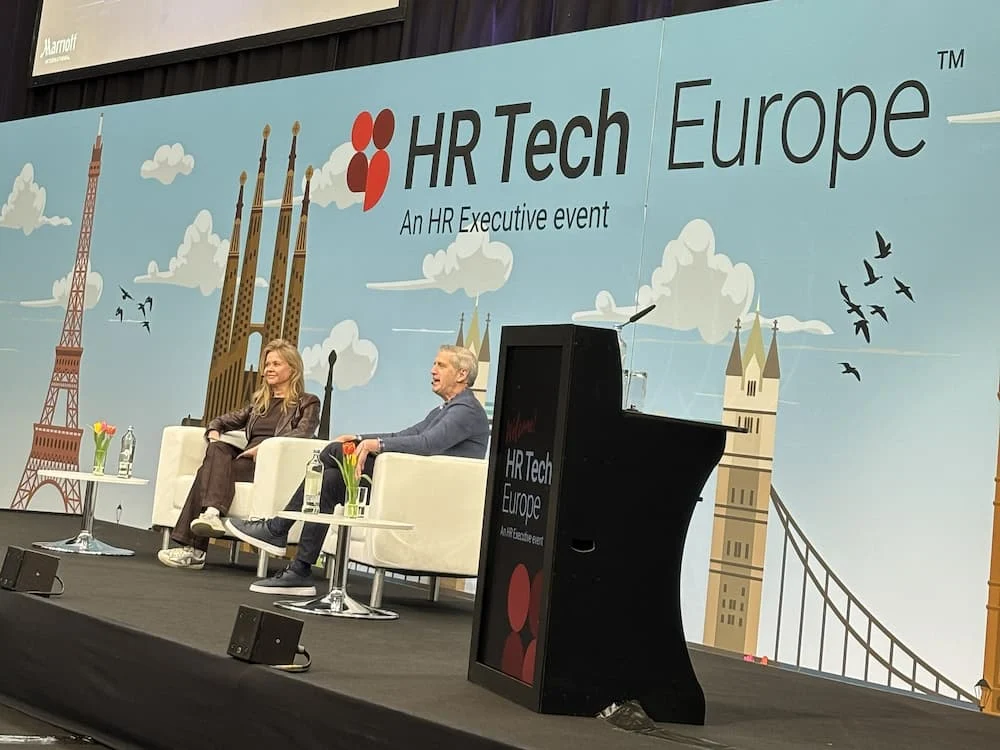
At HR Tech Europe 2026, a pivotal gathering for human resources technology professionals, Marriott International’s top HR executives, Francisca Martinez, CHRO for Europe, Middle East and Africa, and Kris Dunn, CHRO for the U.S. and Canada, shared their strategic insights into the evolving landscape of HR. Operating at the immense scale of a global hospitality giant with $26 billion in annual revenue and a presence across 9,000 properties in 145 countries, their perspectives offered a unique lens on the challenges and opportunities facing HR leaders today. The session, a highlight of the conference, was structured around seven fundamental questions that are currently preoccupying the minds of HR decision-makers worldwide. Their responses, delivered with the authority of extensive experience, provided actionable guidance and a glimpse into the future of human resources management.
The Genesis of the Discussion: HR Tech Europe 2026
HR Tech Europe, held annually, serves as a critical forum for showcasing the latest innovations and discussing the most pressing issues in HR technology. The 2026 edition, taking place against a backdrop of accelerating digital transformation and the pervasive integration of artificial intelligence, drew thousands of HR professionals, technology vendors, and industry analysts. The inclusion of Marriott International’s leadership team, renowned for its consistent recognition as one of the "Best Companies to Work For" for an unprecedented 26 consecutive years, lent significant weight to the discussions. Their ability to navigate the complexities of a vast, diverse, and geographically dispersed workforce while maintaining a strong employee-centric culture made their insights particularly valuable. The session was not just a theoretical exploration but a practical roadmap derived from real-world implementation within a Fortune 500 company.
Navigating the HR Tech Ecosystem: Suite vs. Best-of-Breed
One of the most fundamental debates in HR technology procurement is the choice between an integrated HR tech suite and a collection of best-of-breed specialized solutions. Martinez and Dunn presented a nuanced perspective, asserting that the binary choice is rapidly becoming obsolete.
"The honest answer," they stated, "is that the choice is no longer either/or. Hybrid is now the default."
They elaborated on this by explaining that comprehensive suite providers offer the essential global scale and robust compliance infrastructure that large, multinational organizations like Marriott require. These integrated systems provide a foundational layer for essential HR functions, ensuring consistency and adherence to diverse regulatory frameworks across different regions. However, for critical, high-priority areas that demand agility and specialized functionality, a best-of-breed partner often proves more effective.
"For high-priority functions such as talent acquisition and learning," Dunn explained, "a best-of-breed partner often moves faster and goes deeper." This allows organizations to leverage cutting-edge technology for specific strategic initiatives, such as optimizing recruitment pipelines or delivering personalized learning experiences, without being constrained by the pace of a larger, more generalized suite.
Dunn offered a strategic piece of advice for HR leaders considering the addition of point solutions: "When adding a point solution, HR leaders should aim to find one that can do multiple things within its specialty." This approach aims to prevent the fragmentation of the HR tech stack, a common pitfall that can lead to increased complexity, integration challenges, and a proliferation of vendors. "What you don’t want to do is end up with 30 or 40 providers," he cautioned. The goal, as articulated by Marriott’s experience, is to "think of it as building a mini suite within your existing suite."
Marriott’s adoption of Paradox (now integrated into Workday’s Olivia) for automated interview scheduling exemplifies this strategy. The decision was driven not solely by its scheduling capabilities but by the vendor’s broader talent acquisition roadmap, which extended beyond basic automation to encompass more strategic functions. This forward-thinking approach ensures that investments in specialized tools contribute to a more comprehensive and integrated talent management strategy.
The Dawn of AI Agents: From Promise to Action in 2027?
The conversation then pivoted to the much-anticipated role of Artificial Intelligence in HR. The question of whether 2027 will be the year AI agents truly take action, rather than merely responding to queries, was met with a pragmatic, yet urgent, response.
"It better be," Dunn declared, reflecting a sentiment shared by many in the HR community who feel that the current generation of AI in HR has, in many cases, fallen short of its initial promise. Many current AI applications are characterized as "smart chatbots" that excel at answering questions but struggle to perform autonomous actions.
Martinez, who also holds responsibility for IT and strategy and planning within Marriott’s EMEA operations, outlined the critical preconditions necessary for AI agents to effectively act on behalf of employees. These include:
- Well-governed, connected data: The foundation of any effective AI system is reliable, accessible, and well-managed data. In large organizations, achieving this can be a significant hurdle. Marriott’s experience highlights this challenge, with "dozens of standalone payroll and benefits platforms across EMEA that don’t talk to each other," even with a core global HR system in place. This fragmentation hinders the seamless flow of information required for AI to operate efficiently.
- Real-time system integration: For AI agents to take meaningful action, they must be able to interact with various HR systems in real-time. This requires robust integration capabilities that bridge the gaps between disparate platforms.
- Organizational readiness to adopt: Beyond the technological infrastructure, the organization itself must be prepared to embrace and understand how AI rollouts will impact daily work and contribute to company objectives. This involves fostering a culture of learning and adaptation, ensuring employees are equipped to leverage AI tools effectively.
Martinez emphasized that "the technology may arrive before the infrastructure does." This underscores the importance of a holistic approach, where technological advancements are paralleled by strategic investments in data governance, system integration, and employee enablement. The implication is clear: organizations must proactively address these foundational elements to unlock the full potential of AI agents.
Identifying AI’s Impact: Which HR Tasks Should Be Eliminated?
The discussion turned to the practical application of AI in alleviating the burden of administrative tasks within HR departments. Martinez and Dunn identified "high-volume, transactional, and administrative work" as prime candidates for AI-driven automation. These are the tasks that often consume HR teams’ time and energy without providing significant strategic value or professional fulfillment. Examples include managing benefits changes, answering routine payroll inquiries, and processing absence requests.
"I haven’t met an HR professional in 25 years who got into the field to ‘just do’ transactional work," Martinez stated, underscoring the desire of HR professionals to engage in more strategic and impactful activities.
However, Martinez also issued a crucial caution against what she termed "over-automating without a strategy." She pointed out that many of these seemingly routine processes are often "over-engineered legacy workflows that accumulated over years." Before implementing new technology, she advised, "HR leaders should re-evaluate processes rather than just automating what they do today, without thinking analytically about it." This proactive process re-engineering ensures that automation is applied to streamlined workflows, maximizing efficiency and avoiding the perpetuation of outdated or inefficient practices. The underlying implication is that true efficiency gains come not just from applying technology, but from intelligently redesigning the work itself.
Bridging the Divide: Employee Desire vs. Security Constraints in AI Adoption
A common point of tension in contemporary workplaces is the desire of employees for access to advanced AI tools, often contrasted with the stringent security protocols of their organizations. This challenge, which elicited "knowing nods from the room," was framed by Martinez as an ongoing and complex issue.
"Many new tools are genuinely impressive," she acknowledged, "but providing broad enterprise access in regulated environments is complicated, and employee frustration is real." The desire for cutting-edge technology often clashes with the necessity of protecting sensitive company and employee data.
Dunn proposed a strategic approach to navigate this tension: "HR leaders should think of employee groups as potential adoption tiers." Not all employees require or desire the most advanced AI tools. For those who do, Dunn recommended a measured approach of "carving out selective access with clear expectations." He illustrated this with an example of a junior software developer who was granted full access to an advanced AI tool for a limited period. The condition was that the developer would then share their learnings with leadership, providing valuable insights to inform a broader rollout strategy.
Marriott employs a similar methodology in India, where a select group of "AI champions" receives access to a wider array of tools. The expectation is that these champions will not only leverage the tools but also educate their colleagues and identify new use cases. This tiered approach allows organizations to harness the enthusiasm of early adopters while managing security risks and gathering crucial data to inform future decisions. This strategy offers a pathway to innovation that respects both employee aspirations and organizational security imperatives.
Accelerating Returns: Identifying the Fastest ROI for HR and Careers
The pursuit of tangible results is paramount for any HR initiative, and the question of where to find the fastest Return on Investment (ROI) for both the organization and individual careers was a key focus. Martinez pointed to "quick wins with AI-driven HR self-service" as a direct path to impact, benefiting both the bottom line and HR’s reputation.
"High-volume transactions are the fastest path to measurable return," she stated. This translates into tangible benefits: "Associates get answers faster, in natural language. HR teams get time back. And accurate, associate-initiated transactions improve data quality downstream." The cumulative effect of these improvements can significantly enhance operational efficiency and employee satisfaction.
Furthermore, success in implementing effective self-service solutions can be a significant career differentiator for HR leaders. "Success with adoption also positions you as the HR leader who finally made self-service work," Martinez observed.
Dunn echoed the sentiment of starting small to achieve rapid wins. "HR leaders should start small," he advised. "Find one thing that’s relatively contained, prove the promise of the technology, and build from there. Don’t try to solve everything at once." This incremental approach minimizes risk, allows for learning and adaptation, and builds momentum for broader initiatives. The implication for career progression is clear: demonstrating tangible, measurable success, even on a small scale, can significantly enhance an HR leader’s profile and influence.
Transforming HR Tech Without Eroding Trust
A critical concern for any technology transformation is the potential impact on employee trust. Both Martinez and Dunn emphasized that "change management is where most AI rollouts fail." They shared Marriott’s experience with implementing automated interview scheduling in the U.S., which took 18 months to achieve 80% adoption, and a manager scheduling tool that currently operates at around 70% adoption. While the tools themselves were deemed effective, the challenge lay in driving widespread adoption.
Martinez highlighted the importance of "transparent, frequent communication about what’s in it for the employee." The message should transcend a simple announcement of new technology; it needs to articulate concrete benefits. Instead of "AI is coming," the focus should be on "here’s how this removes friction from your day." This employee-centric communication strategy is vital for building buy-in and mitigating resistance.
Dunn framed this as an opportunity for HR to evolve into strategic consultants. "HR leaders can become consultants on which workflows can really take advantage of AI," he suggested. By proactively identifying and championing processes that can be enhanced by AI, HR departments can not only drive technology adoption but also demonstrate their strategic value and build deeper trust with the workforce. This approach positions HR as an enabler of positive change, rather than a driver of disruptive technology.
The Enduring Human Element: What Remains After Transactions Disappear?
The final, and perhaps most profound, question addressed the future role of humans in HR as transactional tasks become increasingly automated. Martinez posited that "empathy, human connection, and the ability to read and shape culture will be retained as work for people."
While technology can effectively identify trends or flag emerging issues, it currently lacks the capacity for nuanced decision-making or the genuine human connection required to make individuals feel truly understood. "What it can’t do, at least not yet according to the CHRO, is decide what to do about it or sit across from someone and make them feel genuinely seen."
In a business like Marriott, where guest interactions are paramount, this distinction carries significant operational weight. Martinez emphasized that "the business is really about the guest experience, and that the best use of technology is to enable human connections by removing friction." By automating routine tasks, HR professionals are freed to focus on the uniquely human aspects of their roles, fostering stronger relationships, nurturing organizational culture, and ultimately enhancing the employee and guest experience. The future of HR, as envisioned by Marriott’s leaders, is one where technology augments human capabilities, allowing for deeper engagement and more meaningful work.