
The landscape of B2B marketing is undergoing a fundamental transformation as traditional outbound strategies encounter diminishing returns in an increasingly saturated digital marketplace. For years, the standard growth engine for enterprise solutions—ranging from Software-as-a-Service (SaaS) and Learning Management Systems (LMS) to Human Resources (HR) technology—was fueled by aggressive cold outreach, high-frequency paid advertising, and a heavy reliance on trade show networking. However, recent industry shifts indicate that these "interruption-based" tactics are becoming significantly more expensive and less effective. As decision-makers become more autonomous in their purchasing journeys, the emergence of a "360 inbound marketing" framework has become the new benchmark for organizations seeking to build a resilient and scalable revenue pipeline.
According to recent data from Gartner, B2B buyers now spend only 17% of their total purchase time meeting with potential suppliers. When buyers are comparing multiple vendors, that time drops to a mere 5% or 6% per salesperson. This shift suggests that the vast majority of the buyer’s journey occurs independently, through online research, peer recommendations, and content consumption. Consequently, if a brand is not visible and authoritative during this "dark" phase of the research cycle, it is effectively disqualified before the first sales call is ever scheduled. The 360 inbound marketing plan addresses this reality by creating an integrated, full-funnel ecosystem designed to meet buyers exactly where they are.
The Evolution of Inbound: From Silos to Systems
Historically, inbound marketing was often reduced to a single tactic, such as maintaining a corporate blog or optimizing for specific keywords. In the modern B2B environment, these siloed activities are insufficient. A true 360-degree approach requires the harmonization of search engine optimization (SEO), content production, lead generation, and automated nurturing into a single, cohesive growth engine.
Market analysts observe that fragmented marketing efforts—where the SEO team operates independently of the content team, or where webinars are disconnected from sales follow-up—lead to inconsistent buyer experiences. A 360 inbound strategy eliminates these disconnects by aligning every digital asset with the specific stages of the customer lifecycle. This systemic approach is particularly vital for sectors like HR Tech and LMS, where the sales cycle is frequently extended and involves multiple stakeholders across IT, Finance, and Operations.
A Chronological Framework for Inbound Implementation
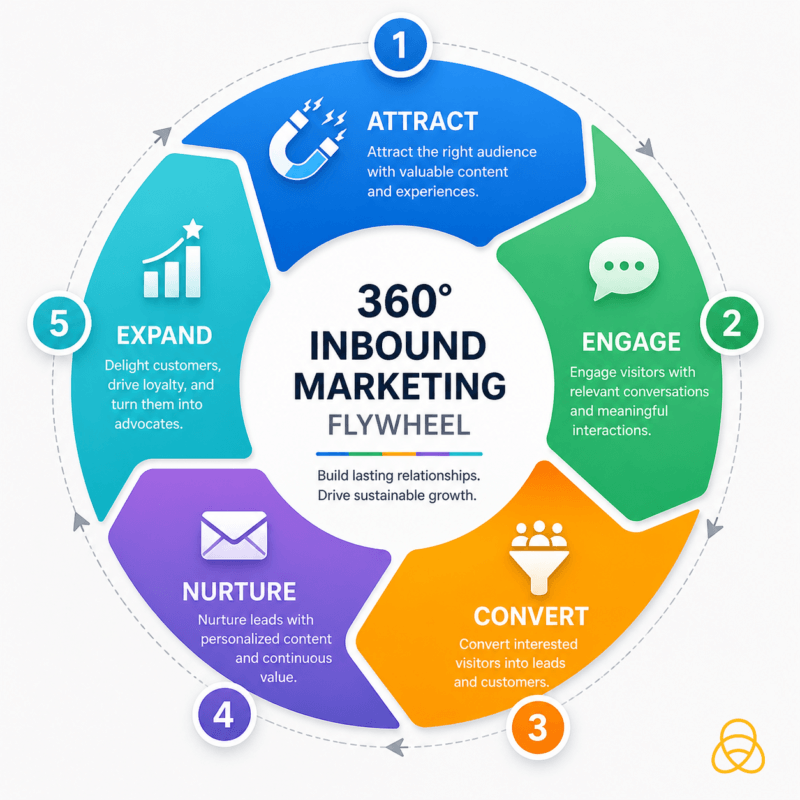
The implementation of a 360 inbound strategy follows a logical progression of five interconnected stages: Attraction, Engagement, Conversion, Nurturing, and Expansion. Each stage serves as a prerequisite for the next, creating a "flywheel" effect where customer satisfaction and brand authority drive further acquisition.
Stage 1: Strategic Attraction and AI-Driven Discovery
The initial phase focuses on visibility. However, the methodology for achieving visibility has changed. While traditional SEO remains a cornerstone, the rise of AI-driven search—such as Google’s Search Generative Experience (SGE) and conversational AI tools—has forced marketers to adapt.
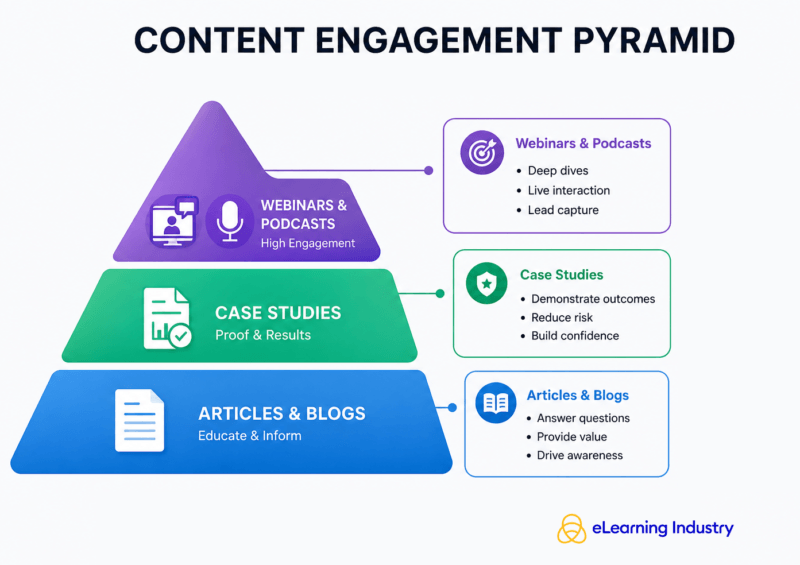
Industry experts suggest that to remain discoverable in an AI-heavy environment, content must move beyond generic keyword stuffing. Organizations are now prioritizing "topical authority" by creating clusters of high-quality content that answer complex, intent-driven questions. For a SaaS provider, this might involve moving from broad terms like "project management software" to high-intent queries such as "how to integrate project management tools with enterprise ERP systems." By providing direct, expert-led answers, brands increase their chances of being featured in AI-generated summaries and recommendation engines.
Stage 2: Deep Engagement Through Authority-Building Assets
Once a prospect is aware of a brand, the focus shifts to engagement. In the B2B sector, engagement is synonymous with trust. High-value assets such as webinars, podcasts, and research reports serve as the primary vehicles for this trust-building.
Webinars, in particular, have seen a resurgence as a tool for mid-funnel engagement. Data indicates that B2B buyers are more likely to commit time to a live educational event than to read a 50-page white paper. Furthermore, these events provide a wealth of "repurposable" material. A single 45-minute webinar can be transformed into multiple blog posts, social media clips, and email snippets, maximizing the return on investment for every piece of original content produced.
Stage 3: Conversion and the Psychology of Demand Capture
The transition from a "visitor" to a "lead" is where many inbound plans falter. A 360-degree plan emphasizes the use of specific, actionable lead magnets. Generic "monthly newsletters" are being replaced by high-utility tools such as ROI calculators, implementation checklists, and industry benchmark reports.
For LMS and HR Tech vendors, conversion often hinges on reducing the perceived risk of the software. Landing pages that feature concise social proof, clear value propositions, and frictionless forms are essential. Journalistic analysis of conversion data suggests that even a 2% increase in the conversion rate of high-intent traffic can lead to a 20% to 30% increase in total pipeline value over a fiscal year, making this stage a critical lever for revenue growth.
Stage 4: Precision Nurturing and Pipeline Velocity
Because the B2B buying cycle can span six to eighteen months, the "nurturing" phase is where the most significant revenue is often secured. Modern nurturing utilizes sophisticated email automation and retargeting to keep the brand top-of-mind.
Rather than sending generic sales pitches, high-performing organizations segment their nurturing tracks based on buyer persona and intent. An IT manager might receive content focused on security protocols and API integrations, while a Chief Human Resources Officer (CHRO) receives case studies on employee retention and culture impact. This level of personalization ensures that the communication remains helpful rather than intrusive, gradually moving the prospect toward a state of "sales readiness."
Stage 5: Expansion and the Power of Advocacy
The final stage of the 360-degree model recognizes that the customer journey does not end at the point of sale. In the SaaS and enterprise tech world, retention is the primary driver of profitability. Inbound principles are applied to existing customers through advanced training content, community forums, and "customer-only" webinars.
By fostering a community of successful users, companies turn their customers into advocates. In the HR Tech and LMS markets, peer reviews and word-of-mouth recommendations often carry more weight than any marketing collateral. An integrated inbound strategy leverages this advocacy to drive cross-selling and upselling opportunities, effectively lowering the overall Customer Acquisition Cost (CAC) by increasing the Lifetime Value (LTV) of each account.
Supporting Data and Industry Implications
The shift toward this integrated model is supported by compelling economic data. Research from the Content Marketing Institute indicates that while inbound marketing costs 62% less than traditional outbound marketing, it generates three times as many leads per dollar spent. Furthermore, companies that excel at lead nurturing generate 50% more sales-ready leads at a 33% lower cost.
The implications for the industry are clear: organizations that fail to build a discoverable and helpful digital presence will find themselves increasingly marginalized. The "loudest" brand is no longer the winner; rather, the "most useful" brand secures the market share. This is particularly true as the workforce sees a generational shift, with younger, digitally native decision-makers preferring self-service research over traditional sales interactions.
Measuring Success in a 360-Degree Environment
To validate the effectiveness of a 360 inbound marketing plan, organizations are moving away from "vanity metrics" like raw page views or social media likes. Instead, the focus has shifted to revenue-centric KPIs. Key performance indicators now include:
- Pipeline Velocity: The speed at which a lead moves through the funnel to a closed deal.
- Marketing Influenced Revenue: The percentage of closed deals that engaged with inbound content at some point in the journey.
- Customer Acquisition Cost (CAC) Efficiency: The long-term reduction in acquisition costs as organic traffic and brand authority grow.
- Lead Quality Score: An assessment of how well inbound leads align with the Ideal Customer Profile (ICP).
Conclusion: The Strategic Necessity of Integration
The move toward a 360 inbound marketing plan is not merely a trend but a strategic necessity in a buyer-led economy. By treating inbound marketing as a connected system rather than a collection of disjointed tactics, B2B companies can create a sustainable engine for growth. This approach ensures that a brand is present, credible, and influential during the critical phases of a buyer’s independent research.
As AI continues to reshape search and discovery, and as B2B sales cycles remain complex, the ability to attract, engage, and nurture leads through high-value content will remain the primary differentiator between market leaders and their competitors. For SaaS, LMS, and HR Tech vendors, the path to long-term scalability lies in mastering this full-funnel framework—transforming marketing from a cost center into a predictable driver of enterprise value.






