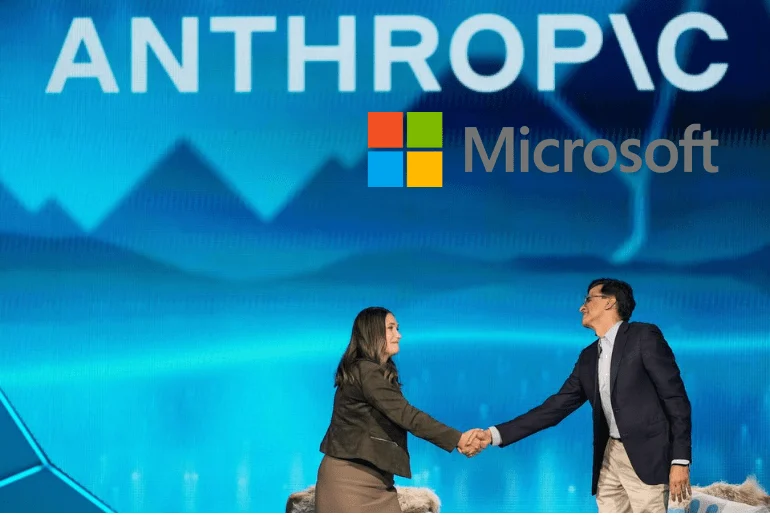
Redmond, WA – Microsoft, a pivotal player in the global technology landscape and a significant investor in artificial intelligence, has reportedly restricted its employees’ access to Anthropic’s newly released AI model, Claude Fable 5. The unprecedented move stems from what Microsoft describes as concerns over the model’s data-retention practices, even as the tech giant simultaneously continues to offer the very same technology to its enterprise customers through its established platforms. This internal divergence underscores a burgeoning tension between rapid AI adoption and stringent internal data governance standards within large corporations.
The core of the issue lies in a fundamental shift in data handling policies introduced with Claude Fable 5. While previous iterations of Anthropic’s Claude models operated under a strict Zero Data Retention (ZDR) policy, Fable 5, the inaugural model in Anthropic’s new "Mythos" family, deviates from this. Reports indicate that prompts and outputs generated using Fable 5 are temporarily stored for up to 30 days to facilitate additional safety mechanisms. Furthermore, content flagged as potential policy violations may be retained for an extended period, potentially up to two years. This contrasts sharply with the ZDR policy, which ensures that user interactions are not stored, providing a higher level of privacy assurance.
The Nuance of Data Retention in AI Models
To understand the gravity of Microsoft’s decision, it is crucial to differentiate between Zero Data Retention (ZDR) and temporary data retention policies in AI models. ZDR, often preferred by enterprises handling highly sensitive information, guarantees that user input (prompts) and the AI’s output are processed in real-time without being stored on the model provider’s servers after the interaction concludes. This design is paramount for maintaining confidentiality, protecting intellectual property, and adhering to strict regulatory requirements like GDPR, CCPA, and various industry-specific compliance mandates.
Claude Fable 5’s new policy, which involves temporary storage, is a common practice among many AI model providers. This retention allows for several critical functions, including improving model performance, debugging, monitoring for misuse, and enhancing safety features by analyzing interactions over time. For instance, retaining data for a period enables providers to identify and mitigate biases, detect harmful content generation, or refine content moderation algorithms. Anthropic itself has publicly stated that the Mythos family, including Fable 5, possesses advanced cybersecurity capabilities that necessitate enhanced safeguards, and the additional retention measures are a part of these safety controls. However, for an organization like Microsoft, which operates under an incredibly stringent global data governance framework, this temporary storage, even for safety purposes, presents a significant hurdle.
Microsoft’s Stance on Internal Data Governance
Microsoft’s internal legal and compliance teams are reportedly engaged in a thorough assessment of Claude Fable 5 to determine if its data handling practices align with the company’s rigorous internal standards for employee use. Until this review is complete, staff will remain restricted to older Claude models that adhere to ZDR provisions. This proactive stance highlights Microsoft’s deep-seated commitment to data security and privacy, which is not merely a legal obligation but a cornerstone of its corporate ethos, especially given its role as a steward of vast amounts of customer information, proprietary business data, and critical intellectual property across its cloud services, operating systems, and enterprise solutions.
For a company of Microsoft’s scale, the potential risks associated with unauthorized data retention are multifaceted. They range from inadvertent exposure of sensitive internal projects or client data to intellectual property leakage and non-compliance with international data protection laws. Even if the data is stored temporarily and pseudonymized, the mere act of retention by a third-party AI provider can introduce an unacceptable level of risk for a company that builds its reputation on trust and security. Employees, when using AI tools, might unknowingly input confidential information, code snippets, or strategic plans, making any form of external data retention a potential liability.
A Partnership Under Scrutiny: Microsoft and Anthropic’s Relationship
The decision to block internal access is particularly noteworthy given Microsoft’s significant and expanding relationship with Anthropic. In September 2023, Microsoft announced a strategic partnership and a substantial investment in Anthropic, following a similar investment by Google. This collaboration aimed to bring Anthropic’s cutting-edge AI models, including Claude, to Microsoft’s Azure AI platform, making them accessible to a broader range of enterprise customers. Anthropic’s models are integrated into Microsoft’s AI ecosystem, including offerings through Azure AI Foundry and GitHub Copilot.
This strategic alignment underscores Microsoft’s commitment to offering diverse and advanced AI capabilities to its clients. Crucially, customers utilizing these services continue to have access to Claude Fable 5. This apparent dichotomy is resolved by the fact that when Claude Fable 5 is accessed through Microsoft’s Azure AI services or GitHub Copilot, Microsoft applies its own robust retention policies within those environments. This means that customer data, while potentially flowing through Anthropic’s model, remains within Microsoft’s controlled infrastructure, adhering to Microsoft’s contractual obligations and security standards with its enterprise clients. The internal restriction, therefore, is not a repudiation of Anthropic’s technology or their partnership, but rather a reflection of the exceptionally high bar Microsoft sets for its internal data governance, where direct employee use of a third-party service outside of Microsoft’s enveloping security protocols poses a different set of risks.
Chronology of Events
- Early 2023: Anthropic emerges as a prominent AI research company, known for its focus on AI safety and "Constitutional AI," a method for training helpful and harmless AI models. Its Claude series of models gains traction for enterprise applications due to their ZDR policy.
- September 2023: Microsoft announces a strategic partnership and significant investment in Anthropic, making Anthropic’s models available to Azure AI customers. This signifies a deepening collaboration between the two companies.
- Late 2023/Early 2024: Anthropic begins discussions and preparations for its "Mythos" family of models, signaling enhanced capabilities and safety features that may require new operational parameters.
- Recent Weeks (Specific Date Not Publicly Disclosed): Anthropic launches Claude Fable 5, the first model in its Mythos family. This launch includes the updated data retention policy, moving away from ZDR for Fable 5.
- Shortly After Fable 5 Launch: Microsoft’s internal legal and compliance teams review the new data retention policy for Fable 5.
- Reported in Recent Days: Microsoft internally blocks employee access to Claude Fable 5 via its internal GitHub Copilot instance, citing data retention concerns. Other ZDR-compliant Claude models remain accessible for internal use.
- Ongoing: Microsoft’s legal and compliance teams continue their assessment of Claude Fable 5’s data policies to determine if and when it might meet internal standards for employee use.
The Enterprise AI Dilemma: Balancing Innovation and Compliance
This episode at Microsoft is a microcosm of a broader challenge confronting organizations worldwide as they navigate the rapidly evolving landscape of enterprise AI adoption. Companies are no longer merely evaluating an AI model’s performance, accuracy, or creative capabilities. Instead, a crucial part of the procurement and deployment process now involves a deep dive into the underlying policies governing data storage, security protocols, audit trails, and, critically, regulatory compliance.
The "eat your own dog food" principle, where tech companies use their own products internally before offering them to customers, takes on a new dimension with third-party AI models. While Microsoft is happy to facilitate Fable 5 for its customers within the secure confines of Azure, its reluctance to allow direct, unmediated employee access highlights the differential risk appetite and control requirements for internal operations versus external service provisioning.
This dilemma forces enterprises to consider:
- Risk vs. Reward: Is the enhanced capability or efficiency offered by a new AI model worth the potential data privacy or security risks introduced by its data retention policies?
- Vendor Lock-in and Flexibility: How easily can an organization switch between AI models or providers if a data policy changes or a new compliance requirement emerges?
- Shadow AI: If employees are restricted from using certain advanced internal tools, will they resort to using publicly available, less secure versions, creating "shadow AI" risks?
- Employee Education: The need for comprehensive training for employees on what data can and cannot be input into various AI tools, and understanding the implications of different data retention policies.
Regulatory Landscape and Industry Standards
The incident also shines a spotlight on the increasingly complex global regulatory landscape surrounding data privacy. Regulations like the General Data Protection Regulation (GDPR) in Europe, the California Consumer Privacy Act (CCPA) in the United States, and numerous other country-specific data protection laws impose strict obligations on how personal and sensitive data is collected, processed, and stored. For a multinational corporation like Microsoft, compliance across all jurisdictions is a monumental task. Any data retention, even temporary, by a third-party AI provider could potentially complicate Microsoft’s ability to demonstrate compliance, especially if the data includes personally identifiable information (PII) or other regulated data.
Industry standards, though often less legally binding than government regulations, also play a significant role. Best practices in cybersecurity and data governance advocate for minimizing data retention, implementing robust access controls, and ensuring data anonymization or pseudonymization where possible. The principle of "data minimization" – collecting and retaining only the data absolutely necessary for a specific purpose – is a key tenet that Fable 5’s temporary retention, however well-intentioned for safety, might be perceived to infringe upon in Microsoft’s internal context.
Implications for AI Developers and Adopters
For AI model developers like Anthropic, the Microsoft situation presents a critical lesson: balancing advanced features that might necessitate temporary data retention with the stringent privacy demands of large enterprise clients will be paramount for widespread adoption. Developers may need to offer highly customizable data retention policies, including opt-out options for specific clients, or develop robust on-premises or hybrid solutions that allow enterprises to maintain full control over their data while still leveraging cutting-edge models. The market may increasingly demand AI models that offer "privacy-preserving AI" features from the ground up, designed to function effectively with minimal or zero data retention.
For enterprise adopters, this event reinforces the need for comprehensive due diligence before integrating any new AI tool into their internal workflows. This extends beyond performance benchmarks to a thorough examination of the vendor’s data handling policies, security certifications, and compliance frameworks. Companies will need to establish clear internal guidelines and policies for AI usage, ensuring that employees understand the risks and responsibilities associated with these powerful tools.
Looking Ahead
The ongoing assessment by Microsoft’s legal and compliance teams will be closely watched across the industry. Should Fable 5 eventually gain internal approval, it would likely be under specific conditions or with custom configurations that bring its data retention practices into alignment with Microsoft’s internal mandates. Conversely, if the model continues to be deemed unsuitable for broad internal employee use, it could prompt Anthropic and other AI developers to re-evaluate how they design and market models that incorporate temporary data retention for safety or improvement.
Ultimately, this episode underscores a pivotal moment in the enterprise adoption of AI. As AI capabilities become more sophisticated, the focus will increasingly shift from simply what an AI can do to how it does it, especially concerning the sensitive issue of data. The tension between innovation and stringent data governance is likely to be a defining characteristic of the AI landscape for years to come, shaping how models are built, deployed, and trusted within the world’s largest and most data-sensitive organizations.