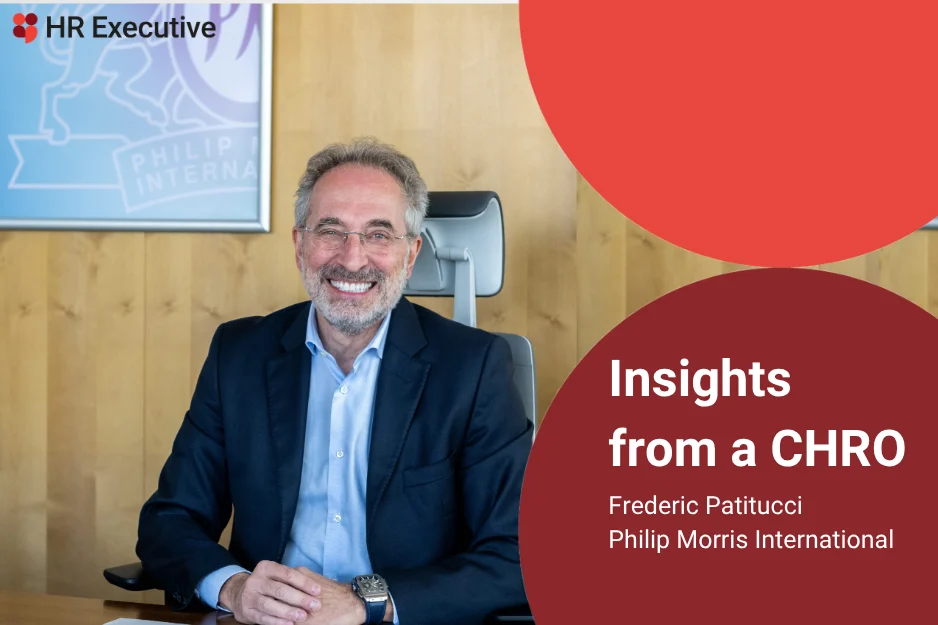
Over the past decade, Philip Morris International (PMI) has embarked on an unprecedented corporate transformation, moving from a predominantly combustible tobacco company to one focused on delivering a smoke-free future. This monumental shift has seen smoke-free products skyrocket from generating zero net revenue to accounting for over 40% of the company’s total net revenues today. Navigating this profound change, which impacts every facet of the global organization, has been a core responsibility of Fredric Patitucci, PMI’s Group Chief People and Culture Officer. Patitucci, a veteran with 35 years at the company, now oversees the human capital strategy for a workforce that spans more than 80,000 employees across the globe, orchestrating a cultural evolution designed not only to embrace the smoke-free vision but also to proactively prepare the enterprise for the transformative potential of Artificial Intelligence (AI).
The Genesis of a Smoke-Free Future: PMI’s Strategic Pivot
PMI’s strategic redirection began in earnest with its public commitment to "designing a smoke-free future" – a bold declaration for a company historically synonymous with cigarettes. This strategic pivot was driven by a confluence of factors, including evolving public health perspectives, increasingly stringent regulatory landscapes globally, and a recognition of changing consumer preferences. The company began investing heavily in research and development, pioneering a portfolio of smoke-free products, primarily heated tobacco and e-vapor devices, as alternatives to traditional cigarettes. This decade-long journey from concept to significant market penetration represents one of the most ambitious transformations in modern corporate history, demanding not just technological innovation but also a fundamental re-evaluation of the company’s purpose and operational ethos. Patitucci, who describes himself as "a pure product of PMI," having started his career with Kraft in France before its acquisition and subsequent spin-off into PMI, has witnessed and contributed to this evolution firsthand. His extensive international career, including eight years overseeing operations in Eastern Europe, Africa, and the Middle East, followed by roles in Russia and Switzerland, provided him with a panoramic view of the company’s global footprint and diverse cultural landscape, invaluable experience he brought to the CHRO role three years ago.
Cultivating a New Ethos: The PMI DNA
Upon assuming the leadership of people and culture, Patitucci recognized that the organizational culture needed to accelerate its evolution to match the pace of the product and business model transformation. The shift from a mature, "security-driven" category like traditional tobacco to the dynamic, innovation-centric realm of smoke-free alternatives necessitated a different set of behaviors, values, and mindsets. To define this new cultural blueprint, Patitucci spearheaded an ambitious initiative, convening 350 individuals from across various functions and geographies. This diverse group collaborated to articulate what PMI’s culture should represent in its new strategic context. The outcome of this collaborative effort was the establishment of three core values, collectively termed the "PMI DNA": "We’re better together. We’re game-changers. We care."
These values were not merely aspirational statements; they were designed to be actionable tenets guiding daily operations and strategic decision-making. "We’re better together" underscores the critical importance of collaboration and cross-functional synergy, essential for innovation in a complex global business. "We’re game-changers" speaks to the company’s commitment to innovation, challenging the status quo, and pioneering new solutions in a rapidly evolving market. "We care" reflects a deeper responsibility – to consumers by offering better alternatives, to employees by fostering an inclusive environment, and to society by working towards a smoke-free future. This cultural reset was foundational, providing a shared language and framework for behavior that would prove unexpectedly crucial for subsequent technological shifts.
From Transformation to Integration: Preparing for the AI Era
The deliberate cultivation of the PMI DNA laid vital groundwork that inadvertently prepared the organization for another significant technological wave: Artificial Intelligence. Patitucci highlights that the emphasis on collaboration, in particular, became a cornerstone for successful AI integration. AI, at its core, often requires diverse teams to work together, combining data science, engineering, business acumen, and ethical considerations. The "better together" principle, ingrained through the PMI DNA, naturally fostered an environment where such interdisciplinary collaboration could thrive.
The cultural reinforcement wasn’t a one-time event. Two years ago, Patitucci’s team launched a global "roadshow" to introduce and embed the PMI DNA across its vast employee base. Building on this, last year’s initiative focused on developing a "growth mindset" throughout the organization. A growth mindset, characterized by a belief in one’s ability to develop skills and intelligence through dedication and hard work, is paramount in an era of rapid technological advancement like AI. It encourages continuous learning, adaptability, and resilience in the face of new challenges, fostering an environment where employees are eager to explore and leverage new tools rather than resist them. This year, the focus of the roadshow explicitly centered on AI integration, directly connecting the established cultural values and growth mindset to the practical application and ethical considerations of AI. Patitucci posits that these combined elements were instrumental in culturally embracing AI, asserting, "Because AI is not really a tech play – it’s a mindset play, a leadership play." This perspective elevates AI beyond a mere technological implementation, framing it as a strategic imperative that requires fundamental shifts in how people think, lead, and collaborate.
The Human Element of AI: Beyond Technology
Patitucci’s assertion that AI is fundamentally a "mindset play" and a "leadership play" resonates deeply with contemporary thinking on enterprise-wide AI adoption. Successful AI integration is rarely solely about the algorithms or the infrastructure; it is about how an organization adapts, learns, and empowers its people to work alongside intelligent systems. This involves fostering a culture of psychological safety, where employees feel comfortable experimenting with new tools, learning from failures, and providing feedback without fear of reprisal. For a global corporation like PMI, this means investing heavily in reskilling and upskilling programs, ensuring that the workforce possesses not only the technical competencies to interact with AI but also the critical thinking, problem-solving, and creative skills that complement AI capabilities. Leaders, in this context, are tasked with championing AI’s potential, articulating a clear vision for its role within the organization, and modeling the desired behaviors of curiosity and adaptability. This leadership role extends to ensuring that AI is implemented ethically and responsibly, with a clear understanding of its impact on employees, consumers, and society.
Breaking Down Silos: A Cross-Functional Approach to AI
A significant hurdle for many large organizations attempting to integrate AI sustainably is the persistent issue of functional silos. Patitucci candidly observes, "People still, I have to be honest, are looking at their own functional vertical." This departmentalized view often impedes the holistic transformation necessary for AI to deliver its full potential. AI’s true power often lies in its ability to connect disparate data sets and automate processes across an entire value chain, from supply chain optimization and manufacturing to marketing and customer service. To achieve this, planning for AI integration must be "agnostic of functions," requiring global process owners to step back from day-to-day operations and adopt an end-to-end perspective.
This broader view, however, can be challenging and even "painful," as it necessitates transcending established departmental boundaries and potentially redefining long-held roles and responsibilities. This is where a robust "learning appetite" becomes critical. Employees and leaders must be motivated to acquire new knowledge, understand diverse functional perspectives, and embrace new ways of working. Patitucci firmly believes that HR is uniquely positioned to lead this charge. As the custodians of organizational culture and talent development, HR departments can drive the narrative around cross-functional collaboration, facilitate learning initiatives, and help leaders "disassociate yourself from your own stream" to embrace a truly company-wide perspective. This strategic leadership from HR ensures that AI is not just a technological add-on but an integral part of a redefined, interconnected operational framework.
Strategic Patience: The Long-Term Vision for AI
For PMI, the extensive work involved in redefining workflows across its nearly 90,000-strong global workforce – a complex tapestry of geographies, job categories, and functions – is not primarily aimed at immediate efficiency gains. Instead, leadership is taking a long-term view, carefully considering the consequences of AI implementation five and ten years down the line. Patitucci likens this arduous, yet essential, endeavor to "going to the dentist: a bit painful but worth it." This analogy underscores the upfront investment of effort and potential discomfort required to achieve significant, lasting benefits.
Many organizations rush into AI adoption with an exclusive focus on quick wins and rapid Return on Investment (ROI) through immediate efficiency improvements. However, Patitucci cautions against this approach: "Are we there? Are we seeing the impact on the efficiency? The answer is no, but I don’t think that the companies that are betting on efficiency gains will go far. They may go faster, but not farther." This philosophy highlights a strategic distinction. While short-term efficiency gains might offer immediate financial benefits, a long-term perspective aims for deeper, more transformative impacts, such as fundamental business model innovation, enhanced customer experiences, new product development, and the creation of entirely new capabilities. PMI’s approach suggests a commitment to building a resilient, AI-powered future rather than merely optimizing existing processes. This requires a "calm but determined" approach to decision-making, ensuring that choices align with the company’s overarching strategic vision and its commitment to a smoke-free future.
Navigating Complexity: Workforce and Global Scale
The scale of PMI’s transformation and AI integration efforts is immense, involving a global workforce of approximately 90,000 employees spread across diverse cultures, regulatory environments, and economic landscapes. Implementing new cultural values and technological paradigms in such a complex ecosystem presents unique challenges. This includes varying levels of technological literacy, language barriers, differences in work practices, and the need to respect local customs while fostering a unified global culture. Training programs must be localized, communication strategies tailored, and leadership development adapted to resonate across different regions. Furthermore, the integration of AI impacts various job categories differently, requiring meticulous planning for workforce transition, potential job displacement, and the creation of new roles that require different skill sets. PMI’s journey exemplifies the intricate dance between global strategic imperatives and local operational realities, requiring flexibility, cultural sensitivity, and robust change management capabilities to ensure successful adoption and sustained impact.
Broader Implications and the Future of Work at PMI
The strategic direction taken by Philip Morris International, under Patitucci’s leadership, has significant implications for the future of work within the organization and serves as a compelling case study for other large enterprises. For HR, this means an expanded mandate: moving beyond traditional administrative functions to become a central driver of strategic transformation. This involves not only fostering a conducive culture and developing a growth mindset but also proactively identifying future skill needs, designing comprehensive reskilling and upskilling pathways, and evolving talent acquisition strategies to attract individuals adept at collaborating with AI. PMI’s long-term, human-centric approach to AI suggests a future where technology augments human capabilities, allowing employees to focus on higher-value, more creative, and more strategic tasks.
This approach also positions PMI to navigate the ethical complexities of AI more effectively. By embedding values like "we care" and emphasizing responsible leadership, the company can establish robust ethical guidelines for AI development and deployment, ensuring fairness, transparency, and accountability. Ultimately, PMI’s journey illustrates that true organizational transformation, particularly in an era of rapid technological change, is less about simply adopting new tools and more about fundamentally reshaping mindsets, fostering collaboration, and cultivating a culture of continuous learning and strategic foresight. The commitment to "go farther, not faster" in AI integration reflects a deep understanding that sustainable success in the digital age requires patience, purpose, and an unwavering focus on the human element.