The contemporary business arena is characterized by an unprecedented surge in complexity, rapid market shifts, and an unsettling frequency of crises. This confluence of factors has not only amplified existing challenges but has also underscored the critical need for organizational agility—both at the individual and collective levels. While the capacity to react swiftly can help businesses weather immediate storms, it falls short of enabling them to truly thrive and achieve sustained competitive advantage. In this dynamic environment, merely keeping pace is insufficient; organizations must proactively cultivate differentiators, which in turn necessitates a precise understanding of the leadership behaviors and mindsets required. The prevailing ambiguity surrounding present and future landscapes makes this endeavor particularly arduous, blurring the lines between leadership decision-making, actionable strategies, and overarching organizational aims.
The Vital Link: Connecting Organizational Capabilities to Leadership Strategy
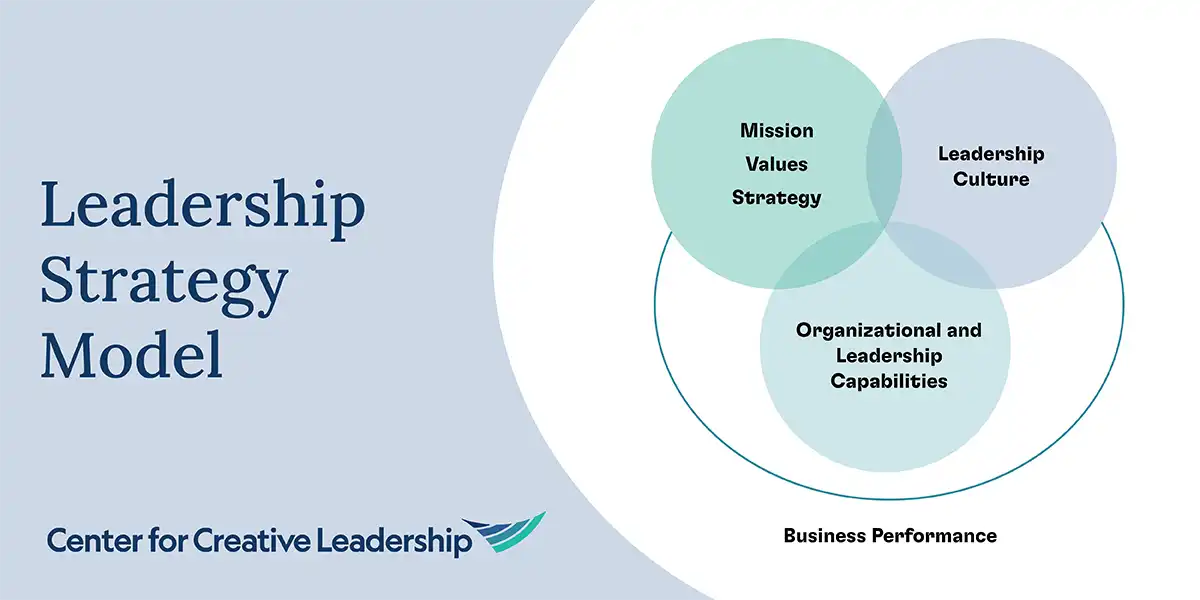
To address this pervasive challenge, a robust framework is essential for clearly articulating the connection between daily leadership practices and enduring organizational prosperity. Building upon decades of research and practical experience, the Leadership Strategy Model offers a comprehensive approach, centering on five interconnected elements. At the heart of this model lies organizational capabilities, acting as the crucial conduit that links strategic intent to the development of indispensable leadership behaviors.
The foundational pillars of this model are mission, values, and strategy, forming the strategic backbone of any organization. Equally vital is the leadership culture, which encompasses the shared beliefs and norms that dictate how leadership is enacted and recognized on a daily basis. From this cultural bedrock, organizational capabilities emerge, defining the enterprise’s unique competitive identity. These capabilities are then nurtured and sustained by leadership capabilities, which empower leaders to build and maintain them effectively. In synergy, these components translate high-level strategy into tangible, impactful action.
A common pitfall observed across industries is the tendency for organizations to leap directly from overarching business strategy to individual leader behaviors, bypassing the critical step of defining what the organization needs to be collectively proficient at. Organizational capabilities serve as this indispensable bridge. By first clarifying these collective strengths, subsequent efforts to identify and prioritize specific leadership behaviors become significantly more purposeful and precise, ensuring alignment and maximizing impact.
Defining Organizational Capabilities: The Engine of Competitive Identity
Organizational capabilities encapsulate what an organization, as a collective entity, knows and does. They represent a nuanced understanding of both inherent strengths and areas requiring development. Critically, these capabilities serve as a strong indicator of which customer segments a business is best positioned to serve and which strategic initiatives it is most likely to execute successfully. They are not abstract concepts but are manifested in observable leadership behaviors that can be tracked and measured. Furthermore, organizational capabilities are intrinsically linked to the people within the organization, requiring the right confluence of skills, knowledge, and attributes to be brought to bear on the work at hand. This inherent dependency makes it impossible to divorce collective organizational capabilities from the individual behaviors of leaders.
The expectation that strategy can be brought to life solely through individual actions, without a prior articulation of necessary collective capabilities, creates a significant operational gap. Leaders then lack the contextual clarity to prioritize the most impactful behaviors, and the organization struggles to achieve the necessary coherence for effective execution. When organizational capabilities are clearly defined, they create a powerful alignment between the business and human systems, enabling the organization to generate value in ways that competitors find exceedingly difficult to replicate.
While the concept of organizational capabilities is not new, its evolution has been significant. Business thinkers in the 1990s began shifting the focus from an outward-looking market perspective to an inward examination of an organization’s core competencies. This necessitated deliberate trade-offs and strategic investments. This foundational thinking has since evolved, particularly to address the imperative for organizations to adapt their capabilities amidst an era of perpetual disruption, driven by technological advancements, globalization, and unpredictable geopolitical shifts.
For decades, the Organizational Leadership practice has leveraged a research-based set of organizational capabilities to assist clients navigating large-scale change and transformation initiatives. This work is underpinned by a profound understanding of leadership as a social process, recognizing the significant influence of leadership culture in demonstrating and reinforcing these capabilities. Extensive studies, involving dozens of executive teams over a twenty-year period, have identified a core set of capabilities instrumental in achieving successful organizational transformations.

In response to the rapidly evolving business landscape, this research has been recently revisited and updated to account for the impact of technological, global, and other transformative influences. The updated framework includes enhanced detail regarding the behavioral components of each capability, aiming to refine understanding and facilitate a more precise connection to leadership capabilities.
A Research-Based Framework: 11 Core Organizational Capabilities
The culmination of extensive research and practical application has yielded a framework of 11 core organizational capabilities. Each capability is meticulously aligned with an organization’s strategic and cultural identity, providing a clear picture of what it looks like in practice. These capabilities are:
- Driving Productivity: The ability to optimize processes, resources, and workflows to achieve maximum output and efficiency.
- Fostering Innovation: Cultivating an environment that encourages creative thinking, experimentation, and the development of new ideas and solutions.
- Leading Transformation: Guiding organizations through significant change, adapting structures, processes, and mindsets to meet evolving demands.
- Driving Performance: Establishing clear objectives, metrics, and accountability to achieve and exceed desired outcomes.
- Building and Leading Teams: Developing cohesive and high-performing teams that leverage diverse talents and foster collaboration.
- Developing Talent: Investing in the growth and skill development of individuals to enhance their capabilities and career progression.
- Managing Risk: Identifying, assessing, and mitigating potential threats and uncertainties to safeguard organizational assets and reputation.
- Ensuring Customer Focus: Placing the customer at the center of all operations, understanding their needs and delivering exceptional value.
- Driving Collaboration: Encouraging cross-functional teamwork and partnerships to achieve shared goals and break down silos.
- Managing Change: Effectively navigating and implementing organizational change, ensuring smooth transitions and employee buy-in.
- Building Organizational Resilience: Developing the capacity to withstand and recover from disruptions, adapting and emerging stronger.
While all 11 capabilities contribute to a high-performing organization, the strategic imperative lies in identifying a focused subset—typically three to four—that will serve as the primary drivers of excellence for a specific organization at a given time. This chosen constellation of capabilities tells a compelling story about how the organization strategically positions itself to confront challenges and what it distinctly does to achieve success.
Consider, for instance, a services company aiming to become an AI-driven organization, embedding AI at the core of its operations and client offerings. If this company already possesses inherent strengths in Fostering Innovation and Driving Productivity, its executive team might decide to further amplify these capabilities. This could translate into emphasizing specific behaviors such as "rapidly creating and launching new products and services" and "continually shaping the organization’s structure and workflows for optimal efficiency." Simultaneously, given the ambitious nature of fundamentally transforming its operating model, the organization might identify the need to build a Leading Transformation capability. In parallel, they might reframe their focus on Driving Performance to better align with the new AI-centric objectives.
The process of narrowing down to the most critical three to four organizational capabilities is not a mere exercise in consensus-building. It demands a careful evaluation of multiple factors, including the strategic importance of each capability, the investment required for their development, and the acceptable level of performance for the remaining capabilities.
A high degree of alignment among the executive team and other key stakeholders regarding these essential capabilities significantly clarifies and smooths the path for their establishment and sustained development. For decades, a well-established methodology has been employed to guide executive teams through this process, fostering direction, alignment, and commitment. This, in turn, paves the way for effectively translating organizational capabilities into both the individual and collective leadership behaviors that bring them to life.
A Structured Approach: The Three-Phase Process for Executive Teams
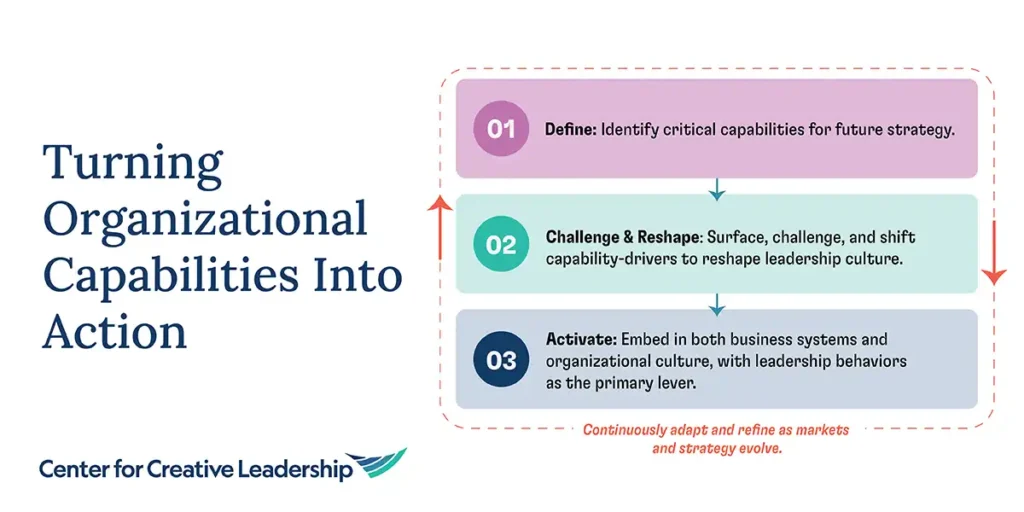
Transforming organizational capabilities into actionable realities requires a dual focus: looking both forward to future aspirations and inward to existing strengths and weaknesses. This dual perspective forms the bedrock of a proven three-phase approach designed for executive teams:
Phase 1: Strategic Capability Identification
This initial phase involves a deep dive into the organization’s current strategic objectives, market positioning, and competitive landscape. The executive team engages in rigorous analysis to identify the core organizational capabilities that are most critical for achieving long-term success. This often involves reviewing existing strengths, identifying critical gaps, and forecasting future capability needs in anticipation of market shifts and emerging trends. The outcome is a clearly defined, prioritized set of organizational capabilities that will form the strategic focus.
Phase 2: Leadership Capability Development and Culture Alignment
Once the strategic organizational capabilities are identified, the focus shifts to developing the corresponding leadership capabilities required to build and sustain them. This phase involves assessing current leadership strengths and weaknesses against the identified capabilities, designing targeted development programs, and fostering a leadership culture that actively supports and rewards the desired behaviors. It also includes defining the specific observable behaviors that exemplify each prioritized capability, ensuring a clear link between individual actions and collective organizational goals.
Phase 3: Capability Integration and Performance Measurement
The final phase focuses on integrating the defined organizational and leadership capabilities into the fabric of daily operations and strategic execution. This involves establishing clear metrics and accountability frameworks to track progress, embedding these capabilities into talent management processes (recruitment, performance reviews, succession planning), and continuously reinforcing the desired behaviors through communication and reinforcement. Regular reviews and adjustments are made to ensure that the capabilities remain relevant and effective in the face of ongoing change.
This structured, three-phase approach, visually represented by clear infographics, provides executive teams with a roadmap for translating abstract strategic goals into concrete organizational strengths and the leadership behaviors that drive them.
Bridging Strategy and Action: The Role of Organizational Capabilities
As organizations contemplate their future trajectory and the evolution of their leadership requirements, organizational capabilities emerge as a pivotal bridging mechanism. By directing energy toward defining and cultivating the organization’s differentiating strengths, these capabilities strategically position the enterprise for success and provide indispensable clarity on the specific behaviors leaders must excel in.
The future is inherently dynamic, and with it, organizational strategies and the leadership actions required to execute them will inevitably evolve. However, when an organization harmonizes its mission, values, strategy, and leadership culture around a focused set of capabilities, it not only strengthens its immediate execution capacity but also enhances its ability to adapt and thrive in the long term. This integrated approach ensures that every element of the Leadership Strategy Model, and every individual within the organization, remains aligned and on the right track toward sustained success.
Embarking on the Next Stage: Partnering for Impact
The process of identifying the organizational capabilities that transform a company’s strategy into a distinct competitive identity—and cultivating the leadership culture necessary to sustain them—is a consequential undertaking for any executive team. Recognizing the complexity and importance of this endeavor, specialized guidance can significantly accelerate progress and ensure impactful outcomes.
Organizations seeking to navigate this critical process can benefit from partnering with experts who can facilitate the definition, alignment, and activation of the most vital capabilities for sustained business performance. By leveraging established frameworks and a deep understanding of leadership dynamics, such partnerships can empower executive teams to build resilient organizations poised for enduring success in an ever-changing global landscape. Exploring dedicated organizational leadership consulting services can provide the strategic support and practical tools necessary to translate vision into tangible results and build a truly differentiated competitive advantage.