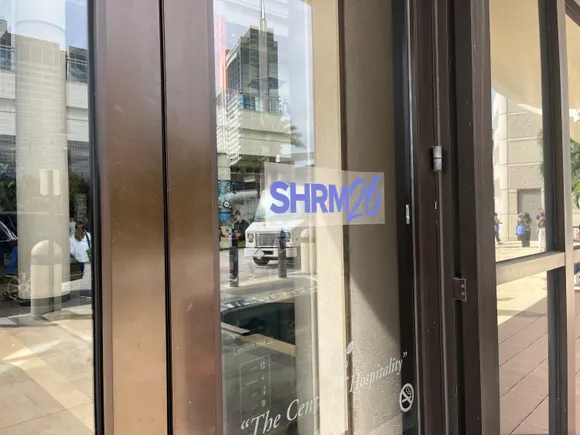
ORLANDO, Fla. – As artificial intelligence continues its rapid integration into human resources, particularly in recruitment, a critical challenge emerges: ensuring these sophisticated tools do not inadvertently overlook a vast pool of qualified individuals often referred to as "hidden talent." This pressing concern was brought to the forefront by Jacqueline Grant, founder and CEO of The Management Academy, a workforce development organization, during her presentation at SHRM26 on June 18. Her insights underscored the paradox of AI in talent acquisition: while 93% of talent acquisition professionals reportedly planned to increase their AI usage by 2026, the very technology promising efficiency and objectivity risks perpetuating and even amplifying existing biases, potentially excluding valuable candidates.
The Ascendancy of AI in Talent Acquisition
The adoption of AI in HR is not merely a trend; it is a fundamental shift in how organizations identify, attract, and onboard talent. Driven by pressures to streamline processes, manage vast applicant volumes, and identify the best candidates quickly, companies are increasingly leveraging AI for everything from initial resume screening and candidate matching to interview scheduling and predictive analytics. The promise is significant: reduced time-to-hire, lower costs, improved candidate experience, and data-driven insights to make more informed decisions. Global spending on AI in HR solutions has surged, reflecting a widespread belief in its transformative potential. Industry reports indicate that the market for AI in recruitment is projected to grow exponentially, driven by advancements in machine learning, natural language processing (NLP), and predictive algorithms.
However, this technological leap, while offering unprecedented advantages, also presents a complex ethical and practical dilemma. The algorithms that power these AI tools are often trained on historical data, which, if not carefully curated, can embed and amplify pre-existing human biases. This is particularly problematic when the historical data reflects past hiring practices that favored specific demographics, educational backgrounds, or career trajectories, inadvertently sidelining candidates who do not fit a traditional mold. The conversation at SHRM26, therefore, was a timely reminder that technological progress must be coupled with vigilant human oversight and a deliberate strategy to ensure equitable outcomes.
Defining and Identifying "Hidden Talent"
Jacqueline Grant’s presentation meticulously defined "hidden talent" as a diverse group of nontraditional job candidates whose qualifications and experiences may not neatly align with conventional recruitment criteria. This cohort includes, but is not limited to, career switchers bringing transferable skills from unrelated industries, military veterans whose extensive leadership and technical training often require careful translation into civilian contexts, graduates of specialized workforce development programs, and adult learners who have acquired valuable competencies through alternative educational pathways or life experiences. Beyond these, the "hidden talent" pool also encompasses individuals re-entering the workforce after a hiatus, neurodiverse candidates who may excel in specific roles but struggle with traditional interview formats, and even individuals with criminal records who have rehabilitated and possess valuable skills.
The collective potential of this talent pool is immense. Research suggests that focusing on skills-based hiring and tapping into these overlooked groups can significantly expand the available workforce, address critical skill gaps, and foster greater diversity and innovation within organizations. For example, military veterans often possess exceptional leadership, problem-solving, and teamwork skills, yet their resumes may not use the exact keywords an AI system is programmed to detect for civilian roles. Similarly, a self-taught software developer who learned through bootcamps and open-source projects might be filtered out by an AI programmed to prioritize computer science degrees from specific universities. The economic implications of fully integrating this talent are staggering, potentially adding billions to global GDP by increasing labor force participation and productivity.
The AI Blind Spot: Where Nontraditional Candidates Disappear
Grant detailed three critical areas where nontraditional candidates frequently fall out of the hiring process due to the limitations of AI and traditional recruitment paradigms: visibility, interpretation, and employer confidence.
-
Visibility Review: This review examines which candidates are considered for a given role and the underlying reasons. While candidates bear the responsibility of clearly articulating their capabilities and training, HR departments and their AI systems must equally ensure that their platforms are sophisticated enough to recognize and value common types of experience or specific keywords that signify relevant credentials, even if presented unconventionally. For instance, an AI tool might be programmed to look for specific certifications. If a candidate possesses equivalent skills gained through on-the-job training or a non-traditional program, the system might fail to flag them. Grant emphasized that if an employer seeks "AI-ready" candidates, they must transparently articulate the specific credentials or experiences that fulfill this requirement, allowing candidates to tailor their applications or for the AI to be programmed to recognize a broader spectrum of relevant indicators. This often requires moving beyond mere keyword matching to a deeper semantic understanding of qualifications.
-
Interpretation Review: This concept relates to an employer’s ability to translate a candidate’s diverse experiences into tangible business needs. A candidate might list "supervised retail staff" on a resume. While a traditional AI might not fully grasp the depth of this experience, a human, or a more advanced, context-aware AI, could interpret this as experience in leadership, conflict resolution, customer service, inventory management, team coordination, and workforce communication – all highly transferable skills valuable across various industries. Grant stressed that it is incumbent upon the organization conducting the interview, and by extension, programming its AI, to ensure that it can receive and translate such information in a way that fits its particular organizational context and needs. This moves beyond simply identifying skills to understanding their application and potential value in a new environment. This interpretive gap is where many career switchers and individuals from less conventional backgrounds are often disadvantaged.
-
Employer Confidence Review: This process aims to identify the disconnects between the credentials candidates present on a resume and what they convey during an in-person interview, which often impacts hiring managers’ confidence. Human biases, often subconscious, lead hiring managers to favor candidates with familiar backgrounds, even if their skills are not superior. When AI systems are trained on historical hiring patterns that reflect these biases, they can inadvertently perpetuate a cycle where "safe" or "familiar" candidates are prioritized, leading to a homogenous workforce. Employers can conduct confidence reviews by analyzing which candidates successfully advance through the hiring funnel versus those who consistently drop off, and then investigate the underlying reasons. This data can then be used to retrain AI models to look for a broader set of success indicators and to challenge implicit assumptions about what makes a "good fit."
The Imperative of Human Oversight and Ethical AI Governance
The discussion at SHRM26 highlighted a critical finding from a 2025 study by University of Washington researchers: human recruiters often adopt the biases of the AI tools they use to select job candidates. This phenomenon, where humans defer to technology even when it exhibits flaws, underscores the profound responsibility HR professionals hold in overseeing AI’s deployment. AI, while a powerful tool, lacks the contextual judgment, empathy, and ethical reasoning that are inherently human.
Grant unequivocally stated that HR remains responsible for the outcomes produced by AI. Final recruiting decisions must always rest with human beings. To mitigate algorithmic bias, employers must actively avoid "familiarity traps" – the tendency to screen for criteria held by current, often homogenous, employees. This practice, she noted, artificially thins talent pools and hinders organizational growth. "If you want to expand, you have to go beyond the familiar colleges, places and industries you might recruit from," Grant advised. "We often repeat signals associated with previous hires and past successes. Even those signals don’t necessarily predict the performance that we want." This speaks to the danger of relying on proxies for success that may not truly correlate with future performance or innovation.
Designing AI for Inclusivity: A Blueprint for the Future
Instead of merely automating existing, potentially biased, processes, recruiters must design AI tools that are fundamentally capability-focused. This means programming AI to identify employees with transferable skills, those who are potential-driven, and individuals who bring diverse experiences to the table. This paradigm shift requires moving beyond rigid criteria like exact job title matches, keyword density in resumes, linear career progressions, the prestige of previous employers, or mere industry familiarity. These traditional metrics, while seemingly objective, can be deeply exclusionary and poor predictors of success in a rapidly evolving job market.
For example, AI can be developed to analyze resumes and profiles for demonstrations of problem-solving, critical thinking, adaptability, communication, and collaboration – skills that are often acquired through varied life and professional experiences, not just traditional corporate roles. NLP algorithms can be trained to recognize and value "soft skills" and cross-functional expertise, rather than solely focusing on hard skills or specific industry jargon.
Furthermore, human oversight provides invaluable context, judgment, adaptability, and ethical reasoning skills that AI cannot easily replicate. To effectively integrate this oversight, Grant advised identifying "human review trigger points" within the recruitment process. These are specific occasions where candidates reference nontraditional experiences, alternative career paths, or unique skill acquisition methods that an automated system might misinterpret or dismiss. Such triggers should automatically flag an application for review by a human recruiter, ensuring that valuable candidates are not prematurely filtered out. This hybrid approach – leveraging AI for efficiency and scale, while embedding human intelligence for nuance and ethical judgment – is paramount.
Finally, a robust governance strategy is essential. Employers must ensure that any AI or recruitment vendors they engage are fully aligned with these standards of inclusivity and ethical practice. This involves due diligence in vendor selection, requiring transparency about AI training data, regular audits of algorithmic outputs for bias, and a commitment to continuous improvement based on feedback and performance metrics. Organizations must establish clear policies for AI usage, data privacy, and accountability mechanisms to address potential discriminatory outcomes.
Broader Implications: Reshaping the Workforce and Economy
The thoughtful integration of AI in recruitment, particularly with a focus on unlocking hidden talent, carries profound implications for the future workforce and broader economy.
- Addressing Skill Gaps: By broadening the talent pool, organizations can more effectively address persistent skill shortages in critical industries. Tapping into career changers, veterans, and individuals from workforce development programs can provide access to diverse skill sets that might otherwise remain untapped, bolstering economic competitiveness.
- Enhancing Diversity, Equity, and Inclusion (DEI): A deliberate strategy to program AI for inclusivity directly supports DEI initiatives. A more diverse workforce leads to increased innovation, better problem-solving, improved employee engagement, and enhanced financial performance. Studies consistently show that companies with diverse teams outperform their less diverse counterparts.
- Economic Growth and Social Mobility: Facilitating access to employment for hidden talent can significantly contribute to economic growth by increasing labor force participation and productivity. It also promotes social mobility, offering opportunities to individuals who might otherwise face systemic barriers, fostering a more equitable society.
- Future-Proofing Organizations: In an era of rapid technological change, the ability to identify and nurture potential, transferable skills, and adaptability is crucial. Organizations that prioritize these qualities through inclusive AI will be better positioned to adapt to future disruptions and maintain a competitive edge.
Jacqueline Grant’s powerful message from SHRM26 serves as a critical reminder: the future of recruitment is not merely about automating hiring but about elevating it. Organizations that thrive in this new landscape will not simply automate existing processes; they will innovate by combining advanced technology with intentional human insight and ethical judgment. The goal is to create recruitment systems that are not only efficient but also equitable, recognizing the full spectrum of human potential and ensuring that no valuable talent remains hidden. This delicate balance of technology and humanity is the cornerstone of a truly intelligent and inclusive talent acquisition strategy.