The role of Human Resources (HR) has fundamentally shifted from a reactive, administrative function to a strategic imperative for organizational success. Historically, HR professionals were primarily seen as the custodians of employee relations, tasked with mediating conflicts, ensuring compliance, and managing the day-to-day operational aspects of the workforce. However, the modern workplace, characterized by rapid technological advancements, evolving employee expectations, and a growing emphasis on culture and employee experience, demands a more sophisticated and proactive HR function. Consequently, the need for robust and specialized HR training programs has never been more critical. These programs are no longer just about keeping pace with regulations; they are about equipping HR teams with the knowledge, skills, and confidence to drive business strategy, foster a thriving organizational culture, and navigate the complexities of a dynamic work environment.
In today’s business climate, HR professionals are expected to be culture architects, champions of employee recognition, skilled coaches for management, and adept change navigators. The right training empowers them not only to manage these multifaceted responsibilities but also to proactively identify opportunities and mitigate risks, thereby contributing directly to the company’s bottom line and long-term sustainability. Whether it involves deepening expertise in compliance, developing inclusive hiring practices, or mastering the art of making recognition impactful and sustainable, comprehensive training serves as the bedrock upon which lasting organizational improvements are built. This is particularly true when such training is complemented by practical, hands-on learning experiences and tools that translate strategic intent into tangible results.
Identifying Key HR Training Programs for Today’s Teams
The market offers a vast array of HR training programs, but discerning those that provide genuine value and return on investment requires careful consideration. To assist organizations in navigating this landscape, a curated selection of twelve prominent HR training providers and their offerings has been identified. These programs are recognized for their practical learning methodologies, relevant industry insights, and flexible delivery formats designed to accommodate the fast-paced demands of contemporary workforces.
1. Coursera: Accessible and Comprehensive Online Learning
Coursera stands out for its ability to integrate HR skill development into busy schedules. The platform hosts a wide range of courses covering critical HR domains such as talent management and organizational psychology, developed by leading academic institutions and industry partners. Many courses are available for free, with an optional Coursera Plus subscription offering access to over 7,000 additional courses for $83 per month or $567 annually, presenting a flexible and cost-effective avenue for continuous professional growth.
2. Oxford Home Study Centre (OHSC): Foundational HR Expertise
OHSC provides online HR courses that focus on core competencies, including recruitment, HR management, and compliance. The center offers several entry-level courses at no cost and supports learners with access to tutor assistance and peer discussion forums. This approach offers a low-barrier, low-pressure entry point for individuals looking to build or refresh their foundational HR knowledge.
3. Association for Talent Development (ATD): Deep Dives into Talent Development
ATD is a recognized leader for HR and talent development professionals seeking to enhance their expertise in areas like coaching, onboarding, and training design. Their programs are delivered through both online and in-person modalities. An ATD membership, starting at $299 per year, grants members access to course discounts, valuable research, essential tools, and a robust professional community, fostering continuous learning and networking opportunities.
4. Academy to Innovate HR (AIHR): Specialized and Self-Paced Learning
AIHR specializes in self-paced learning modules across a broad spectrum of HR disciplines. These include people analytics, HR business partnering, talent acquisition, compensation and benefits, digital HR, and the application of AI in HR practices. Individual certificate programs are priced at $1,125 and provide 12 months of access. For comprehensive access, the Full Academy subscription costs $1,850 per year, encompassing all 16 certificate programs, over 85 courses and mini-courses, downloadable templates, webinars, and extensive learning resources.
5. eCornell: Academic Rigor and Executive Education
The online learning platform of Cornell University, eCornell, offers certificate programs in specialized areas such as Diversity, Equity, and Inclusion (DEI), recruiting, and leadership for hybrid teams. The curriculum is developed by Cornell University faculty, lending significant academic credibility. While individual courses can be purchased, full certificate programs often exceed $3,000, positioning eCornell as a premium option for those seeking academically grounded expertise.
6. FutureLearn: Flexible Learning with Micro-Credentials
FutureLearn offers HR courses that span topics from workforce planning to mental health in the workplace. Users can preview course content without charge, or opt for full access via a subscription model ($40 per month or $335.99 annually). The platform also provides micro-credential programs, ideal for individuals looking to acquire new skills without a long-term commitment, making it a highly adaptable learning solution.
7. LinkedIn Learning: Convenient and Scalable Skill Development
LinkedIn Learning provides an extensive library of HR courses, covering subjects from compensation strategies to the integration of AI in HR functions. Many courses are designed for brevity, making them easily consumable within a demanding workday. Subscription plans begin at $39.99 per month, with team plans available for groups of 2-20 users at $339.99 per user annually, offering scalable solutions for organizations of varying sizes.
8. Human Capital Institute (HCI): Strategic HR Certifications and Workshops
HCI is a leading provider of live certification programs, workshops, and conferences focused on strategic HR imperatives, including succession planning and leadership development. Training is accessible both in-person and virtually. Membership tiers range from $595 to $1,295, depending on the level and duration of engagement, and include valuable discounts on future programs, encouraging continued professional development.
9. Alison: Free and Accessible HR Courses
Alison offers a wide array of on-demand HR courses covering essential topics such as conflict resolution, change management, and people leadership. Course durations vary from short refresher modules to more comprehensive "diploma" options requiring over 10 hours of study. The majority of content is accessible for free, with an ad-free learning experience available through a premium subscription starting at €7.99 per month.
10. HR Certification Institute (HRCI): Industry-Recognized Credentials
The HR Certification Institute (HRCI) is renowned for its industry-recognized certifications for HR professionals at all career stages, including designations like aPHR® and SPHR®. Applications and testing are available year-round. Each certification involves a $100 application fee, with exam costs ranging from $300 to $495. While representing a significant investment, these certifications are widely regarded as a crucial marker of professional credibility and career advancement.

11. SHRM (Society for Human Resource Management): Comprehensive Professional Development
The Society for Human Resource Management (SHRM) provides extensive training and certification opportunities for HR professionals across diverse career stages. Topics include employee benefits, total rewards strategies, and best practices for remote hiring. An annual SHRM membership, starting at $299, grants access to exclusive templates, in-depth research, and discounted learning resources, supporting continuous professional growth and networking.
12. Udemy: Diverse and Affordable On-Demand Learning
Udemy hosts a vast marketplace of HR courses, covering subjects from emotional intelligence and team building to unconscious bias training. Courses are self-paced and individually priced, often falling under $100. With over 210,000 available options, learners can easily find content that aligns with their specific career goals, learning styles, and desired pace.
Cultivating a Culture of Recognition Through HR Training
Effective employee recognition is a cornerstone of a positive and productive organizational culture. However, implementing such a strategy requires HR professionals who are not only knowledgeable but also skilled in its execution. This is precisely where targeted HR training plays a pivotal role. When HR teams are equipped with the understanding and tools to embed recognition into the daily fabric of work – rather than confining it to annual performance reviews – the impact on employee engagement, retention, and the reinforcement of company values is profound.
The true power of recognition unfolds when HR professionals can move beyond theoretical concepts and engage in practical application. This involves understanding how to design and launch effective recognition campaigns, coach leadership on best practices, and integrate recognition seamlessly into the employee lifecycle. Programs like Achievers University offer hands-on resources, including on-demand tutorials and adoption kits, designed to guide HR teams from basic platform utilization to fostering a vibrant culture of appreciation and engagement.
Unlocking the Benefits of Comprehensive HR Training Programs
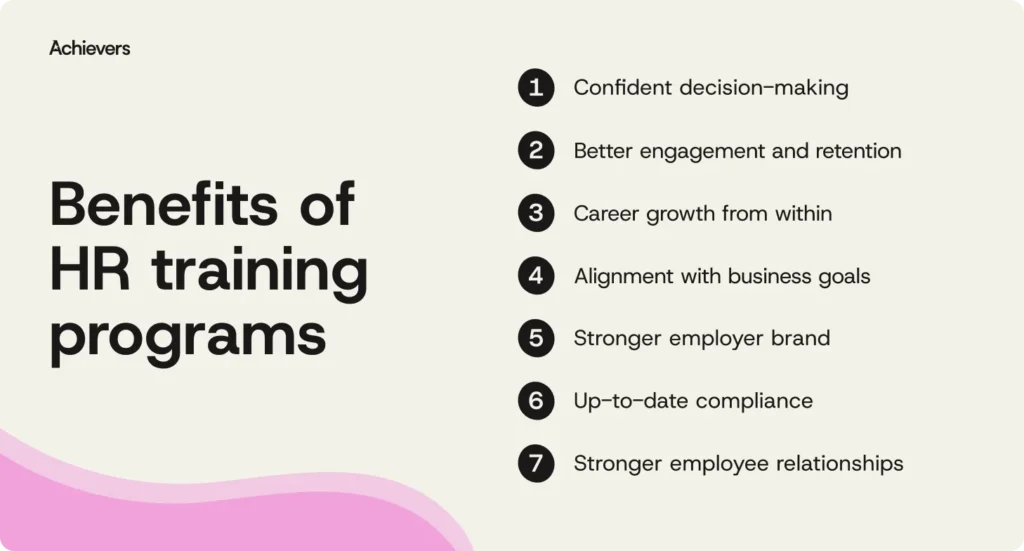
Investing in robust HR training programs yields a cascading effect of positive outcomes across an entire organization. It systematically enhances the capabilities of the HR function, reinforces a positive organizational culture, and unequivocally signals that the people team is a valued and strategic asset worthy of investment. The strategic advantages unlocked by effective HR training include:
- Enhanced Compliance and Risk Mitigation: Training ensures HR teams are up-to-date with the latest labor laws, regulations, and best practices, significantly reducing the risk of legal challenges and costly penalties. For instance, updated training on data privacy regulations like GDPR or CCPA is crucial for protecting sensitive employee information.
- Improved Employee Engagement and Retention: HR professionals equipped with skills in areas like employee recognition, performance management, and career development can foster environments where employees feel valued and supported, leading to higher engagement and reduced turnover. Data from studies consistently show that organizations with strong recognition programs experience lower voluntary turnover rates.
- Stronger Leadership and Management Capabilities: Training programs that focus on coaching managers and developing leadership skills empower them to better lead their teams, manage performance effectively, and contribute to a positive work environment. This can translate into improved team productivity and morale.
- Cultivation of a Positive Organizational Culture: HR training is instrumental in shaping and reinforcing an organization’s values and culture. Programs focused on DEI, psychological safety, and inclusive practices help create a more equitable and supportive workplace for all employees.
- Increased Efficiency and Productivity: By streamlining HR processes, implementing effective technology, and improving employee relations, well-trained HR teams can contribute to overall organizational efficiency and productivity.
- Strategic Business Partnership: As HR professionals gain more strategic knowledge and skills, they can move beyond operational tasks to become true strategic partners, advising leadership on workforce planning, talent management, and organizational design to align with business objectives.
- Adaptability to Change: In an era of constant disruption, HR training equips teams with the agility to manage organizational change, support employees through transitions, and adapt to new work models, such as hybrid or remote work environments.
Navigating Common Pitfalls in HR Training Program Implementation
Even with the best intentions, HR training initiatives can fall short of their objectives if not planned and executed meticulously. Awareness of common pitfalls and proactive strategies to avoid them are essential for maximizing the return on training investments.
- Lack of Clear Objectives and Alignment: Training without clearly defined goals that align with business strategy is often ineffective.
- Avoidance: Before selecting a program, clearly articulate what specific skills or knowledge gaps the training aims to address and how it will contribute to organizational goals.
- Insufficient Management Buy-in and Support: Without the active support of senior leadership and direct managers, training initiatives may not be prioritized or reinforced.
- Avoidance: Secure leadership sponsorship and involve managers in the training needs assessment and selection process. Communicate the benefits of the training to all stakeholders.
- Overemphasis on Theory Without Practical Application: Training that consists solely of lectures or theoretical concepts without opportunities for practical application or skill-building can lead to poor knowledge retention.
- Avoidance: Prioritize programs that incorporate case studies, simulations, role-playing, and hands-on exercises. Encourage immediate application of learned skills in the workplace.
- Inadequate Follow-up and Reinforcement: Learning is an ongoing process. Without mechanisms for reinforcement and follow-up, newly acquired skills can quickly diminish.
- Avoidance: Implement post-training activities such as coaching, mentoring, follow-up workshops, and performance feedback to reinforce learning and encourage behavioral change.
- Choosing the Wrong Training Format or Provider: A mismatch in delivery format (e.g., online vs. in-person) or a provider that doesn’t understand the organization’s specific needs can lead to wasted resources.
- Avoidance: Carefully assess the learning styles of the target audience, the nature of the content, and the organizational budget when selecting a training format and provider.
- Failure to Measure Training Effectiveness: Without a system for evaluating the impact of training, it’s impossible to determine its ROI or identify areas for improvement.
- Avoidance: Establish key performance indicators (KPIs) to measure training effectiveness, such as changes in employee performance, improved compliance rates, or increased employee engagement. Conduct post-training assessments and surveys.
- Ignoring the Need for Ongoing Development: The HR landscape is constantly evolving. Treating training as a one-off event rather than a continuous process leads to outdated skills and knowledge.
- Avoidance: Develop a long-term learning and development strategy for the HR team, incorporating regular training, professional certifications, and opportunities for continuous learning.
Diverse Modalities of HR Training Programs
The multifaceted nature of HR responsibilities necessitates a variety of training approaches. Recognizing the diverse needs and goals of HR professionals, programs are tailored to different levels of expertise and specific functional areas.
- Compliance and Legal Training: These programs focus on current labor laws, regulations, and ethical standards, ensuring HR professionals can navigate complex legal landscapes and minimize organizational risk. Examples include training on EEO laws, wage and hour regulations, and workplace safety standards.
- Talent Acquisition and Recruitment Training: This category covers best practices in sourcing, interviewing, assessing candidates, and building a diverse and inclusive talent pipeline. Skills in employer branding and candidate experience are also key components.
- Compensation and Benefits Training: Programs in this area equip HR professionals with the knowledge to design and administer competitive compensation and benefits packages, including salary benchmarking, incentive programs, and health and retirement plans.
- Employee Relations and Conflict Resolution Training: These courses focus on mediating disputes, managing grievances, fostering positive employee relations, and addressing workplace misconduct effectively and fairly.
- Performance Management Training: This training covers setting performance expectations, providing constructive feedback, conducting performance reviews, and developing performance improvement plans.
- Diversity, Equity, and Inclusion (DEI) Training: Essential for fostering an inclusive workplace, these programs focus on unconscious bias, cultural competence, creating equitable opportunities, and building an inclusive culture.
- HR Technology and Analytics Training: With the increasing reliance on HR technology, training in HRIS systems, payroll software, and people analytics is crucial for data-driven decision-making and process optimization.
- Leadership Development and Coaching Training: HR professionals often play a role in developing leaders. This training equips them to coach managers, facilitate leadership development programs, and support succession planning.
- Change Management Training: In today’s dynamic business environment, HR professionals need skills to guide organizations and employees through periods of change, managing resistance and fostering adaptability.
Online Versus Offline HR Training: Finding the Optimal Fit
The selection of the most effective training format—whether online or offline—depends heavily on an organization’s specific context, including its culture, geographical distribution of employees, budget, and learning preferences. A balanced approach, often combining elements of both, can yield the most comprehensive results.
Online HR Training:
- Pros: Offers unparalleled flexibility, allowing learners to study at their own pace and on their own schedule. It is highly scalable, cost-effective for distributed workforces, and provides access to a global pool of expertise. Many online platforms offer interactive elements, multimedia content, and immediate feedback.
- Cons: Can sometimes lack the depth of personal interaction found in face-to-face settings. Requires strong self-discipline and motivation from the learner. Technical issues can occasionally disrupt the learning experience.
Offline (In-Person) HR Training:
- Pros: Facilitates direct interaction with instructors and peers, fostering deeper engagement, networking opportunities, and immediate clarification of doubts. Offers a more immersive learning experience and can be highly effective for hands-on skill development and complex interpersonal dynamics.
- Cons: Typically more expensive due to costs associated with venue, travel, and accommodation. Less flexible in terms of scheduling and can be challenging to implement for geographically dispersed teams.
Many organizations are adopting a blended learning approach, leveraging the strengths of both online and offline methods. This might involve online modules for foundational knowledge acquisition, followed by in-person workshops for practical application, group discussions, and collaborative problem-solving. The key is to align the training format with the specific learning objectives and the practical realities of the organization.
Integrating Recognition into HR Training with Achievers
Training serves as the critical foundation for building HR capabilities. However, it is the consistent practice of recognition that truly transforms these capabilities into a tangible, positive organizational culture. When HR professionals are not only empowered through continuous learning but also recognized for their contributions and developmental efforts, their engagement levels rise, their connections within the organization strengthen, and their leadership impact grows significantly.
The most impactful HR training programs extend beyond mere skill acquisition. They intentionally create space for recognition, reinforcement, and the cultivation of lasting behavioral change. While learning in isolation possesses inherent value, its potency is amplified exponentially when supported by an organizational culture that actively fosters appreciation and acknowledgement.
Achievers empowers organizations to seamlessly integrate recognition into every facet of the employee experience, including their training and development journeys. By providing the requisite tools and unwavering support, HR teams can transcend the role of merely adapting to change; they can become influential architects of it. For organizations aspiring to translate professional development into enduring, positive organizational impact, exploring how a robust recognition strategy can be the catalyst is a strategic imperative.