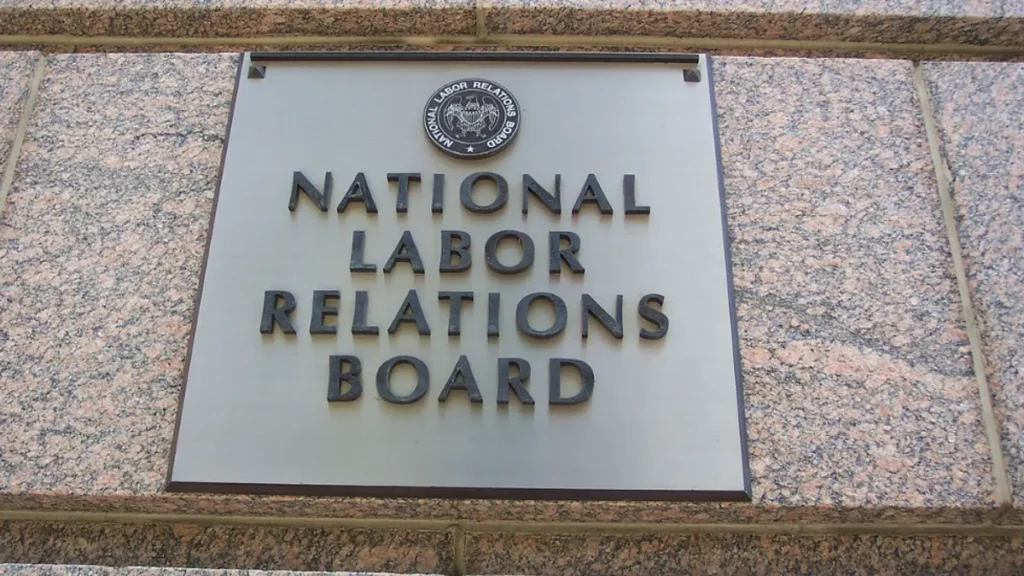
The National Labor Relations Board (NLRB), the independent federal agency tasked with enforcing U.S. labor law, has seen its five-member panel return to a Republican majority, a development that is widely anticipated to usher in a significant shift in labor policy and the potential overturning of established precedential decisions. This crucial change, solidified by the recent Senate confirmations of Republican James Macy and Democrat David Prouty, restores a full and functioning board, averting a potential "quorum gap" but simultaneously empowering the Republican members to reshape the legal landscape governing labor relations across the nation.
Understanding the NLRB’s Role and Structure
To fully grasp the implications of this shift, it is essential to understand the fundamental role and structure of the National Labor Relations Board. Established by the National Labor Relations Act (NLRA) in 1935, the NLRB is responsible for safeguarding employees’ rights to organize and bargain collectively with their employers, and to engage in other protected concerted activity, or to refrain from any such activity. It also works to prevent and remedy unfair labor practices committed by employers and labor organizations.
The Board itself consists of five members, appointed by the President and confirmed by the Senate, who serve staggered five-year terms. These members are typically selected to reflect the political leanings of the administration in power, leading to a cyclical pattern of policy adjustments with each change in the White House. Beyond the Board members, the agency also includes a General Counsel, who acts as the chief prosecutor of unfair labor practice charges and oversees the agency’s regional offices, and Administrative Law Judges who hear cases.
A critical aspect of the NLRB’s operation is the concept of a "quorum." For the Board to conduct official business, including issuing decisions that interpret and apply the NLRA, a minimum number of members must be present and participating. Traditionally, this means at least three members. When the Board lacks a quorum, it effectively grinds to a halt, unable to resolve cases or provide clarity on labor law, leading to significant backlogs and uncertainty for both employers and employees. Furthermore, a long-standing Board tradition, as noted by legal experts like Ogletree Deakins, requires at least three affirmative votes to reverse existing precedential decisions. This means that while a simple functioning quorum can issue routine decisions, a partisan majority of three or more is typically required to actively change established legal interpretations.
A Tumultuous Path to Majority: A Chronology of Events
The journey to the current composition of the NLRB has been marked by periods of political wrangling, vacancies, and the controversial removal of members, underscoring the highly politicized nature of labor policy in the United States.
The most recent period of instability began in January 2025, when then-President Trump controversially fired Democrat Gwynne Wilcox from the Board. This action immediately deprived the NLRB of a functioning quorum, as it left only two members remaining. For several months, the Board was effectively paralyzed, unable to issue any new decisions. This "quorum gap" created a growing backlog of cases, leaving employers, unions, and workers in limbo, unable to get timely resolutions to their labor disputes. The impact of such paralysis can be substantial, delaying justice, hindering collective bargaining, and fostering an environment of legal uncertainty.
The situation eased somewhat in December 2025 when the Senate moved to restore the Board’s quorum. In a crucial set of confirmations, Republicans James Murphy, a former career NLRB attorney, and Scott Mayer, who previously served as chief labor counsel at Boeing, were confirmed. Their appointments brought the Board’s membership to four, re-establishing the necessary quorum and allowing the agency to resume its operational functions, albeit with a split ideological composition. At that point, the Board consisted of two Republicans and two Democrats, meaning significant precedential shifts were unlikely due to the lack of a clear ideological majority.
However, the Board faced the specter of losing its quorum once again as Democrat David Prouty’s term was slated to expire in August 2026. This looming deadline prompted renewed urgency in the Senate to confirm new nominees. The timing of the recent confirmations of Republican James Macy, formerly a U.S. Department of Labor official, and Democrat David Prouty (re-confirmed for a new term) was therefore critical. Their joint confirmation, part of a larger grouping of 74 nominations that passed the Senate in a 51-47 vote, successfully averted a potential second "quorum gap."
With these latest confirmations, the NLRB’s current composition now stands at three Republicans (James Murphy, Scott Mayer, and James Macy) and one Democrat (David Prouty), with one remaining vacancy. This 3-1 Republican majority is the pivotal development, as it provides the necessary votes for the Board to actively revisit and potentially overturn prior precedential decisions. The sole remaining vacancy could potentially be filled by President Trump, further solidifying the Republican leanings of the Board with a 4-1 split, should he choose to make an appointment.
The Power to Overturn Precedent: Implications for Labor Law
The most significant consequence of the Republican majority is its newfound ability to overturn prior precedential decisions. This is not merely an academic exercise; it represents a fundamental shift in the interpretation and enforcement of the National Labor Relations Act, with far-reaching practical implications for businesses, unions, and individual workers. Historically, the NLRB’s policy interpretations have often swung like a pendulum, reflecting the political philosophy of the presidential administration in power. A Republican-controlled Board typically leans towards interpretations that favor employer interests, emphasize management rights, and limit union power, while a Democratic-controlled Board tends to bolster worker protections and facilitate union organizing.
Several key areas of labor law are prime candidates for re-evaluation under the new Republican majority:
-
The Joint Employer Standard: This issue has been a highly contested and frequently changing aspect of labor law. The joint employer standard determines when two or more entities can be held jointly responsible for labor law violations, such as unfair labor practices or collective bargaining obligations. A broader definition, often favored by Democratic majorities (e.g., the Browning-Ferris Industries decision under the Obama administration), expands liability to franchisors, parent companies, and staffing agencies, making it easier for unions to organize and hold multiple parties accountable. Conversely, Republican majorities (e.g., the Hy-Brand Industrial Contractors and Atlas Air Worldwide Holdings decisions under the previous Trump administration, which temporarily narrowed the standard before it was broadened again by the Biden Board) typically advocate for a narrower standard, requiring more direct and immediate control over working conditions before joint employer status is conferred. A Republican majority is highly likely to revert to a more restrictive joint employer test, which would provide greater insulation for companies utilizing franchise or contractor models from being held liable for the labor practices of their business partners. This shift would have a profound impact on industries reliant on these structures, potentially reducing their legal exposure and collective bargaining obligations.

-
Union Representation Elections: The rules governing union representation elections are another area ripe for change. Democratic Boards have historically sought to streamline election processes, reduce delays, and limit employer interference. For instance, the "ambush election" rules introduced during the Obama administration aimed to expedite elections. Republican Boards, on the other hand, often favor rules that provide employers with more time to campaign against unionization and that impose stricter requirements on unions. Decisions like Ambrosia Coal & Construction or PCC Structurals from previous Republican-led Boards have addressed issues such as appropriate bargaining units, the treatment of pre-election unfair labor practices (known as "blocking charges"), and the timing of elections. The current Board could revisit these areas to make it more challenging for unions to organize successfully, potentially by extending election timelines or expanding employer communication rights.
-
Employee Handbooks and Workplace Rules: The line between legitimate employer rules and those that chill employees’ exercise of protected concerted activity has been a recurring battleground. Under Democratic Boards, rules prohibiting things like disparagement of the company, unauthorized recordings, or off-duty access to company property have often been scrutinized and sometimes deemed unlawful if they could reasonably be interpreted by employees as restricting their rights under the NLRA (e.g., the Lutheran Heritage Village-Livonia standard). Republican Boards, by contrast, tend to afford employers greater latitude in maintaining workplace discipline and protecting proprietary interests. The Boeing Co. decision during a previous Republican Board era established a more employer-friendly framework for evaluating handbook rules, which the current Board is likely to reinstate or even expand upon. This could mean employers have more flexibility to enforce policies related to social media, confidentiality, and conduct without fear of NLRB challenge, potentially at the expense of employees’ ability to discuss wages, hours, and working conditions.
-
Protected Concerted Activity: This broad category encompasses a wide range of employee actions, including discussions about terms and conditions of employment, protests, and advocacy. The scope of what constitutes "protected concerted activity" has expanded and contracted based on Board composition. For example, Democratic Boards have often extended protections to individual employees acting alone if their actions relate to broader group concerns, or to employees using social media to air workplace grievances. A Republican Board is likely to narrow the definition of protected concerted activity, requiring a clearer nexus to group action and potentially limiting protections for certain types of employee advocacy, especially those that could be perceived as disruptive or disloyal by employers.
-
Access to Employer Property: The extent to which non-employee union organizers can access employer property for organizing purposes is another area subject to change. Historically, the Supreme Court’s Lechmere decision has limited such access, but subsequent Board decisions have sometimes carved out exceptions. A Republican majority is likely to reinforce employer property rights, making it more difficult for unions to gain access to employees in workplaces where they do not already have a presence.
Reactions from Stakeholders and Broader Implications
The confirmation of Macy and Prouty, and particularly the establishment of a Republican majority, has elicited predictable reactions from various stakeholder groups.
The Associated Builders and Contractors (ABC), a prominent employer advocacy group, immediately commended the confirmations. In a Friday statement, ABC highlighted the importance of a fully functioning NLRB to "reducing the growing case backlog and ensuring labor disputes are resolved in a timely and predictable manner." Kristen Swearingen, ABC vice president of government affairs, emphasized that losing a quorum would have left the NLRB "unable to issue decisions, creating additional uncertainty for the construction industry and the broader employer community." This reaction is consistent with employer organizations’ general desire for regulatory stability and efficient resolution of disputes, often favoring interpretations of labor law that provide businesses with greater operational flexibility.
Conversely, labor unions and worker advocacy groups are likely to view the shift with apprehension. Historically, Republican-led NLRBs have been seen as less sympathetic to union organizing efforts and worker protections. These groups would likely express concerns that the new majority could roll back recent gains for workers, make it harder to form unions, and weaken enforcement against unfair labor practices. They may anticipate a period where the Board is less inclined to find employer conduct unlawful, potentially chilling employees’ exercise of their NLRA rights. Unions may need to adjust their organizing strategies and focus more on direct action or state-level advocacy in response to a potentially less favorable federal regulatory environment.

Legal experts and labor attorneys, particularly those advising employers, are already signaling to their clients the need for vigilance and potential policy adjustments. Firms like Ogletree Deakins, as cited in the original brief, have been tracking these developments closely. They would likely advise employers to review their current policies, particularly in areas like employee handbooks, social media policies, and joint employer relationships, to prepare for potential changes in NLRB guidance. The shift provides an opportunity for employers to align their practices with what is expected to be a more business-friendly interpretation of the NLRA. For attorneys representing unions and workers, the advice would likely center on preparing for more challenging legal battles and exploring alternative avenues for protecting worker rights.
The broader impact extends beyond specific legal doctrines. The ability of the Board to act decisively and overturn precedent will inject a new dynamic into labor relations. Employers may feel emboldened to adopt more assertive stances in union negotiations or in response to organizing efforts, relying on a Board that is more likely to uphold their management prerogatives. For workers and unions, this could necessitate a re-evaluation of strategies, potentially leading to increased reliance on grassroots organizing, direct action, or state-level legislative initiatives to secure rights that might be diminished at the federal level.
Furthermore, the single remaining vacancy on the Board presents another layer of potential influence. Should President Trump choose to fill this seat, it would result in a 4-1 Republican majority, further solidifying the Board’s ideological direction and potentially allowing for even more sweeping policy changes with less internal dissent.
In addition to the NLRB confirmations, the Senate also confirmed economist Brett Matsumoto to a four-year term as Commissioner of Labor Statistics at the Department of Labor (DOL). While not directly impacting NLRB policy, this appointment underscores the administration’s broader efforts to fill key positions across federal agencies that play a role in labor and economic data, which can indirectly inform policy decisions.
In conclusion, the return to a Republican majority at the National Labor Relations Board marks a pivotal moment for U.S. labor law. The Board is now equipped to embark on a new trajectory, revisiting and likely overturning precedents that have shaped labor relations for years. This shift will undoubtedly lead to a period of adjustment for employers, unions, and workers alike, as they navigate a potentially redefined landscape of rights, responsibilities, and enforcement priorities under the National Labor Relations Act. The cyclical nature of NLRB policy underscores the enduring political contest over the balance of power between labor and management in the American workplace.