As the annual Open Enrollment Period approaches, the American healthcare landscape remains a complex tapestry of individual and employer-sponsored coverage options, each defined by distinct financial structures and provider network limitations. For both employees evaluating their personal coverage and employers seeking to balance comprehensive benefits with rising operational costs, the necessity of a granular understanding of health insurance policies has never been more critical. The modern insurance market is bifurcated into two primary categories: individual coverage, which is purchased by the consumer and remains independent of their employment status, and employer-sponsored group plans, where the organization selects and partially subsidizes the policy. According to recent industry analysis, the choice of plan type—ranging from Preferred Provider Organizations (PPOs) to Health Reimbursement Arrangements (HRAs)—is increasingly driven by a need for cost predictability and network flexibility in an era of fluctuating medical inflation.
The Dominance of Managed Care: PPOs and HMOs
Within the traditional group and individual markets, four primary plan types dominate the landscape: PPOs, HMOs, EPOs, and POS plans. Each offers a different balance between the freedom to choose providers and the monthly premium cost.
Preferred Provider Organizations (PPOs)
The PPO remains the most prevalent health plan in the United States, particularly within the corporate sector. Data from the KFF 2025 Employer Health Benefits Survey indicates that 46% of individuals with employer-sponsored insurance are enrolled in a PPO. This plan type is characterized by its "preferred provider" network; while participants are encouraged to stay within the network to receive discounted rates, they maintain the flexibility to see out-of-network providers at a higher out-of-pocket cost. Critically, PPOs generally do not require a Primary Care Provider (PCP) or referrals to see specialists, making them a preferred choice for those who prioritize autonomy. However, this flexibility comes at a price, as PPOs typically carry higher monthly premiums than more restrictive models.
Health Maintenance Organizations (HMOs)
In contrast, HMOs are the most popular choice within the Affordable Care Act (ACA) individual marketplace. These plans operate on a more rigid structure, requiring members to receive all non-emergency care from a specific network of providers. A defining feature of the HMO is the requirement for a designated PCP who acts as a "gatekeeper," providing referrals for any specialist visits. While this limits flexibility, it significantly reduces out-of-pocket expenses. HMOs are often characterized by lower premiums and minimal or no deductibles, appealing to budget-conscious consumers who are comfortable with a coordinated care model.
Hybrid Models and Niche Coverage: EPO and POS Plans
For those seeking a middle ground between the autonomy of a PPO and the cost-savings of an HMO, hybrid models like Exclusive Provider Organizations (EPOs) and Point of Service (POS) plans have emerged.
Exclusive Provider Organizations (EPOs)
EPOs have grown in popularity on the ACA individual market, currently ranking as the second most common network type. An EPO functions similarly to a PPO in that it does not require a PCP or specialist referrals. However, like an HMO, it generally offers no coverage for out-of-network care except in emergencies. This "in-network only" restriction allows for lower premiums than a PPO while maintaining the ease of specialist access.
Point of Service (POS) Plans
The POS plan is the least common option on the individual market, representing approximately 4% of enrollees. It blends features by requiring a PCP and referrals (like an HMO) but allowing for out-of-network care at a higher cost (like a PPO). The administrative complexity of these plans often leads to higher out-of-pocket expenses for patients who frequently go outside the network, as they may be required to file their own reimbursement claims.
The Rise of High-Deductible Health Plans and HSAs
A significant trend in the 2020s has been the shift toward High-Deductible Health Plans (HDHPs) paired with Health Savings Accounts (HSAs). This combination is designed to lower monthly premiums while encouraging consumers to be more selective about their healthcare spending.
2027 Regulatory Thresholds
The Internal Revenue Service (IRS) strictly defines what qualifies as an HDHP. For the 2027 plan year, the minimum deductible for self-only coverage is set at $1,750, with a family minimum of $3,500. Conversely, the out-of-pocket maximums are capped at $8,700 for individuals and $17,400 for families. These thresholds ensure that while the consumer takes on more initial cost, there is a definitive ceiling on their financial liability.
Tax-Advantaged Savings
The primary incentive for enrolling in an HDHP is eligibility for an HSA. These accounts offer a triple tax advantage: contributions are tax-deductible, funds grow tax-free, and withdrawals for qualified medical expenses are not taxed. For 2027, the annual contribution limits have been adjusted to $4,500 for individuals and $9,000 for families. Unlike Flexible Spending Accounts (FSAs), HSA funds roll over annually and are entirely portable, staying with the employee even if they change jobs.
Specialized Insurance: Indemnity and Catastrophic Plans
Beyond managed care, there are specialized options for specific demographic needs or those seeking maximum provider freedom.
Indemnity Plans
Often referred to as "fee-for-service" plans, indemnity insurance offers the highest level of provider choice, as there are no established networks. The insurer pays a predetermined percentage of the "usual and customary" fee for a service, and the patient pays the remainder. While this offers unparalleled freedom, it lacks the negotiated discounts of managed care, often leading to significantly higher costs. Furthermore, indemnity plans are considered supplemental and do not meet the "minimum essential coverage" (MEC) requirements of the ACA.
Catastrophic Health Plans
Reserved primarily for individuals under the age of 30 or those with specific hardship exemptions, catastrophic plans are designed to protect against "worst-case" medical scenarios. They feature very low premiums but extremely high deductibles. Once the deductible is met, the plan typically covers 100% of essential health benefits. These plans are a vital safety net for healthy young adults who cannot afford comprehensive coverage but want protection against major accidents or illnesses.
A New Paradigm for Employers: The HRA Alternative
As traditional group plan premiums continue to rise, many employers are pivoting away from "one-size-fits-all" insurance toward Health Reimbursement Arrangements (HRAs). This shift represents a move from a defined benefit model to a defined contribution model, granting employers more control over their budgets while offering employees more choice.
The Mechanism of an HRA
Under an HRA, an employer sets a monthly tax-free allowance for employees. The employees then purchase their own individual health insurance on the open market and submit their premiums or other medical expenses for reimbursement. This model eliminates the need for employers to negotiate with carriers or worry about minimum participation requirements.
Key HRA Types for 2027
- Qualified Small Employer HRA (QSEHRA): Designed for businesses with fewer than 50 full-time employees, this allows for a flexible, tax-free reimbursement of premiums and medical costs.
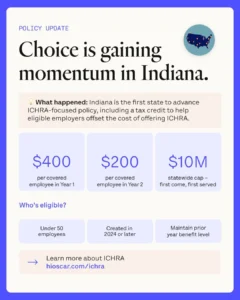
- Individual Coverage HRA (ICHRA): Also known as a "Choice Arrangement," this is available to businesses of all sizes and allows for different allowance amounts based on employee classes (e.g., full-time vs. part-time).
- Group Coverage HRA (GCHRA): This supplemental benefit is offered alongside a traditional group plan (usually an HDHP) to help employees cover out-of-pocket costs like deductibles and copays.
Analysis of Implications: The Future of Benefits
The diversification of health insurance options reflects a broader economic shift toward personalization and cost-shifting. For employers, the move toward HRAs and HDHPs is a strategic response to the annual 5% to 8% increase in group health premiums observed over the last decade. By utilizing HRAs, companies can lock in their benefits spend, effectively insulating themselves from future rate hikes.
For employees, the implications are more nuanced. While the rise of the individual marketplace and HRAs provides more choice—allowing an employee to keep their preferred doctor even if they change jobs—it also requires a higher degree of health literacy. Navigating the differences between an EPO and a PPO, or understanding the tax implications of an HSA, has become a necessary skill for the modern worker.
Conclusion and Strategic Outlook
The health insurance environment of 2027 is defined by a tension between cost and access. While traditional PPO and HMO plans remain the bedrock of the industry, the rapid adoption of HDHPs, HSAs, and HRA-based models indicates a permanent shift toward consumer-driven healthcare. As organizations prepare for the upcoming enrollment cycle, the decision-making process must be informed by a rigorous analysis of provider networks, deductible thresholds, and the potential tax advantages of alternative reimbursement structures. For the modern business, the goal is no longer just providing insurance, but providing a personalized health benefit strategy that enhances employee retention while maintaining fiscal responsibility.