The talent acquisition landscape in 2026 is characterized by unprecedented budgetary constraints and intensified operational demands, forcing HR and recruitment teams to achieve ambitious hiring goals with significantly fewer resources. This challenging environment, anticipated by informal polls in 2025, has been definitively confirmed by more recent data, highlighting critical shifts in priorities, persistent pain points, and emerging threats.
A Shifting Economic Backdrop and the Genesis of Lean Operations
The roots of the current talent acquisition challenges can be traced back to the economic volatility experienced in late 2023 and throughout 2024. Amidst rising inflation, interest rate hikes, and recessionary fears, many organizations initiated cost-cutting measures, with HR and talent acquisition departments often among the first to see their budgets trimmed. This proactive belt-tightening, initially a cautious response, became a sustained strategy entering 2025 and intensified into 2026. Companies, particularly in the technology sector, underwent significant layoffs, recalibrating their workforce needs and tightening recruitment spending. The informal poll conducted in 2025, distributed through "The JD Weekly" to a cross-section of recruiters, hiring managers, and compensation specialists, served as an early indicator of these impending pressures. Its findings, initially seen as predictive, have now been validated by comprehensive 2026 data, painting a clear picture of a sector striving for efficiency amidst adversity.
Budgetary Squeeze: Identifying the Most Vulnerable Areas
When organizations face tight budgets, the immediate instinct is often to cut obvious line items such as agency spend for external recruitment and investments in job board advertising. However, a deeper analysis reveals a more complex and often more damaging trend: the erosion of less tangible, yet strategically vital, HR initiatives. Responses from the 2026 pulse check pointed to "something else" as the primary casualty, a revealing phrase that encapsulates the vulnerability of long-term strategic investments. This "something else" typically includes critical programs like Diversity, Equity, and Inclusion (DEI) initiatives, internal mobility programs designed to foster career growth and retention, and employer branding efforts crucial for attracting top talent.
Industry analysts and HR leaders express growing concern over these "hidden cuts." While seemingly non-essential in the short term, the disinvestment in DEI can undermine an organization’s commitment to building an inclusive workforce, potentially leading to reputational damage and reduced innovation in the long run. Similarly, neglecting internal mobility can stifle career development, leading to increased attrition and a diminished talent pipeline from within. Employer branding, though often perceived as a marketing function, is foundational to talent attraction and retention. Universum’s research, indicating that companies with strong employer branding experience a 50% reduction in cost-per-hire, highlights the profound financial implications of neglecting this area. These strategic cuts, while offering immediate financial relief, risk creating long-term talent deficits and damaging organizational culture. This situation contributes significantly to the startling statistic from GoodTime’s 2026 Hiring Insights Report, which found that 90% of U.S. companies missed their hiring goals, with a third missing them by a wide margin, signaling a systemic inability to acquire necessary talent under current constraints.
Resilience Amidst Cuts: The Enduring Priority of System Integration and AI
Despite widespread budget freezes, certain initiatives continue to receive investment, underscoring their perceived necessity in a resource-constrained environment. System integration emerged as a non-negotiable priority, a testament to the ongoing drive for operational efficiency. In a climate where teams are expected to "do more with less," streamlining technological ecosystems becomes paramount. Integrating disparate HR and talent acquisition systems ensures data flows seamlessly, reducing manual effort, minimizing errors, and providing leadership with enhanced visibility into recruitment pipelines and performance metrics. This foundational work, though often unglamorous, is seen as crucial for survival and scalability.
Beyond integration, the adoption of advanced technologies like automation and Artificial Intelligence (AI) is rapidly accelerating. GoodTime’s findings reveal that top-performing talent acquisition teams are 58% more likely to leverage centralized texting platforms for candidate communications. This move towards consolidated messaging not only enhances candidate experience through faster, consistent responses but also improves accountability across the hiring team. The strategic integration of AI extends further, with Korn Ferry reporting that 52% of talent leaders plan to incorporate AI agents into their teams. These AI agents are envisioned to handle repetitive tasks such as initial candidate screening, answering frequently asked questions, and scheduling interviews, thereby freeing human recruiters to focus on more complex, relationship-driven aspects of their roles. The future of recruitment, therefore, is increasingly seen as a collaborative ecosystem where human expertise is augmented by intelligent automation, demanding a careful balance between technological efficiency and human empathy.
Operational Bottlenecks: The Persistent "Admin Hell"
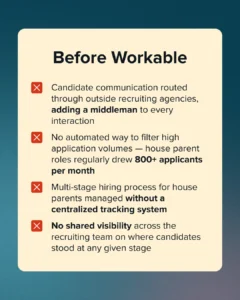
The pressure on talent acquisition teams is most acutely felt in the day-to-day operational tasks that consume significant time and resources. Screening applications, scheduling interviews, and maintaining consistent communication with candidates remain the most formidable pain points. The 2026 Recruiting Benchmarks report by Gem starkly illustrates this challenge: hiring teams are leaner, yet their workloads have surged dramatically. Recruiters are now managing 93% more applications and overseeing 40% more open roles than in 2021, despite their teams being 14% smaller. This imbalance has led to a concerning 43% drop in hires per recruiter, indicating a severe dip in efficiency and a surge in administrative burden.
This phenomenon, colloquially referred to as "admin hell," directly impacts both internal team morale and external candidate experience. Recruiters are stretched thin, often struggling to keep pace with the volume of applications and communication demands, leading to burnout. Externally, this translates into slow response times, prolonged hiring processes, and the all-too-common practice of "ghosting" candidates. Such inefficiencies not only drain internal resources but also severely damage the employer brand, creating a negative perception among potential future hires. Addressing these operational bottlenecks through process optimization and strategic automation is no longer a luxury but a critical necessity for maintaining competitive advantage in the talent market.
The Automation Imperative: Streamlining Candidate Status Updates
When asked about the single most impactful automation they could implement, one respondent’s concise answer — "Disposition of candidate status" — resonated deeply across the industry. This highlights a pervasive problem: candidates are often left in the dark after applying, unsure of their standing, while recruiters spend countless hours manually managing communication. GoodTime’s research further illuminates this, revealing that 60% of organizations saw an increase in time-to-hire in 2025, and only a mere one in nine succeeded in reducing it. This counterintuitive trend suggests that merely adopting new technology is insufficient; without disciplined workflows and clear ownership, new tools often exacerbate existing complexities rather than resolving them.
Automating candidate status updates, therefore, is not just about saving time; it’s a fundamental step towards improving the candidate experience and reinforcing a positive employer brand. By providing timely, respectful, and clear communication, even to candidates who are not moving forward, organizations demonstrate respect for individuals’ time and effort. However, experts caution against overly robotic or impersonal automated messages. The challenge lies in crafting automation that is efficient yet retains a personal touch, ensuring candidates feel valued throughout the process. This balance is crucial for leveraging technology to enhance, rather than detract from, the human element of recruitment.
The Growing Threat: The Fake Candidate Problem
A disturbing trend emerging as the number one threat for 2026, according to GoodTime’s research, is the proliferation of fraudulent and AI-generated candidates. The unintended consequence of increasingly streamlined application processes and the widespread availability of sophisticated AI tools is a surge in deceptive applications. While a high application rate traditionally signifies strong interest, it now increasingly means more "noise" to sift through, including a significant proportion of fake submissions.
Today, AI can generate highly tailored resumes, compelling cover letters, and even fabricated work samples that can bypass initial automated screening layers. This creates a critical challenge for talent acquisition teams, as the very tools designed to accelerate hiring (such as auto-screening and automated status updates) can inadvertently fast-track fraudulent candidates if robust verification layers are absent. The primary defense against this sophisticated deception begins at the earliest stage: the job description itself. Vague or generic job descriptions tend to attract a higher volume of unqualified and fake applicants. Conversely, highly specific and clear screening criteria within the job description make it significantly harder for AI to generate convincingly fraudulent profiles. Implementing robust screening processes, including skills assessments, video interviews, and careful human verification at subsequent stages, is becoming indispensable in combating this evolving threat to hiring integrity.
Job Descriptions: The Unsung Hero of Effective Screening
The effectiveness of job descriptions (JDs) remains a critical determinant of recruitment success, particularly in the face of skills misalignment and the fake candidate problem. When asked about the most significant JD challenge, the consensus pointed to "effective screening criteria." GoodTime’s survey highlighted that 28% of TA leaders cited skills misalignment as their most widespread recruiting challenge. This disconnect between what candidates present on their resumes and the actual skills organizations require is a persistent and growing issue. Even with a robust pipeline of applicants, recruiters struggle to identify candidates with the precise competencies needed, leading to prolonged hiring cycles and suboptimal hires.
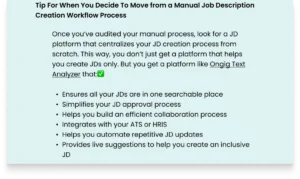
This challenge is further complicated by the rapid evolution of job roles and the increasing emphasis on skills-based hiring. The National Association of Colleges and Employers (NACE) reported that 70% of employers are now implementing skills-based hiring practices. This paradigm shift moves the focus from traditional credentials (degrees, years of experience) to demonstrable competencies and abilities. Consequently, JDs must evolve to reflect this change, articulating specific skills, knowledge, and behaviors required for a role, rather than relying on outdated buzzwords or generic checklists. Tools like Ongig’s Text Analyzer are instrumental in this evolution, helping organizations craft JDs that remove bias, eliminate jargon, and focus on capabilities, thereby attracting a more relevant and qualified pool of talent. The JD, therefore, is not merely a job posting; it is the first and most crucial line of defense in the battle for authentic, skilled talent.
Broader Impact and Strategic Implications for Talent Acquisition
The confluence of budget cuts, operational pressures, technological advancements, and emerging threats is reshaping the very fabric of talent acquisition. The immediate impact is a leaner, more efficient, but often more stressed TA function. However, the long-term implications are profound, suggesting a future where recruitment is increasingly data-driven, technologically augmented, and strategically integrated with overall business objectives.
The continued push for system integration and AI adoption signals a future of blended human-AI teams, where recruiters act as strategic partners, leveraging intelligent tools for efficiency while focusing their human expertise on critical areas like candidate engagement, relationship building, and complex decision-making. The emphasis on refining job descriptions and implementing skills-based hiring underscores a shift towards a more meritocratic and objective assessment of talent, moving beyond traditional proxies to focus on actual capabilities.
However, the trend of cutting "strategic" HR initiatives like DEI and employer branding carries significant risks. Neglecting these areas in the short term could erode long-term talent pipelines, diminish organizational reputation, and hinder innovation. Industry experts caution that a purely cost-cutting approach, without a strategic understanding of HR’s value, can prove detrimental to an organization’s future competitiveness. The challenge for TA leaders is to articulate and demonstrate the tangible ROI of these strategic investments, even in lean times.
Ultimately, the 2026 hiring landscape is a crucible for talent acquisition, forcing teams to innovate, optimize, and strategically leverage technology. Organizations that successfully navigate these pressures by investing wisely in technology, refining their processes, and upholding a commitment to strategic HR functions will be best positioned to attract, engage, and retain the talent critical for future success. This period of intense change is not just about survival; it’s about evolving the very nature of talent acquisition to be more resilient, intelligent, and impactful.