A diversity statement serves as a concise, public declaration of an organization’s commitment to fostering inclusion and equity within its ranks. These crucial communications, often found on career pages, dedicated Diversity, Equity, and Inclusion (DEI) sections, or integrated into job descriptions, play a significant role in attracting prospective talent. Effective diversity statements are characterized by their specificity, honesty, and direct alignment with the organization’s overarching mission, moving beyond generic platitudes to articulate tangible commitments. They resonate most powerfully when they explicitly name diverse groups, substantiate claims with verifiable data, and demonstrate a clear connection to core business objectives. This article delves into the evolving nature of diversity statements, particularly in the context of 2026, examining shifts in corporate strategy, best practices for their formulation, and illustrative examples from leading global companies.
The Evolving Landscape of Diversity Statements: A 2026 Perspective
The year 2026 marks a pivotal period in the evolution of corporate DEI initiatives, where the emphasis has decidedly shifted from mere public declarations to demonstrable results. This recalibration is largely a consequence of significant political and legal developments that unfolded in early 2025. Federal executive orders, enacted at the beginning of 2025, led to the dismantling of agency-level DEI programs across various governmental bodies. This governmental shift sent ripples through the corporate world, prompting many organizations to re-evaluate and adapt their approaches to diversity and inclusion.
According to research conducted by Gravity Research, a notable 40 corporations publicly adjusted their DEI strategies in the immediate aftermath of these executive orders. This period was marked by a cautious but strategic reassessment. Despite these shifts, a substantial 80% of companies continued to reaffirm their commitment to the core tenets of inclusion, belonging, or accessibility in some form. This indicates a nuanced response, where the underlying values remained, but the public articulation and strategic implementation underwent significant refinement.
A prominent trend observed during this period, particularly among S&P 500 companies, was a tactical rebranding effort. Corporate filings revealed a marked decrease in the usage of the acronym "DEI." This was not merely a cosmetic change but a deliberate strategic move to depoliticize internal programs and safeguard them from potential legal or political scrutiny. Departments previously designated as "DEI" were frequently renamed to more neutral, business-centric titles such as "People & Culture" or "Employee Experience." A comprehensive review of 1,000 corporate filings underscored this trend, illustrating a conscious effort to replace potentially polarized labels with language that emphasized broader organizational well-being and talent management. This linguistic pivot allowed companies to continue their inclusion efforts, albeit under a revised nomenclature, while simultaneously prioritizing data-driven compliance to ensure their practices could withstand rigorous legal reviews.
Beyond Buzzwords: The Essence of an Effective Diversity Statement
In an era where authenticity and measurable impact are paramount, the effectiveness of a diversity statement hinges on its ability to transcend superficial buzzwords and convey genuine commitment. For candidates scrutinizing these statements—often the first point of contact with a company’s culture—specificity and honesty are non-negotiable. A truly impactful statement is intrinsically linked to the organization’s mission, articulating how diversity, equity, and inclusion are not merely add-ons but integral to achieving business goals and fostering innovation.
Ongig’s Text Analyzer software, along with other specialized diversity tools, provides valuable insights into the linguistic components of effective statements. These tools assess factors such as the balance of masculine versus feminine words, the presence of offensive language, the prevalence of positive and negative sentiments, and overall readability. The goal is to craft content that is not only inclusive in its message but also in its very construction, ensuring broad accessibility and resonance.
Crafting Impactful Diversity Statements: A Guide to Best Practices
Developing a compelling diversity statement requires careful consideration of several key elements:
-
Specificity and Named Groups: The most effective statements move beyond generic terms like "diverse backgrounds" to name specific underrepresented groups. This could include racial and ethnic minorities, LGBTQ+ individuals, people with disabilities, veterans, or individuals from varying socioeconomic strata. Naming these groups demonstrates a deliberate and targeted commitment, fostering a stronger sense of belonging among candidates from those communities. For instance, mentioning specific employee resource groups (ERGs) or affinity networks, as seen in examples from Stanley Black & Decker, provides tangible evidence of an inclusive environment.
-
Backing Claims with Data and Action: Vague promises erode trust. High-impact diversity statements integrate data or reference concrete initiatives. This could involve statistics on workforce diversity, details about mentorship programs, supplier diversity initiatives, or partnerships with organizations dedicated to promoting equity. The shift towards "results rather than public promises" in 2026 underscores the importance of this data-driven approach, demonstrating measurable progress and accountability.
-
Tying to the Mission and Business Impact: A diversity statement gains immense power when it clearly articulates how inclusion contributes to the company’s core mission and strategic objectives. Google’s statement, for example, links diversity directly to its ability to "build helpful products for everyone." This highlights that diversity is not just a moral imperative but a business advantage, driving innovation, enhancing problem-solving, and better serving a diverse customer base.
-
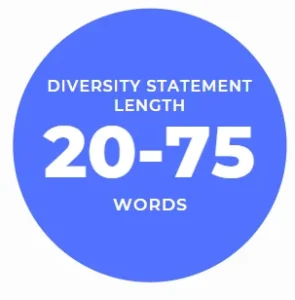
Optimal Length and Readability: For primary diversity statements—those appearing on career pages or in job descriptions—brevity is key. Leading companies typically use 20 to 75 words for their main statement. This conciseness ensures that busy candidates can quickly grasp the core message. When an entire page is dedicated to DEI, the main statement serves as an impactful introduction, supported by more detailed elaborations. Furthermore, readability is crucial. Aiming for an 8th-grade reading level or lower ensures broad comprehension. As demonstrated by Oath’s statements, simpler, plain English is appreciated by all, maximizing retention. Research by the Public Relations Society of America (PRSA) indicates that sentences of eight words or less can achieve 100% comprehension, whereas retention drops significantly with longer sentences. Companies like Pfizer and Capital One demonstrate this principle by crafting statements with short, impactful sentences.
-
Strategic Headlines and Sub-headlines: A compelling headline is vital for cutting through the noise. Beyond merely stating "Diversity Statement," a unique and engaging headline helps an organization stand out. T-Mobile’s "Who We Are" with a strong sub-headline, for instance, immediately captures attention and conveys a sense of identity and purpose, drawing candidates deeper into the message.
-
The Power of Positive Language: The choice of words significantly impacts how a statement is received. Employing positive, inclusive language fosters a sense of welcome and belonging. Words like "embrace," "empower," "celebrate," "innovate," "thrive," and "opportunity" evoke positive emotions and reinforce an inviting culture. Conversely, avoiding jargon or overly corporate language ensures the message feels authentic and human.
Leveraging Technology for Inclusive Content
In the pursuit of crafting effective and inclusive diversity statements, technology plays a supportive role. Tools like Ongig’s Text Analyzer provide objective insights into the linguistic quality of written content, identifying areas for improvement in terms of tone, bias, and readability. However, a critical note on AI-generated diversity statements has emerged. While AI tools can assist in refining and editing, relying solely on them for drafting often results in generic, uninspired language. Psychology and Marketing research indicates that when audiences perceive diversity representation as artificially generated, it can trigger a lower sense of belonging and elicit a negative reaction toward the brand. The human element, expressed through specific examples, named communities, quantifiable commitments, and unique headlines, remains indispensable for creating truly impactful and authentic statements.
Leading by Example: Corporate Diversity Statements in Practice
Numerous organizations have demonstrated excellence in crafting diversity statements that embody these best practices:
- Pfizer: With its headline "Merit-Based Diversity, Equity, and Inclusion: Who We Are," Pfizer emphasizes that inclusion is rooted in meritocracy, where "hard work, talent, and contributions drive success, and barriers to opportunity are removed." This aligns with the 2026 focus on measurable, equitable opportunity.
- Google: Google’s statement, "We’re building a Google for all of us to build helpful products for everyone," directly links diversity to product innovation and broad societal impact, showcasing how inclusion is fundamental to its mission.
- Salesforce: Salesforce champions equality as a core value, stating, "At Salesforce, equality is one of our longstanding core values that helps us to innovate and drive business success." This directly connects diversity to business outcomes and employee well-being.
- HubSpot: With "We’re all in on Belonging," HubSpot focuses on the psychological safety and trust that fuels creativity, framing belonging as a catalyst for "collective genius" and customer success.
- Netflix: Netflix’s "Stories That Reflect Our World" highlights its commitment to representation, emphasizing that "Better representation on-screen starts with representation in the office." This illustrates an internal-first approach to external impact.
- United Way of the National Capital Area: Their "Equity Statement" articulates a deep commitment to social justice, explicitly mentioning dismantling systemic racism and supporting marginalized groups based on intersectional identities. This comprehensive approach exemplifies a broad and proactive stance on equity.
- Capital One: Capital One’s "Building a culture of belonging where everyone can thrive" positions its Diversity, Inclusion, and Belonging (DIB) strategy as a talent strategy, emphasizing an open culture where all voices are valued, regardless of hierarchy.
- Workday: Workday’s "VIBE. Value Inclusion & Belonging for Everyone™" presents a memorable acronym and a clear vision for how inclusion sparks innovation and belonging powers performance, directly linking these concepts to business success and customer service.
- FedEx: FedEx’s commitment to being an equal opportunity employer since 1971 demonstrates a long-standing dedication to diversity, emphasizing its global workforce across 220 countries and territories, united by shared values of dignity and respect.
- Target: "Belonging at the Bullseye" articulates Target’s commitment to creating a sense of belonging for its team, guests, and communities, connecting diversity to consumer experience and community well-being.
These examples, while varied in their specific phrasing, share common threads: a clear commitment to inclusion, an articulation of how diversity benefits the organization, and often, a connection to their broader societal or customer-centric mission.
The Future of Inclusion: From Statements to Sustained Action
The trajectory of diversity statements in 2026 and beyond points towards an unwavering focus on authentic, data-driven inclusion efforts. While the language and public presentation of these commitments may evolve in response to external pressures, the underlying imperative for organizations to foster equitable and inclusive workplaces remains. The shift from the specific "DEI" acronym to broader "People & Culture" or "Employee Experience" departments signifies not an abandonment of diversity goals, but rather an integration of these principles into the fundamental fabric of talent management and organizational strategy. Companies are increasingly recognizing that true inclusion is not merely about checking a box or hitting a target, but about cultivating environments where every individual feels valued, heard, and empowered to contribute their best. This commitment, reinforced by transparent metrics, legal compliance, and continuous learning, is essential for sustained innovation, employee engagement, and long-term business success in an increasingly diverse global landscape.