
The social sector, a bedrock of community well-being and societal progress, is perpetually buffeted by a confluence of external forces. Funding streams can evaporate without notice, policy landscapes shift with political tides, and even long-standing partnerships can dissolve unexpectedly. This relentless wave of change presents a formidable challenge, often prompting a predictable, albeit potentially short-sighted, instinct: to double down on direct service delivery.
This strategic pivot, while understandable, overlooks a critical reality. Social sector organizations are not merely weathering a single storm; they are simultaneously engaged in two distinct but interconnected battles. The first is the ongoing fight to achieve their core mission – fostering better outcomes, strengthening communities, and dismantling systemic inequities. The second, often less visible but equally impactful, is the struggle to adapt to the operational volatility surrounding them, from precarious funding environments to evolving policy priorities.
When external pressures intensify, the natural inclination is to narrow the focus. Resources are finite, the urgency of the mission is paramount, and pausing investments in areas perceived as less immediate, such as organizational capacity-building, can seem like the most prudent course of action while awaiting a return to stability. However, for a significant portion of the social sector, this notion of “stability” is an increasingly elusive concept. Volatility has become the de facto operating environment.
The capacity of an organization to achieve its long-term mission impact is inextricably linked to the strength of its leadership. This strength is not solely derived from deep subject matter expertise, be it in public health, education, or social justice. True leadership in this complex landscape requires the ability to navigate ambiguity, foster internal alignment, and build robust external commitment, even as the ground shifts beneath them. Investing in leadership development is not a luxury; it is a fundamental strategy that demonstrably strengthens this crucial capacity, and the evidence supporting this assertion is compelling and clear.
The Underpinnings of Nonprofit Capacity-Building
Capacity-building for nonprofits is a multifaceted approach designed to enhance an organization’s ability to fulfill its mission effectively and sustainably over time. This encompasses a broad spectrum of initiatives, including cultivating strong leadership capabilities, optimizing organizational systems and processes, fortifying vital partnerships, and cultivating the resilience necessary to adapt and thrive amidst evolving conditions.
At the heart of this endeavor lies leadership development. Social sector leaders often bring an impressive array of expertise to their roles – deep knowledge of their respective fields, clinical proficiency, nuanced understanding of policy, and invaluable community credibility. Yet, the complex demands of modern social impact work extend far beyond individual expertise. The ability to effectively collaborate across diverse boundaries and among a multitude of stakeholders, and to sustain progress in the face of persistent challenges, requires a distinct set of leadership competencies that subject matter knowledge alone cannot guarantee. Developing these competencies is a cornerstone of effective nonprofit capacity-building.
As one seasoned nonprofit stakeholder articulated in a candid reflection, "When you invest in the leadership skills… you increase the odds and the pace and the sustainability of impact. Can they get there without it? Sure, some will. But you will get higher numbers, you will get longer-term vision and outcomes. You will have even bigger thinking when you invest in this kind of space." This sentiment underscores a fundamental truth: nurturing leadership talent directly amplifies the potential for achieving greater, more enduring impact.
Empirical Evidence of Leadership Investment’s Lasting Impact
Extensive research has been conducted to examine the profound and lasting impact of investing in leadership development within the social sector. A multi-study research initiative, drawing on qualitative interviews and survey data from nearly 300 social sector leaders who participated in targeted development programs, revealed a consistent pattern of tangible outcomes. These outcomes included measurable improvements such as expanded healthcare access, significant reductions in maternal mortality rates, and the successful implementation of civic initiatives aimed at dismantling systemic inequities.
The impact of leadership development on nonprofit capacity is not merely a matter of acquiring new skills. A more profound transformation occurs as leaders recalibrate their self-perception and expand their belief in what is achievable. This recalibration of standards and the evolution of leadership identity are often the catalysts for more significant change. It influences how leaders engage with others, the ambitious goals they set, and their capacity to respond effectively when faced with adversity.
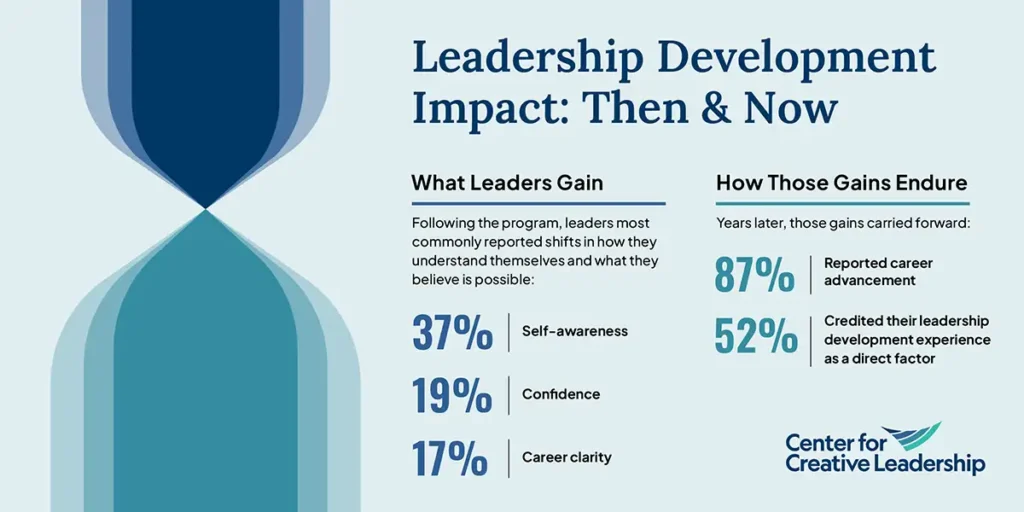
Within one particular study involving 261 nonprofit leaders, the most frequently reported gains were enhanced self-awareness (37%), increased confidence (19%), and greater career clarity (17%). Participants shared powerful narratives of personal growth. One leader described learning to acknowledge and value her accomplishments, rather than allowing them to be diminished by feelings of inadequacy. Another individual entered the program grappling with what she termed "massive imposter syndrome" but emerged with a far clearer vision of how to effectively drive impact.
These internal shifts are not merely anecdotal; they translate directly into observable behavioral changes within the workplace. A leader who previously hesitated to speak in meetings may find their voice, contributing valuable insights. A program director, armed with newfound confidence and a broadened perspective, might pursue a larger grant opportunity or initiate a novel partnership, driven by an expanded sense of possibility. These subtle yet significant shifts collectively influence decision-making processes and fundamentally alter how organizations respond to and navigate pressure.
(Infographic placeholder – Description: A visually engaging infographic titled "Leadership Development Impact: Then & Now," illustrating the tangible improvements in organizational outcomes and leadership effectiveness following investment in development programs.)

Three Pillars of Effective Nonprofit Capacity-Building
The positive effects of leadership development are not fleeting; they demonstrate remarkable durability over time. In a follow-up survey conducted several years after nonprofit leaders completed their development programs, an impressive 87% reported career advancement, with more than half directly attributing their progress to their leadership development experience.
Our research consistently identifies three core elements that contribute significantly to achieving lasting impact through capacity-building initiatives:
- Cultivating a Growth Mindset: This involves fostering an environment where learning is continuous, mistakes are viewed as opportunities for growth, and leaders are encouraged to embrace challenges and persist in the face of setbacks. It’s about shifting from a fixed view of abilities to one that embraces development and learning.
- Developing Strategic Thinking and Action: This pillar focuses on equipping leaders with the skills to analyze complex environments, identify strategic opportunities and threats, and translate vision into actionable plans. It involves honing the ability to think critically about the long-term implications of decisions and to anticipate future trends.
- Building Adaptive Leadership Skills: In an era of constant change, leaders must possess the capacity to inspire and mobilize others, manage conflict constructively, and navigate uncertainty with agility. This includes fostering resilience, promoting collaboration, and empowering teams to adapt to evolving circumstances.
When these three elements are actively integrated and supported within an organization, the positive impact extends far beyond the individual leader. It permeates teams, influences organizational culture, and ultimately amplifies the reach and effectiveness of the organization’s mission. Conversely, when these pillars are absent, progress may be confined to individual achievements, failing to translate into sustained organizational or community-wide change.
The Imperative of Investment in Times of Uncertainty
The prevailing notion that periods of resource constraint necessitate a pause in capacity-building for nonprofits and social sector organizations is, for many, a flawed premise. In fact, these very moments often present the most compelling arguments for such investments.
During times of heightened uncertainty, organizations become even more reliant on the strength and adaptability of their people. The capacity of their leaders to navigate these turbulent waters does not materialize spontaneously, nor can it be sustained without consistent reinforcement. Leadership development programs are designed to deliberately cultivate and strengthen this capacity. The accumulated evidence from decades of work within the social sector unequivocally demonstrates that the return on this investment is substantial, enduring, and far-reaching.
Social sector organizations that choose to invest in their people during periods of change are not doing so out of an abundance of financial resources. Rather, they are acting from a profound understanding that their ability to achieve their long-term mission is fundamentally dependent on individuals who are not only skilled but also equipped and consistently supported to lead effectively as circumstances inevitably shift.
A Call to Action: Empowering Leaders for Lasting Impact
The challenges facing the social sector are complex and multifaceted. Addressing issues such as climate change, global health crises, and persistent social injustices requires organizations that are not only mission-driven but also strategically adept, operationally resilient, and led by individuals who can inspire, innovate, and adapt.
Investing in nonprofit capacity-building, with a particular emphasis on leadership development, is not merely a prudent organizational practice; it is a strategic imperative for maximizing social impact. By equipping leaders with the skills, mindset, and support they need to navigate volatility, organizations can enhance their ability to respond effectively to crises, seize emerging opportunities, and ultimately achieve their transformative goals.
The evidence is clear: organizations that prioritize the development of their leaders are better positioned to weather the storms of change, foster innovation, and drive sustainable, meaningful impact for the communities they serve.
Ready to Strengthen Your Organization’s Leadership for Enduring Impact?
For decades, we have partnered with a diverse range of nonprofits, foundations, and social sector organizations to cultivate leadership that is not only effective in the present but also resilient and visionary for the future. Our expertise lies in designing and delivering tailored capacity-building solutions that empower leaders and strengthen organizations.
We invite you to explore our comprehensive suite of capacity-building solutions specifically designed for nonprofits and social sector organizations. Discover how a strategic partnership can equip your leaders with the tools and strategies necessary to navigate complex challenges, drive innovation, and amplify your organization’s impact. Let us help you build leadership that lasts.








