In today’s fiercely competitive talent landscape, the speed and efficiency with which organizations can define, create, and publish job descriptions (JDs) are paramount. This process extends far beyond mere drafting; it encompasses a comprehensive management journey, including robust approval mechanisms, seamless collaboration, meticulous version control, and accessible storage solutions. Streamlining these elements is no longer a luxury but a strategic imperative for attracting top talent swiftly and effectively.
The Strategic Imperative of Streamlined Job Descriptions
The modern recruitment environment demands agility. Delays in filling critical positions can lead to significant financial repercussions, including lost productivity, increased operational costs, and missed business opportunities. Industry analysts estimate that a prolonged hiring cycle can cost organizations an average of 1% to 2.5% of a position’s annual salary per week it remains unfilled, with some specialized roles incurring even higher costs. Furthermore, a cumbersome or slow JD process can negatively impact the candidate experience, leading to higher drop-off rates and potentially damaging an organization’s employer brand. Candidates are increasingly expecting swift and transparent communication throughout their job search, and an outdated or inefficient JD creation process signals a lack of organizational efficiency.
Foundational Steps for Effective JD Creation
Before a single word is committed to a job description, strategic preparatory steps are essential to ensure accuracy, relevance, and ultimately, a faster drafting process.
1. Comprehensive Role Definition and Objective Setting: The genesis of an effective job description lies in a clear understanding of the role itself. This involves more than just a job title; it requires a deep dive into the purpose of the position, its strategic objectives, and how it contributes to the broader organizational goals. Key questions to address include: What problem will this role solve? What are the measurable outcomes expected within the first 30, 60, and 90 days? What impact will this individual have on the team and the company? By establishing these foundational elements upfront, organizations can avoid vague descriptions that lead to numerous revisions and misaligned candidate expectations. This proactive approach significantly reduces the time spent in subsequent drafting and approval stages, as stakeholders have a unified vision from the outset.
2. Market Research and Compensation Benchmarking: A critical, often overlooked, pre-drafting step is to conduct thorough market research regarding similar roles and their associated compensation ranges. Understanding industry standards for required skills, experience levels, and salary expectations prevents the creation of JDs that are either under- or over-qualified for the desired compensation, or that offer non-competitive remuneration. This research should inform the initial framing of the JD, ensuring that the requirements are realistic and attractive to the target candidate pool. Data from talent intelligence platforms indicates that JDs with transparent and competitive compensation ranges receive up to 30% more applications from qualified candidates.
3. Early Identification of Key Stakeholders: Identifying and engaging all relevant stakeholders from the very beginning is crucial. These typically include the hiring manager, team leads, HR business partners, and sometimes even cross-functional leaders who will collaborate with the new hire. Their input is vital for accurately defining responsibilities, required skills, and cultural fit. By involving them early in discussions about the role’s scope, deliverables, and essential qualifications, organizations can pre-empt numerous review cycles and conflicting feedback later in the process. This upfront alignment, as noted by Lucas Botzen, CEO of Rivermate, where a "15-minute alignment conversation can save hours of rewriting," underscores the efficiency gained from proactive stakeholder engagement.
Structuring for Clarity and Candidate Engagement
Once these foundational steps are complete, the actual drafting process benefits immensely from a well-defined structure. A disorganized job description not only confuses internal teams but also deters potential candidates, who often scan JDs for key information. Research suggests that candidates spend an average of 49-76 seconds reviewing a job description, making skimmability critical.
An optimal JD structure typically includes:
- A Compelling Job Clear, concise, and accurately reflecting the role.
- Company Overview and Culture: A brief introduction to the organization and its values.
- Role Summary: A succinct overview of the position’s purpose and primary contributions.
- Key Responsibilities: Action-oriented bullet points detailing daily tasks and strategic duties.
- Required Qualifications: Essential skills, experience, and educational background.
- Preferred Qualifications: Desirable but not mandatory attributes.
- Benefits and Perks: A clear outline of compensation, health benefits, and other employee advantages.
- Diversity, Equity, and Inclusion (DEI) Statement: Demonstrating commitment to a diverse workforce.
- Call to Action: Clear instructions on how to apply.
This structured approach not only accelerates internal review by highlighting specific sections for feedback but also significantly enhances the candidate experience, allowing them to quickly ascertain if the role aligns with their aspirations and qualifications.
Leveraging Resources for Accelerated Drafting
Efficiency in JD creation is greatly enhanced by smart utilization of existing resources and data.
The Power of Standardized Templates: Templates are invaluable time-savers, eliminating the need to start from scratch for every new opening. An effective template provides a pre-structured framework that ensures consistency, reduces administrative overhead, and minimizes the potential for critical information to be overlooked. Such templates should be comprehensive, including placeholders for the job title, department, reporting structure, a detailed role summary, core responsibilities, essential and preferred qualifications, company culture statements, compensation ranges, and mandatory EEO/Diversity statements. Implementing a robust template system can cut initial drafting time by as much as 70%, allowing teams to focus on customizing the unique aspects of each role.
Data-Driven Job Description Refinement: Analyzing past candidate data is a powerful way to move beyond guesswork in the hiring process. Leveraging Applicant Tracking System (ATS) data and other hiring analytics provides actionable insights into what attracts and converts top talent. This data can reveal:
- Effective Keywords: Which terms in JDs lead to more qualified applications.
- Candidate Sourcing Channels: Where top candidates are typically found.
- Retention Factors: Attributes of candidates who perform well and stay longer.
- Application Drop-off Points: Sections of the JD or application process that cause candidates to disengage.
Milos Eric, General Manager at OysterLink, emphasizes this data-driven approach: "We found that starting to write JDs with actual candidate behavior in mind saved us time. So we decided to observe which listings our top candidates clicked on, what prompts them to apply, and what causes them to drop off. Using this information, we reverse-engineer our JDs to make them more effective at converting top candidates to apply to our openings. This eliminates most of the time we’d waste creating JDs by second-guessing.” By integrating these insights, organizations can refine their JDs to be more targeted and effective, reducing the time spent on sifting through unqualified applications.
Establishing a Centralized JD Repository: A centralized, cloud-based library for all job descriptions is a cornerstone of efficiency. This repository acts as a single source of truth, eliminating the chaos of scattered documents across various platforms (Word files, shared drives, Google Docs). A well-organized library allows HR and hiring teams to quickly search and filter for existing JDs by department, title, skills, or keywords, using them as inspiration or direct templates. This prevents the costly duplication of effort and ensures that the most current and approved versions are always accessible.
Adapting and Modifying Existing Descriptions: Building upon a centralized library, the practice of copying and modifying existing, approved job descriptions is a significant time-saver. Rather than composing each JD from scratch, teams can leverage the common elements (approximately 70%) from a similar past role. The remaining 30% is then customized to reflect the unique requirements, duties, and responsibilities of the new position. For example, a JD for a Senior Software Engineer might largely mirror a previous one, but with updated details for specific project responsibilities or technology stacks. This iterative approach maintains consistency while allowing for necessary adaptations.
Enhancing Collaboration and Workflow Efficiency
Inefficient collaboration and convoluted workflows are notorious bottlenecks in the JD creation process, leading to delays and frustration.
Cultivating Collaborative Creation Teams: A lack of clear roles, communication, and shared platforms within a JD creation team can lead to significant slowdowns. Questions such as "Who is working on this section?" or "Why hasn’t this document moved forward?" are symptomatic of a disorganized process. This disorganization results in:
- Redundant Efforts: Multiple team members working on the same section.
- Conflicting Edits: Overlapping changes that require reconciliation.
- Communication Gaps: Delays due to unanswered questions or missed feedback.
- Lack of Accountability: Unclear ownership of tasks.
Implementing collaborative tools and establishing clear roles and responsibilities can drastically improve efficiency. Project management software, shared document platforms with real-time editing, and defined communication channels ensure that everyone is aligned and contributing effectively.
Ensuring Robust Version Control: Poor version control is a major time sink, forcing teams to re-do work and painstakingly search for the correct or latest iteration of a job description. The absence of a clear historical record of changes means that reconciling edits becomes a manual, error-prone process. This chaos also hinders progress tracking, making it impossible to estimate publication timelines accurately. Investing in JD management software with built-in version control allows teams to:
- Track all changes: See who made what edits and when.
- View previous versions: Easily revert to earlier drafts if needed.
- Maintain an audit trail: Ensure compliance and accountability.
Stakeholder Engagement and Information Gathering: As highlighted earlier, collecting comprehensive information from important stakeholders before drafting commences is paramount. The person primarily responsible for writing the JD often doesn’t possess all the intricate details of a role. Proactively engaging hiring managers, team leads, and other subject matter experts ensures clarity on critical aspects such as the precise job title, specific responsibilities, essential experience, and core competencies. This upfront investment in information gathering drastically reduces back-and-forth communication and subsequent revisions, ensuring that the first draft is as close to the final version as possible.
Achieving Unambiguous Clarity in JD Development: Clarity serves as the compass for the entire job description creation process. Without established guidelines on language, tone, and content, teams risk inconsistencies and prolonged review cycles. For instance, if there’s no defined standard for accessible language, different team members might use varying levels of jargon, necessitating hours of collective effort to simplify the text for candidates. To circumvent this, organizations should establish clear guidelines on:
- Role Definition: A shared understanding of the position’s scope and impact.
- Task Ownership: Clear assignment of who is responsible for each section.
- Language Standards: Ensuring inclusive, bias-free, and easy-to-understand language.
- Documentation: Recording all agreed-upon details and guidelines.
Streamlining the Approval Workflow: A disorganized JD approval process is a significant impediment, often extending the time-to-hire by weeks. When multiple stakeholders are involved, manual approval processes can become mired in delays, with JDs languishing in inboxes awaiting review. Common signs of a slow approval process include:
- Unclear Approval Order: Confusion about who approves next.
- Lack of Deadlines: No urgency for reviewers.
- Manual Tracking: Relying on emails or verbal cues.
- Bottlenecks at Specific Stages: JDs getting stuck with certain individuals.
Implementing an automated approval workflow is the antidote. This system ensures that JDs move systematically through predefined stages, with each approver receiving automated notifications, direct links to the document, and clear deadlines. Such automation can reduce approval times from weeks to mere days, providing transparency and accountability at every step.
Technological Advancement and Quality Assurance
The integration of specialized technology and robust quality checks represents the final frontier in optimizing the JD lifecycle.
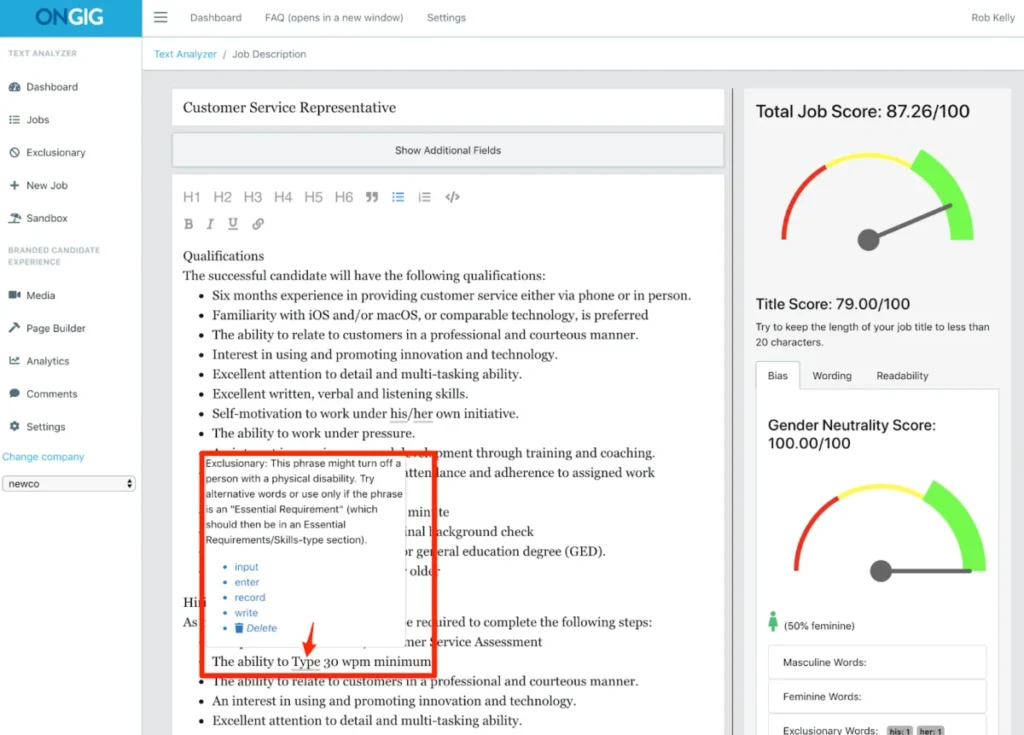
The Transformative Role of Job Description Software: Dedicated job description software eliminates manual inefficiencies across the entire JD management spectrum. Tools like Ongig Text Analyzer go beyond simple word processing to offer comprehensive solutions for writing, drafting, reviewing, approving, and managing JDs. Key functionalities include:
- AI-Powered Drafting Assistance: Generating content based on role requirements.
- Bias Detection and Inclusivity Scoring: Identifying and correcting biased language to attract diverse talent.
- Template Management: Providing pre-approved, customizable templates.
- Workflow Automation: Streamlining approval processes and task assignments.
- Centralized Library: Offering a searchable repository for all JDs.
- Version Control: Tracking changes and maintaining history.
- ATS Integration: Seamlessly connecting with existing Applicant Tracking Systems.
- Readability and SEO Optimization: Ensuring JDs are easy to read and discoverable.
Such software can drastically reduce the time spent on JD creation and management, often by over 50%, while simultaneously improving the quality and effectiveness of the descriptions.
Implementing a Comprehensive JD Checklist: Even with advanced software and optimized workflows, human error can occur. A robust JD checklist serves as a final quality assurance step, ensuring that all critical information is accurate and present before publication. This reduces last-minute discoveries of missing details and prevents costly delays. A comprehensive checklist should cover:
- Content Accuracy: Is the job title correct? Are responsibilities clearly defined? Are qualifications aligned with the role?
- Formatting & Readability: Are headings used effectively? Is the language clear and concise? Are bullet points utilized for easy scanning?
- Compliance & Inclusion: Is the JD free of biased language? Does it include necessary EEO/DEI statements? Does it comply with legal requirements?
- System Integration: Is the JD formatted for the ATS? Are relevant keywords included for searchability?
- Stakeholder Sign-off: Has final approval been secured from all necessary parties?
This systematic review ensures that every JD published is polished, compliant, and optimized for attracting the best candidates.
The Broader Impact on Talent Acquisition and Organizational Success
The collective implementation of these strategies — from foundational preparation and leveraging resources to enhancing collaboration, streamlining workflows, and adopting technology — yields profound benefits for organizations. Beyond mere speed, an optimized JD lifecycle leads to a faster time-to-hire, a direct reduction in recruitment costs, and a significant improvement in the quality of candidates attracted and ultimately hired. By presenting clear, well-structured, and inclusive job descriptions, organizations bolster their employer brand, making them more appealing to top-tier talent.
Moreover, an efficient JD management process fosters greater organizational agility, enabling companies to respond quickly to evolving talent needs and market demands. This strategic approach ensures that talent acquisition functions as a proactive, rather than reactive, component of business growth. HR analysts widely agree that organizations prioritizing JD optimization gain a significant competitive edge in attracting and retaining top talent, ultimately contributing to sustained organizational success.
In conclusion, accelerating the job description process is not merely about writing faster; it is about strategically optimizing every facet of the JD management journey. By embracing structured approaches, leveraging data and technology, and fostering efficient collaboration, organizations can transform a historically cumbersome process into a powerful engine for effective talent acquisition.