The Occupational Safety and Health Administration (OSHA) has unveiled comprehensive new guidance aimed at equipping American workplaces with critical tools and strategies to combat the escalating opioid overdose crisis, particularly in light of the pervasive threat posed by illicit fentanyl. This pivotal initiative, published on September 25, 2026, is a cornerstone of the broader Great American Recovery Initiative, a multi-faceted effort spearheaded by the Trump Administration to address addiction treatment and recovery across the nation. The guidance underscores the urgent need for employers to proactively prepare for potential opioid overdose incidents, emphasizing life-saving interventions like the administration of naloxone and nalmefene.
The Great American Recovery Initiative, a significant policy thrust from the Trump Administration, represents a renewed and intensified focus on the nation’s ongoing struggle with substance use disorders. Launched with the explicit goal of improving access to addiction treatment, supporting recovery efforts, and preventing drug-related deaths, the initiative coordinates various federal agencies. OSHA’s new guidance on workplace preparedness fits directly into this framework, recognizing that the opioid crisis is not confined to specific communities but profoundly impacts the American workforce. White House Drug Czar Sara Carter articulated the gravity of the situation, stating, "Because fentanyl has infiltrated the illicit drug landscape and acts as a chemical weapon against our people, it is critically important that the American workforce is familiar with drug overdose recognition and reversal. I am grateful to the Department of Labor for informing employers and workers about life-saving overdose reversal treatments like naloxone." This statement highlights the administration’s view of fentanyl as a particularly insidious threat requiring robust, broad-based responses, including employer engagement.
The Escalating Opioid Crisis and Fentanyl’s Shadow
The United States has been grappling with an opioid crisis for over two decades, evolving through distinct waves. Initially fueled by the over-prescription of opioid painkillers in the late 1990s, the crisis transitioned into a second wave marked by a rise in heroin use as prescription opioids became harder to obtain. The current, devastating third wave, which began around 2013, is characterized by the widespread proliferation of synthetic opioids, primarily fentanyl and its analogues. Fentanyl, a synthetic opioid 50 to 100 times more potent than morphine, has become the leading cause of overdose deaths. Often mixed with other illicit drugs like heroin, cocaine, and methamphetamine, frequently without the user’s knowledge, fentanyl dramatically increases the risk of fatal overdose.
According to data from the Centers for Disease Control and Prevention (CDC) and the National Institute on Drug Abuse (NIDA), opioid overdose deaths continued to climb through the mid-2020s, with fentanyl implicated in a vast majority of these fatalities. Projections for 2026 indicate that annual overdose deaths could exceed 120,000, underscoring the relentless progression of this public health emergency. The sheer potency of fentanyl means that even minute quantities can be lethal, making accidental exposure a significant concern, not just for users but also for first responders and, increasingly, for individuals in workplace settings. The economic burden of the opioid crisis is also staggering, estimated in the hundreds of billions of dollars annually, encompassing healthcare costs, lost productivity, criminal justice expenses, and premature mortality. This economic impact directly affects businesses through absenteeism, impaired performance, and increased healthcare premiums, solidifying the rationale for employer-led intervention.
OSHA’s New Guidance: Key Preparedness Strategies

The newly issued OSHA fact sheet provides concrete, actionable strategies for employers to integrate overdose preparedness into their existing workplace safety protocols. The guidance is designed to be practical and adaptable, acknowledging the diverse nature of American workplaces. Central to these recommendations are:
- Keeping Reversal Medications Readily Available: Employers are strongly advised to stock opioid overdose reversal medications, specifically naloxone (commonly known by its brand name Narcan) or nalmefene. These medications can rapidly reverse the effects of an opioid overdose, buying critical time until emergency medical services arrive. The guidance stresses that these kits should be treated with the same importance as traditional first-aid kits.
- Strategic Placement and Accessibility: Overdose kits, much like automated external defibrillators (AEDs), should be placed in visible, easily accessible locations throughout the workplace. This ensures that in an emergency, anyone can quickly locate and retrieve the necessary medication without delay. Clear signage indicating the location of these kits is also recommended.
- Worker Education on Overdose Symptoms: A crucial preventive measure is educating all employees on how to recognize the signs and symptoms of an opioid overdose. These can include slowed or stopped breathing, pinpoint pupils, bluish lips or fingertips, unresponsiveness, and gurgling sounds. Increased awareness empowers colleagues to act swiftly when an incident occurs.
- Training for Safe Administration: Beyond recognition, the guidance emphasizes the importance of training designated workers on how to safely and effectively administer naloxone or nalmefene. These medications are typically administered as a nasal spray or an intramuscular injection. Training programs should cover the proper steps for administration, what to do immediately after, and the importance of calling emergency services (911) even after a reversal medication has been given, as the effects are temporary.
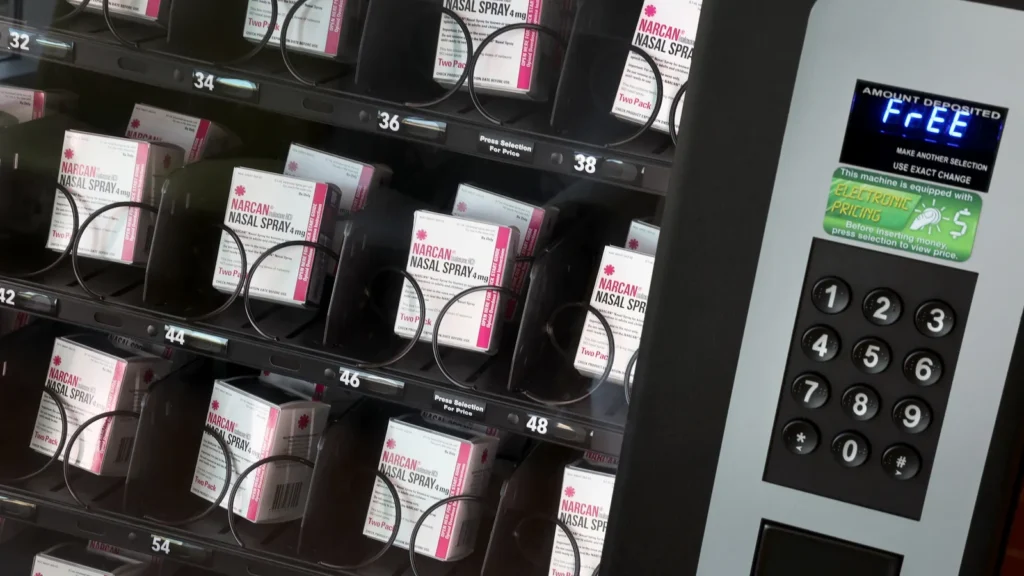
The availability of overdose reversal medications, as seen in innovative programs like free Narcan vending machines (such as the one photographed in Wheaton, Illinois, on September 1, 2022), underscores the public health push to make these life-saving tools ubiquitous. OSHA’s guidance aims to extend this accessibility directly into the workplace, transforming employers into frontline responders in the battle against opioid fatalities.
Workplace Drug Use: Alarming Statistics and Trends
The need for this OSHA guidance is further underscored by alarming statistics on drug use within the American workforce. A July 2025 report from clinical laboratory Quest Diagnostics, which analyzed millions of U.S. workforce drug test results (including hair and urine tests for marijuana, cocaine, opiates, amphetamines, and methamphetamine), revealed a concerning trend: nearly 1 in 5 workers (approximately 18.7%) tested positive for drug use from hair analysis. This figure represents a significant increase over the past decade, indicating a pervasive issue across various industries.
Delving deeper into the Quest Diagnostics findings, opiate use was found to be highest among healthcare workers. This particular statistic raises significant concerns given the healthcare sector’s direct exposure to controlled substances and its critical role in patient care. The report highlights that while marijuana remains the most commonly detected substance, the prevalence of illicit opioids, including fentanyl, in post-accident and random drug tests has been on an upward trajectory, signaling a direct threat to workplace safety and productivity. The report also pointed to regional variations, with certain states and industries exhibiting higher rates of drug positivity, suggesting that employers need to be aware of local trends and tailor their prevention and response strategies accordingly.
The implications of these statistics are profound. A workforce struggling with substance use disorders experiences higher rates of absenteeism, presenteeism (being at work but not productive), workplace accidents, and healthcare costs. Employers are increasingly recognizing that addressing substance use is not merely a social issue but a critical component of risk management and human capital strategy.
Legal and Ethical Imperatives: ADA Compliance and Employer Responsibility

Beyond the immediate safety concerns, companies also face significant legal and ethical considerations when dealing with employees’ opioid use. The Americans with Disabilities Act (ADA) protects individuals with substance use disorders who are in recovery or seeking treatment, considering addiction a disability if it substantially limits a major life activity. This means employers cannot discriminate against an employee solely because they have a history of opioid addiction or are undergoing treatment, provided they can still perform the essential functions of their job.
A notable example of this legal imperative occurred when a software company paid an $80,000 settlement in a U.S. Equal Employment Opportunity Commission (EEOC) disability discrimination lawsuit. The lawsuit alleged that the company unlawfully fired an employee who took leave for inpatient treatment for substance abuse. The worker, who had a history of opiate addiction and was participating in doctor-supervised medication-assisted treatment, was deemed by the EEOC to have been fired because he was regarded as disabled, a clear violation of the ADA. This case, among others, serves as a stark reminder to employers that punitive approaches to addiction can lead to costly legal repercussions. Instead, the focus should be on providing reasonable accommodations, supporting treatment, and creating a workplace culture that prioritizes recovery and reintegration.
The ethical dimension complements the legal framework. Employers have a moral obligation to provide a safe working environment, which now extends to preparing for potential medical emergencies like opioid overdoses. Offering support for employees struggling with addiction can also foster loyalty, improve morale, and ultimately contribute to a more stable and productive workforce.
Expert Reactions and Industry Perspectives
The release of OSHA’s guidance is expected to elicit a range of reactions from various stakeholders. Public health experts and addiction specialists will likely laud the move as a crucial step in destigmatizing addiction and integrating overdose prevention into mainstream safety practices. They may emphasize the importance of comprehensive programs that combine prevention, treatment, and harm reduction.
HR professionals and business leaders, while acknowledging the severity of the crisis, may also raise practical concerns regarding implementation. Questions about the cost of naloxone kits, the logistics of training a large workforce, and potential liability issues if an overdose occurs despite preparedness measures are anticipated. However, many progressive companies already have robust Employee Assistance Programs (EAPs) and substance abuse policies, and they may view this guidance as an opportunity to enhance their existing frameworks. Labor unions are likely to welcome the guidance, seeing it as an important enhancement to worker safety and health protections, aligning with their long-standing advocacy for safer working conditions. They may push for collective bargaining agreements to incorporate these new guidelines and ensure proper training and resources are allocated.
There may also be calls for government subsidies or tax incentives to help smaller businesses absorb the costs associated with implementing the guidance, ensuring that economic constraints do not impede life-saving measures. The proactive stance of the Trump Administration through the Great American Recovery Initiative suggests a commitment to supporting such efforts, potentially through grants or informational resources.

Implementation Challenges and Best Practices
Implementing OSHA’s new guidance will present both opportunities and challenges for businesses of all sizes. For large corporations with established safety departments, integrating overdose preparedness might be a relatively smooth process, building upon existing emergency response protocols. However, small and medium-sized enterprises (SMEs) may face resource constraints and require more support in developing and executing these new strategies.
Best practices for implementation will likely include:
- Developing a Clear Policy: Establishing a written policy on opioid overdose preparedness, including procedures for responding to an overdose, naloxone administration, and post-incident support.
- Integrating into Safety Training: Incorporating overdose recognition and naloxone training into existing new-hire orientations and recurring safety training programs.
- Leveraging EAPs: Enhancing Employee Assistance Programs to include resources for addiction treatment, counseling, and recovery support, promoting a culture of help-seeking rather than fear of reprisal.
- Regular Review and Updates: Periodically reviewing and updating the overdose preparedness plan, ensuring that naloxone kits are not expired and that training remains current.
- Communication and Awareness Campaigns: Running internal campaigns to raise awareness about the opioid crisis, reduce stigma, and inform employees about available resources.
Broader Implications for Public Health and Workforce Safety
OSHA’s guidance marks a significant evolution in workplace safety, acknowledging that the boundaries between public health crises and occupational hazards are increasingly blurred. By mandating or strongly recommending overdose preparedness, the government is effectively deputizing employers as critical partners in the national response to the opioid epidemic. This shift signifies a recognition that a holistic approach is necessary, one that extends beyond traditional law enforcement and healthcare settings to encompass every facet of daily life, including the workplace.
The long-term implications are substantial. A more prepared workforce could lead to a reduction in opioid overdose fatalities, not just within the workplace but potentially within communities, as trained individuals might respond to incidents outside of work hours. It could also foster a more compassionate and understanding workplace culture, where addiction is viewed as a treatable health condition rather than a moral failing. As the Great American Recovery Initiative continues to unfold, this OSHA guidance is poised to become a foundational element, transforming how businesses approach employee well-being and contributing meaningfully to the nation’s arduous journey toward recovery. The proactive integration of life-saving measures into everyday work environments represents a tangible commitment to safeguarding the health and future of the American workforce.