A landmark decision by an Irish employment tribunal has resulted in a €50,000 (£42,750) compensation award to Dikeledi Nkele Mushapho, a supervising pharmacist who experienced significant workplace discrimination and subsequent dismissal after informing her employer of her pregnancy. The ruling by Ireland’s Workplace Relations Commission (WRC) underscores the stringent legal protections afforded to pregnant employees in the Republic of Ireland and serves as a powerful reminder to employers of their obligations under national and European equality legislation. The case, adjudicated against Rose Finlay Pharmacy in Tullamore, County Offaly, illuminates the severe consequences of failing to adhere to fair employment practices and the principles of non-discrimination.
Chronology of Events Leading to Discrimination Claim
Dikeledi Nkele Mushapho commenced her role as a supervising pharmacist at Rose Finlay Pharmacy in Tullamore, County Offaly, in November 2024. Her initial tenure was marked by success and positive feedback from the pharmacy owner, particularly for her effective management of the team during the demanding Christmas period. This period of satisfactory performance established a clear baseline for her professional standing within the company.
The pivotal shift in Mushapho’s employment experience occurred on 18 February 2025, when she disclosed her pregnancy to the pharmacy management. According to her submission to the WRC, this announcement triggered an immediate and dramatic deterioration in her working environment. She reported an escalation in micromanagement and an intensified level of scrutiny over her performance, a stark contrast to the previously positive appraisals. This sudden change in management’s approach, directly following her pregnancy disclosure, formed the bedrock of her discrimination claim.
Further complicating the situation, an external consultant was introduced to the pharmacy, ostensibly to "support the team." However, Mushapho later discovered that the consultant’s true purpose was to assess her performance, an assessment she believed was unwarranted and a direct consequence of her pregnancy. This perceived covert evaluation further contributed to an atmosphere of distrust and undue pressure.
The situation escalated when Mushapho was presented with an offer of demotion, which also entailed a significant pay cut. She firmly believed this proposed demotion was "unjustified" and intrinsically linked to her pregnancy. Her refusal to accept this demotion led directly to her dismissal by the pharmacy on 28 March 2025. This dismissal was executed with only four weeks’ notice and, crucially, without any semblance of due process, further compounding the employer’s breaches of employment law. The absence of a fair hearing or opportunity for Mushapho to address any alleged performance issues prior to termination underscored the arbitrary nature of the decision.
The Workplace Relations Commission’s Adjudication
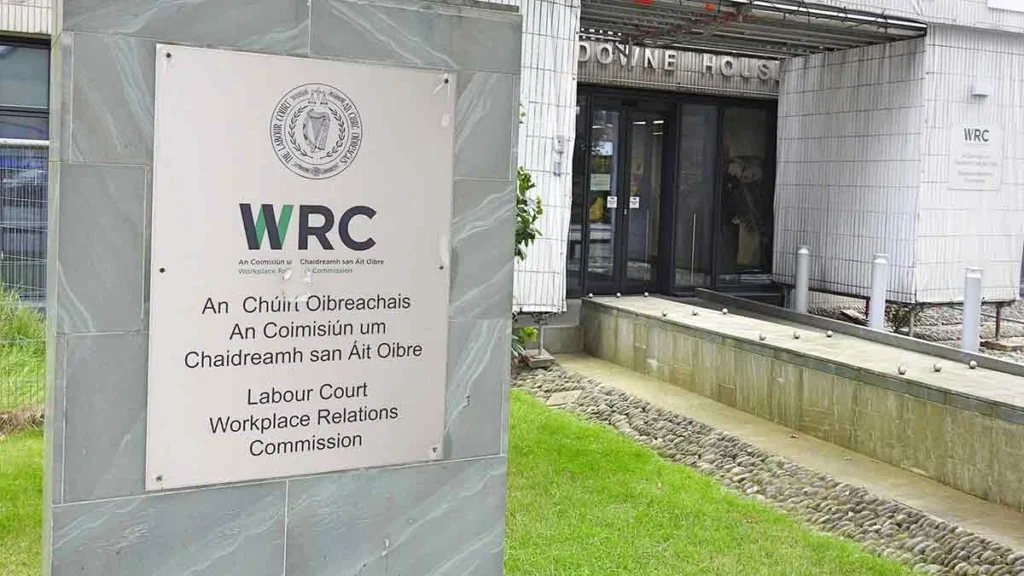
The Workplace Relations Commission (WRC) serves as Ireland’s primary independent statutory body responsible for promoting harmonious workplace relations, resolving industrial disputes, and ensuring compliance with employment laws. It investigates complaints of unfair dismissal, discrimination, and other breaches of employment rights, providing an accessible and impartial forum for resolution. The WRC’s role is critical in upholding the integrity of Ireland’s labour market and protecting the rights of its workforce.
In this specific case, the WRC initiated proceedings to hear Mushapho’s complaint. A critical aspect of the hearing was the non-participation of Rose Finlay Pharmacy. Despite being the respondent in the case, the pharmacy neither attended the hearing nor provided any submission or defence to the WRC regarding the allegations of discrimination and unfair dismissal. This absence effectively meant that Mushapho’s account and evidence stood largely uncontested before the adjudication officer.
During the hearing, Mushapho’s legal arguments drew heavily on established legal precedents concerning pregnancy-related dismissals. She specifically referenced the pivotal case of Intrum Justitia v McGarvey, a Labour Court ruling that provides a foundational principle in Irish employment law. This case explicitly outlines that "special protection against dismissal exists during pregnancy," asserting that "only the most exceptional circumstances not connected with the condition of pregnancy allow for any deviation from this." Furthermore, Intrum Justitia v McGarvey firmly established that "the dismissal of a pregnant woman raises a prima facie case of discrimination on the gender ground." This legal principle means that once a pregnant woman is dismissed, the burden of proof effectively shifts to the employer to demonstrate that the dismissal was for reasons entirely unrelated to her pregnancy and was conducted fairly.
Mushapho’s complaint was lodged under the provisions of the Employment Equality Act, which prohibits discrimination on various grounds, including gender. Her claim articulated that she had been discriminated against and ultimately dismissed directly due to her pregnancy, thereby constituting discrimination on gender grounds.
In his decision, Connor Stokes, the adjudication officer at the Workplace Relations Commission, found unequivocally in favour of Mushapho. His ruling stated: "Accordingly, I find that the complainant has established that she was discriminatorily dismissed in circumstances where she was pregnant." Given Mushapho’s annual salary of €100,000, and taking into account all the factors presented, Adjudication Officer Stokes determined that "an award of €50,000 is appropriate in all the circumstances of this complaint." This compensation aims to address the financial loss and distress suffered by Mushapho as a direct result of the discriminatory dismissal.
Legal Framework and Broader Context of Pregnancy Discrimination
The WRC’s decision in Mushapho’s favour is firmly rooted in a robust legal framework designed to protect pregnant employees in Ireland and across the European Union. At the national level, the Employment Equality Acts 1998-2015 prohibit discrimination in employment on nine distinct grounds, including gender. Pregnancy discrimination is explicitly covered under the gender ground, meaning that treating an employee unfavourably because of her pregnancy, or any matter connected with it, constitutes unlawful discrimination. These Acts also mandate equal treatment in terms of access to employment, working conditions, training, promotion, and dismissal.

Further protection is provided by the Maternity Protection Acts 1994 and 2004, which entitle pregnant employees to maternity leave and associated rights, including the right to return to their job or a suitable alternative. Crucially, these Acts make it unlawful to dismiss an employee during pregnancy or maternity leave unless there are extremely compelling reasons unrelated to the pregnancy itself, and even then, strict procedures must be followed.
At the European level, the Pregnant Workers Directive (Council Directive 92/85/EEC) sets minimum standards for the protection of pregnant workers and workers who have recently given birth or are breastfeeding. This directive aims to improve the safety and health at work of pregnant workers, including protections against dismissal. EU case law, particularly from the European Court of Justice, has consistently reinforced these protections, establishing that pregnancy is not a sickness but a unique condition requiring special protection. This consistent legal stance across Europe reinforces the strong position taken by the WRC in Ireland.
Despite these extensive legal protections, pregnancy discrimination remains a persistent issue in workplaces globally, and Ireland is not immune. Studies and anecdotal evidence often reveal that women continue to face challenges related to pregnancy disclosure, ranging from subtle forms of discrimination like being overlooked for promotions or training opportunities, to more overt acts such as demotion or outright dismissal. A 2018 study by the ESRI (Economic and Social Research Institute) in Ireland, while not solely focused on pregnancy, highlighted various forms of gender inequality in the workplace, with parental status often playing a role in career progression. Organisations like the Irish Human Rights and Equality Commission (IHREC) frequently receive complaints related to gender discrimination, including those linked to pregnancy. The WRC itself processes numerous such cases annually, indicating that while legal frameworks are strong, their consistent application and employer awareness remain critical.
Common manifestations of pregnancy discrimination include:
- Unfair Dismissal: As seen in Mushapho’s case, direct termination after pregnancy disclosure.
- Demotion or Reduced Responsibilities: Forcing pregnant employees into less senior or less demanding roles, often with a pay cut.
- Negative Performance Reviews: Fabricating or exaggerating performance issues post-disclosure to create a pretext for adverse action.
- Lack of Accommodation: Refusing reasonable adjustments for pregnant workers, such as lighter duties or modified hours, where feasible.
- Exclusion from Opportunities: Overlooking pregnant employees for training, promotions, or projects, assuming they will be less committed or capable.
The WRC’s robust approach in cases like Mushapho’s sends a clear message that such discriminatory practices will not be tolerated and will incur significant penalties.
Implications for Employers and Workplace Policies
This WRC ruling carries significant implications for employers across Ireland, particularly for small and medium-sized enterprises (SMEs) that may have less formalised HR structures than larger corporations. The decision serves as a stark reminder that ignorance of the law is not a defence and that comprehensive understanding and adherence to employment equality legislation are paramount.
For employers, key takeaways include:
- Strict Adherence to Due Process: Any disciplinary action, including demotion or dismissal, must follow rigorous due process, especially for pregnant employees. This includes clear communication of concerns, opportunities for the employee to respond, and fair investigation. The absence of due process in Mushapho’s dismissal was a critical factor in the WRC’s finding.
- Unwavering Protection for Pregnant Employees: The "special protection" afforded to pregnant workers means that employers must exercise extreme caution. Dismissal during pregnancy is almost always unlawful unless it can be definitively proven to be for a reason entirely unrelated to the pregnancy and unavoidable.
- Training and Awareness: Employers must invest in regular training for managers and HR personnel on equality legislation, particularly concerning gender and pregnancy discrimination. This ensures that those in leadership positions understand their legal obligations and the potential financial and reputational risks of non-compliance.
- Objective Performance Management: Performance assessments must be objective, consistent, and well-documented. Any sudden shift in performance management after a pregnancy disclosure will be viewed with suspicion by tribunals.
- Inclusive Workplace Culture: Beyond legal compliance, fostering an inclusive culture where pregnant employees feel supported and valued is crucial. This can help prevent discrimination and improve employee morale and retention.
- Legal Counsel: Employers should seek legal advice when dealing with sensitive employment matters, especially those involving protected characteristics like pregnancy, to ensure all actions are legally sound.
The financial penalty of €50,000, in addition to potential legal costs and reputational damage, underscores the high cost of non-compliance. For a small business like a local pharmacy, such an award can have a substantial impact on its operations and long-term viability.
Implications for Employees and Advocacy
For employees, particularly women contemplating pregnancy or those who are already pregnant, this ruling offers significant reassurance and empowerment. It reinforces the message that legal protections are robust and that avenues for redress are effective.
Key implications for employees:
- Awareness of Rights: The case highlights the importance of employees being aware of their rights under the Employment Equality Acts and Maternity Protection Acts.
- Documentation is Key: Employees who suspect discrimination should meticulously document all relevant interactions, communications, and changes in working conditions. This evidence can be crucial in building a strong case.
- Seeking Advice: Employees should not hesitate to seek advice from trade unions, legal professionals, or bodies like the Irish Human Rights and Equality Commission (IHREC) or directly from the WRC if they believe their rights have been violated.
- Empowerment: The successful outcome for Mushapho serves as a powerful example that challenging discriminatory practices can lead to justice and compensation, thereby encouraging others to come forward.
- Reinforcement of Equality Principles: The ruling reinforces the societal value placed on gender equality and the right to work without fear of discrimination based on family status or reproductive choices.
This case is not merely about an individual award; it is a broader affirmation of the principle that pregnancy should never be a barrier to professional advancement or job security. It strengthens the collective resolve to eradicate discrimination and ensure that workplaces are equitable and supportive environments for all.
Conclusion
The Workplace Relations Commission’s decision to award Dikeledi Nkele Mushapho €50,000 for discriminatory dismissal following her pregnancy disclosure is a significant development in Irish employment law. It reaffirms the strength of national and European legal frameworks designed to protect pregnant workers and sends an unequivocal message to employers about their obligations. The ruling underscores the critical importance of fair process, non-discrimination, and a comprehensive understanding of equality legislation. As Ireland continues to strive for gender equality in the workplace, such rulings play a vital role in ensuring that legal protections translate into real-world justice, fostering environments where women can pursue their careers without fear of reprisal for choosing to start a family. The case of Dikeledi Nkele Mushapho will undoubtedly serve as a crucial reference point for future claims and as a powerful deterrent against discriminatory practices in workplaces across the nation.