When leading human resources for a global workforce, fostering genuine connection and maximizing employee potential can often feel like the most formidable challenge, yet simultaneously, the greatest strategic opportunity. This dynamic is precisely where advanced employee reward platforms designed for enterprise HR departments are proving to be transformative, fundamentally reshaping how organizations engage, motivate, and retain their talent. These sophisticated platforms are not merely tools for distributing gifts; they are integral components of a holistic engagement strategy, delivering recognition that resonates, links effort directly to tangible impact, cultivates enduring loyalty, and quantifies the business value of appreciation.
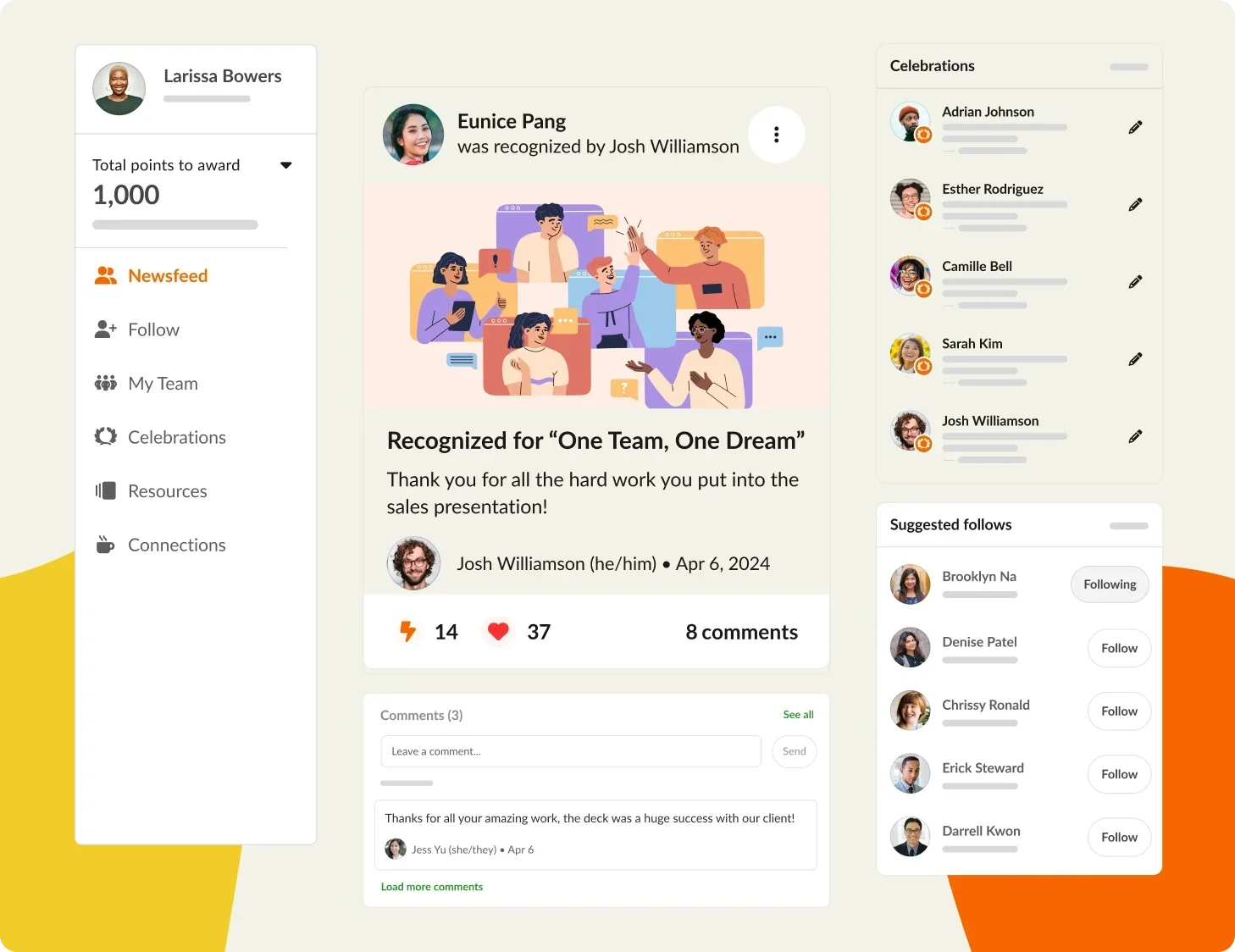
The impact of well-executed reward programs is demonstrably clear, underscoring their strategic importance. According to the authoritative 2025 State of Recognition Report, over 40% of employees express feeling genuinely appreciated upon redeeming points, while a substantial nearly 70% report that rewards significantly boost their motivation at work. This compelling data highlights the profound influence of effective reward systems: they don’t just make individuals feel valued in the moment; they inspire a sustained desire to contribute and innovate, thereby continuously adding value to the organization. The critical question for today’s HR leaders, therefore, shifts from if to which platforms effectively deliver on this promise.
The Strategic Imperative: Why Enterprise Reward Platforms Matter Now More Than Ever
The modern corporate landscape has undergone a seismic shift, driven by factors such as accelerated globalization, the widespread adoption of remote and hybrid work models, and an increasingly competitive talent market. The era of the "Great Resignation" and the ongoing emphasis on employee well-being have amplified the need for HR to move beyond traditional, transactional HR functions towards becoming strategic architects of organizational culture and engagement. In this context, outdated, manual, or fragmented recognition systems are no longer sufficient. Enterprise-grade reward platforms emerge as a critical infrastructure, enabling organizations to build cohesive, high-performing cultures across diverse geographies and work arrangements.
These platforms address several core challenges:
- Scalability and Consistency: Ensuring equitable and culturally relevant recognition for tens of thousands of employees across dozens of countries.
- Impact Measurement: Providing data-driven insights into the effectiveness of recognition programs, linking them to key business outcomes like retention, productivity, and employee satisfaction.
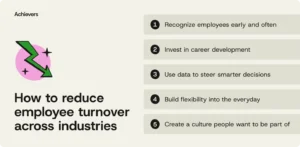
- Engagement and Retention: Creating a continuous loop of appreciation that reinforces positive behaviors, boosts morale, and reduces costly employee turnover.
- Operational Efficiency: Automating administrative tasks associated with rewards, freeing HR teams to focus on strategic initiatives.
Evolution of Employee Recognition: A Brief Chronology
The concept of employee recognition is far from new, but its execution has evolved dramatically. Historically, recognition often consisted of annual awards, service anniversaries, or ad-hoc gestures like a manager’s verbal "thank you." While valuable, these methods lacked consistency, scalability, and measurable impact, particularly as workforces grew and diversified.
- Early 2000s: The rise of basic online points-based systems, often managed by third-party vendors, offering a limited catalog of generic rewards. These systems provided a rudimentary level of automation but often lacked integration with broader HR systems or cultural alignment.
- 2010s: Increased focus on "social recognition," allowing peers to acknowledge each other’s contributions. This era saw platforms integrating with internal communication tools, making recognition more frequent and visible. The concept of linking recognition to company values began to gain traction.
- Late 2010s to Present: The emergence of sophisticated, enterprise-grade platforms characterized by:
- Global Reach: Vast, localized reward marketplaces catering to diverse cultural preferences and logistical challenges.
- Advanced Analytics: AI-powered insights into recognition patterns, sentiment analysis, and the correlation between recognition and performance metrics.
- Deep Integration: Seamless connectivity with HRIS, payroll, communication platforms (Slack, Teams), and performance management systems.
- Personalization: Customization options for rewards, recognition programs, and user interfaces to reflect company branding and values.
- Holistic Engagement: Integration of recognition with other engagement drivers like well-being programs, feedback mechanisms, and learning opportunities.
This evolution underscores a fundamental shift: recognition is no longer a peripheral HR activity but a central pillar of organizational strategy, demanding robust technological solutions.
Essential Criteria for Enterprise HR Leaders Selecting a Reward Platform
Choosing the right enterprise reward platform is a strategic decision that can significantly influence organizational culture, employee engagement, and business outcomes. HR leaders must look beyond superficial features and consider a comprehensive set of capabilities:
- Global Scalability and Localization: For multinational corporations, the ability to deliver relevant, equitable, and compliant rewards across diverse regions and cultures is paramount. This includes a vast global marketplace with local currency options, tax compliance, and varied reward categories (e.g., digital gift cards, experiential rewards, charitable donations, physical merchandise). Platforms offering "zero markups and free shipping" on rewards, as highlighted by Achievers, present significant value.
- Robust Analytics and Reporting: Strategic HR requires data. The best platforms provide real-time dashboards, AI-driven insights, and customizable reports that track recognition activity, identify engagement trends, measure program ROI, and highlight potential areas for intervention. This data helps HR leaders demonstrate the tangible business impact of their recognition efforts.
- Seamless Integration Capabilities: A truly effective platform integrates effortlessly with existing HR ecosystems, including Human Resources Information Systems (HRIS), performance management tools, and internal communication platforms like Slack, Microsoft Teams, and Outlook. This ensures recognition becomes an embedded part of daily workflows, rather than an isolated activity.
- Configurability and Customization: The platform should allow HR to tailor recognition programs to align with specific organizational values, strategic objectives, and brand identity. This includes custom badges, program rules, and communication templates.
- User Experience (UX) and Accessibility: An intuitive, user-friendly interface is crucial for driving high adoption rates. The platform should be accessible on various devices (desktop, mobile app) and easy for all employees—from frontline staff to senior executives—to navigate and utilize effectively.
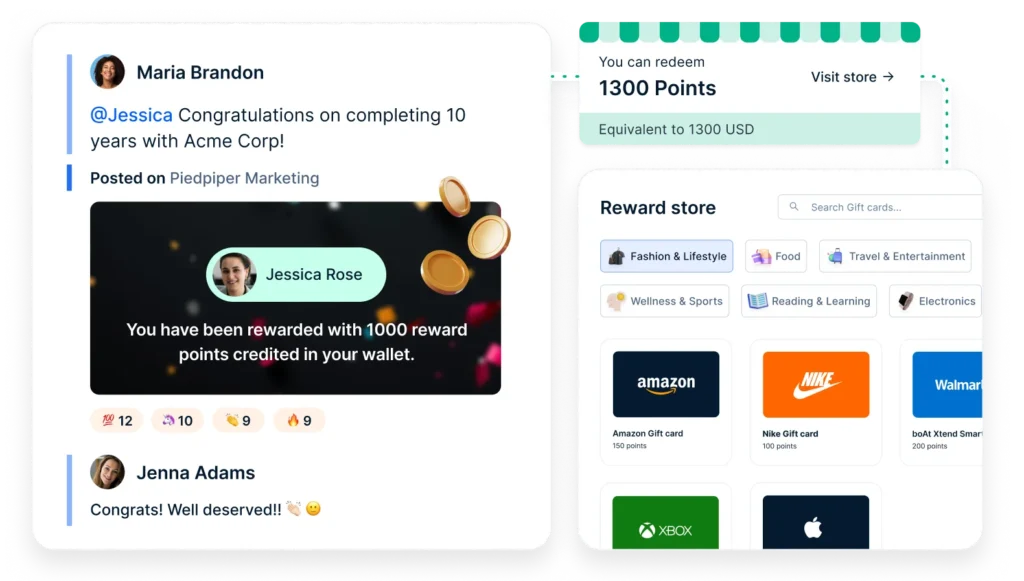
- Comprehensive Reward Catalog: A diverse and appealing selection of rewards is key to motivating a varied workforce. This should span digital gift cards, merchandise, travel, unique experiences, and charitable giving options, with flexible redemption processes.
- Security and Compliance: Given the sensitive nature of employee data and financial transactions, robust security measures and adherence to global data privacy regulations (e.g., GDPR) are non-negotiable.
- Support and Implementation: The vendor should offer strong implementation support, ongoing training, and responsive customer service to ensure a smooth rollout and continuous optimization of the program.
Leading Solutions in the Enterprise Reward Landscape
The market for employee reward platforms is dynamic and competitive, with a range of solutions catering to different organizational sizes and needs. While many platforms offer compelling features, a closer look reveals their distinct strengths and ideal use cases.
Global Powerhouses: Comprehensive Enterprise Solutions
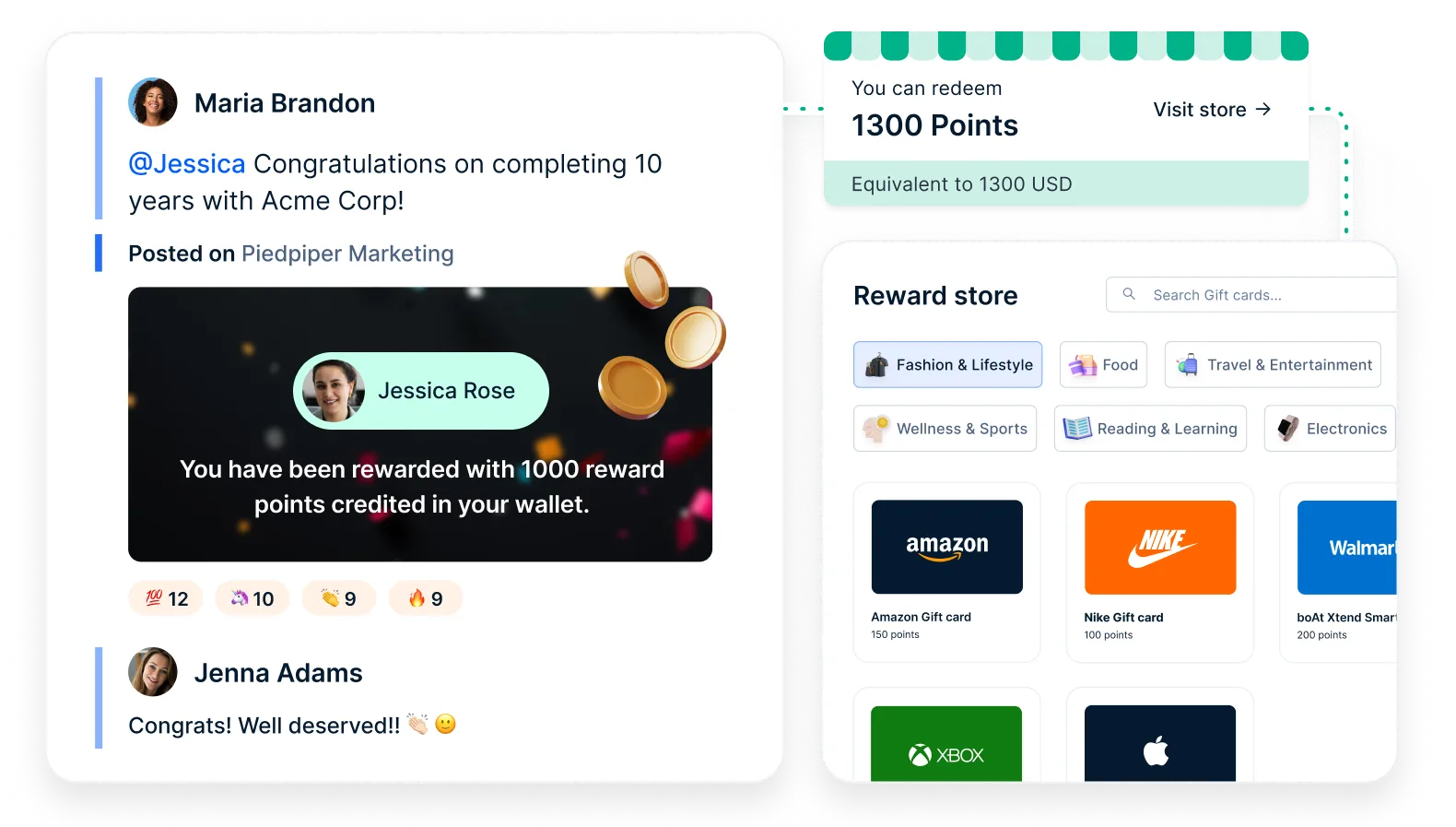
- Achievers (G2 rating: 4.7/5): Positioned as a leading enterprise-grade platform, Achievers excels in global scalability and data-driven impact. Its marketplace boasts over 3 million locally relevant rewards across 190 countries, with transparency in pricing (zero markups, free shipping). This extensive reach, combined with robust analytics and a focus on connecting culture, performance, and results, makes it ideal for large, complex organizations seeking measurable outcomes. Users like Natalia C., a Sr. Learning Specialist, praise its ease of use for recognizing teammates and leadership engagement features. Its primary weakness lies in its enterprise focus, potentially offering more features than smaller businesses require.
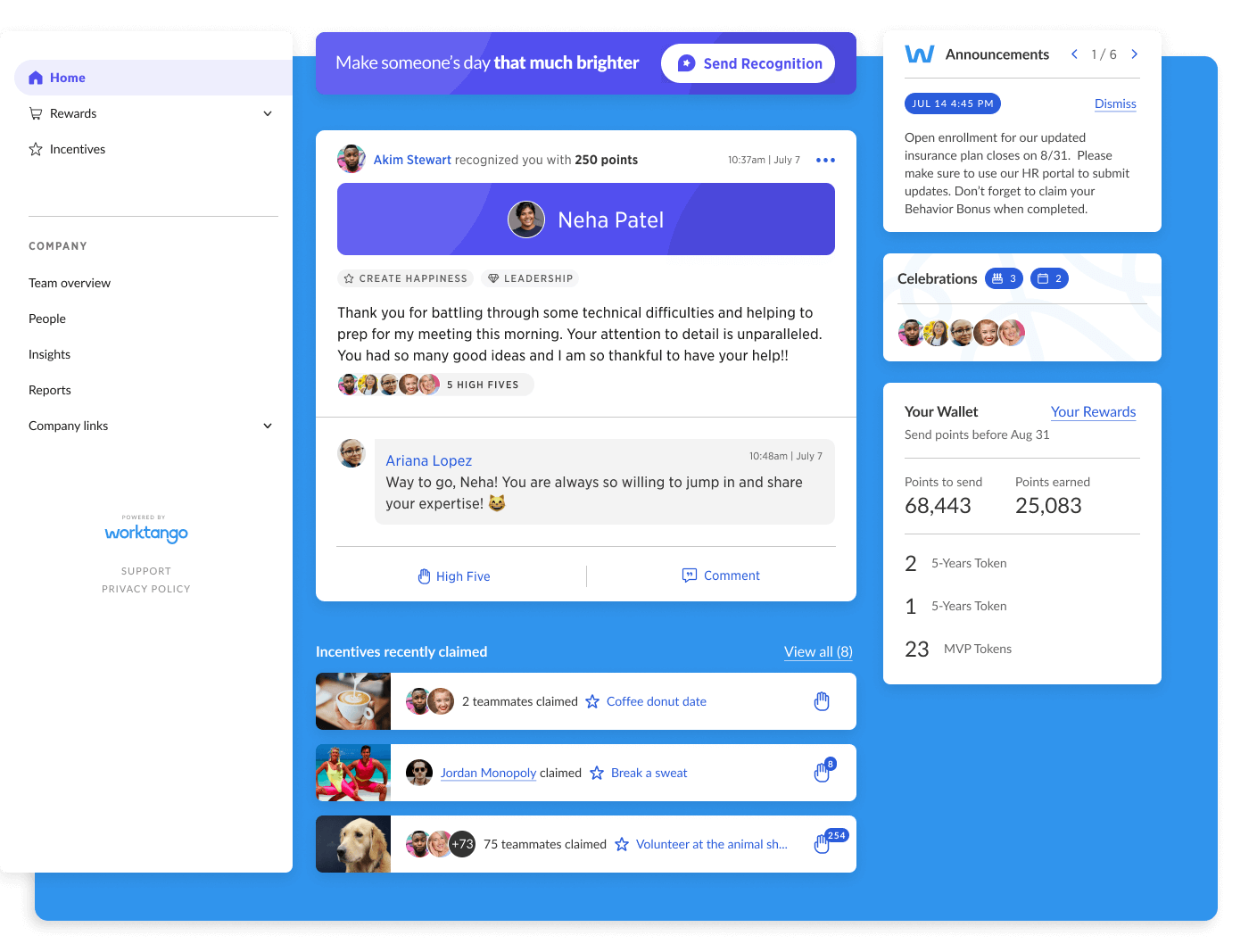
- WorkTango (G2 rating: 4.7/5): WorkTango offers a unified platform for recognition, rewards, and broader engagement. It provides a global rewards marketplace, peer-to-peer recognition, and milestone automation, coupled with analytics to track program impact. It’s well-suited for organizations seeking a single, integrated solution for global rewards and engagement. James W., a Customer Success Team Lead, notes its effectiveness in highlighting excellent contributions and its wide variety of redemption options.
- Empuls (by Xoxoday) (G2 rating: 4.6/5): Empuls focuses on integrating recognition with feedback, perks, and communication, making it a comprehensive engagement platform. Its global rewards marketplace supports both small and large organizations, offering a broad selection of digital and tangible gift options. A Gartner review highlights it as a "very good product as a social software and also for employee recognition." It is particularly strong for global teams needing a broad rewards solution, though it may lack some of the concierge-style fulfillment options of more specialized enterprise platforms.
Agile Innovators: Social & Integrated Recognition
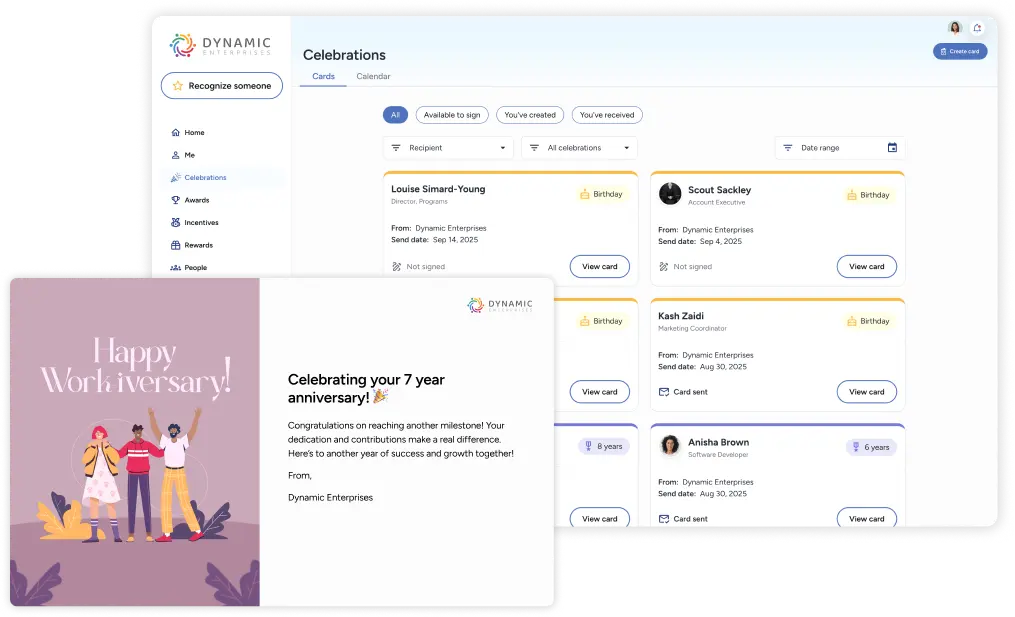
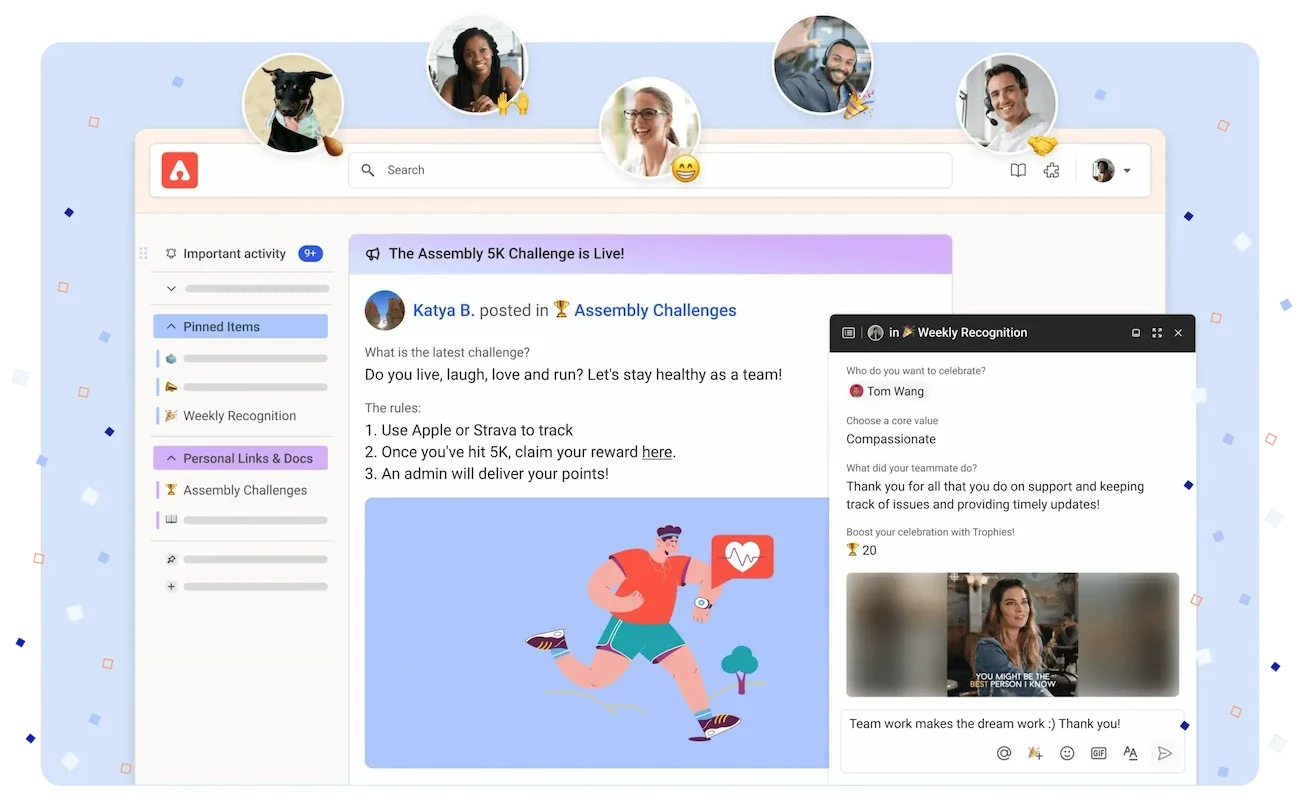
- Assembly (G2 rating: 4.9/5): Assembly stands out for its modern, AI-supported approach to recognition, particularly for hybrid and remote teams. Its automated celebrations and flexible global rewards catalog make it attractive for mid-sized to enterprise organizations prioritizing connected experiences. Marsean R., a Product Specialist, appreciates its intuitive interface and its ability to foster a culture of recognition. While robust, its reporting depth might be less extensive than platforms dedicated solely to enterprise analytics.
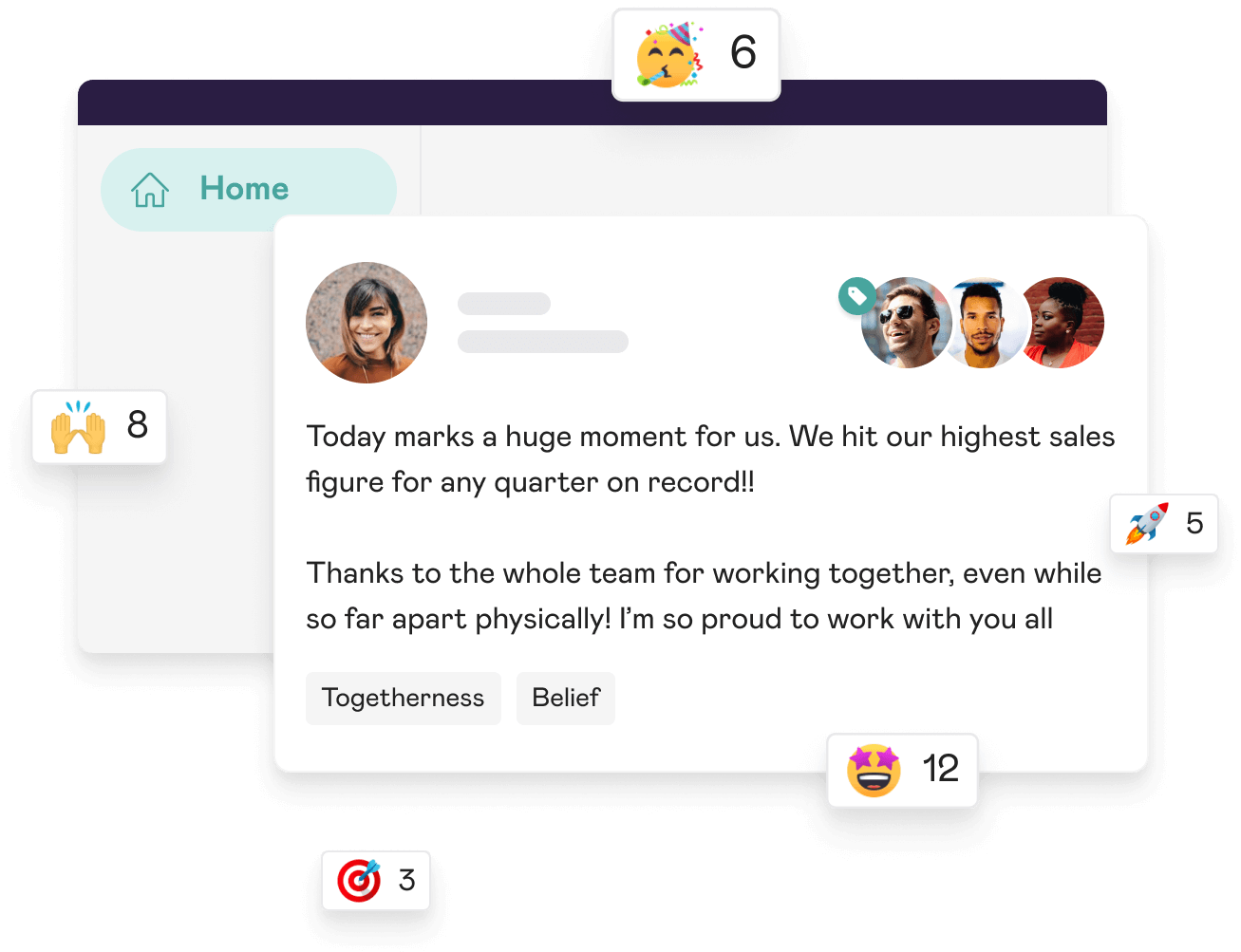
- Mo (G2 rating: 4.6/5): A UK-based platform, Mo emphasizes social recognition and culture-building through "Moments" feeds and automated awards. Its integration with Microsoft Teams, Slack, and Outlook allows recognition within existing workflows, making it ideal for fostering continuous, social engagement. Asyim, an Office Administrator, notes Mo’s unique system for rewarding "over-achiever" employees and boosting their focus. However, its rewards catalog options and enterprise-scale analytics are more limited compared to larger global platforms.
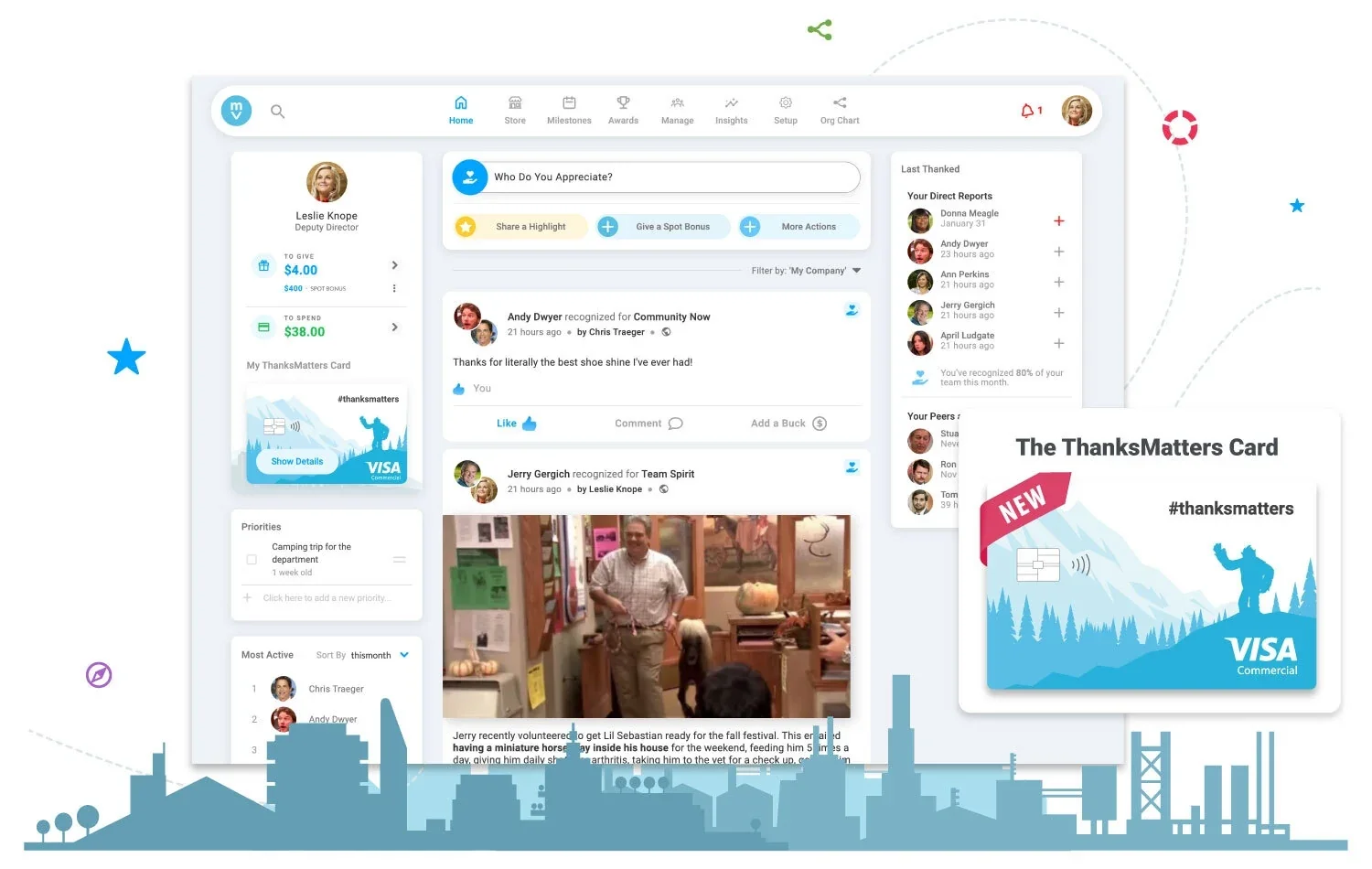
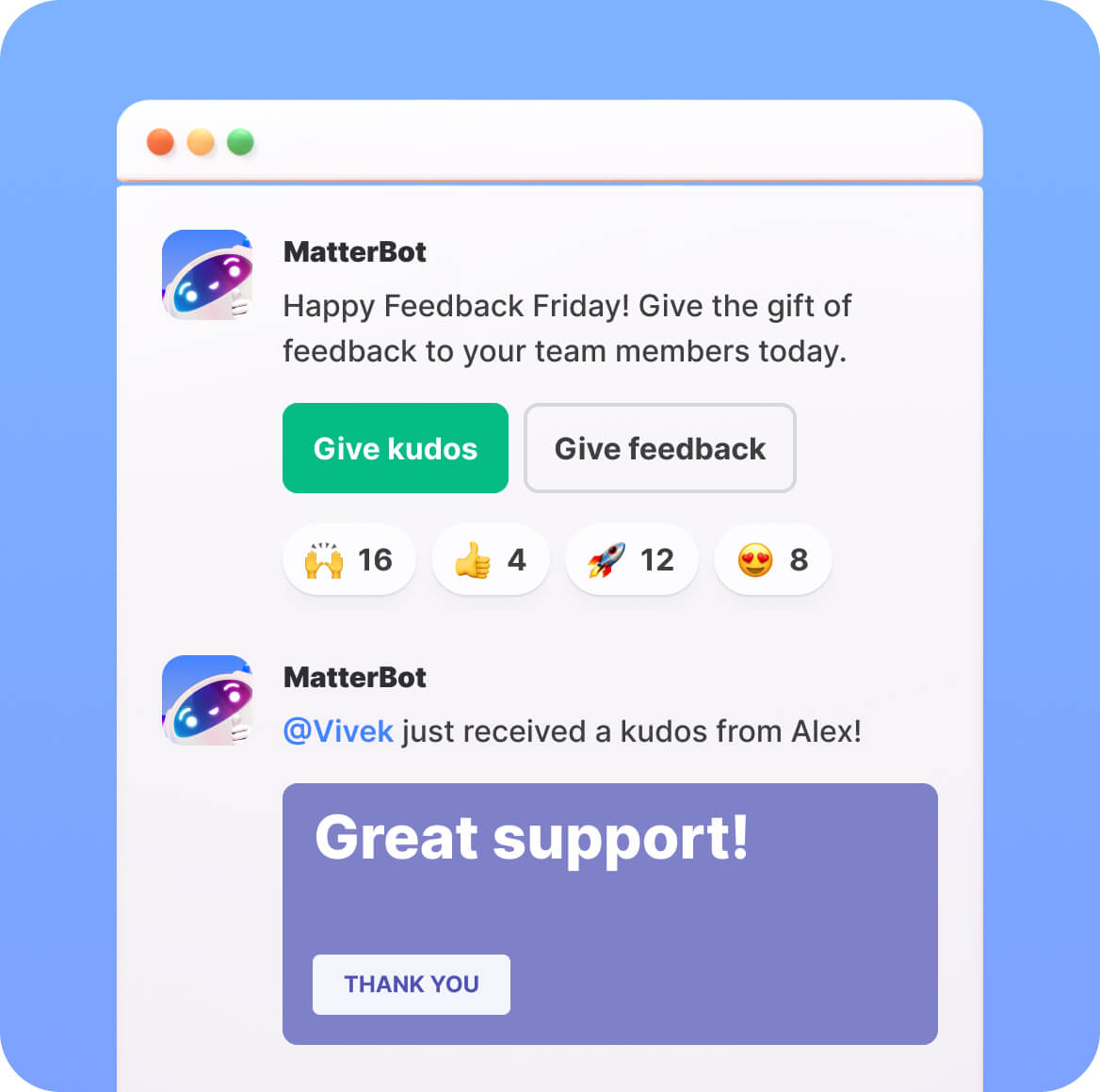
- Matter (G2 rating: 4.6/5): Designed for seamless integration, Matter operates directly within Slack and Microsoft Teams, allowing employees to send kudos and redeem coins for digital gift cards or custom company rewards. This makes it an excellent choice for organizations heavily reliant on these communication tools, aiming for embedded recognition. David, an Inventory Manager, credits it for making him "more actively engaged in communicating my appreciation." Its convenience comes with fewer advanced analytics and strategic reward management tools than enterprise-focused platforms.
Focused & User-Friendly: Mid-Market and Specific Use Cases
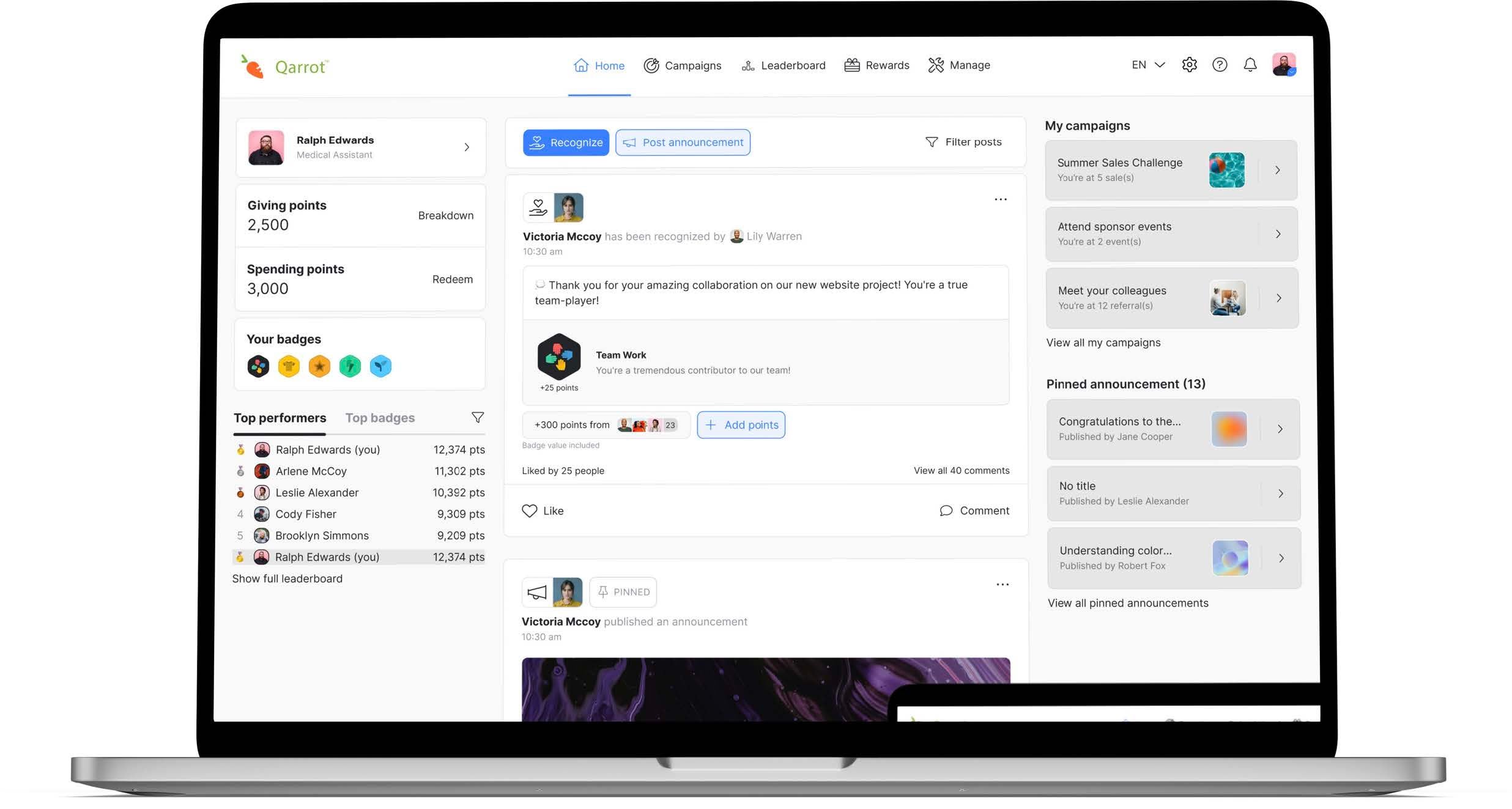
- Qarrot (G2 rating: 4.6/5): Qarrot is a cloud-based platform built for simplicity, focusing on peer-to-peer and manager recognition, milestone awards, and outcome-based incentive campaigns. It’s best for small to mid-sized companies seeking a straightforward platform that links social appreciation with performance incentives. A verified G2 reviewer praises its diverse gift card selection and customizability.
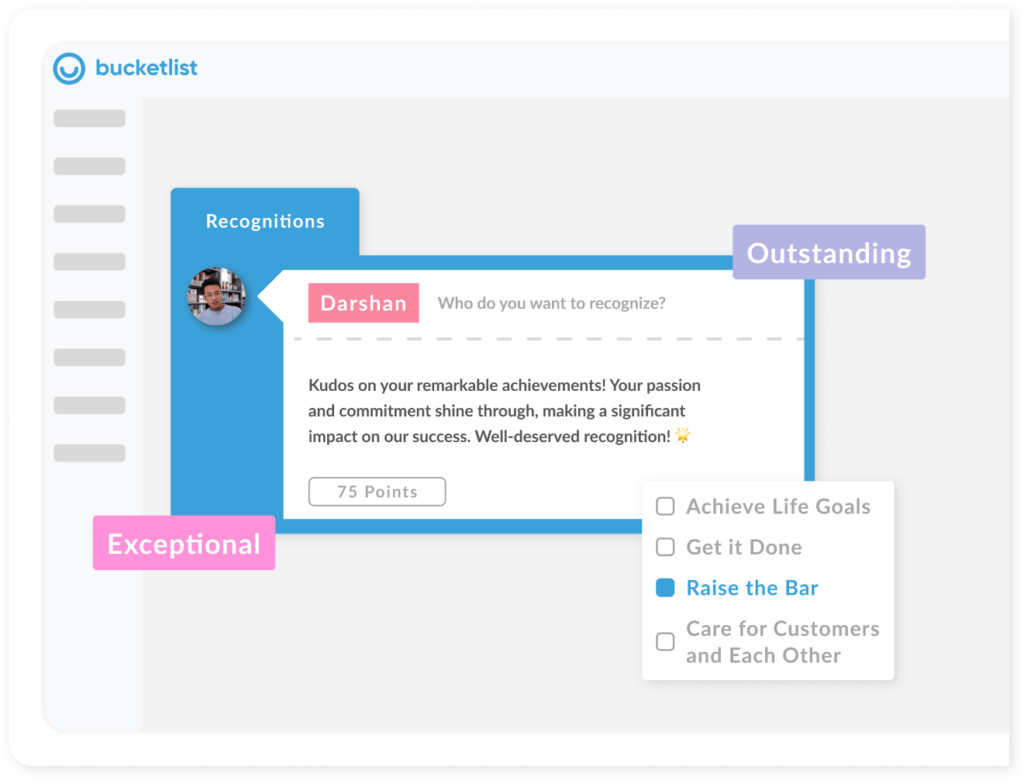
- Bucketlist (G2 rating: 4.8/5): Bucketlist aims to make appreciation simple and social, combining peer recognition, milestone celebrations, and a global rewards catalog. Its integrations with Slack and Microsoft Teams enhance daily recognition. Jessica, an Accounts Receivable Analyst, enjoys the "fun and personal touch" of its gift cards and experience-based rewards. While user-friendly, its analytics and customization options might be less robust for larger enterprises.
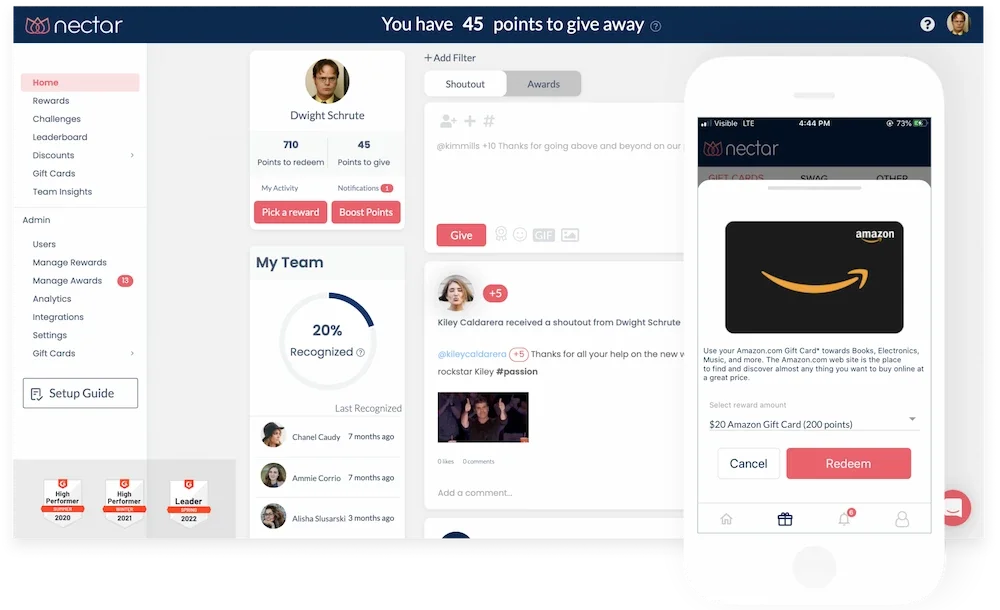
- Nectar (G2 rating: 4.7/5): Nectar transforms everyday "thank yous" into visible acknowledgment, supporting peer shout-outs and linking recognition to core values. It offers a wide-range rewards catalog. Lisa, Head of People and Culture, highlights its ability to foster "ongoing positive interaction daily" and management’s use of tangible rewards. It’s well-suited for smaller to mid-sized teams but may face limitations in scalability and global reach for larger organizations.
- Kudos (G2 rating: 4.8/5): Kudos focuses on building connection, belonging, and purpose through peer-to-peer recognition and milestone celebrations. It offers a global rewards program including merchandise, gift cards, and experiences. An Optimization Engineer, Matthew P., likes rewarding coworkers monthly but suggests a wider range of point tranches for a better experience. It is a strong recognition-led platform but its rewards marketplace may have fewer high-end fulfillment options.
- Motivosity (G2 rating: 4.7/5): Motivosity emphasizes connection and appreciation through peer recognition, performance incentives, and global rewards, including gift cards, branded swag, and travel experiences. Sara, a Customer Experience Supervisor, notes significant morale improvement and full employee engagement with the platform. While providing a broad range of global options, it offers fewer high-touch or concierge-style fulfillment experiences.
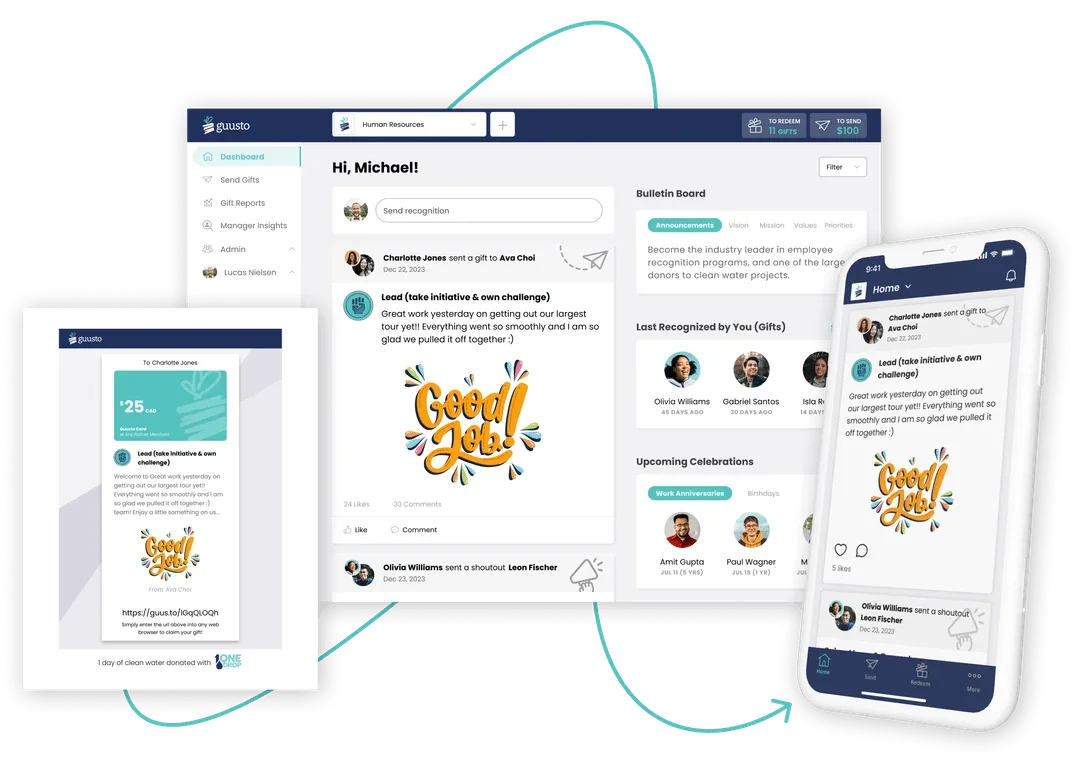
- Guusto (G2 rating: 4.9/5): Guusto provides a recognition and rewards solution for both office and frontline employees, emphasizing accessibility with digital or print delivery. Its catalog includes gift cards, merchandise, charitable donations, and prepaid Mastercards. Olayinka, a Data Analyst, praises its intuitive platform and customization options. Its feature set is more limited compared to enterprise-grade platforms with advanced analytics and AI insights.
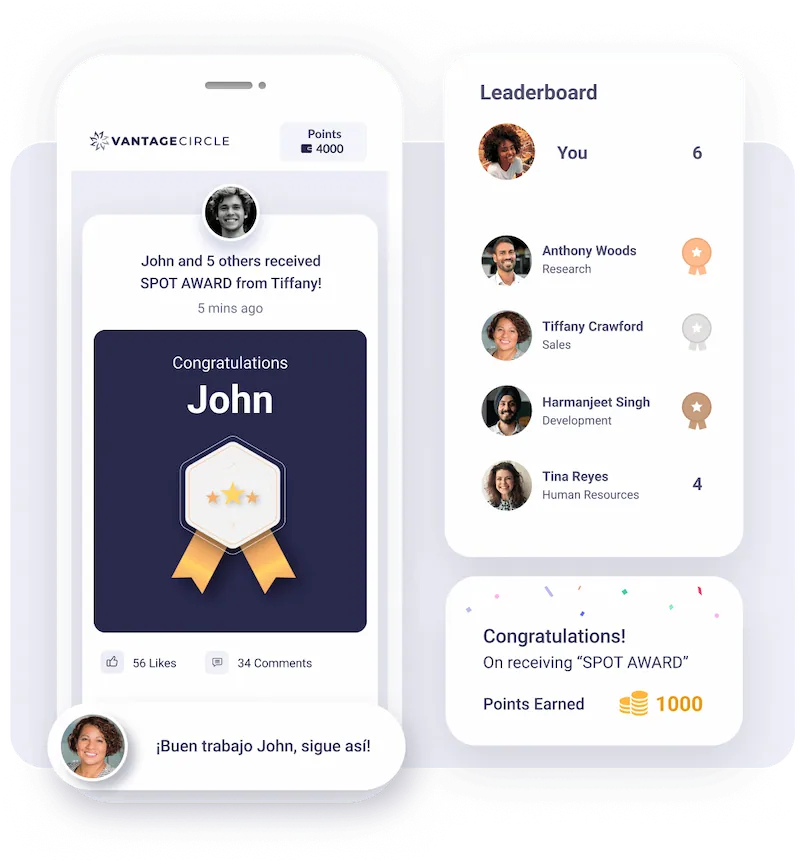
- Vantage Circle (G2 rating: 4.7/5): Vantage Circle combines recognition, wellness, perks, and feedback. Its Vantage Rewards tool supports peer and manager recognition and a point-based system. It’s ideal for organizations seeking a single platform connecting recognition with employee well-being and corporate discounts. A verified G2 review suggests expanding the reward catalog to include more local or niche options.
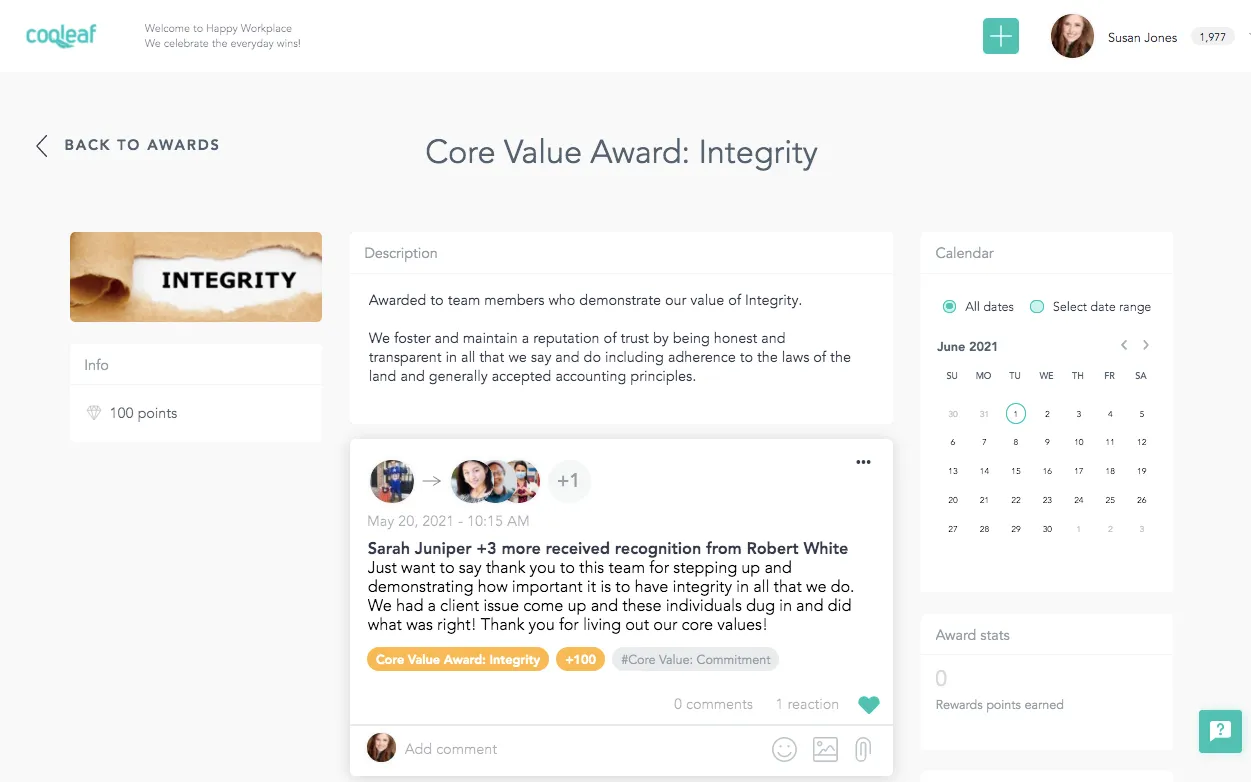
- Cooleaf (G2 rating: 4.9/5): Cooleaf offers an easy-to-use, culture-focused platform with global reward options spanning gift cards, experiences, and donations. A verified G2 reviewer finds it a "great source for employees to feel like their hard work actually does pay off," praising the variety of rewards. Its analytics and advanced customization options are more limited than enterprise-grade solutions.
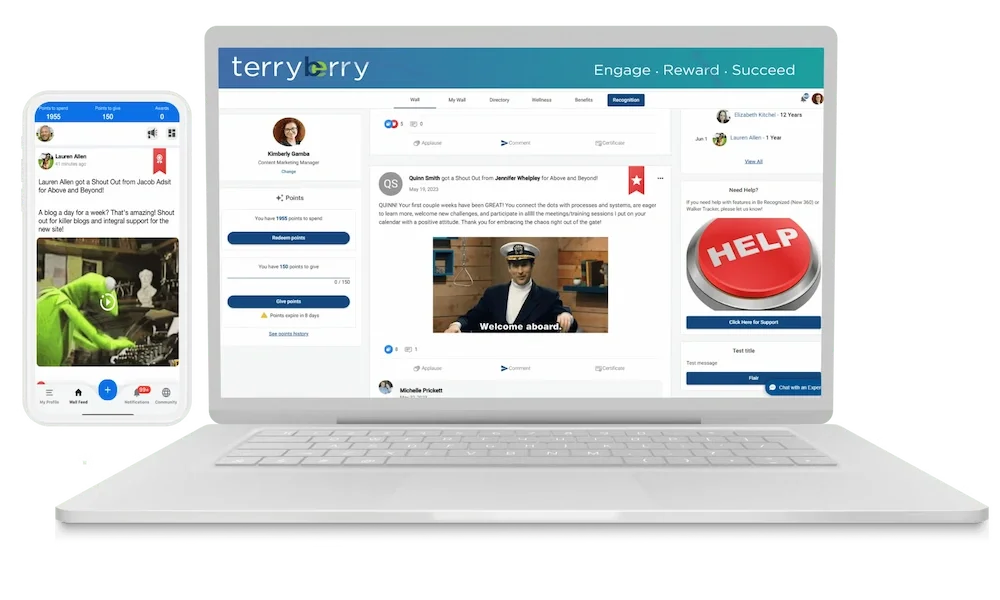
- Terryberry (G2 rating: 4.6/5): Terryberry is an established provider combining recognition, rewards, well-being, and feedback. Its Amazon Business integration offers retail pricing for rewards. It’s suitable for organizations desiring an integrated suite of engagement, incentive, and well-being programs. A verified G2 reviewer wished for "even more reward options" in certain categories. Its traditional interface may feel less modern than newer platforms.
The Financial Landscape: Pricing and Value Proposition
Enterprise employee rewards solutions typically employ a hybrid pricing model, combining platform fees with reward funding. Most vendors charge on a per-employee basis, while some implement tiered pricing structured around organizational size, required features, and global deployment complexities.
When evaluating the total cost of ownership, HR leaders must look beyond the initial software subscription. The comprehensive investment often encompasses the actual reward budgets, costs associated with integrations, implementation support, access to advanced reporting functionalities, and the intricacies of global reward fulfillment. For large organizations, the optimal employee rewards solution strikes a delicate balance between predictable costs and the inherent flexibility to scale recognition programs across diverse teams, geographical regions, and distinct business units.
A crucial tip for procurement is to prioritize total value over the upfront price. A platform that demonstrably boosts participation, significantly improves retention rates, and measurably strengthens employee engagement can yield a substantially greater return on investment (ROI) than a seemingly lower-cost solution plagued by limited adoption or inadequate reporting capabilities. The true value emerges from its capacity to drive meaningful, measurable improvements in human capital.
Broader Impact and Implications for the Modern Enterprise
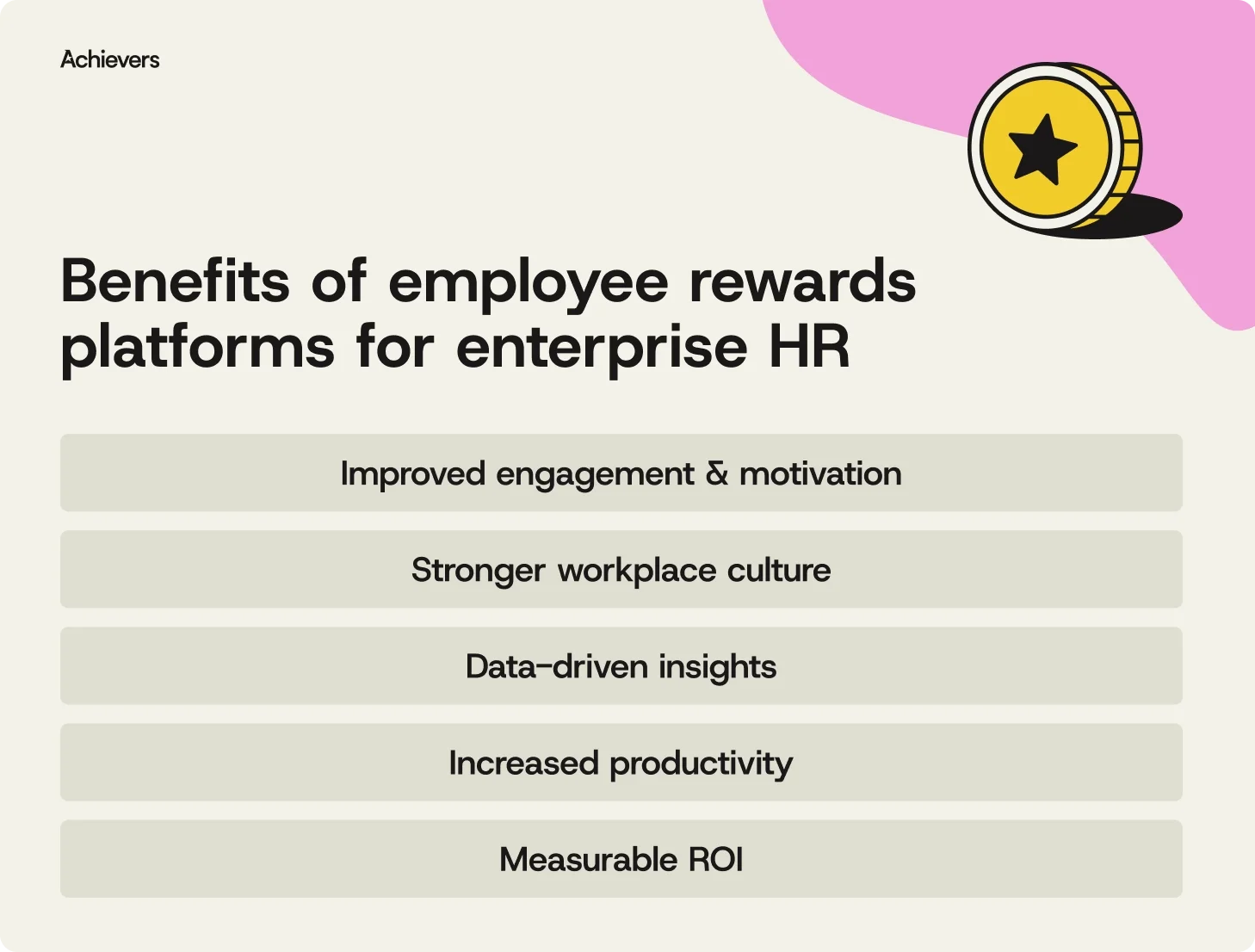
The benefits of implementing sophisticated enterprise HR reward platforms extend far beyond mere employee satisfaction, translating into significant strategic advantages for the organization:
- Improved Engagement and Motivation: Regular, meaningful recognition is a powerful driver of motivation and commitment. In a globalized world, these platforms ensure that every employee, regardless of location, feels connected to the organization’s mission and appreciated for their contributions, fostering a sense of psychological safety and belonging.
- Stronger Workplace Culture: Organizational culture is not merely a set of stated policies; it is actively shaped by daily interactions and consistent behaviors. Consistent recognition platforms reinforce core values, celebrate successes, and build a cohesive sense of community, acting as a stabilizing force during periods of change or uncertainty.
- Data-Driven Strategic Insights: The real-time analytics and AI-powered dashboards offered by leading platforms empower HR leaders with unparalleled visibility. They can identify patterns in recognition, pinpoint potential areas of disengagement early, and continuously refine their recognition strategies to maximize impact. This shifts HR from reactive to proactive, data-informed decision-making.
- Increased Productivity and Performance: When employees feel genuinely valued and recognized for their efforts, their intrinsic motivation, focus, creativity, and collaborative spirit are significantly enhanced. This direct link between appreciation and performance translates into tangible improvements in individual and team output, turning "good work into great results."
- Measurable ROI and Business Value: Perhaps most critically, the best enterprise HR reward platforms establish a direct, quantifiable link between employee appreciation and key business metrics such as reduced turnover, higher engagement scores, and increased productivity. This allows HR to demonstrate that investing in culture and people is not merely an expenditure but a strategic investment that generates substantial returns, unequivocally proving that culture is not just supportive of the business—it is the business.
Conclusion: Turning Every Reward into Lasting Business Impact
Ultimately, the essence of an effective reward program transcends mere company swag or catchy slogans; it lies in the enduring impact it generates. The most impactful reward platforms empower enterprise HR departments to do more than simply acknowledge employees; they enable them to cultivate inspiration, drive superior performance, deepen organizational connection, and achieve concrete business results.
Achievers, among others, exemplifies this ethos, assisting leaders in building cultures where recognition acts as a catalyst for success. From established global brands to rapidly scaling mid-market teams, these platforms are instrumental in crafting environments where every act of recognition is meaningful, every reward is impactful, and the collective efforts of a valued workforce propel the organization towards its strategic objectives. The future of work is undeniably tied to the future of recognition, making these platforms indispensable for any enterprise aiming to thrive in the complex global marketplace.