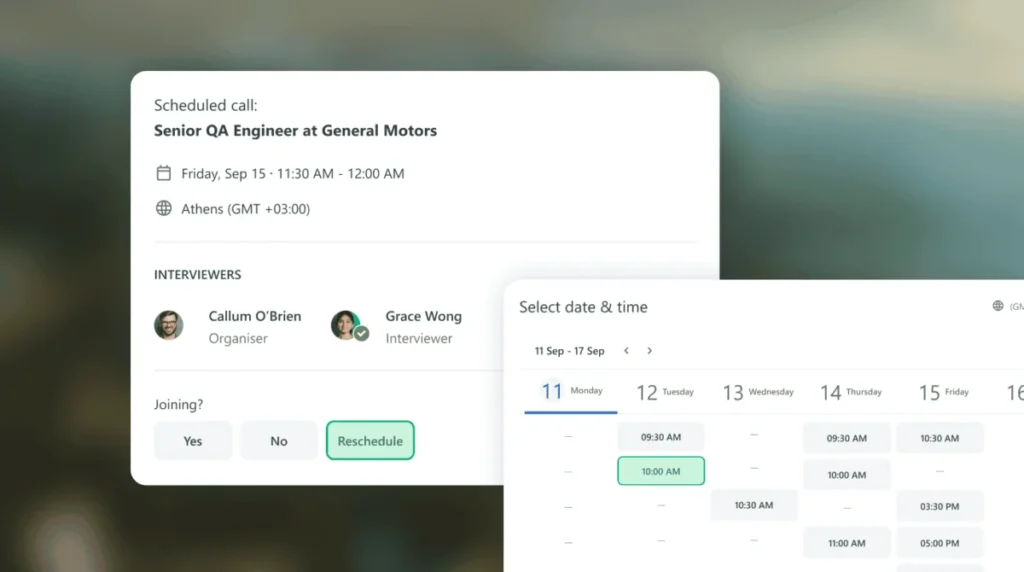
A prominent HR technology platform has announced significant enhancements to its scheduling functionalities, spearheaded by a groundbreaking candidate self-rescheduling feature designed to eliminate pervasive friction points in the hiring process. This development aims to empower job seekers with greater autonomy, streamline administrative tasks for hiring teams, and ultimately improve critical recruitment metrics such as time-to-fill and candidate satisfaction. The update addresses a common pain point for hiring managers: the intricate, often frustrating, dance of rescheduling interviews that frequently begins with a last-minute email from a promising candidate stating, "I’m so sorry, but something has come up. Can we reschedule?" This seemingly minor inconvenience has historically triggered a cascade of manual coordination, involving multiple email exchanges, calendar cross-checks, and adjustments across several interviewer schedules, delaying the process and potentially undermining a company’s image as a modern, people-first organization.
The Pervasive Challenge of Interview Logistics
The scenario is acutely familiar to anyone involved in talent acquisition. An initial interview invitation, carefully aligned with team availability, is dispatched. Then, mere hours before the scheduled meeting, the inevitable request to reschedule arrives. What follows is not just an administrative burden but a critical juncture where the candidate’s initial perception of the company can shift. The protracted back-and-forth, often involving days of coordination, can leave a strong candidate questioning the efficiency and agility of an organization that purports to be innovative. This friction point is not an isolated incident but a systemic issue, rooted in traditional, often rigid, scheduling workflows that fail to account for the dynamic nature of modern professional life. The problem extends beyond mere inconvenience, impacting both the efficiency of hiring teams and the psychological experience of job seekers, ultimately hindering a company’s ability to secure top talent in a competitive market.
Startling Statistics: The Hidden Costs of Inefficient Scheduling
The scale of this inefficiency is revealed by compelling data. Research conducted by the platform indicates that, on average, a staggering 50% of all interview requests never materialize into actual booked meetings. To put this into perspective, if a company receives 200 applications and extends interview invitations to 40 promising candidates, only approximately 20 of those interviews are likely to be scheduled on the calendar. This means half of the potential opportunities to engage with viable talent are lost before a conversation even begins, representing a significant leakage in the talent pipeline.
Further analysis of over 10,000 candidates revealed a critical insight: a substantial number of candidates received multiple scheduling requests while at the same stage of the hiring process. This was not merely due to recruiter oversight but a direct consequence of inflexible scheduling systems. When a candidate needed to reschedule, the prevailing workflow often necessitated the generation of an entirely new scheduling link, forcing both the candidate and the hiring team to restart the entire coordination process from scratch. The cumulative impact is substantial: candidates experience unnecessary friction at a critical touchpoint, recruiters divert valuable time to purely logistical tasks, and, in many cases, promising interviews are never finalized, leading to missed opportunities and extended time-to-fill metrics. Industry reports consistently underscore that delays in the hiring process can cost companies thousands of dollars per role, not only in lost productivity but also in the potential loss of top-tier candidates who move on to more streamlined processes.
Redefining Candidate Experience: The Pillars of Respect and Autonomy
Contemporary talent acquisition philosophy increasingly emphasizes the centrality of the candidate experience. Extensive research across various industries consistently points to a singular theme: the most positive candidate experiences are built upon principles of respect and autonomy. When job seekers are afforded the ability to manage their own schedules, much as they would for any other professional meeting or personal commitment, they feel trusted, valued, and empowered. This stands in stark contrast to antiquated models where candidates are forced into rigid, one-way communication flows, which can inadvertently convey a message that they are merely being "processed" rather than "partnered with" in a mutual evaluation.
A superior candidate experience extends beyond mere politeness; it actively shapes employer branding and influences a candidate’s decision-making. In today’s candidate-driven market, where top talent often has multiple offers, the subtle signals sent throughout the recruitment journey are paramount. A smooth, respectful, and autonomous scheduling process reflects positively on a company’s culture, its operational efficiency, and its commitment to treating all individuals with professionalism. Conversely, a cumbersome or disrespectful process can deter even highly qualified candidates, regardless of the role’s attractiveness or compensation package. HR thought leaders frequently highlight that every interaction, from the initial application to the final offer, contributes to a candidate’s holistic perception of an organization, making frictionless scheduling a strategic imperative rather than a mere convenience.
Introducing One-Click Candidate Self-Rescheduling: A Paradigm Shift
The core of the new platform update is the introduction of a revolutionary one-click candidate self-rescheduling feature. This functionality fundamentally alters the interview scheduling dynamic. Candidates can now effortlessly reschedule their interviews directly from the original invitation. This eliminates the tedious and often anxiety-inducing email threads, the waiting periods for a response, and any apprehension about inconveniencing the hiring team. Instead, candidates simply select a new time from the same pool of available slots initially provided by the company, maintaining control and transparency.
This innovative feature is bolstered by intelligent guardrails designed to protect both the candidate experience and the operational efficiency of the hiring team. While specific technical details were not fully disclosed, these guardrails typically include parameters such as minimum notice periods for rescheduling, limits on the number of times an interview can be rescheduled, and adherence to the pre-defined availability windows set by interviewers. Such safeguards ensure that while candidates gain unprecedented flexibility, the hiring process remains structured and efficient for the organization. This balanced approach ensures that the benefits of candidate autonomy do not compromise the logistical integrity of the interview process, allowing companies to maintain control over their schedules while offering a superior experience.
A Holistic Approach: Seven Additional Enhancements for Frictionless Hiring
Beyond the headline feature of candidate self-rescheduling, the platform has rolled out a comprehensive suite of seven additional improvements, all developed in direct response to feedback from hiring teams. These enhancements collectively address a broader range of pain points, contributing to an even more streamlined and efficient recruitment workflow. While not individually detailed in the announcement, these improvements are designed to tackle common logistical hurdles that impede recruiter productivity and candidate engagement.
Such complementary features typically include: enhanced calendar synchronization capabilities, ensuring real-time accuracy across all interviewer schedules; automated, intelligent reminder systems for both candidates and interviewers, significantly reducing no-show rates; improved integration with Applicant Tracking Systems (ATS) for seamless data flow and reduced manual entry; greater visibility for recruiters into the real-time status of candidate scheduling, eliminating guesswork; simplified methods for interviewers to block out unavailable times; customizable scheduling templates to standardize and expedite the invitation process; and robust multi-timezone support to accommodate diverse candidate pools and global teams. These incremental yet impactful improvements collectively contribute to a more robust, user-friendly, and efficient scheduling ecosystem, allowing hiring teams to dedicate more time to strategic candidate engagement rather than administrative minutiae.
Transformative Impact: Shifting the Power Dynamic in Recruitment
These comprehensive improvements transcend mere convenience; they represent a fundamental shift in the power dynamic of recruiting, rebalancing the relationship between companies and candidates.
For Candidates: The implications are profound. They are treated as the professionals they are, empowered to manage their own schedules, communicate changes clearly, and experience companies as flexible, respectful, and modern from their very first interaction. This fosters a sense of trust and partnership, crucial for attracting and retaining top talent in today’s competitive landscape. A positive initial experience can significantly enhance a candidate’s willingness to engage further and ultimately accept an offer.
For Hiring Teams: The benefits translate into dramatically less administrative overhead. The days of email ping-pong, manual calendar updates, and the frustrating detective work to understand why a promising candidate might have "ghosted" an interview are substantially reduced. Recruiters and hiring managers can reclaim countless hours previously spent on logistics, reallocating that time to more strategic activities such as talent sourcing, candidate engagement, and fostering stronger relationships. This operational efficiency directly impacts recruiter satisfaction and productivity.
For Hiring Metrics: The impact is measurable and substantial. Companies can anticipate faster time-to-fill rates, as delays caused by scheduling complexities are minimized. Higher interview show rates will lead to more completed interviews, maximizing the investment in candidate sourcing. Crucially, these improvements are expected to result in higher candidate satisfaction scores, which in turn bolster employer branding and attract a stronger pool of future applicants. These are not merely qualitative benefits but quantifiable improvements that drive real business impact and provide a tangible return on investment for adopting modern HR technology.
The Strategic Imperative: Adapting to the Modern Talent Market
The traditional recruiting model, characterized by companies dictating the terms of engagement, is increasingly obsolete. In that outdated paradigm, companies held virtually all the power, dictating when and how interviews would occur, with candidates expected to bend their personal and professional schedules to fit. However, the modern talent market operates fundamentally differently. The most sought-after candidates are not passive applicants; they are active evaluators with numerous options. They are meticulously assessing potential employers as much as companies are evaluating them. Every interaction, every touchpoint, from the initial job posting to the final onboarding, shapes their perception of a company’s culture, values, and operational effectiveness.
When companies extend the autonomy for candidates to manage their own interview schedules, it sends an unambiguous and powerful message: their time is respected, their professionalism is trusted, and they deserve to be treated exceptionally well from the very first interaction. This progressive approach is not merely "good recruiting"; it is unequivocally "good business." In an era where talent is a primary differentiator, attracting and securing the best individuals requires a holistic approach that prioritizes respect, efficiency, and a superior experience at every stage. Companies that fail to adapt risk losing out on critical talent to competitors who embrace these modern principles.
Seamless Implementation and Future-Forward Design
The new self-rescheduling functionality is now available to all customers utilizing Google or Microsoft Calendar integrations, ensuring broad accessibility for a vast user base. A key aspect of this rollout is its non-disruptive nature: the updates require no immediate changes to existing workflows. Current scheduling links remain fully active, allowing hiring teams the flexibility to adopt the new functionality at their own pace, integrating it into their established processes without interruption. This phased adoption strategy minimizes friction for current users and facilitates a smooth transition to enhanced capabilities.
These latest updates were meticulously shaped by direct feedback from hiring teams, underscoring a user-centric development philosophy aimed at continually reducing friction in the interview process. The platform acknowledges that while significant strides have been made, there is always more room for improvement, and scheduling remains an area where even seemingly small changes can yield profoundly meaningful differences in efficiency and experience. The overarching philosophy guiding these innovations is that thoughtful hiring technology should serve to remove obstacles, not create them. By making scheduling seamless and intuitive, teams can pivot their focus from burdensome coordination tasks to the far more critical objective of engaging in meaningful conversations with the right candidates, ultimately driving more successful hires and building stronger organizations.
Ready to empower candidates and streamline your hiring process? Explore the new self-rescheduling features and discover how they can seamlessly integrate into and elevate your existing recruitment workflow.