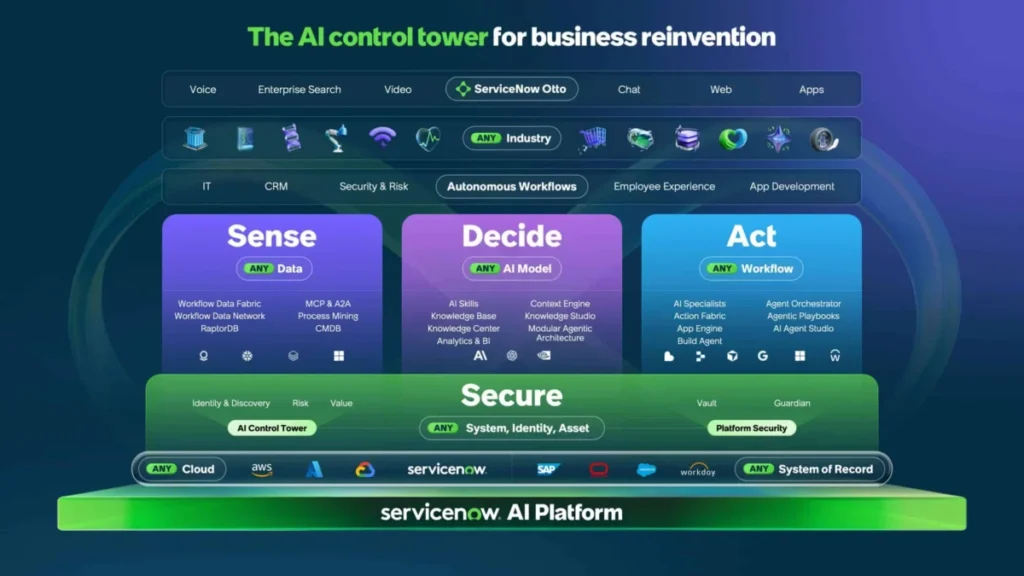
ServiceNow has unveiled a sweeping suite of announcements, signaling an aggressive strategy aimed at doubling its revenue to $30 billion within the next four years. The company’s ambitious plan centers on establishing itself as the definitive platform for managing, securing, and acting as the central gateway for every artificial intelligence agent operating within an enterprise. This move positions ServiceNow to capture significant revenue from the burgeoning AI agent market, potentially marking a turning point in the "SaaS Apocalypse" narrative.
The tech giant’s strategy arrives at a pivotal moment, as major competitors like Microsoft and Workday are pursuing similar objectives, betting on the enterprise’s need for robust AI governance and management. ServiceNow’s core proposition, "We are turning enterprise AI chaos into control," directly addresses the anxieties of Chief Information Officers (CIOs) concerned about the proliferation of unmanaged AI tools. Workday echoes this sentiment, stating, "AI agents without enterprise governance are lawless by design." While these pronouncements resonate with IT leadership, the immediate challenge for many organizations lies not in controlling "chaos," but in demonstrating scalable Return on Investment (ROI) from AI initiatives. ServiceNow’s proposed control mechanisms, therefore, aim to foster faster adoption and more tangible business outcomes.
Action Fabric: ServiceNow’s Centralized AI Monitoring and Monetization Layer
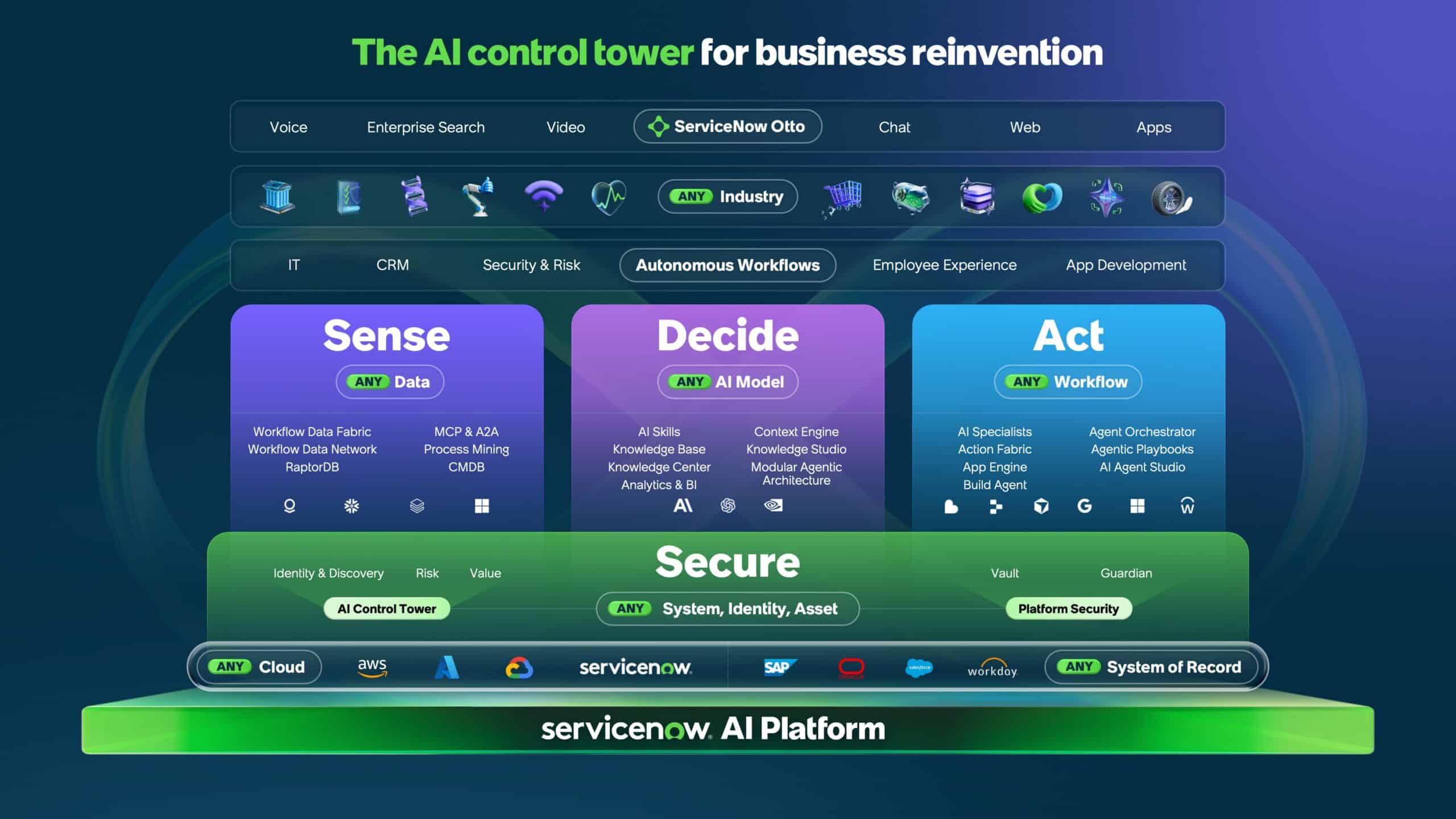
At the heart of ServiceNow’s strategy is the "Action Fabric," a sophisticated system designed to act as a central traffic controller for all AI agent activities. This initiative mirrors the visions of Microsoft’s Agent 365 and Workday’s Agent System of Record, all seeking to establish a comprehensive monitoring and management layer for enterprise AI.
The Action Fabric, delivered via an MCP server, is built upon three key tenets:
- Universal Agent Compatibility: "Any agent. Any model." This means any AI agent, regardless of its origin or vendor, can connect with ServiceNow Fabric through the MCP to execute tasks. This open architecture aims to de-fragment the AI landscape, allowing enterprises to integrate diverse AI solutions without proprietary lock-in. Both Microsoft and Workday have articulated similar interoperability goals for their respective platforms.
- Openness to All AI: The management tools are designed to be accessible to external agents, enabling the automation of management scenarios and the integration of third-party management frameworks. This fosters an ecosystem where ServiceNow’s infrastructure supports, rather than dictates, the AI tools an organization chooses to deploy.
- Comprehensive Control and Trust: All AI agents integrated with the Action Fabric undergo authentication, permission scoping, auditing, and continuous monitoring. ServiceNow asserts that this provides "Full Control; Full Trust." While the precise mechanisms for enforcing specific business rules from other enterprise systems like Workday or SAP remain to be fully detailed, the focus on security and compliance is paramount.
This ambitious framework leverages ServiceNow’s two decades of investment in foundational IT management technologies, including its Configuration Management Database (CMDB), Workflow Data Network, established business rules, Security Center, and identity and access controls. This robust infrastructure provides a solid bedrock for managing the complexities of enterprise-grade AI.
Paralleling ServiceNow’s move, Workday and SAP are also evolving their platforms. Workday’s Agent System of Record and Agent Gateway are opening its core functionalities to external agents on a per-call basis. SAP, similarly, mandates that agents access its business rules through SAP’s Business Accelerator Hub, with usage-based metering. The choice between these platforms will likely hinge on an organization’s existing investment in Workday or SAP business rules and their preferred development environments.
Otto: The "Front Door" to Enterprise AI and the New Employee Experience
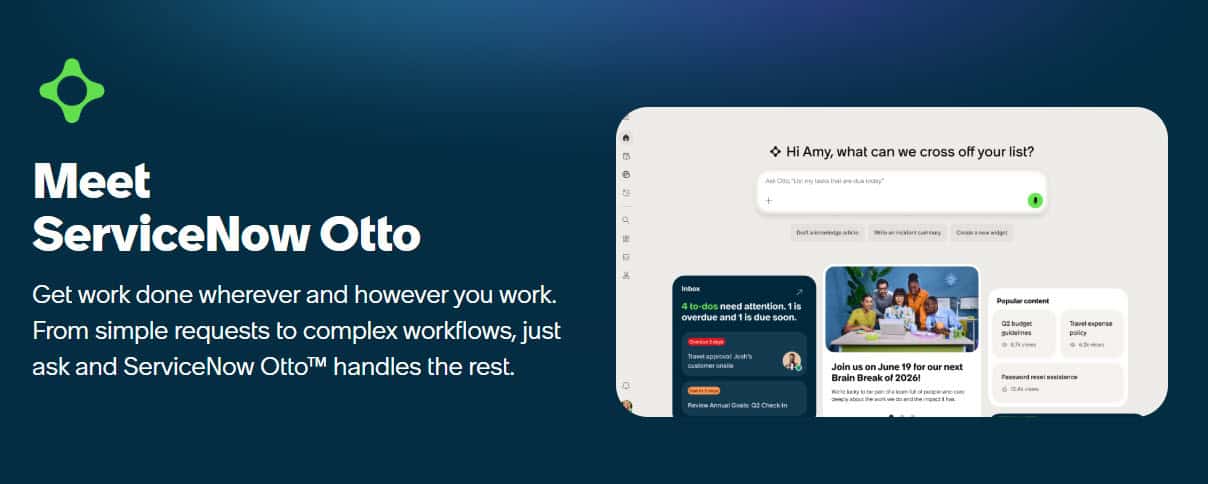
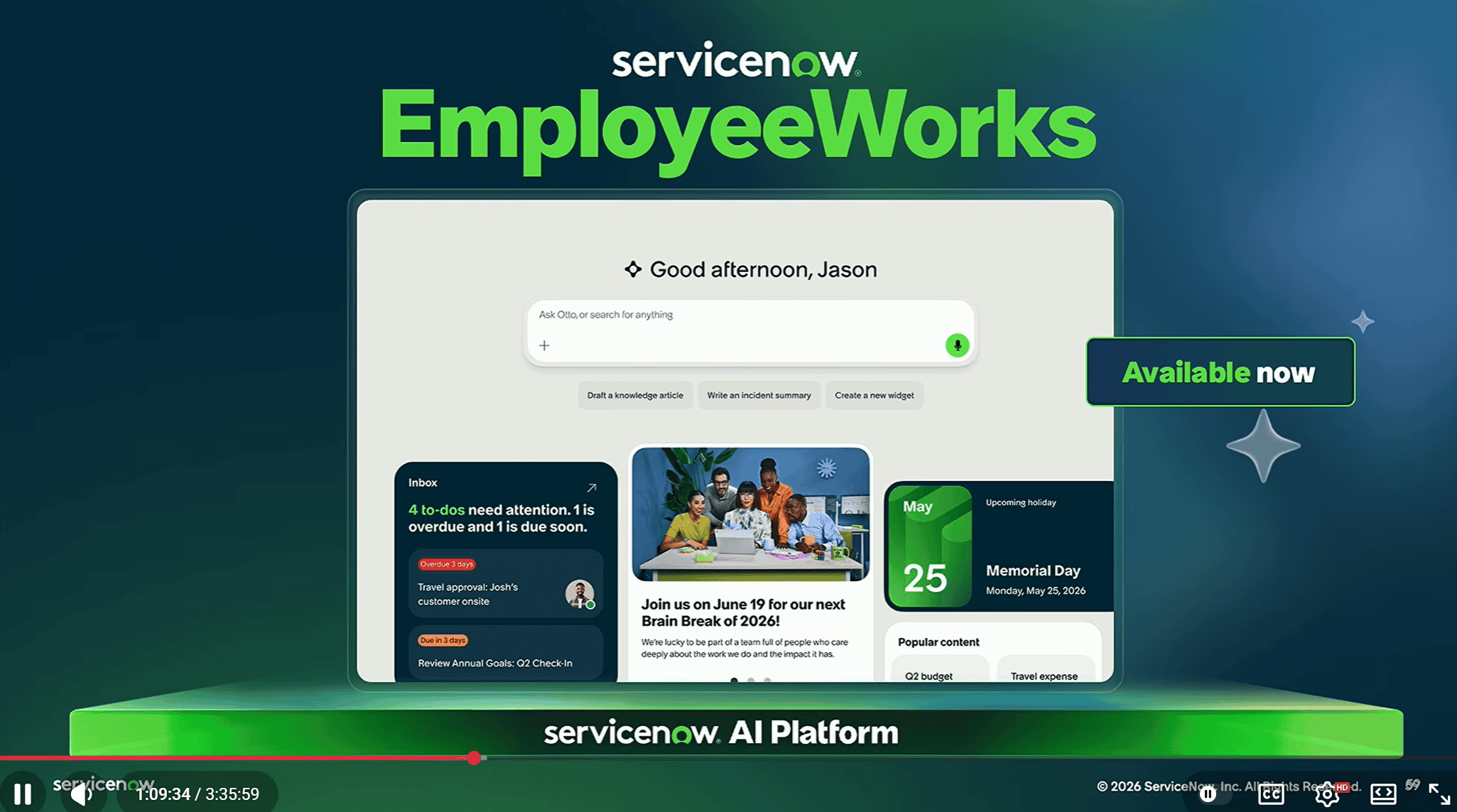
ServiceNow is also reinventing its Now Assist functionality as "Otto," positioning it as the primary "Front Door" agent for accessing any enterprise resource. This move directly competes with Workday’s introduction of "Sana" as its enterprise front door and signals a broader trend towards unified employee interaction points.
The integration of Moveworks into Now Assist and its rebranding as Otto aims to create a more personable and accessible employee tool for a wide array of needs, including search, knowledge management, and general employee inquiries. This strategic rebranding emphasizes the human-centric aspect of AI interaction, moving beyond purely functional utility. While Sana is noted for its advanced learning capabilities, Otto’s strength lies in its integration with ServiceNow’s comprehensive enterprise workflow and management capabilities.
Crucially, ServiceNow positions Otto as the embodiment of the "new Employee Experience." This shift signifies a departure from the traditional "Employee Self-Service" model, which is often perceived as reactive and limited. Otto is designed to be a proactive, friendly interface that simplifies access to information and services. Bhavin Shah, founder of Moveworks, now leads the Otto initiative, with the platform being branded under the broader "EmployeeWorks" umbrella to underscore its open and integrated nature.
The concept of an Employee Experience Platform (EXP) is not new, but its implementation is fraught with complexity. Employee needs are interconnected, requiring a platform that can handle a vast range of inquiries and integrate seamlessly with diverse systems. Otto will need to demonstrate robust integrations with HR, IT, and other business functions to fulfill its promise. For instance, a crisis management agent, as seen in advanced applications like Microsoft’s efforts for employees in Ukraine, requires support for multifaceted issues ranging from family trauma to logistical disruptions. Such broad support tools, whether AI-first or AI-enhanced, present significant potential use cases for Otto.
The market for such employee-facing AI is intensely competitive, with players like Microsoft, Zoom, and various Human Capital Management (HCM) vendors vying for dominance. ServiceNow’s "Otto" and its focus on the "Front Door" agent and "EmployeeWorks" represent a strategic play to capture this expanding market by offering a unified, intelligent interface for the modern workforce.
The AI Control Tower: Governing and Securing the Enterprise AI Landscape
ServiceNow’s "AI Control Tower" is envisioned as an expansive system for discovering, observing, governing, and securing enterprise AI. This platform aims to provide deep insights into how AI agents are functioning, where they are delivering value, and where potential issues like hallucinations or cost overruns might occur.
The AI Control Tower’s capabilities extend to calculating the ROI of individual AI agents, allowing organizations to identify underperforming or excessively costly deployments. This proactive management approach echoes historical IT management paradigms, such as IBM’s SystemView in the 1980s, which sought to manage all computing resources within proprietary networks.
ServiceNow CEO Bill McDermott articulates a vision of managing the entire enterprise as a unified entity, encompassing all identities—agents, workflows, and people. This ambitious goal aims to bring order to what he describes as a "sprawl of conflicting workflows and business rules." The emphasis is on comprehensive control, though questions remain about the balance between stringent IT oversight and empowering human judgment. The company highlights the potential for the AI Control Tower to detect and neutralize sophisticated threats, such as prompt injection attacks. A live demonstration showcased the platform autonomously identifying and mitigating a malicious attempt to manipulate shipping prices across thousands of requests, leveraging signals from security partners like Veza, Armis, Cisco AI Defense, and CrowdStrike. The ability to prevent such sophisticated attacks presents a compelling business case for adopting advanced AI governance tools.
The ServiceNow Autonomous Workforce: Defining AI Roles
Further bolstering its AI strategy, ServiceNow has introduced "The ServiceNow Autonomous Workforce," a collection of pre-defined "AI Specialists" designed for autonomous work. This initiative aligns with the broader trend of defining specific job roles for AI agents, a concept explored in depth in HR 2030 research.
ServiceNow has outlined potential AI Specialist roles, including:
- Site Reliability AI Specialist
- AI Operations Specialist
- Level 1 Service Desk Specialist
- HR Service Delivery AI Specialist
- Case Management Specialist
- Third-party Screening Specialist
- Enterprise Architecture Specialist
- Vulnerability Exposure Specialist
These roles aim to automate and centralize tasks previously handled by human employees, potentially impacting organizational structures and workforce planning. The definition of these roles provides a framework for companies beginning to name and deploy their AI agents effectively. It is anticipated that AI agents themselves may evolve to self-identify their capabilities and optimal roles.
Galileo, ServiceNow’s "digital HR consultant," is now integrated as an add-on feature to Otto, further enhancing the capabilities of the Autonomous Workforce by providing specialized HR-focused AI expertise. This integration underscores the company’s strategy to embed AI across all major business functions.
Context Engine: Unifying Enterprise Operations Through a Context Layer
The introduction of the ServiceNow Context Engine aims to provide a unified view of enterprise operations by identifying and locating existing system business rules and metadata. This "context layer" theoretically encompasses organizational structures, privacy regulations, and various business workflows, many originating from ERP and other core systems.
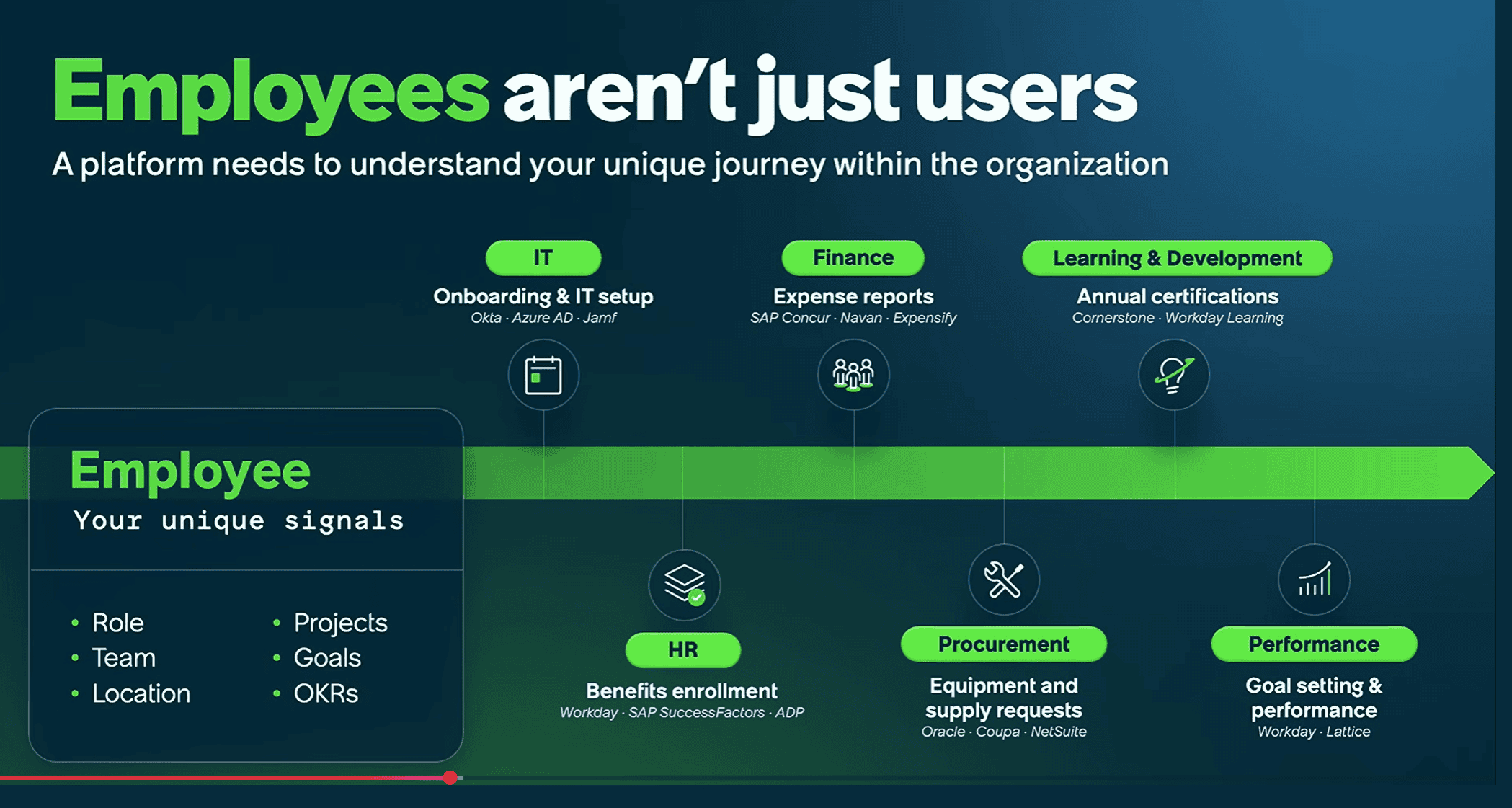
ServiceNow describes the Context Engine as a "graph of graphs," integrating its workflow data network with knowledge, action, asset, and decision graphs. This comprehensive approach is designed to enable the platform to learn and adapt to business operations with each interaction. The introduction of an "AI Analyst Specialist" for autonomous data analytics further supports the goal of keeping this complex data landscape integrated and actionable.
This area is highly competitive, with Microsoft’s WorkIQ and Microsoft Graph offering similar contextual insights for Microsoft 365. Gloat’s Loomra also targets human capital applications with a contextual layer. The success of ServiceNow’s Context Engine will depend on its ability to integrate with and provide superior value over existing data and context management solutions.
The Evolving Business Case for Enterprise AI Infrastructure
The significant investments by ServiceNow, Microsoft, and Workday in AI management and governance tools raise critical questions about the economic viability and timing of these enterprise-grade infrastructures. While the need for managing AI agents is widely acknowledged, the willingness of organizations to invest heavily in this infrastructure before widespread application deployment remains a key consideration.
An interesting economic dynamic is at play: companies are deploying AI to potentially reduce labor costs. However, if AI agents are not demonstrably improving productivity or transforming work, the substantial costs associated with new infrastructure, token fees, and ongoing management might not yield a positive ROI. Recent reports, such as Uber’s decision to scale back software agents in favor of human labor, highlight the ongoing evaluation of AI’s cost-effectiveness.
The emphasis is shifting from merely "automating work" to "transforming work." Organizations are advised to focus on redesigning their processes and workflows before investing heavily in the security and management layers for AI. Many ServiceNow customers, for example, have licensed software that remains underutilized.
Furthermore, the choice of development tools will influence platform adoption. If development environments within Workday or Microsoft Copilot prove more intuitive or cost-effective, their associated management tools may gain preference. The "total cost of AI transformation" encompasses not only infrastructure but also the expenses related to development, maintenance, business rule implementation, and governance.
ServiceNow’s New Revenue Model: Monetizing Agent Usage
ServiceNow is positioning itself to capitalize on the estimated trillion-dollar opportunity in enterprise AI, moving beyond traditional per-seat licensing to a model based on agent usage. This approach is shared by other major enterprise software vendors like Workday, Oracle, and SAP, who recognize the shift towards service-based revenue streams.
The broader trend of AI monetization is evident in recent strategic partnerships. Anthropic has collaborated with Blackstone to establish a services company for integrated AI products, while OpenAI has launched a joint venture with private equity firms to deploy AI solutions. This indicates a move towards a "software as a service" model that aims to replace significant portions of human labor through fee-driven AI services.
However, as the author reflects on the principles of exceptional customer service, citing The Ritz Carlton’s philosophy of empowering employees to "use their best judgment," a crucial question arises: to what extent should AI decisions be rigidly monitored and managed? While IT departments may prioritize control and security, the human element of nuanced decision-making should not be overlooked.
Ultimately, the aspiration is for AI agents to liberate humans, enabling them to focus on higher-level thinking and more complex problem-solving. The success of ServiceNow’s strategy will depend on its ability to deliver tools that not only manage AI but also empower human ingenuity, fostering a future where AI and human capabilities are synergistically enhanced. The coming years will reveal whether ServiceNow’s comprehensive vision for enterprise AI management can translate into sustained revenue growth and a transformed business landscape.