
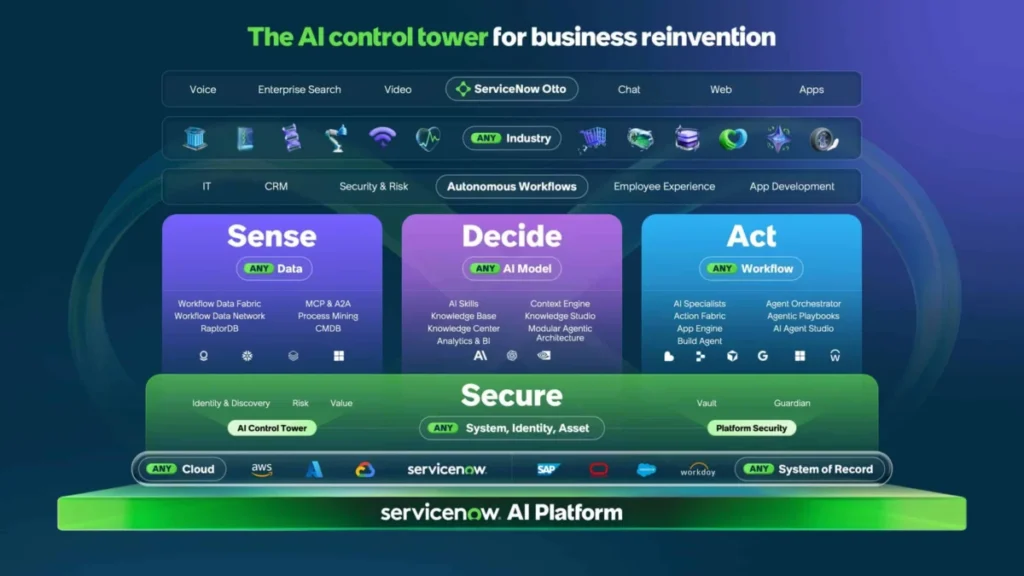
San Francisco, CA – May 7, 2026 – In a significant move set to redefine the enterprise software landscape, ServiceNow has launched a comprehensive suite of announcements and product innovations aimed at establishing its dominance in the rapidly evolving field of Artificial Intelligence management. The company’s aggressive strategy, detailed in a series of recent disclosures, underscores a clear ambition: to double its annual revenue to $30 billion within the next four years. At the core of this vision is ServiceNow’s objective to become the central hub for all AI agents within an organization, managing their operations, security, and serving as the primary interface for employee interaction. This move positions ServiceNow as a key player in the emerging "SaaS Apocalypse" recovery, where robust management and governance are becoming paramount.
The strategic push by ServiceNow is occurring in a highly competitive arena, with major technology rivals such as Microsoft and Workday also making substantial bets on the future of enterprise AI. Both companies are vying to provide the foundational platforms and governance structures for AI agents that will increasingly permeate business operations. This intense competition highlights the immense perceived value and potential of a well-managed AI ecosystem.
ServiceNow’s overarching message appears to be a promise to transform the "enterprise AI chaos" into a controlled and efficient environment. Similarly, Workday has articulated a vision where "AI agents without enterprise governance are lawless by design." While these pronouncements resonate with Chief Information Officers and IT decision-makers concerned with security and compliance, the immediate challenge for many businesses lies in the practical application and demonstrable return on investment (ROI) of AI use cases. The success of ServiceNow’s strategy, therefore, will hinge not only on its control mechanisms but also on its ability to empower organizations to rapidly deploy scalable and value-generating AI solutions.
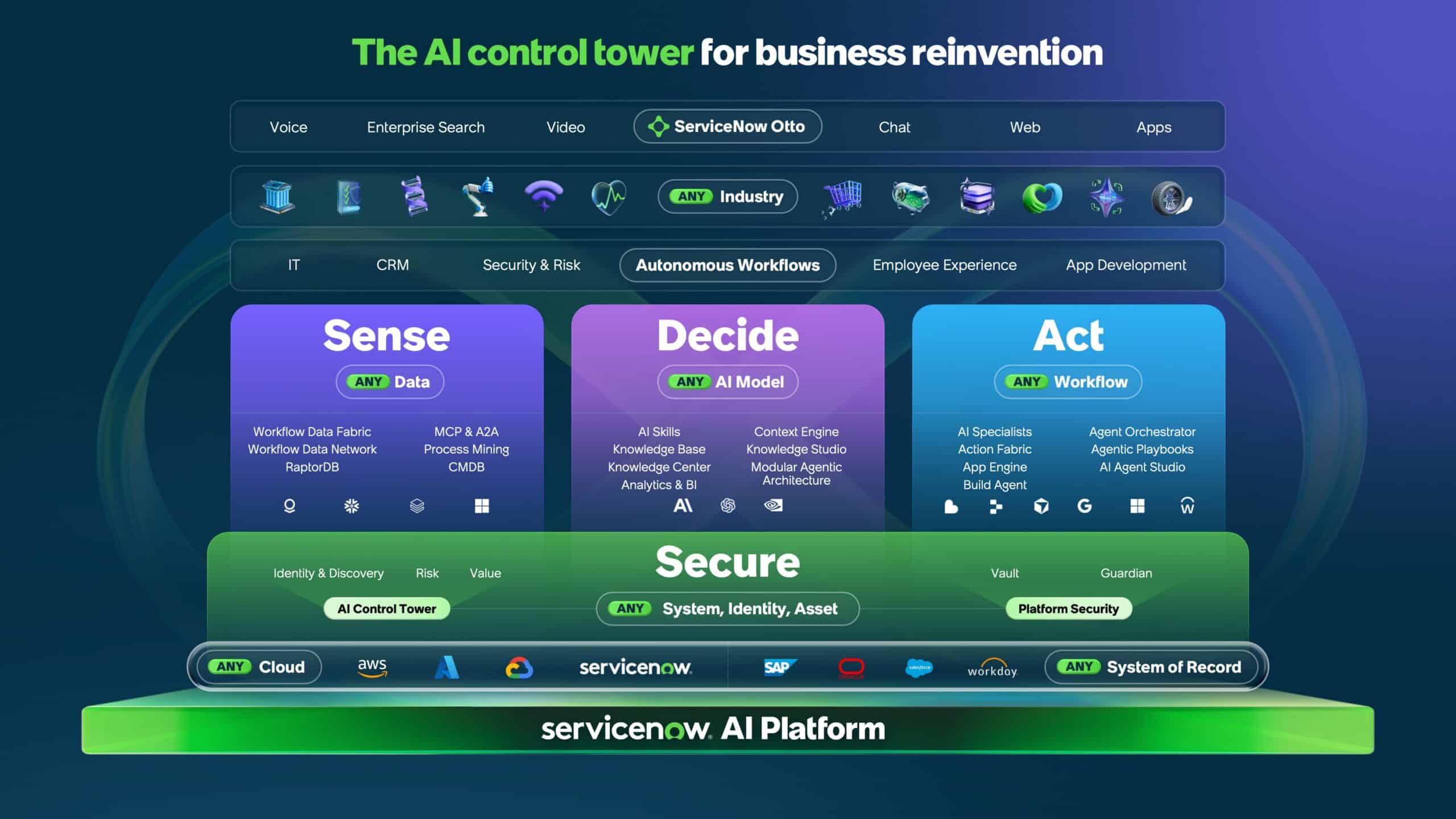
The company’s strategic announcements can be broadly categorized into several key pillars, each designed to capture a critical aspect of the AI agent lifecycle and value chain.
The Action Fabric: ServiceNow’s Central Command for AI Agents
A cornerstone of ServiceNow’s new strategy is the introduction of what it terms the "Action Fabric." This sophisticated layer is designed to act as a central monitoring and management system for all AI agent activities within an enterprise. The concept is akin to a sophisticated traffic controller, meticulously observing and orchestrating the interactions of diverse AI agents.
This vision mirrors similar initiatives from competitors. Microsoft is developing its "Agent 365" platform, while Workday has introduced its "Agent System of Record." All these platforms aim to provide a unified layer for governing, monitoring, and managing the proliferation of AI agents, regardless of their origin or underlying technology.
ServiceNow highlights several key capabilities of its Action Fabric, delivered through its proprietary MCP (likely referring to a managed control plane) server:
- Universal Agent Compatibility: The Action Fabric is engineered to connect with any AI agent, irrespective of the model it utilizes or the vendor that developed it. This "any agent, any model" approach ensures broad interoperability, allowing organizations to integrate existing AI tools seamlessly. Both Microsoft and Workday have expressed similar commitments to open integration.
- Openness to Third-Party AI: The management tools within the Action Fabric are designed to be callable by external AI agents. This enables automation of management scenarios and facilitates the integration of third-party management frameworks, fostering a more dynamic and extensible AI ecosystem.
- Comprehensive Control and Trust: A primary focus is on ensuring full control over AI agents. This includes robust authentication, permission scoping, auditing, and continuous monitoring of all agent activities. While ServiceNow emphasizes its ability to enforce its own security and access controls, the specifics of how it will integrate with and enforce business rules from other major enterprise systems like Workday or SAP remain a subject for further clarification.
This robust management layer leverages ServiceNow’s two decades of experience in building foundational enterprise IT systems. Key components include its Configuration Management Database (CMDB), the Workflow Data Network, its extensive library of configured business rules, Security Center, and identity and access management capabilities. This comprehensive IT management infrastructure is now being repurposed and expanded to serve as a unified IT management system for AI agents and applications, positioning ServiceNow for what it describes as a "reinvention" of its platform.
Competitors are also making parallel moves. Workday’s "Agent System of Record" and "Agent Gateway" are designed to open its platform to external agents on a per-call basis, allowing for controlled access to Workday’s data and business logic. Similarly, SAP has announced that AI agents must utilize SAP’s Business Accelerator Hub to access its business rules, with usage being metered. The choice between these platforms will likely depend on an organization’s existing investment in specific vendor ecosystems, such as the depth of their Workday or SAP business rule configurations, and their preference for development environments like Microsoft’s Joule or Workday’s Sana.
Otto: The "Front Door" to Enterprise AI and Employee Experience
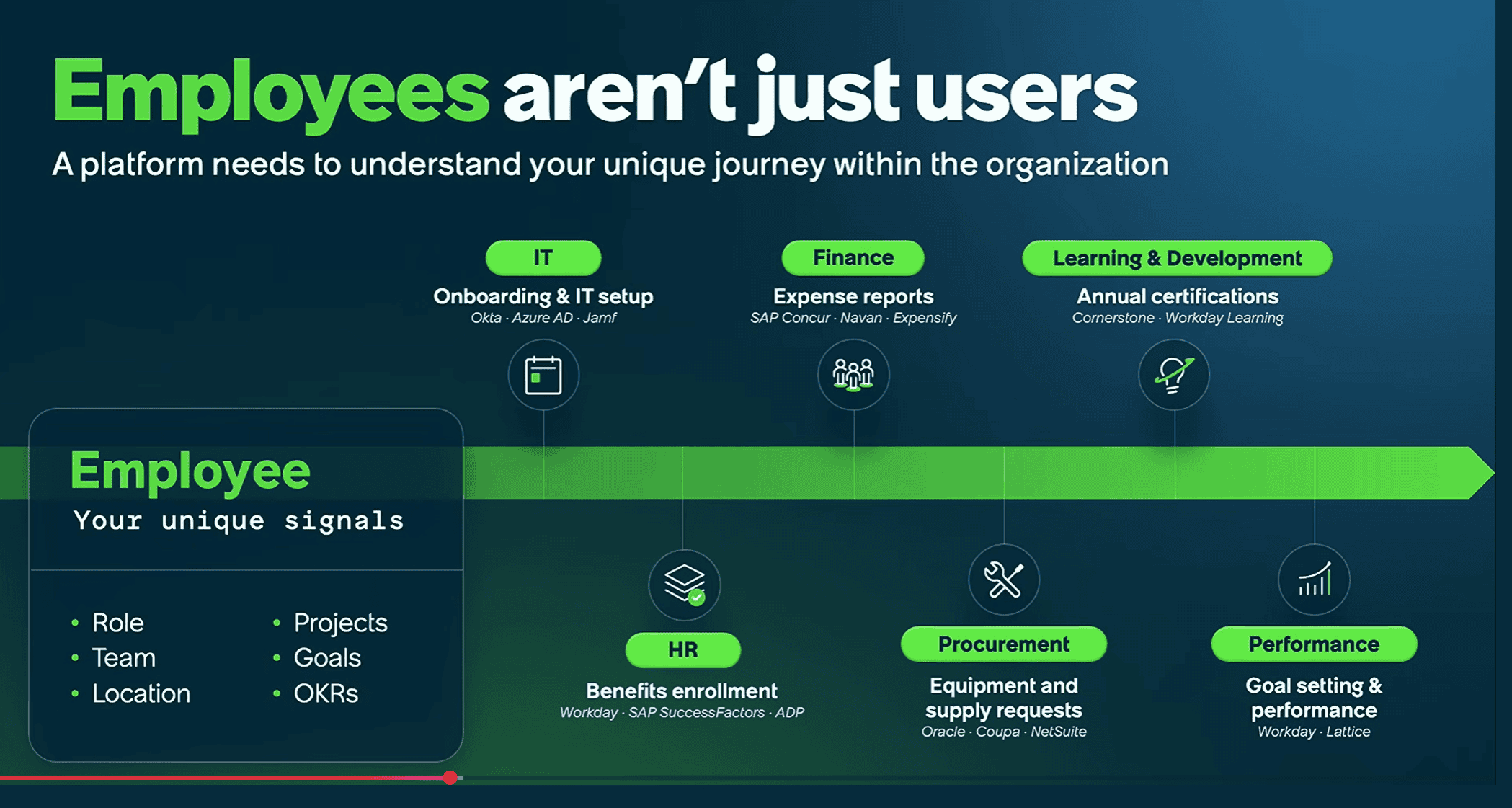
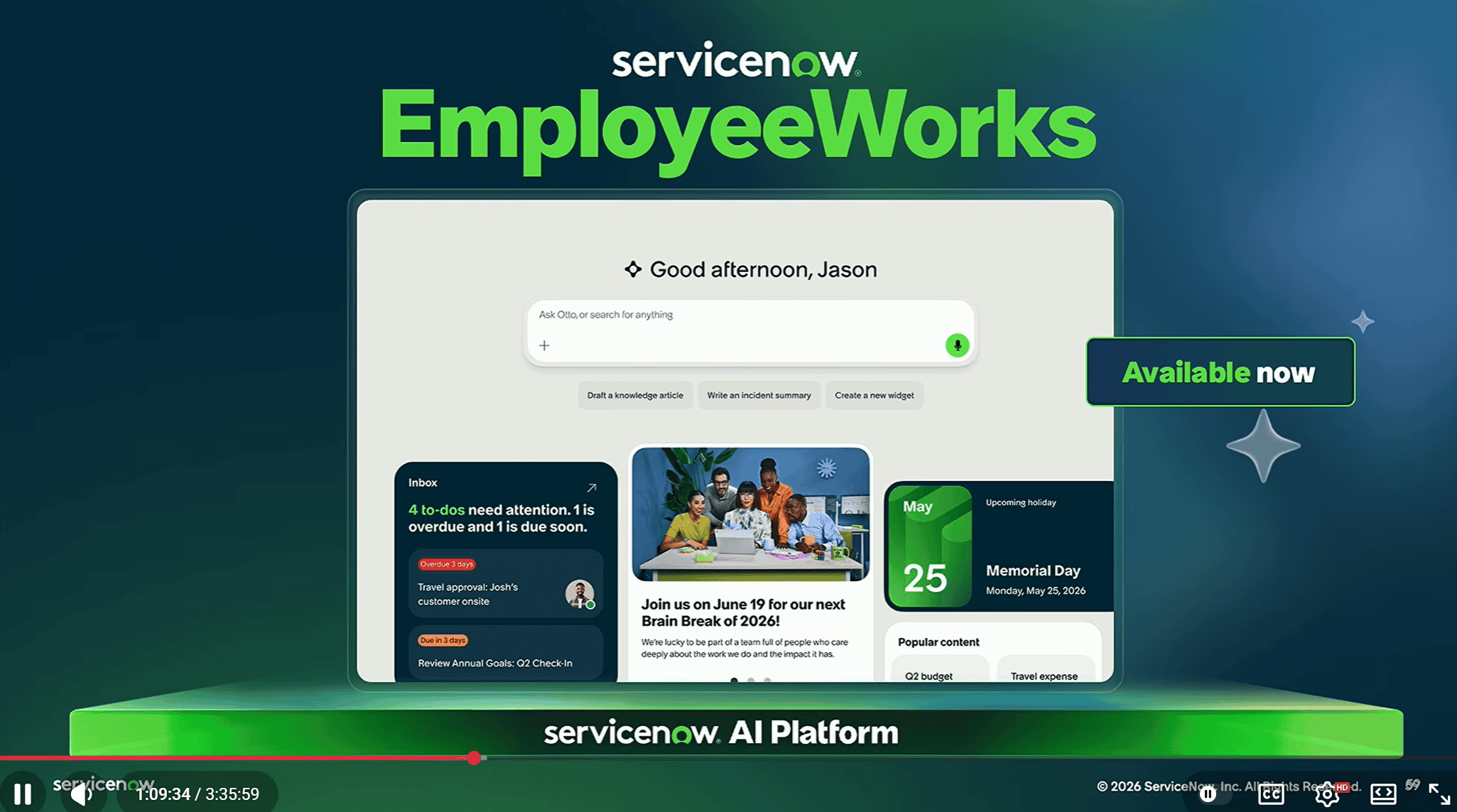
ServiceNow is also reinventing its "Now Assist" capability, rebranding and enhancing it as "Otto." This initiative aims to position Otto as the primary "front door" agent through which employees can access any enterprise service or information. This mirrors Workday’s introduction of Sana as its "Front Door to the Enterprise," suggesting a convergence of strategies around creating a unified, AI-powered employee interface.
The integration of Moveworks’ technology into Now Assist and its subsequent rebranding as Otto is a significant step. Moveworks, known for its advanced AI-powered employee support solutions, brings a strong capability in natural language understanding and intelligent automation. By branding Otto as a distinct persona, ServiceNow aims to foster a more friendly and approachable employee experience, moving beyond traditional IT support paradigms.
While Otto is positioned as the "Front Door," it’s important to note that other players, such as Workday with Sana, are pursuing similar strategies. Sana is noted for its advanced learning capabilities, which may offer a competitive edge in terms of AI-driven personalization and adaptation. ServiceNow, however, is leveraging Otto to redefine the Employee Experience (EX) altogether, moving away from the often-perceived limitations of "Employee Self-Service" towards a more proactive and intelligent assistant.
Bhavin Shah, the founder of Moveworks, now leads the Otto initiative, further underscoring its strategic importance. The broader "EmployeeWorks" branding emphasizes ServiceNow’s commitment to an open and integrated approach to employee-facing AI.
The challenge for platforms like Otto is the inherent complexity of employee needs. While a chatbot might initially appear to handle simple queries about vacation policies or benefits, the reality is that most employee inquiries are interconnected and require access to a wide range of information and systems. Effective Employee Experience Platforms (EXPs) must integrate seamlessly with HR, IT, communications, training, and other business functions to provide comprehensive support. ServiceNow’s Otto will need to demonstrate robust integration capabilities to address diverse employee scenarios, from routine requests to complex support needs, such as those encountered during crisis management situations where agents might need to handle issues like family trauma or emergency support, as exemplified by custom agents developed for crisis response in regions experiencing conflict.
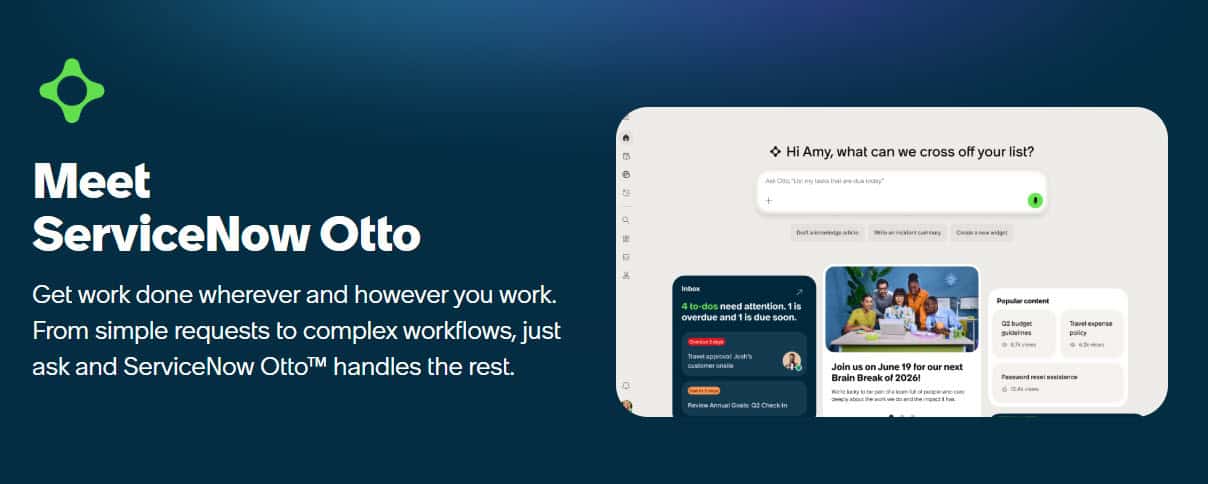
The employee self-service market is already highly competitive, with major players like Microsoft and Zoom, alongside numerous HR technology vendors. ServiceNow’s rebranding and focus on "Otto" as an "employee’s friend" aims to differentiate it from more functional, yet perhaps less engaging, "Employee Self-Service Agent" designations.
The AI Control Tower: Governance and ROI for Enterprise AI
ServiceNow’s "AI Control Tower" represents its vision for governing and securing enterprise AI deployments. This expansive platform goes beyond simple monitoring, aiming to provide deep insights into how AI agents are operating, where they are delivering value, and importantly, where they may be exhibiting issues like "hallucinations" or inefficiencies.
The AI Control Tower is designed to:
- Discover and Observe: Identify and track all AI agents operating within the enterprise.
- Govern and Secure: Implement policies and controls to ensure responsible and secure AI usage.
- Measure ROI: Attempt to quantify the return on investment generated by AI agents, a critical factor for business justification.
- Identify Anomalies: Detect agents that are misbehaving or incurring excessive costs due to inefficient token consumption.
The concept evokes parallels with early enterprise management systems, such as IBM’s "SystemView," which aimed to provide comprehensive control over complex computing environments. ServiceNow’s CEO, Bill McDermott, has articulated a vision of managing "every identity" – encompassing agents, workflows, and people – to address what he describes as a "sprawl of conflicting workflows and business rules" within organizations.
While this vision offers a compelling solution for IT departments facing growing AI complexity and potential security risks, the emphasis on "monitoring and managing every decision" raises important considerations about human autonomy and judgment. The Ritz Carlton’s renowned approach to employee empowerment, where staff are encouraged to "use their own best judgment," serves as a reminder that while AI can automate tasks, human intuition and discretion remain invaluable. The successful implementation of an AI Control Tower will require a delicate balance between robust governance and fostering an environment where human decision-making is complemented, not superseded, by AI.
The ServiceNow Autonomous Workforce: Predefined AI Specialists
Further solidifying its strategy, ServiceNow has introduced "The ServiceNow Autonomous Workforce," a collection of predefined "AI Specialists." These specialists are essentially role-based AI agents designed to be trained for specific autonomous tasks across major business functions. This initiative aligns with the growing trend of defining specific job roles for AI, much like the "HR 2030" vision explored in industry research, which categorizes agents into those that take action, set rules, and observe/monitor.
Examples of these AI Specialists include:
- Site Reliability AI Specialist
- AI Operations Specialist
- Level 1 Service Desk Specialist
- HR Service Delivery AI Specialist
- Case Management Specialist
- Third-Party Screening Specialist
- Enterprise Architecture Specialist
- Vulnerability Exposure Specialist
This approach helps organizations by providing a framework for identifying and deploying AI agents for specific business needs. It also implicitly suggests a future where certain human roles may be consolidated or significantly augmented by these specialized AI agents, particularly in areas requiring data analysis, repetitive tasks, or rule-based decision-making. For instance, roles like DEI analysis, compliance monitoring, or pay equity advocacy could potentially be centralized within sophisticated AI agents.
The naming convention of these AI Specialists is an important step in making AI more tangible and understandable within organizations. As AI agents become more capable, it’s plausible they might even develop their own self-naming conventions based on their core functions and expertise.
The integration of Galileo, ServiceNow’s "digital HR consultant," as an add-on feature to Otto, further emphasizes this move towards specialized AI roles. Galileo’s capabilities in HR analytics and advisory services are now embedded within the broader employee-facing AI platform.
The Context Engine: Unifying Enterprise Operations
Completing ServiceNow’s strategic announcement is the introduction of the "Context Engine." This layer is designed to identify and locate existing system business rules and metadata, providing a unified view of enterprise operations. The Context Engine aims to create a comprehensive "graph of graphs," integrating ServiceNow’s workflow data network with knowledge, action, asset, and decision graphs. This ambitious undertaking includes introducing an "AI Analyst Specialist" for autonomous data analytics, ensuring continuous data integration and insight generation.
This context-aware approach is crucial for enabling AI agents to understand the nuances of enterprise operations, including organizational structures, privacy regulations, and complex business workflows. The claim that the platform "grows smarter about how a business works with each action" points to a dynamic and learning system.
However, this space is also highly competitive. Microsoft’s "WorkIQ" is positioned similarly, leveraging the extensive Microsoft Graph for context. Workday and SAP are also developing analogous capabilities to provide deeper context for their respective AI agent ecosystems. Furthermore, companies like Gloat are introducing solutions like Loomra, specifically focusing on contextual understanding for human capital applications.
A Bold Vision with Significant Revenue Implications
ServiceNow’s expansive vision for enterprise AI management is undeniably bold, reminiscent of large-scale IT initiatives of the past that aimed to revolutionize how businesses operated. The strategy taps into a fundamental IT concern: the fear of data breaches, unmanaged AI agents, and operational inefficiencies. The live demonstration of the AI Control Tower detecting and neutralizing a sophisticated prompt injection attack on a pricing agent, by integrating signals from multiple security vendors, powerfully illustrates the value proposition of such a system and the willingness of enterprises to invest in mitigating these risks.
The economic case for these comprehensive AI management solutions is still being formulated. While the promise of replacing labor costs with AI agent efficiency is attractive, the actual ROI depends on the agents’ effectiveness and the total cost of transformation, which includes development, maintenance, and governance. The recent trend of companies like Uber re-evaluating the cost-effectiveness of software agents compared to human labor underscores the economic complexities. ServiceNow’s advice for organizations to prioritize transformation and redesign before heavily investing in management infrastructure is prudent.
The development environment also plays a critical role. If platforms like Microsoft Copilot or Workday’s Sana offer more intuitive agent development tools, their integrated management solutions might gain favor. The "total cost of AI transformation" will encompass not just licensing fees but also the resources required for building, maintaining, and governing these complex AI systems.
Redefining Software Revenue Models
ServiceNow, alongside Workday, Oracle, and SAP, is clearly recognizing that enterprise AI represents a trillion-dollar opportunity, shifting monetization from traditional per-seat licenses to usage-based fees tied to agent activity. This evolution is further evidenced by recent strategic partnerships and ventures in the AI services sector, such as Anthropic’s collaboration with Blackstone and OpenAI’s establishment of a joint venture for AI deployment. The underlying principle is that "software is a service," with AI agents poised to replace a significant portion of human work through fee-driven service models.
Ultimately, the future of enterprise AI lies in its ability to augment human capabilities. While the focus on control and management is essential for security and efficiency, the goal should be to liberate human potential, enabling individuals and organizations to think bigger and more clearly. As the technology matures, the most successful AI implementations will likely be those that foster collaboration between humans and intelligent agents, driving innovation and transformative outcomes. ServiceNow’s ambitious strategy positions it at the forefront of this evolving landscape, aiming to be the essential orchestrator of the AI-powered enterprise.







