
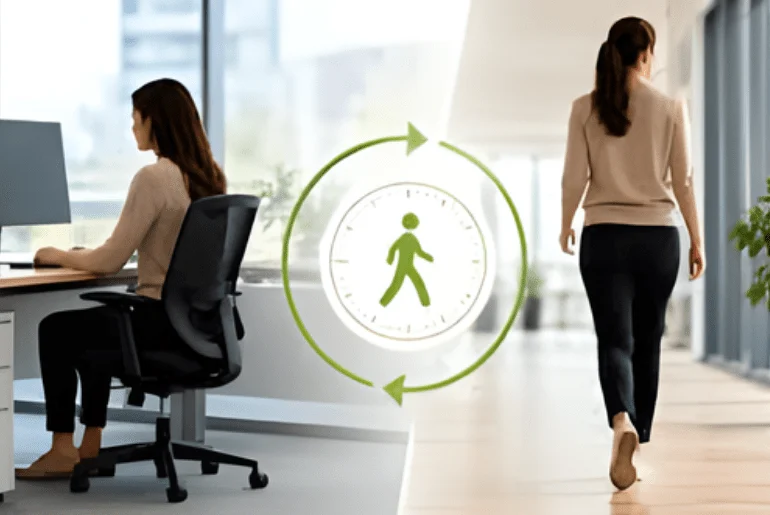
A groundbreaking study published in the prestigious British Journal of Sports Medicine (BJSM) has delivered compelling evidence reinforcing the critical need to address prolonged sitting in the modern workplace. The research unequivocally demonstrates that incorporating brief, regular movement breaks throughout the workday can substantially enhance employee health outcomes without compromising, and often even boosting, productivity. Specifically, the study identified a five-minute walk every hour as the most practical, accessible, and effective intervention to mitigate the myriad adverse effects associated with extended periods of sedentary behavior. This finding arrives at a pivotal moment, as global health organizations and employers grapple with the escalating health crisis precipitated by increasingly desk-bound occupations.
The BJSM Study: A Deeper Dive into the Efficacy of Movement Breaks
The comprehensive research, which involved a diverse cohort of office workers across various sectors, meticulously tracked participants’ physical health metrics, cognitive function, and work performance over an extended period. The methodology employed a controlled experimental design, comparing groups with differing levels of movement breaks against a control group maintaining typical sedentary work patterns. The results were striking: employees who consistently integrated five-minute walking breaks into each hour of their workday exhibited marked improvements across several key indicators. Physically, participants reported reduced musculoskeletal discomfort, better cardiovascular markers, and a lower incidence of self-reported fatigue. Critically, these health benefits were not achieved at the expense of output; researchers observed that participants not only maintained their work performance but, in numerous instances, demonstrated enhanced efficiency and accuracy in their tasks. Beyond the physical realm, the study illuminated significant cognitive advantages, including lower levels of cognitive fatigue, improved concentration, and a notable increase in daily engagement. This dual benefit—bolstering both physical wellbeing and workplace performance—underscores the profound potential of this simple intervention. The study’s authors emphasized the practicality of a five-minute hourly walk, highlighting its minimal disruption to workflow compared to longer, less frequent breaks, making it a viable strategy for widespread implementation across diverse organizational settings.
The Sedentary Epidemic: A Global Health Challenge
The findings from the BJSM study resonate deeply with a growing body of research that has, over the past two decades, increasingly characterized prolonged sitting as a silent public health epidemic. The shift from physically demanding agricultural and industrial economies to a predominantly service-based and digital workforce has dramatically altered daily activity levels. The average adult in developed nations now spends upwards of 9-10 hours per day in sedentary positions, a figure that often rises significantly for office workers. This alarming trend has prompted health experts to label "sitting as the new smoking," a stark metaphor intended to convey the profound and widespread health risks associated with a sedentary lifestyle.
Chronologically, concerns about the health implications of prolonged sitting began to gain significant traction in the early 2000s, moving beyond simply advocating for exercise to emphasizing the dangers of inactivity, even for those who meet recommended exercise guidelines. Research started to differentiate between structured exercise and non-exercise activity thermogenesis (NEAT), highlighting that even active individuals could still be at risk if they spent the majority of their day sedentary. Major health organizations, including the World Health Organization (WHO) and the Centers for Disease Control and Prevention (CDC), have since issued guidelines that not only recommend regular physical activity but also specifically advise reducing and breaking up prolonged periods of sitting. This growing awareness has led to the development of various interventions, from standing desks to active workstations, but the simplicity and effectiveness of short walking breaks offer a highly scalable solution.
The Indian Context: A Looming Health Crisis
Nowhere are the implications of the sedentary epidemic more acutely felt than in rapidly developing economies like India. The nation’s burgeoning IT, financial services, and corporate sectors have created millions of desk-bound jobs, dramatically transforming lifestyles for a significant segment of its workforce. Estimates suggest that nearly 70 per cent of Indian employees are currently at risk of developing one or more chronic health conditions, a figure that represents a substantial burden on both individuals and the national healthcare system. Long hours spent hunched over desks, coupled with excessive screen exposure, increasingly poor sleep patterns, irregular and often unhealthy eating habits, and pervasive chronic fatigue, have created a fertile ground for a surge in lifestyle-related illnesses. The consequences are stark: rising cases of obesity, Type 2 diabetes, hypertension, cardiovascular diseases, and mental health issues such as anxiety and depression are becoming alarmingly common among the Indian workforce, often affecting younger demographics than previously observed.
A significant challenge identified in India, as elsewhere, is the insidious nature of these health deteriorations. Many employees, immersed in demanding professional environments, often fail to recognize the early warning signs of deteriorating health. Persistent tiredness, difficulty concentrating, increased irritability, recurrent headaches, disturbed sleep, unexplained weight gain, and gradually elevated blood pressure are frequently dismissed as normal by-products of a high-pressure job. This normalization of symptoms delays intervention, allowing conditions to progress to more severe stages before medical attention is sought. The economic ramifications are substantial, leading to increased absenteeism, reduced presenteeism (where employees are present but less productive due to ill-health), and higher healthcare costs for both employers and employees.
Beyond Physical Health: Cognitive and Psychological Impacts
The study’s observations of lower cognitive fatigue and higher daily engagement among participants taking regular breaks are particularly noteworthy. Prolonged sitting is not merely a physical stressor; it also exerts a considerable toll on cognitive function and psychological well-being. Research indicates that extended periods of physical inactivity can reduce blood flow to the brain, impacting oxygen and nutrient delivery, which in turn can impair concentration, memory, and problem-solving abilities. Furthermore, the mental monotony of uninterrupted work, especially in intellectually demanding roles, contributes to mental fatigue and burnout.
Psychologically, the absence of movement breaks can exacerbate feelings of being trapped or overwhelmed, contributing to stress and anxiety. The act of stepping away from the desk, even for a few minutes, provides a crucial mental reset, allowing the brain to switch contexts, process information, and return to tasks with renewed vigor. This micro-break offers an opportunity for mindfulness, a brief detachment that can significantly reduce stress levels and improve mood, ultimately fostering a more positive and productive work environment. The BJSM study provides empirical support for what many intuitively understand: a refreshed mind is a more effective mind.
The Limitations of Traditional Wellness Programs
In response to the growing health crisis, many organizations globally, including a significant number in India, have expanded their employee wellness offerings. These initiatives typically include gym memberships, access to mental health support services, healthy meal options in cafeterias, ergonomic workstation assessments, and various health screenings. While well-intentioned and often beneficial for a segment of the workforce, experts believe these comprehensive programs have, to date, had a limited impact on the broader challenge of sedentary behavior.
A primary reason for this limited efficacy lies in the prevailing workplace culture. Many corporate environments continue to subtly, or overtly, reward long working hours and an unwavering commitment to the desk. This culture of ‘presenteeism’ often leaves employees reluctant to utilize wellness benefits or take breaks for fear of being perceived as less dedicated, less productive, or lacking commitment to their roles. The pressure to appear constantly engaged, particularly in competitive markets, can override an individual’s awareness of their health needs. Furthermore, while gym memberships are valuable, they address structured exercise rather than breaking up sedentary time throughout the day. Mental health support is crucial, but it often serves as a reactive measure rather than a proactive preventative strategy against the physical stressors of prolonged sitting that can contribute to mental fatigue. The BJSM study effectively highlights that systemic, integrated micro-interventions are often more impactful than large-scale, optional programs in tackling pervasive behavioral challenges.
Expert Perspectives and Calls to Action
Leading researchers and public health experts have been quick to laud the BJSM study’s findings, emphasizing their practical implications. Dr. Anya Sharma, a prominent occupational health specialist, commented, "This research provides a simple, evidence-based roadmap for employers. We’ve known for a while that prolonged sitting is detrimental, but identifying such a practical and effective intervention like a five-minute hourly walk is a game-changer. It shifts the focus from grand, expensive wellness schemes to something inherently scalable and sustainable." Similarly, Dr. Vikram Singh, a cardiologist with a focus on preventive medicine, stated, "The beauty of this recommendation lies in its accessibility. It doesn’t require special equipment or significant time commitment. It’s about integrating movement into the very fabric of the workday, directly combating the metabolic risks associated with inactivity."
From an organizational standpoint, HR professionals and corporate wellness managers acknowledge both the challenge and the opportunity. Ms. Priya Das, Head of HR at a leading tech firm in Bengaluru, remarked, "The reluctance to take breaks is a deeply ingrained cultural issue. However, with clear data showing positive impacts on both health and productivity, we now have a stronger case to advocate for these micro-breaks. It’s about educating leadership and fostering an environment where taking a short walk is seen as a sign of smart work, not a lack of dedication." There is a growing consensus among these stakeholders that the study’s findings provide the impetus for a significant shift in corporate wellness strategies, moving towards more embedded, behavioral interventions.
Implementing Change: Strategies for Organizations
The implications of the BJSM study are profound for organizational policy and workplace design. Implementing a culture that actively encourages hourly movement breaks requires a multi-faceted approach:
- Leadership Endorsement: Senior management must visibly champion the initiative, demonstrating that taking short breaks is not only permissible but encouraged and valued. Leaders should model the behavior themselves.
- Policy Integration: Companies can integrate movement break recommendations into official HR policies, perhaps even scheduling brief, mandatory breaks in certain roles or encouraging team-based walking breaks.
- Environmental Design: Creating walking paths within office complexes, designating "movement zones," or simply ensuring staircases are easily accessible and appealing can encourage physical activity.
- Technological Reminders: Utilizing workplace communication platforms or dedicated apps to send gentle hourly reminders can help employees build the habit. Wearable technology can also play a role in tracking activity and prompting movement.
- Education and Awareness: Continuous campaigns to educate employees on the specific health and productivity benefits of these breaks, using clear, compelling data, are essential.
- Performance Metrics Adjustment: Re-evaluating performance metrics to focus on output and quality rather than simply ‘time at desk’ can alleviate fears associated with taking breaks.
- Manager Training: Equipping team leaders and managers with the knowledge and tools to encourage and support their teams in taking regular breaks without impacting deadlines.
The Path Forward: Cultivating a Culture of Movement
Cultivating a culture of movement is not merely about adding another item to a wellness checklist; it represents a fundamental shift in how organizations perceive work, productivity, and employee well-being. It acknowledges that human beings are not designed for prolonged immobility and that supporting natural physiological needs ultimately leads to a more resilient, engaged, and innovative workforce. The economic benefits for companies are substantial, including reduced healthcare costs, decreased absenteeism, improved employee morale and retention, and enhanced creativity and problem-solving abilities. A healthy workforce is a productive workforce, and the simplicity of the intervention outlined in the BJSM study makes it an incredibly powerful tool for achieving this goal.
This shift also empowers individual employees to take greater ownership of their health within the confines of their professional lives. By integrating these micro-interventions, individuals can proactively manage their health risks, reduce fatigue, and sustain higher levels of energy and focus throughout their workday. It moves beyond the idea that health is something to be addressed outside of work hours, recognizing that the workplace itself is a critical determinant of well-being.
Conclusion: A Simple Solution for Complex Problems
The latest research published in the British Journal of Sports Medicine offers a beacon of hope in the fight against the detrimental effects of sedentary work. By advocating for a simple yet profoundly effective intervention—a five-minute walk every hour—the study provides organizations and individuals with a clear, actionable strategy to improve health and maintain productivity. In an era where chronic lifestyle diseases are rampant and workplace stress is pervasive, this research underscores the power of small, consistent changes. The challenge now lies in translating these scientific findings into widespread practical application, fostering a global workplace culture that not only values output but also prioritizes the fundamental human need for movement. The future of a healthy, productive workforce may indeed hinge on something as simple as taking a walk.







