
The Sixth U.S. Circuit Court of Appeals recently affirmed a lower court’s decision, ruling that a school district was not obligated to grant a teacher paid sick leave for a three-week guide dog training course. The May 13, 2026, ruling from the appellate court clarifies the nuanced interplay between the Americans with Disabilities Act (ADA) and the Family and Medical Leave Act (FMLA), particularly regarding an employer’s discretion in offering reasonable accommodations and the substitution of paid leave. The court found that the teacher, who lives with Usher syndrome, could not demonstrate that non-disabled employees were granted paid sick leave for absences that did not qualify under the district’s standard policy, thus undermining her claim of discriminatory treatment. Furthermore, the court emphasized that while employers must provide reasonable accommodations, they are not necessarily bound to an employee’s preferred accommodation, especially when an effective alternative, such as unpaid leave combined with personal days, is offered.
The Case at Hand: A Teacher’s Quest for Independence
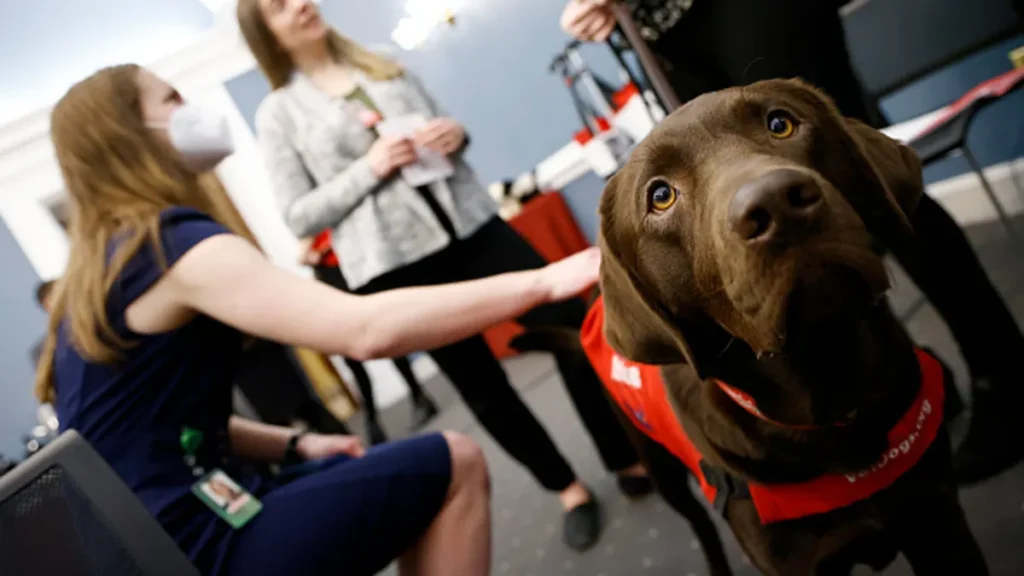
The legal battle centered on a dedicated teacher afflicted with Usher syndrome, a rare and progressive genetic disorder that leads to combined hearing and vision loss. As her condition advanced, the necessity for a guide dog became paramount for maintaining her independence and professional capabilities within the classroom environment. After being successfully matched with a guide dog, she was required to attend a mandatory, intensive three-week training course – a critical component to forging an effective partnership with her new service animal.
Recognizing the medical necessity underlying her training, the teacher formally requested 13 paid sick days from her school district to cover the duration of the course. She posited that since the training was "medically related" to her disability, it should fall under the purview of paid sick leave. However, the executive director of human resources (HR) at the school district approved her leave but stipulated that it would comprise a combination of paid personal days and unpaid leave, categorizing the latter portion as an accommodation under the ADA. The HR department’s rationale was that the district’s policy explicitly defined paid sick leave as being reserved for "personal illness, injury or exposure to contagious disease," a criteria that, in their interpretation, the guide dog training did not directly meet.
Disappointed with the school district’s decision to deny full paid sick leave, the teacher initiated legal action. She alleged that the school district had discriminated against her based on her disability by refusing her request for paid sick leave and by failing to provide a reasonable accommodation. She further contended that the FMLA mandated the school to permit her to substitute her paid sick days for FMLA-protected leave. These arguments set the stage for a critical examination of employer obligations and employee rights under federal disability and leave laws.
Chronology of Events Leading to the Appellate Ruling
The timeline of events highlights the progressive nature of the teacher’s condition and the subsequent legal challenge:
- Undisclosed Period: The teacher is diagnosed with Usher syndrome, a progressive genetic disease causing hearing and vision loss.
- Ongoing: The teacher’s condition deteriorates, increasing her reliance on assistive measures, eventually necessitating a guide dog.
- Undisclosed Period: The teacher is matched with a guide dog, a crucial step toward enhancing her independence and ability to perform her professional duties.
- Pre-2026: The teacher is mandated to attend a rigorous three-week training course to learn how to effectively work with her new guide dog.
- Pre-2026: The teacher formally requests 13 paid sick days from the school district to cover the duration of her guide dog training, citing the "medically related" nature of the absence.
- Pre-2026: The school district’s HR executive director approves the leave but specifies that it will be a blend of paid personal days and unpaid leave, offered as an ADA accommodation, based on the district’s sick leave policy.
- Pre-2026: The teacher files a lawsuit against the school district, alleging disability discrimination and failure to accommodate under the ADA, and a violation of FMLA regarding paid leave substitution.
- Pre-May 2026: A lower court rules against the teacher, upholding the school district’s actions.
- May 13, 2026: The Sixth U.S. Circuit Court of Appeals affirms the lower court’s decision, solidifying the school district’s position.
- May 18, 2026: The ruling is published, sparking discussions among HR professionals, legal experts, and disability advocates.
Legal Frameworks: ADA, FMLA, and Sick Leave Policies
Understanding the nuances of the ADA, FMLA, and standard sick leave policies is crucial for grasping the court’s decision.
Americans with Disabilities Act (ADA): Enacted in 1990, the ADA prohibits discrimination against individuals with disabilities in all areas of public life, including employment. Under Title I of the ADA, employers are required to provide "reasonable accommodations" to qualified employees with disabilities, unless doing so would impose an "undue hardship" on the operation of the business. A reasonable accommodation is any modification or adjustment to the job application process, to the work environment, or the way a job is customarily performed, that enables a person with a disability to enjoy equal employment opportunities. Crucially, the ADA does not mandate paid leave as an accommodation if unpaid leave serves as an effective alternative. Furthermore, employers generally have the right to choose among effective accommodations, and are not required to provide the employee’s preferred accommodation.
Family and Medical Leave Act (FMLA): The FMLA, passed in 1993, allows eligible employees of covered employers to take up to 12 weeks of unpaid, job-protected leave per year for specific family and medical reasons, including an employee’s own serious health condition or to care for a family member. While FMLA leave itself is unpaid, employees can elect, or employers can require, the substitution of accrued paid leave (like sick leave or vacation time) for FMLA leave. However, this substitution is generally subject to the employer’s existing paid leave policies. An employee’s FMLA leave request must align with the employer’s established criteria for using paid leave, unless the FMLA specifically overrides those criteria (e.g., for certain serious health conditions).
Employer Sick Leave Policies: Most organizations have defined policies regarding the use of paid sick leave. These policies typically outline qualifying reasons for absence, such as personal illness, injury, medical appointments, or exposure to contagious diseases. The specific language of these policies is paramount in determining whether a particular absence, like guide dog training, falls within the designated categories for paid time off. In this case, the school district’s policy specified "personal illness, injury or exposure to contagious disease," which the HR department interpreted as not directly encompassing guide dog training, despite its medical relevance to the employee’s disability.
The Court’s Rationale: Comparators, Accommodation, and Substitution
The Sixth Circuit Court of Appeals meticulously addressed each of the teacher’s arguments, providing clarity on several legal fronts.
1. Disability Discrimination (Disparate Treatment): The teacher argued that by denying her paid sick leave, the school district discriminated against her. To prove disparate treatment, she needed to demonstrate that she was treated less favorably than similarly situated non-disabled employees. A key element of this is identifying "comparators" – individuals outside the protected class (non-disabled employees) who were treated differently under similar circumstances. The court found that the teacher "could not point to any examples of nondisabled employees who were granted paid sick leave ‘even when the employee’s proposed absence did not qualify for that leave.’" This absence of valid comparators was a critical failing in her discrimination claim. The court essentially stated that if the school district consistently applied its sick leave policy to all employees, regardless of disability status, and denied paid sick leave for non-qualifying reasons, then the teacher was not subjected to disparate treatment.

2. Failure to Accommodate (ADA): The teacher also contended that the school district failed to provide a reasonable accommodation by not granting her paid leave for the training. While the ADA mandates reasonable accommodation, the court reiterated a well-established principle: employers are not required to provide an employee’s preferred accommodation if another effective, reasonable accommodation is available. In this instance, the school district offered a mix of paid personal days and unpaid leave as an ADA accommodation for the guide dog training. The court determined that this combination constituted an effective and reasonable accommodation, enabling the teacher to attend her crucial training without undue hardship to the school district. The fact that the teacher preferred paid sick leave did not obligate the employer to provide it, as long as the alternative accommodation effectively met her needs related to her disability.
3. FMLA Paid Leave Substitution: The teacher’s final argument hinged on the FMLA, asserting that it required the school to allow her to substitute her paid sick days for FMLA leave. The court, however, clarified that while FMLA allows for the substitution of paid leave, this is typically governed by the employer’s existing paid leave policies. The FMLA does not automatically convert all FMLA-qualifying leave into paid leave if the underlying reason for the leave does not meet the employer’s criteria for paid time off. The court noted that for the teacher to succeed on this claim, she would have had to show that the district "normally provide[d]" paid sick leave for situations like guide-dog training. The HR executive director’s testimony confirmed that the guide-dog training did not fall under the district’s sick leave policy. Therefore, the FMLA did not compel the school district to allow the substitution of paid sick days for an event that did not qualify under its established policy.
Broader Implications and Expert Reactions
The Sixth Circuit’s ruling carries significant implications for both employers and employees across various sectors, particularly concerning disability accommodations and leave policies.
For Employers: This decision reinforces the importance of clear, well-defined, and consistently applied leave policies. It affirms an employer’s right to interpret and enforce its sick leave policy uniformly, even when an employee’s absence is related to a disability. HR departments are encouraged to review their policies to ensure they are unambiguous regarding what qualifies for paid sick leave versus other forms of leave (e.g., personal days, FMLA, ADA accommodation). The ruling also provides comfort to employers that they retain discretion in choosing among effective reasonable accommodations under the ADA, as long as the chosen accommodation genuinely addresses the employee’s needs.
An HR consultant, speaking generally on such cases, might state: "This ruling underscores the tightrope HR professionals walk. We must ensure compliance with both ADA and FMLA, while also adhering to company policy and fiscal responsibility. Consistency in policy application is paramount to avoid claims of discrimination. While empathy is crucial, legal obligations dictate that we provide reasonable accommodation, not necessarily the most preferred or most expensive option."
For Employees with Disabilities: While the outcome may seem unfavorable to the teacher, the ruling serves as a crucial reminder about the legal distinctions between "reasonable accommodation" and "preferred accommodation." Employees must understand that while employers are legally bound to accommodate their disabilities, this does not always translate to receiving paid leave for all disability-related absences if the employer’s policy does not specifically cover it, and if unpaid leave or other forms of paid leave (like personal days) are deemed effective. This case highlights potential financial burdens on employees when disability-related needs require time off that does not qualify for paid leave under existing policies.

A representative from a disability rights organization might comment, "While we respect the court’s interpretation of existing law, this case highlights a critical gap. The financial burden of managing a disability, including essential training for assistive tools like guide dogs, often falls disproportionately on the individual. We advocate for policies that go beyond the legal minimum to truly support employees with disabilities, ensuring they don’t face financial penalties for maintaining their independence and ability to work."
Legal and Societal Impact: This decision from the Sixth Circuit, covering federal courts in Kentucky, Michigan, Ohio, and Tennessee, contributes to the evolving body of case law interpreting federal disability and leave statutes. It clarifies that merely having a disability-related need for time off does not automatically entitle an employee to paid leave if that leave does not align with the employer’s consistently applied paid leave policy. The ruling reinforces that the ADA aims to ensure equal opportunity, not necessarily identical benefits for all types of leave, especially when other effective accommodations are available.
This case also subtly touches upon broader societal conversations regarding the integration of individuals with disabilities into the workforce. While legal frameworks like the ADA have significantly advanced disability rights, the nuances of "reasonable accommodation" and the financial implications of specific accommodations remain areas of ongoing discussion and occasional contention. The ruling does not diminish the invaluable role of guide dogs or the necessity of training, but rather delineates the legal boundaries of an employer’s obligation regarding the payment for such training under current statutory interpretations. It serves as a point of reference for future cases involving similar questions, urging both employers and employees to be thoroughly informed about their rights and responsibilities under federal employment laws.






