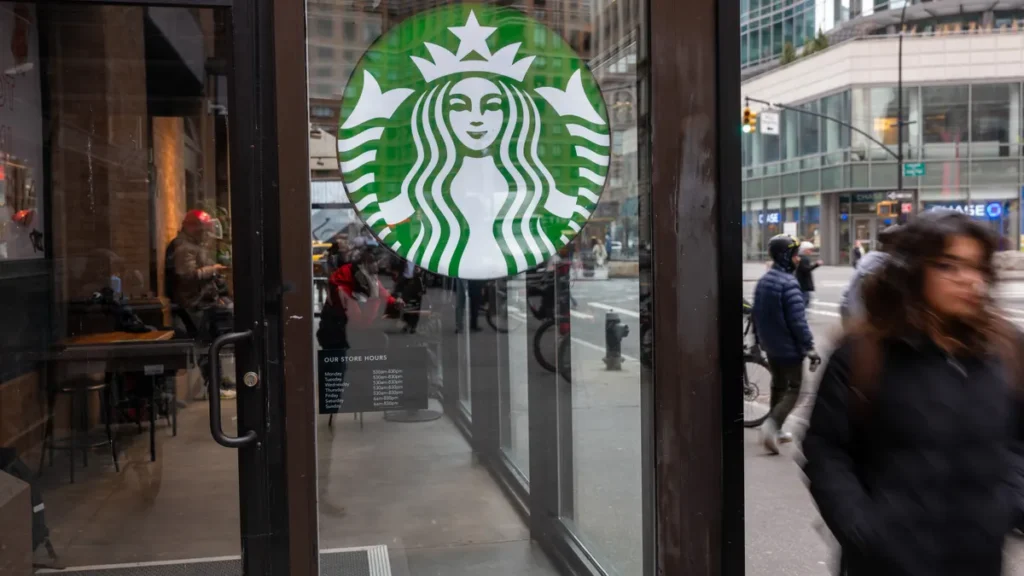
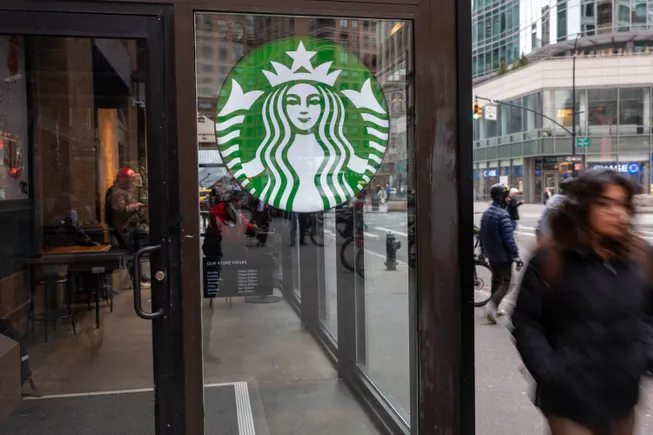
Starbucks has finalized a $1 million settlement with the state of Florida, resolving a lawsuit initiated by Florida Attorney General James Uthmeier. The legal action alleged that the global coffee giant engaged in unlawful race-based hiring and advancement policies, discriminating against nonminorities within its employment practices. The agreement, announced on Thursday, September 18, 2026, marks a significant development in the ongoing national debate and legal scrutiny surrounding corporate Diversity, Equity, and Inclusion (DEI) initiatives.
The lawsuit, filed by Florida’s Attorney General’s office in late 2025, accused Starbucks of maintaining policies and programs that "excluded or disfavored nonminorities" in various aspects of employment. Specifically, the state’s complaint cited several publicly available documents and corporate filings as evidence of these alleged discriminatory practices. Among the most prominent allegations were claims that Starbucks had implemented racial quotas for hiring, engaged in differential wage payments based on race, linked executive compensation to participation in race-based mentorship programs, and systematically excluded individuals of "disfavored races" from crucial networking and mentorship opportunities designed for career advancement.
One key piece of evidence highlighted by Florida was a 2020 Starbucks report, where the company publicly committed to ambitious diversity targets. This report stated Starbucks’ intention to achieve a workforce composition where people of color constituted 40% of its retail and distribution center new hires, and 30% of its corporate new hires. While many companies articulate such goals as part of broader efforts to address historical underrepresentation and foster diverse workplaces, the Florida Attorney General’s office interpreted these targets as de facto racial quotas, which are prohibited under civil rights laws.
Further bolstering the state’s case was a 2024 regulatory filing by Starbucks. This document revealed that a portion of executive pay—specifically 7.5% during the ongoing fiscal year—was tied to an executive’s service as a mentor to individuals who identified as Black, Indigenous, or People of Color (BIPOC). While such programs are often designed with the intent of fostering leadership development and closing equity gaps for underrepresented groups, the lawsuit contended that by explicitly linking compensation to race-specific mentorship, Starbucks effectively created a discriminatory incentive structure that favored certain racial groups over others.
Chronology of Events and Broader Context
The settlement with Starbucks unfolds against a backdrop of increasing legal challenges to corporate DEI programs, both at the state and federal levels. This movement gained significant momentum following shifts in judicial and executive interpretations of civil rights legislation.
- 2020: Starbucks publicly announces ambitious diversity hiring goals, aiming for 40% people of color in retail/distribution new hires and 30% in corporate new hires, as detailed in a company report.
- 2023 (June): The U.S. Supreme Court issues landmark rulings in Students for Fair Admissions v. Harvard and Students for Fair Admissions v. University of North Carolina, effectively ending affirmative action in college admissions. While not directly applicable to corporate employment, these decisions signal a tightening legal environment around race-conscious policies and have a chilling effect on corporate DEI strategies.
- 2024 (Fiscal Year): Starbucks’ regulatory filings indicate that 7.5% of executive pay is tied to mentoring individuals identifying as Black, Indigenous, or People of Color (BIPOC).
- Late 2025: Florida Attorney General James Uthmeier files a lawsuit against Starbucks, alleging illegal race-based hiring and advancement policies, specifically citing the 2020 diversity goals and the 2024 executive compensation policy.
- July 2026: A federal judge orders Northwestern Mutual to comply with an Equal Employment Opportunity Commission (EEOC) subpoena for data related to its DEI policies, indicating judicial support for agency investigations into potential discrimination.
- August 2026: The U.S. Department of Justice (DOJ) announces a $21.5 million settlement with Deloitte over alleged discrimination in hiring, promotion, and staffing decisions, specifically related to the firm’s DEI programs.
- Early September 2026: The DOJ reaches a $25 million settlement with Accenture, after alleging the firm considered race and sex in hiring and promotions, favoring candidates who advanced its demographic goals.
- September 18, 2026: Florida Attorney General James Uthmeier announces the $1 million voluntary resolution with Starbucks, where the company agrees to comply with Florida’s Civil Rights Act and refrain from certain diversity mandates.
Florida’s Stance and Attorney General Uthmeier’s Campaign
Florida, under the leadership of Attorney General James Uthmeier, has been at the forefront of state-level efforts to challenge corporate DEI initiatives. Uthmeier’s office has consistently argued that while diversity and inclusion are commendable goals, programs that use race as a primary factor in employment decisions violate civil rights statutes designed to prevent discrimination. The lawsuit against Starbucks is a direct extension of this campaign, which mirrors a broader "anti-woke" movement gaining traction in various state legislatures and legal circles.
In his announcement of the settlement, Uthmeier emphasized Starbucks’ agreement to comply with Florida’s Civil Rights Act. This compliance includes a commitment from Starbucks to refrain from participating in organizations that mandate or require the company to increase the racial diversity of its board of directors. Furthermore, Starbucks’ Chief Legal Officer will be required to submit annual certifications of continued compliance with the agreement over a four-year period, ensuring ongoing oversight from the state.
Starbucks’ Official Response and Non-Admission of Wrongdoing
Despite the settlement, Starbucks maintains its position that it did not engage in any wrongdoing. Pilar Ramos, Executive Vice President and Chief Legal Officer at Starbucks, issued a statement accompanying the Attorney General’s announcement, reiterating this stance. "We will continue to focus on offering great jobs and career opportunities to our partners who wear the green apron, while making a positive impact on the communities we serve in Florida and around the world," Ramos stated. This suggests that while the company agreed to the settlement to avoid prolonged litigation and associated costs, it does not concede the legal merits of Florida’s allegations. The company’s commitment to "offering great jobs and career opportunities" implies a continued focus on inclusive hiring practices, albeit within the stricter legal framework established by the settlement.

Broader Implications for Corporate DEI and Legal Landscape
The Starbucks settlement, alongside the recent federal actions against Accenture and Deloitte, underscores a significant shift in the legal and regulatory environment surrounding corporate Diversity, Equity, and Inclusion programs. The "multiyear campaign against workplace DEI" initiated during the previous presidential administration and continued by enforcement agencies like the U.S. Equal Employment Opportunity Commission (EEOC) and the U.S. Department of Justice (DOJ), has intensified scrutiny on how companies implement diversity goals.
Guidance issued by these federal agencies has increasingly outlined how certain DEI programs, if not carefully structured, could be deemed discriminatory under Title VII of the Civil Rights Act of 1964, Section 1981, and various state civil rights acts. The core legal argument against many challenged DEI initiatives is that policies designed to boost the representation of one group, even historically underrepresented ones, can inadvertently lead to "reverse discrimination" against other groups if they involve explicit quotas, set-asides, or preferential treatment based on race.
The recent settlements involving substantial payouts — $25 million from Accenture and $21.5 million from Deloitte — serve as stark warnings to other corporations. These cases illustrate that enforcement agencies are not only investigating but are also successfully pursuing legal actions against firms whose DEI programs are perceived to cross the line into unlawful discrimination. The allegations in these cases often mirror those against Starbucks, focusing on how race and sex were considered in hiring, promotion, and staffing decisions to meet demographic goals.
Moreover, the EEOC’s aggressive posture in launching investigations and issuing subpoenas for DEI-related information has been largely upheld by federal courts. Legal experts have previously indicated that courts are likely to side with the EEOC in demanding compliance, a prediction borne out by decisions such as the July 2026 order for Northwestern Mutual to provide data for an EEOC probe. This judicial backing gives federal agencies significant leverage in scrutinizing corporate DEI frameworks.
Impact on Corporate Strategy and Future of DEI

The increasing legal risks are prompting many corporations to re-evaluate and, in some cases, recalibrate their DEI strategies. Companies are now faced with the delicate task of balancing their stated commitments to fostering diverse and inclusive workplaces with the imperative to avoid legal pitfalls. This often involves a pivot from race-conscious policies, such as explicit targets or quotas, towards race-neutral approaches that focus on broader concepts of equity, access, and opportunity for all employees.
Many legal experts advise companies to emphasize "belonging" and "inclusion" initiatives, which aim to create welcoming environments, rather than setting specific demographic targets that could be interpreted as discriminatory. The focus is shifting towards eliminating barriers, promoting fair processes, and ensuring equitable access to opportunities, without making race a determinative factor in hiring, promotion, or compensation decisions.
The Starbucks settlement, while financially modest compared to the federal payouts, carries significant symbolic weight. It signals that state attorneys general, not just federal agencies, are actively monitoring and challenging corporate DEI practices. For Starbucks, the agreement to not participate in organizations requiring racial diversity on its board could impact its broader corporate governance and its relationships with investor groups that advocate for specific diversity metrics.
Ultimately, the evolving legal landscape is forcing a redefinition of what constitutes permissible and effective DEI. While the pursuit of diverse talent and inclusive cultures remains a core business objective for many, the methods employed are under intense scrutiny. The coming years will likely see continued litigation, refined corporate policies, and ongoing debates about how best to achieve diversity without running afoul of anti-discrimination laws. The Starbucks settlement stands as a clear indicator that the era of loosely defined or aggressively targeted DEI initiatives is giving way to a more legally constrained and meticulously scrutinized approach.