The modern business environment is increasingly defined by a paradox of connectivity: while communication channels have never been more numerous, the ability to earn genuine public trust has become significantly more difficult. According to the 2025 Edelman Trust Barometer, approximately 80% of consumers report that they trust the brands they currently use, suggesting that brand trust is no longer a peripheral marketing concern but a core competitive advantage. For B2B organizations, this shift necessitates a transition from traditional, noise-heavy promotional tactics to strategic public relations (PR) that emphasizes relevance, clarity, and credible action.
Public relations in the 2020s has evolved far beyond the distribution of press releases and the pursuit of media mentions. It now functions as a sophisticated mechanism for turning organizational expertise into market visibility and translating corporate values into meaningful industry conversations. When executed correctly, a PR campaign can fundamentally alter market perceptions, establish executive authority, and position a brand within the center of wider cultural or economic dialogues. However, the most successful initiatives do not rely on attention alone; they synchronize a compelling narrative with specific business objectives to give target audiences a tangible reason to engage.
The Architectural Pillars of a Successful PR Campaign
To understand the efficacy of modern public relations, one must look at the strategic components that distinguish a viral moment from a sustainable brand-building effort. Attention is a fleeting metric; results are driven by the intersection of four critical elements: relevance, newsworthiness, credibility, and human insight.
Relevance ensures that the story addresses a real need or trend within the target audience’s ecosystem rather than forcing a corporate message into an unrelated space. Newsworthiness provides the "why now" factor—utilizing surprising data, timely events, or cultural shifts to give journalists and the public a reason to discuss the brand. Credibility is the foundation of trust, requiring that all claims be supported by verifiable data, expert testimony, or transparent information. Finally, human insight provides the emotional or intellectual hook, transforming a sterile corporate announcement into a relatable story.
Purpose-Led Public Relations: Building Long-Term Platforms
Purpose-driven PR is most effective when it reflects a pre-existing societal concern and transforms it into a long-term platform for dialogue. Three landmark examples illustrate this principle:
- Dove’s Campaign for Real Beauty (Launched 2004): Originally designed to challenge narrow beauty standards, this campaign has evolved over two decades into a global research powerhouse. In 2024, Dove’s research involved 33,000 participants across 20 countries, proving that a purpose-led narrative can maintain relevance for decades if the company consistently invests in the idea.
- Patagonia’s "Don’t Buy This Jacket" (2011): By running a full-page advertisement in The New York Times on Black Friday, Patagonia utilized a counterintuitive message to highlight the environmental costs of overconsumption. This move was not a mere publicity stunt; it was a radical alignment of communication with the company’s core environmental mission, which generated massive earned media and solidified customer loyalty.
- LEGO’s "Rebuild the World" (2019): This initiative connected LEGO’s physical products with the abstract concept of future-shaping creativity. By involving cultural figures like Mark Ronson and focusing on children’s imaginative potential, LEGO moved beyond selling toys to selling the value of a creative mindset.
The overarching lesson for B2B brands is that a purpose campaign becomes a lasting narrative only when the organization demonstrates a consistent commitment to the underlying values.
Transforming Products into Cultural Stories
A product or service often gains market traction not through its features, but through the stories it enables. This shift from "what we sell" to "what we facilitate" is evident in the strategies of Spotify and Airbnb.

Spotify Wrapped, launched in its current form in 2015, has become an annual cultural phenomenon. By leveraging individual listening data, Spotify creates a personalized narrative for each user, effectively turning its customer base into its primary distribution channel. In 2023, the campaign engaged a record 227 million monthly active users. The brilliance of Wrapped lies in its ability to make the user the protagonist, while the brand provides the stage.
Similarly, Airbnb’s launch of "Experiences" in November 2016 shifted the company’s narrative from property rentals to community-driven travel. By focusing on local hosts and unique activities, Airbnb provided a wealth of storytelling material for media relations that went beyond the logistics of lodging. For B2B software companies, this suggests that the software itself should rarely be the protagonist; instead, the story should focus on the professional transformation or the problem-solving journey of the user.
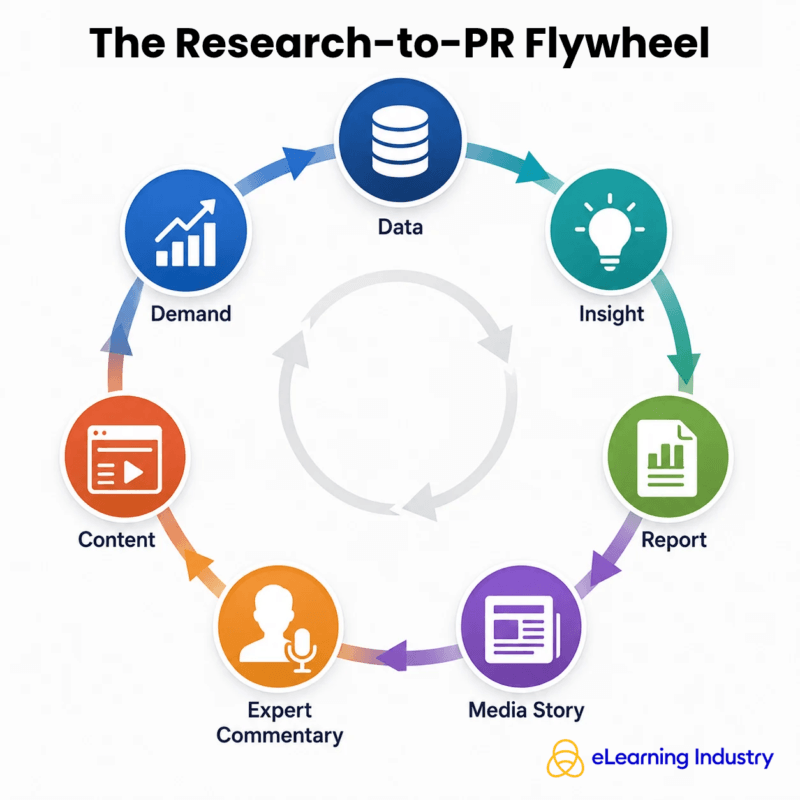
Data-Led PR: The Research-to-Visibility Flywheel
Proprietary data is perhaps the most potent tool for B2B brands seeking to establish authority. When a company uses its internal insights to explain broader market shifts, it moves from being a vendor to being an industry oracle.
LinkedIn’s "Economic Graph" is a gold standard in this category. By aggregating billions of data points regarding hiring, skills, and AI adoption, LinkedIn produces reports such as the "Future of Recruiting," which are cited by global news outlets and policymakers alike. This research-led approach provides a continuous stream of newsworthy content that reinforces LinkedIn’s reputation as the definitive authority on the workforce.
In the learning technology sector, this strategy is equally effective. For example, the "AI Expectation Gap in Learning Tech" report identifies the disconnect between buyer expectations and vendor offerings. By publishing such benchmarks, companies can lead the conversation on emerging technology adoption, positioning themselves as thought leaders who understand the market’s pulse.
High-Spectacle and Experiential Public Relations
While B2B PR is often intellectual, there is still a significant role for experiential and attention-grabbing events. Red Bull Stratos (2012) remains a definitive example of this. By sponsoring Felix Baumgartner’s record-breaking freefall from the stratosphere—which was watched live by 9.5 million people on YouTube—Red Bull created a story that was inherently newsworthy. Journalists did not need a pitch to understand the significance of the event; the spectacle spoke for itself.
On a more accessible level, IKEA’s 2011 "Big Sleepover" responded to a Facebook community’s request to spend the night in a store. By inviting 100 fans to stay at its Essex location, IKEA transformed a social media trend into a tangible, sharable experience that humanized the brand and demonstrated a willingness to listen to its community.
Reactive PR: The Power of Real-Time Engagement
The ability to respond to external events with speed and brand-appropriate humor can result in massive earned media. During the 2013 Super Bowl blackout, Oreo’s "You can still dunk in the dark" tweet generated over 525 million total media impressions. The success of this response was rooted in its speed and its perfect alignment with the product’s established "dunking" ritual.
Similarly, when a Peloton holiday advertisement faced public backlash in 2019, Aviation Gin quickly hired the same actress for a parody commercial. This reactive move allowed Aviation Gin to highjack a trending conversation in a way that was humorous and culturally savvy. For B2B brands, this principle applies when responding to new industry regulations, major cybersecurity events, or economic shifts. Providing immediate, expert commentary on these issues can turn a crisis or a trend into a thought leadership opportunity.
Strategic Impact on SEO, GEO, and Reputation
Modern PR is no longer siloed from digital marketing; it is a primary driver of search engine visibility and reputation management. When reputable industry publications mention a brand, they create high-value signals that search engines use to determine authority. This is increasingly relevant for Generative Engine Optimization (GEO), where AI-driven search tools prioritize brands that are frequently and credibly cited across the web.
Strategic PR supports the entire buyer journey. During the discovery phase, media coverage introduces the brand to new audiences. During the evaluation phase, authoritative mentions and third-party validation provide the "social proof" necessary to close complex B2B deals.
Measurement and Avoiding Common Pitfalls
To determine if a PR campaign has succeeded, organizations must look beyond vanity metrics like "total reach." Effective measurement frameworks categorize impact into five areas:
- Awareness: Tracking branded search volume, website traffic from referrals, and share of voice.
- Authority: Monitoring high-quality backlinks, executive speaking invitations, and mentions in industry reports.
- Engagement: Analyzing social media interactions and the depth of content consumption.
- Reputation: Evaluating sentiment analysis and the presence of the brand in "top list" directories.
- Commercial Impact: Utilizing CRM data to identify leads that originated from earned media coverage.
Conversely, brands must avoid common mistakes such as "newsjacking" without relevance, prioritizing quantity of mentions over quality of outlet, and failing to provide credible evidence for claims. A PR campaign that is not aligned with the actual customer experience can lead to a "reputation gap," where public perception far exceeds organizational reality, ultimately eroding trust.
Conclusion: The Future of Credible Communication
The strongest public relations initiatives are those that provide the market with evidence rather than just promotional messages. Whether through original research, executive thought leadership, or community-led storytelling, the goal remains the same: to give the audience something of value to discuss. In an era where trust is the ultimate currency, the most successful brands will be those that use PR not to shout louder, but to speak more clearly and with greater authority. By connecting communication with substantive action, B2B organizations can build the credibility necessary to navigate an increasingly crowded and skeptical marketplace.