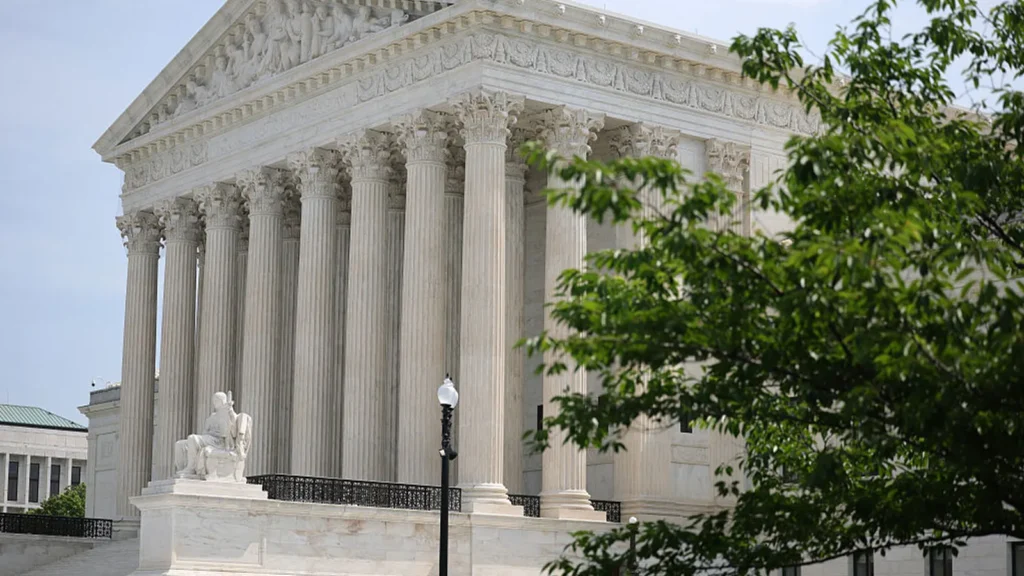
In a landmark 6-3 decision handed down on Monday, the U.S. Supreme Court declared unconstitutional a more than 90-year-old precedent that had shielded the heads of certain independent federal agencies from at-will removal by the President. This pivotal ruling significantly redefines the balance of power between the executive branch and independent regulatory bodies, marking a profound shift in the governance of the sprawling federal bureaucracy. The decision, delivered in Trump v. Slaughter, asserts that the President possesses unfettered authority to dismiss officials exercising executive power on his behalf, irrespective of Congress’s designation of such agencies as "independent."
The Historical Bedrock of Agency Independence: The Humphrey’s Executor Era
The legal battle culminating in Trump v. Slaughter centered on the interpretation and validity of a 1935 Supreme Court decision, Humphrey’s Executor v. U.S. For nearly a century, Humphrey’s Executor stood as a cornerstone of the administrative state, establishing the principle that Congress could create "independent" agencies whose leaders could only be removed "for cause"—typically defined as inefficiency, neglect of duty, or malfeasance in office—rather than at the President’s discretion. This precedent was seen as vital to insulating critical regulatory functions from the immediate political whims of a presidential administration, fostering stability, expertise, and non-partisan decision-making in areas such as economic regulation, labor relations, and consumer protection.
The rationale behind Humphrey’s Executor originated from the New Deal era, a period of rapid expansion of federal power and the creation of numerous administrative agencies to address the complexities of a modern industrial economy. The Federal Trade Commission (FTC), established in 1914, was among the earliest of these bodies, tasked with ensuring fair competition and consumer protection. The case arose when President Franklin D. Roosevelt attempted to remove William Humphrey, an FTC Commissioner, simply because Humphrey held policy views antithetical to the Roosevelt administration’s agenda. The Supreme Court, in its 1935 ruling, found that the FTC exercised quasi-legislative and quasi-judicial powers, rather than purely executive functions. Therefore, the Court reasoned, Congress had the power to limit the President’s ability to remove such officers, ensuring their independence. This ruling effectively carved out a category of federal officials who were insulated from direct presidential control, a concept that became deeply embedded in the structure of American governance.
This framework stood in contrast to an earlier landmark decision, Myers v. U.S. (1926), where the Supreme Court, in an opinion by Chief Justice William Howard Taft, affirmed the President’s inherent power under Article II of the Constitution to remove purely executive officers, such as a postmaster, without the need for Senate approval or cause. Myers had established a broad view of presidential removal power for those performing functions traditionally within the executive branch, while Humphrey’s Executor created an important carve-out for independent regulatory bodies. The tension between these two precedents has been a subject of continuous legal and academic debate for decades, forming the theoretical battleground for the current case.
The Genesis of Trump v. Slaughter: A Test of Executive Authority
The longstanding precedent of Humphrey’s Executor faced renewed and intense scrutiny during the Trump administration, which often expressed frustration with what it perceived as the intransigence and political leanings of the federal bureaucracy. The specific events leading to Trump v. Slaughter began in 2025 when then-President Donald Trump moved to dismiss several leaders of independent federal agencies. Among them was Rebecca Slaughter, a Democratic Commissioner of the Federal Trade Commission, whose tenure was set to expire in 2027. President Trump explicitly stated that Slaughter’s continued service was "inconsistent with his administration’s priorities," offering no other cause for her removal.
Slaughter promptly challenged her dismissal as unconstitutional, arguing that under the Humphrey’s Executor precedent, she could only be removed for specific enumerated causes such as inefficiency or malfeasance, none of which had been alleged. Her lawsuit argued that the President’s actions directly violated the statutory protections Congress had enacted to ensure the FTC’s independence. This challenge swiftly made its way through the lower courts and was ultimately taken up by the Supreme Court, setting the stage for a re-evaluation of nearly a century of jurisprudence regarding presidential removal power and agency independence.
The Slaughter case was not an isolated incident. The Trump administration similarly attempted to dismiss officials from other independent agencies, including the U.S. Equal Employment Opportunity Commission (EEOC) and the National Labor Relations Board (NLRB). For instance, former NLRB member Gwynne Wilcox challenged her removal by Trump, though the Supreme Court had previously denied a petition for certiorari before judgment in her case. A separate lawsuit filed by former EEOC Commissioner Jocelyn Samuels had been stayed pending the outcome of Slaughter, awaiting the definitive ruling on the scope of presidential power. These parallel legal battles underscored a broader executive branch push to assert greater control over regulatory bodies, igniting a constitutional showdown over the very nature of the administrative state.
The Majority’s Reasoning: Reasserting the Unitary Executive
Chief Justice John Roberts, writing for the 6-3 majority in Trump v. Slaughter, delivered a forceful opinion that systematically dismantled the foundations of Humphrey’s Executor. Roberts asserted that the 1935 decision was "tethered to a highly circumscribed and almost fictional view" of the Federal Trade Commission’s functions. He argued that the earlier Court wrongly held that, because the FTC exercised neither purely political nor purely executive power, its commissioners could be removed only for "inefficiency, neglect of duty, or malfeasance in office."
The majority opinion firmly reiterated the principle of the unitary executive, rooted in Article II, Section 1 of the Constitution, which vests "the executive Power" in the President. Roberts contended that officials who exercise executive power on behalf of the President must, by constitutional design, be subject to his control and direction. He clarified that while Congress has the authority to establish independent agencies to assist it with its functions, it "may not foist those agencies upon the President, and thus deprive him of ‘the executive power vested [in him] by the Constitution’ – something Humphrey’s itself never purported to permit."
Essentially, the Court found that the FTC, despite its "independent" designation, fundamentally exercises executive power through its enforcement actions, investigations, and regulatory promulgations. Therefore, its leaders cannot be insulated from presidential removal. The majority emphasized that the historical distinction drawn in Humphrey’s between "quasi-legislative" and "quasi-judicial" functions versus "purely executive" functions was ultimately insufficient to justify limiting the President’s Article II authority over those carrying out executive duties. This ruling effectively eliminates the "for cause" removal protection for any independent agency head who, in the Court’s view, performs executive functions.
Roberts did, however, sidestep the application of this decision to all federal officials with tenure protections. He explicitly noted that the case did not address removal protections for judges of non-Article III courts, indicating that the Court was not issuing a blanket rejection of all congressional limitations on removal power. Instead, he referred back to the 1926 Myers v. U.S. decision, reaffirming that officials handling a function traditionally outside of the executive branch—such as purely legislative or judicial functions—might still be exempt from at-will removal.
The Dissenting Voices: Warning Against Concentrated Power
Justice Sonia Sotomayor penned a fervent dissent, joined by Justices Elena Kagan and Ketanji Brown Jackson, warning of the far-reaching and potentially destabilizing consequences of the majority’s decision. Sotomayor argued that the ruling grants the President "power unknown even to the English Crown," a stark assertion highlighting her belief that the Court had unduly concentrated power in the executive branch.
The dissenters emphasized that the majority’s decision fundamentally undermines the carefully constructed system of checks and balances that Congress intended when establishing independent agencies. They argued that these agencies were designed to operate with a degree of insulation from partisan political pressures, allowing for expert-driven, consistent policy implementation over time. By enabling a President to remove agency heads at will, simply because their priorities differ, the Court, in the dissenters’ view, risked transforming these vital regulatory bodies into mere extensions of the President’s political agenda.
Justice Sotomayor highlighted the potential for rapid and disruptive policy shifts with each change in administration, creating instability and uncertainty in areas critical to the national economy and public welfare. She contended that such a change would inevitably lead to the politicization of agencies that require impartiality and long-term vision, ultimately eroding public trust in their ability to act as neutral arbiters. The dissenters warned that the ruling could fundamentally alter the landscape of federal governance, diminishing Congress’s role in shaping the administrative state and empowering the President to an unprecedented degree.
Broader Implications and Collateral Cases
The immediate repercussions of Trump v. Slaughter are profound and far-reaching. The decision directly impacts the pending lawsuits of former agency officials like Jocelyn Samuels of the EEOC and Gwynne Wilcox of the NLRB. Legal experts widely anticipate that, given the Supreme Court’s clear pronouncement, these challenges to their removals will likely fail, effectively validating the Trump administration’s actions. The ruling is expected to affect a wide array of multimember agencies, including the NLRB, which adjudicates labor disputes, and the EEOC, responsible for enforcing federal anti-discrimination laws in the workplace.
The Court’s decision, however, was not monolithic in its application to all agencies with removal protections. In a simultaneous ruling, Trump v. Cook, the Supreme Court held that President Trump’s removal powers were restricted with respect to the Federal Reserve’s Board of Governors. Chief Justice Roberts distinguished the Federal Reserve from agencies like the FTC by citing a "long tradition" of monetary policy being exercised independently of executive influence, and by emphasizing that the Fed’s functions do not entail exercising executive power on behalf of the President in the same manner as the FTC. This distinction suggests that the Court is not entirely dismantling the concept of independent agencies but is drawing a new, narrower line based on the nature of the functions performed. The specific criteria for this distinction—"long tradition" versus direct exercise of executive power—will likely be a fertile ground for future legal challenges.
Beyond these immediate cases, the Slaughter ruling raises significant questions about the tenure protections afforded to other types of federal officials, such as judges of non-Article III courts. While Roberts explicitly stated that such cases were not before the Court, the underlying logic of the majority opinion—emphasizing the President’s Article II authority over those exercising executive power—could potentially be extended to other areas, sparking further constitutional debates.
Expert Analysis and Future Outlook
Legal experts and practitioners are already grappling with the full implications of this seismic shift. Timothy Taylor, a former deputy solicitor of labor at the U.S. Department of Labor and a partner at Holland & Knight, commented that while the decision’s full reach is presently unclear, it will "likely affect multimember agencies like NLRB." Brian Hayes, co-chair of Ogletree Deakins’ traditional labor relations practice group, echoed this sentiment, adding that the EEOC and other agencies may also be significantly impacted.
Hayes further elaborated on the practical consequences, suggesting that if the ruling results in agencies becoming more responsive to a presidential administration’s priorities, agency policy may shift more rapidly between administrations. This heightened volatility could create considerable uncertainty for employers and regulated entities, who might face drastically different regulatory environments depending on who occupies the Oval Office. He advised employers to closely monitor developments in ongoing lawsuits, such as those by Wilcox and Cathy Harris, a former member of the Merit Systems Protection Board, as their outcomes will provide further clarity on the ruling’s scope. "If the challenges fail, as now appears likely, the administration’s actions will stand – potentially reshaping these agencies’ direction and priorities for the foreseeable future," Hayes concluded.
The ruling marks a significant victory for proponents of the "unitary executive theory," who argue that the Constitution vests all executive power in the President, thus requiring him to have ultimate control over those who implement federal law. Critics, however, fear that this decision will lead to the "politicization" of the administrative state, undermining the very purpose of creating independent agencies: to provide stability, expertise, and impartial regulation free from direct political interference.
Looking ahead, the Trump v. Slaughter decision will likely intensify the debate over the appropriate balance of power among the three branches of government. Congress may explore legislative avenues to redefine agency functions or create new structures to safeguard some degree of independence, though such efforts would undoubtedly face constitutional challenges in light of this ruling. For now, the administrative landscape has been fundamentally altered, ushering in an era where the President’s ability to shape the federal bureaucracy is significantly enhanced, with profound consequences for policy, regulation, and the very fabric of American governance. The enduring legacy of Trump v. Slaughter will be measured in the coming years, as administrations wield these newly affirmed powers and the federal government adapts to a more centralized executive authority.