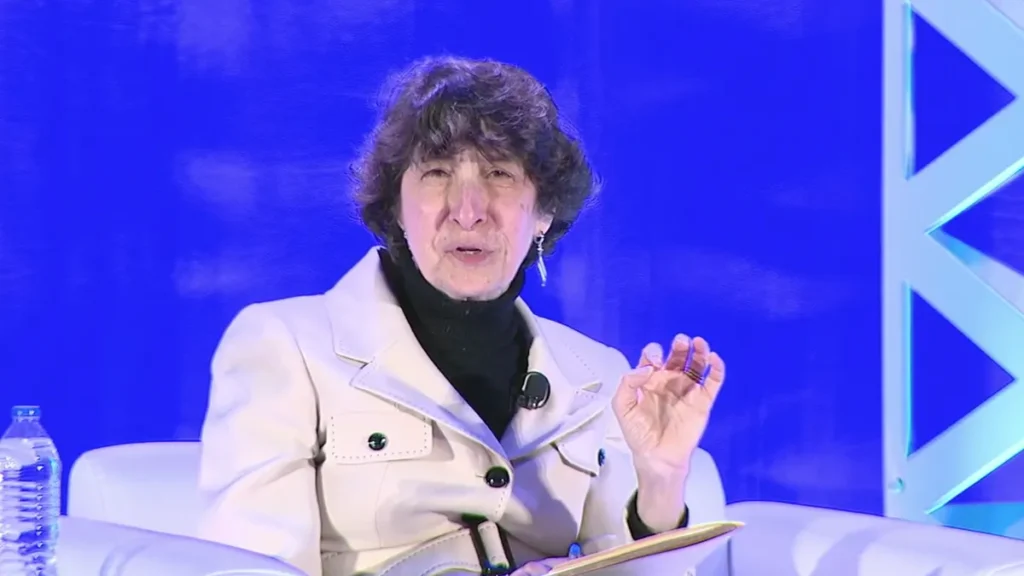
Washington D.C. – In a landmark decision that profoundly redefines the balance of power within the U.S. government, the Supreme Court today affirmed expansive presidential authority to remove commissioners of independent agencies, effectively curtailing the nearly century-old precedent set by Humphrey’s Executor v. U.S. The ruling led directly to Jocelyn Samuels, former Vice Chair of the U.S. Equal Employment Opportunity Commission (EEOC), ending her lawsuit against the Trump administration, which had challenged her abrupt firing. Both Samuels and dissenting Justice Sonia Sotomayor issued stark warnings regarding the consolidation of immense power within the executive branch, signaling a new era for regulatory governance and worker protections.
The Genesis of a Constitutional Clash: Samuels’ Lawsuit and the EEOC
Jocelyn Samuels, a distinguished legal professional with a long career dedicated to civil rights, served as Vice Chair of the U.S. Equal Employment Opportunity Commission, a pivotal independent agency tasked with enforcing federal laws prohibiting employment discrimination. Her tenure, like that of many career officials during the Trump administration, became a focal point of a broader struggle over the independence of these agencies. In January 2025, amidst a wave of dismissals targeting various independent agency officials, Samuels, along with former Commissioner Charlotte Burrows, was unceremoniously fired by the Trump administration. These removals were widely perceived by legal experts as a deliberate strategy to test the constitutional limits of presidential power over entities traditionally insulated from direct political control.
Samuels’ legal challenge, filed in April 2025, asserted that her firing was not only unlawful but also "undermined the EEOC’s historic independence and interfered with its statutorily mandated duties to protect workers from discrimination." Her complaint argued that Congress had not granted the President authority to remove EEOC commissioners at will, particularly given the quasi-judicial and quasi-legislative functions inherent to their roles. Attorneys representing Samuels referenced Humphrey’s Executor v. U.S., a 1935 Supreme Court opinion that had long served as a bulwark against unchecked presidential removal power over such independent bodies.
A Century of Precedent Under Scrutiny: Humphrey’s Executor and the Unitary Executive Theory
The Humphrey’s Executor decision stemmed from President Franklin D. Roosevelt’s attempt to remove William E. Humphrey, a conservative commissioner of the Federal Trade Commission (FTC), who had been appointed by a previous administration. The Supreme Court at the time unanimously ruled that the President could not remove an FTC commissioner purely for political reasons, establishing that Congress could create "independent" agencies whose heads were protected from at-will presidential removal. This protection was deemed essential for agencies performing functions that were not purely executive but rather quasi-legislative (rule-making) and quasi-judicial (adjudicating disputes), thereby ensuring their impartiality and long-term stability beyond the shifting tides of presidential politics.
For decades, Humphrey’s Executor has been a cornerstone of administrative law, underpinning the structure of numerous independent agencies vital to American governance, including the Securities and Exchange Commission (SEC), the National Labor Relations Board (NLRB), and the Consumer Financial Protection Bureau (CFPB). These agencies are designed to operate with a degree of insulation from direct political pressure, allowing them to make decisions based on expertise and established law rather than partisan whims. This independence is seen as crucial for maintaining public trust, ensuring fair and consistent enforcement, and promoting long-term regulatory stability.
However, the principle of agency independence has increasingly come under fire from proponents of the "unitary executive theory." This theory posits that the President possesses ultimate control over the entire executive branch, including independent agencies, and therefore has the inherent power to remove any executive official at will. Adherents to this theory argue that any legislative attempt to limit presidential removal power infringes upon the constitutional separation of powers and the President’s duty to "take Care that the Laws be faithfully executed." With a conservative-majority Supreme Court, legal experts had "long anticipated the challenge to Humphrey’s Executor and its potential overturning," as noted by a Seyfarth Shaw partner in January 2025. The firings of Samuels, Burrows, and other agency officials were seen as a deliberate strategic maneuver by the Trump administration to bring this long-simmering constitutional debate to a head.
Chronology of a Pivotal Legal Battle:
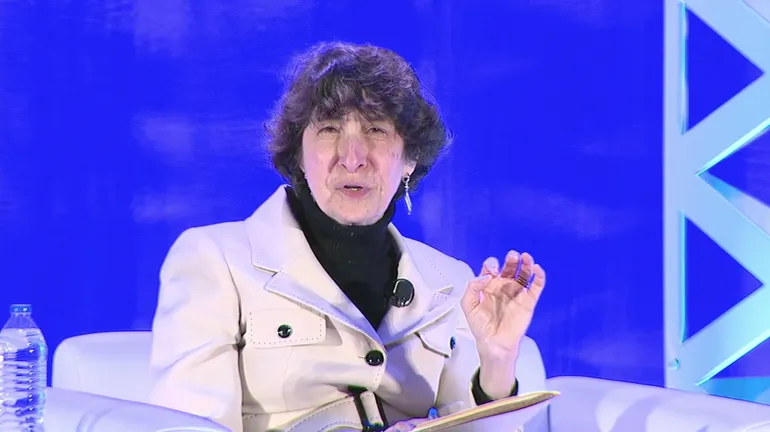
- February 28, 2023: Jocelyn Samuels, then Vice Chair of the U.S. Equal Employment Opportunity Commission, delivers a speech at a SHRM conference, highlighting her active role in the agency’s mission.
- January 2025: The Trump administration initiates a series of high-profile firings of officials from various independent agencies, including Jocelyn Samuels and Charlotte Burrows from the EEOC. This move is immediately flagged by legal analysts, such as those at Seyfarth Shaw, as a deliberate strategy to assert expansive presidential removal authority and challenge the constitutional limits on presidential power over independent agencies.
- April 2025: Jocelyn Samuels files her lawsuit, arguing that her termination was unlawful and violated the independence of the EEOC, citing Humphrey’s Executor v. U.S. as the foundational legal precedent protecting agency officials from at-will presidential removal.
- July 6, 2026: The Supreme Court issues its decision, widely referred to as the Slaughter decision (though the official name of the case is likely different, Slaughter is mentioned in the original context, implying it’s the shorthand for the ruling that redefined presidential removal powers). The ruling favors expansive presidential removal authority, leading Samuels to end her lawsuit.
The Supreme Court’s Verdict: A Shift in Power Dynamics
The Supreme Court’s majority opinion, penned by Chief Justice John Roberts, articulated a robust defense of presidential executive power. The ruling stated that Congress "may not deprive the president of his executive power by foisting independent agencies upon him." This perspective aligns squarely with the unitary executive theory, emphasizing that the President, as the sole head of the executive branch, must have ultimate control over those who execute federal law. The Court’s reasoning effectively narrows the scope of Humphrey’s Executor, reclassifying many "independent" agency functions as fundamentally executive and thus subject to presidential oversight, including the power of removal.

This decision marks a significant jurisprudential shift, moving away from a long-held understanding of administrative law that prioritized agency independence for certain functions. The majority opinion argued that the framers of the Constitution envisioned a more unified executive, and that Congress’s attempts to create pockets of executive power immune from presidential control were an overreach of legislative authority. The ruling is expected to have far-reaching implications, not just for the EEOC but for the entire landscape of federal regulatory bodies.
Dissenting Voices and Grave Warnings:
The Supreme Court’s decision was not unanimous, and Justice Sonia Sotomayor’s dissenting opinion offered a scathing critique of the majority’s reasoning and its potential consequences. Sotomayor warned that the decision "discards that democratic regime in favor of one that distorts the structure of Government to fit the majority’s theory of unitary, total executive control." She emphasized that the Court’s ruling would result in "a President who emerges with far greater power than ever before," fundamentally altering the delicate balance of powers established by the Constitution.
Justice Sotomayor’s dissent highlighted the historical rationale for independent agencies, arguing that their insulation from direct political pressure was a deliberate choice by Congress to ensure expert, non-partisan administration of complex laws. She expressed concern that politicizing these agencies by granting presidents at-will removal power would undermine their effectiveness, erode public trust, and make them susceptible to the whims of transient political agendas rather than consistent application of law.
Jocelyn Samuels herself echoed these concerns, specifically pointing to the "Trump-aligned changes at EEOC" that made the Slaughter decision "particularly damaging for workers." She cited a litany of concerning shifts:
- Abandonment of LGBTQI+ Employees: A rollback of protections and enforcement efforts for LGBTQI+ individuals, signaling a departure from previous interpretations of anti-discrimination laws. This could include withdrawing guidance, refusing to investigate certain complaints, or failing to litigate cases on behalf of these employees.
- Declined or Delayed Processing of Complaints: A significant increase in the rate at which complaints "clearly covered by the anti-discrimination laws" were either declined for investigation or subjected to undue delays. This could effectively deny justice to victims of discrimination by creating bureaucratic hurdles.
- "Fishing Expeditions" Conflicting with Procedural Constraints: The initiation of investigations or enforcement actions that lacked clear legal basis or went beyond the scope of established procedural norms, potentially harassing employers or diverting resources from legitimate complaints.
- Rescinded Guidance: The withdrawal of crucial guidance documents that employers relied on for compliance, but which "conflict with this Administration’s ideological agenda." This creates uncertainty for businesses and can leave workers vulnerable by removing clear standards for anti-discrimination practices.
These specific examples underscore the practical impact of a politicized EEOC. When an agency’s leadership can be replaced at will by a president with a differing ideological agenda, the consistent enforcement of laws, particularly those protecting vulnerable populations, becomes precarious. The implications for civil rights and workplace equity could be profound, potentially leading to a chilling effect on reporting discrimination and a weakening of enforcement mechanisms.

Broader Implications and the Future of Governance:
The Supreme Court’s decision to expand presidential removal authority has monumental implications for the landscape of American governance. Approximately 60 to 70 federal agencies operate with some degree of independence, many of which were structured to have commissioners or board members serving fixed terms, removable only for "cause." This ruling potentially strips that protection, making a wide array of regulatory bodies more vulnerable to direct presidential control.
- Politicization of Independent Agencies: Agencies like the Federal Reserve, the Federal Communications Commission, the National Transportation Safety Board, and others could see their independence significantly curtailed. This raises concerns about the potential for increased politicization of decision-making in critical areas such as monetary policy, financial regulation, environmental protection, and public safety. Instead of expert, long-term policy formulation, these agencies might become more responsive to short-term political objectives of the sitting president.
- Regulatory Instability: A president’s ability to swiftly replace agency heads could lead to rapid shifts in regulatory priorities and enforcement strategies with each new administration. This could create instability for businesses, complicate long-term planning, and potentially weaken the consistent application of laws.
- Checks and Balances: The decision reconfigures the delicate balance of power among the three branches of government. By enhancing executive power at the expense of legislative checks on that power (through the creation of independent agencies), it could lead to a less accountable and more centralized federal government. Legal scholars are already debating whether Congress will attempt to find new legislative mechanisms to reassert some form of agency independence or if the legislative branch will be forced to cede more authority to the executive.
- Impact on Worker Protections and Civil Rights: For agencies like the EEOC, the ruling directly impacts the ability to protect workers from discrimination. If the President can install leadership aligned with specific ideological viewpoints, enforcement priorities can shift dramatically. This could lead to a decline in proactive enforcement, a narrowing of interpreted protections, and a reduced capacity for victims of discrimination to seek redress. Civil rights advocates and labor organizations are likely to mobilize, expressing deep concerns about the potential erosion of hard-won protections.
- Public Trust: The perception of impartiality and non-partisanship is crucial for the public trust in regulatory bodies. If these agencies are seen as mere extensions of the President’s political agenda, their credibility and effectiveness in their mandated roles could be severely undermined.
In the wake of this historic Supreme Court decision, the United States stands at a crossroads regarding the structure and function of its administrative state. The ruling represents a triumph for proponents of a strong, unitary executive, but it simultaneously ignites profound concerns about the future of independent oversight, regulatory stability, and the protection of civil liberties in an increasingly powerful presidency. The full ramifications of this monumental shift will undoubtedly unfold in the coming years, shaping policy, politics, and the very fabric of American governance.