The rapid integration of Artificial Intelligence (AI) into leadership frameworks is presenting a significant challenge for many executives, with early adopters increasingly demonstrating a critical error: over-reliance on the technology. While the allure of AI-driven efficiency is undeniable, a growing consensus among seasoned leadership experts suggests that mistaking technological prowess for genuine leadership effectiveness is a fundamental miscalculation. This trend, observed across various industries as organizations race to implement AI strategies, highlights a crucial distinction: true leadership amplifies human capabilities, it does not seek to replace them. The most successful leaders are those who understand that while AI offers unparalleled speed and analytical power, it cannot replicate the nuanced wisdom, ethical judgment, and authentic connection that define impactful leadership.
The imperative to adopt AI has intensified over the past five years, driven by a global market projected to reach trillions of dollars by the end of the decade. Companies worldwide are investing heavily in AI solutions, from predictive analytics and automation to personalized customer engagement and talent management. This technological surge has understandably created a pressure to integrate AI into every facet of business operations, including leadership. However, this rush to adopt has, in some instances, overshadowed a deeper understanding of what constitutes effective human leadership.
The Illusion of Algorithmic Superiority
At the core of this emerging leadership paradox lies the misconception that AI can unilaterally enhance managerial effectiveness. While AI excels at processing vast datasets, identifying patterns, and automating routine tasks, its limitations become apparent when confronting the inherently human aspects of leadership. The drive for efficiency, often championed by AI proponents, can inadvertently lead to a de-emphasis on the very qualities that foster trust, inspire loyalty, and drive long-term organizational success.
AI Delivers Speed, Not Wisdom:
One of the primary areas where AI’s limitations are exposed is in the realm of decision-making. AI algorithms can analyze market trends, financial data, and operational metrics with unprecedented speed, providing leaders with a wealth of information. However, the ability to process data rapidly does not equate to the capacity for wise judgment. Wisdom in leadership often involves navigating ambiguity, understanding unstated stakeholder needs, and making decisions that align with deeply held organizational values – elements that are intrinsically human and cannot be fully automated. For instance, a recent study by the Harvard Business Review found that companies with leaders who demonstrated high levels of emotional intelligence, a trait heavily reliant on human empathy and understanding, reported higher employee engagement and profitability, even when controlling for technological adoption rates.
Human Judgment Navigates Gray Areas:
Complex ethical dilemmas and nuanced organizational challenges rarely fit neatly into algorithmic frameworks. While AI can provide data-driven insights, it lacks the capacity for moral reasoning, ethical intuition, and the lived experience necessary to navigate situations involving conflicting values or intangible human factors. Effective leaders leverage AI as a powerful input for their decision-making processes, but they retain the ultimate responsibility for applying their experience, intuition, and ethical compass to arrive at sound conclusions. This reliance on human judgment is particularly critical in areas such as crisis management, interpersonal conflict resolution, and strategic pivots that require foresight beyond data extrapolation. A survey conducted by Deloitte in 2023 revealed that organizations prioritizing human oversight in AI-driven decision-making were 20% more likely to report successful ethical AI implementation and avoid reputational damage.
Inspiration Requires Authentic Connection:
The ability to motivate and inspire teams is a cornerstone of effective leadership, and this fundamentally relies on authentic human connection. AI can assist in crafting communications, personalizing messages, and even predicting employee sentiment based on data. However, it cannot replicate the genuine emotional resonance that stems from a leader’s personal presence, authentic passion, and ability to build rapport. Leaders who effectively integrate AI understand that technology can inform their communication strategies but cannot replace the power of face-to-face interaction, empathetic listening, and the shared experience of working towards a common goal. The phenomenon of "disengaged remote work," which saw a significant uptick during the early pandemic without adequate human leadership intervention, underscores the continued need for direct, empathetic leadership to foster team cohesion and morale.
Empathy Cannot Be Automated:
Understanding and responding to the emotional needs of team members is a hallmark of empathetic leadership. AI can analyze behavioral data, communication patterns, and even physiological indicators to provide insights into employee well-being. However, the ability to truly empathize – to feel with another person and respond with genuine care and understanding – is an exclusively human capacity. Forward-thinking leaders use AI to gain a more comprehensive understanding of their teams, but they recognize that building trust and fostering a supportive environment requires the application of human emotional intelligence, not just data interpretation. Research published in the Journal of Applied Psychology has consistently linked empathetic leadership with reduced employee burnout and increased job satisfaction, highlighting the irreplaceable value of human connection.
Consistency Builds Trust, Not Algorithms:
Trust, the bedrock of any successful leader-team relationship, is forged through consistent, values-based actions, not through algorithmic outputs. AI can be instrumental in tracking performance metrics, identifying operational inefficiencies, and forecasting potential opportunities. However, the reliability and predictability that build deep trust stem from a leader’s unwavering commitment to their values, their people, and their promises. Employees look to their leaders for stability, fairness, and a clear moral compass, qualities that are demonstrated through consistent behavior and genuine care, not through automated processes. A 2022 study by the Edelman Trust Barometer found that consistent ethical behavior by leaders was the single most important factor influencing public trust in organizations.

Vision Emerges From Human Insight:
The creation of compelling organizational visions, those that inspire innovation and drive long-term strategy, is rooted in human insight and aspiration. AI can provide invaluable support through market analysis, trend forecasting, and scenario planning. However, the ability to synthesize complex data, understand latent human desires, and translate abstract concepts into a clear, inspiring direction is a uniquely human endeavor. Innovative leaders harness AI to inform their strategic thinking but ultimately rely on their own creativity, foresight, and understanding of the human condition to craft visions that resonate and mobilize. The history of transformative business leaders, from Steve Jobs to Elon Musk, often points to their ability to articulate a human-centric vision that went beyond mere market prediction.
Cultural Understanding Transcends Data:
Navigating the intricate landscape of organizational culture, including its unspoken norms, political dynamics, and interpersonal nuances, requires sophisticated human skills that AI cannot replicate. While AI can analyze communication patterns and team dynamics, it lacks the intuitive understanding of social cues, emotional intelligence, and cross-cultural sensitivity necessary for effective navigation. Responsible leaders utilize AI to gain objective insights into team interactions, but they rely on their interpersonal skills, empathy, and cultural awareness to build cohesive and productive work environments. The complexities of global business operations, where cultural misunderstandings can derail even the best-laid strategies, underscore the continued primacy of human relational skills.
Adaptability Requires Human Creativity:
In today’s rapidly evolving business environment, adaptability is paramount. AI can provide real-time feedback, rapid analysis, and optimize workflows. However, true strategic adaptability stems from human creativity, flexible thinking, and the ability to improvise and innovate beyond predefined algorithmic responses. Agile leaders leverage AI as a tool for rapid assessment and iteration, but they ultimately rely on their own ingenuity and problem-solving skills to chart new courses and overcome unforeseen challenges. The ability to pivot in response to unexpected market shifts or technological disruptions often depends on human ingenuity that goes beyond predictive modeling.
The Synergy of AI and Human Leadership
The leaders who are truly excelling in the age of AI are not pitting technology against human skills. Instead, they are forging a powerful synergy between the two, creating leadership approaches that are both exceptionally efficient and profoundly effective. These leaders understand that AI can be a potent tool for eliminating guesswork, automating repetitive tasks, and providing data-driven insights, thereby freeing up their human capacity to focus on the critical elements that drive loyalty, foster innovation, and ensure sustainable performance.
This nuanced approach to AI integration is fundamentally reshaping the definition of leadership efficiency. It is no longer solely about processing decisions at breakneck speed or optimizing workflows through automation. True leadership efficiency, in this evolving landscape, is about achieving lasting results, cultivating thriving teams, and building organizational cultures that attract and retain exceptional talent. AI can significantly enhance these outcomes by providing powerful analytical and operational support, but it cannot, in itself, create the human-centric foundations upon which enduring success is built.
The ultimate takeaway for leaders navigating this new frontier is clear: artificial intelligence should be leveraged to augment and amplify their inherently human qualities, not to diminish them. The goal is to become more human, not less; more effective, not insufficient; more connected, not isolated; and more insightful, not merely reactive. By striking this delicate balance, leaders can harness the transformative power of AI while preserving and strengthening the essential human elements that define great leadership and drive profound, lasting impact.
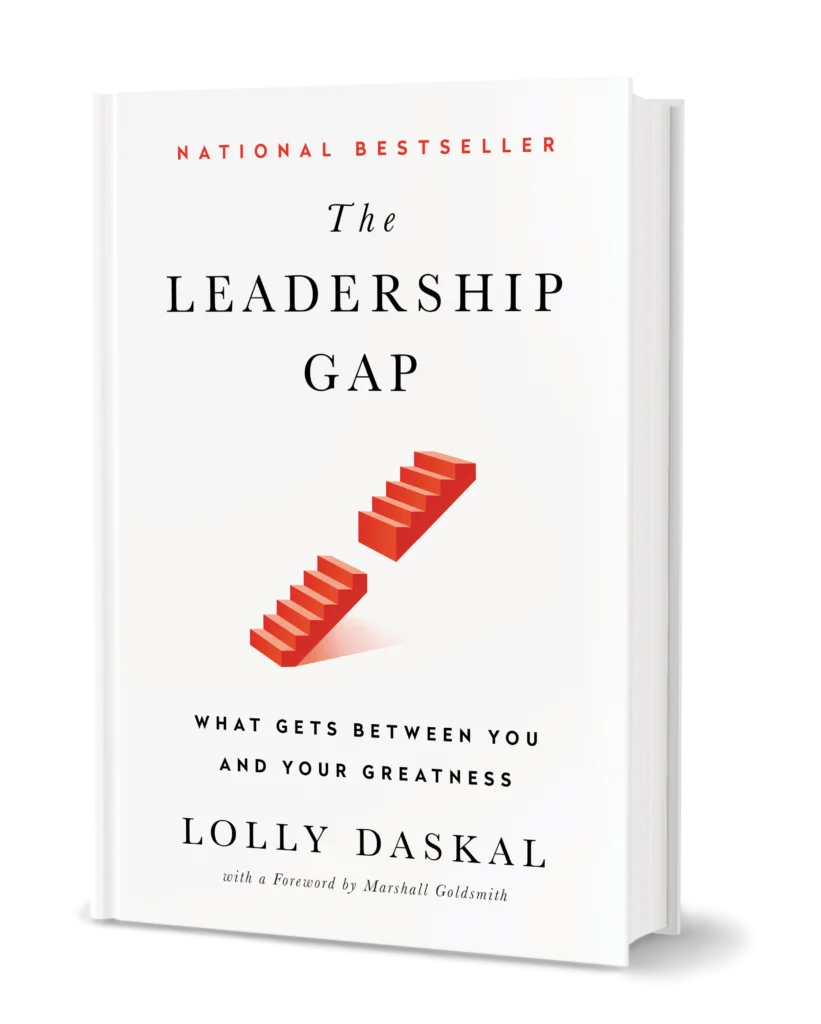
The Leadership Gap: What Gets Between You and Your Greatness
This discussion on the human element of leadership is further explored in Lolly Daskal’s national bestseller, "The Leadership Gap: What Gets Between You and Your Greatness." Drawing from decades of experience coaching executives worldwide, Daskal identifies the critical values and traits that propel leaders to success, but also the common pitfalls that can lead to performance plateaus and eventual failure. The book delves into how executives can recognize and overcome these internal barriers, emphasizing that true leadership growth often requires introspection and a conscious cultivation of human-centric qualities. Daskal’s work underscores that while external tools and technologies, including AI, can offer advantages, the core of enduring leadership lies within the individual’s ability to understand themselves and connect authentically with others. The book is available for purchase through major retailers.
Lolly Daskal, founder and CEO of Lead From Within, is a globally recognized executive leadership coach with extensive cross-cultural expertise spanning 14 countries and hundreds of companies. Her proprietary leadership program is designed to catalyze leaders seeking to enhance performance and make a significant positive impact. Daskal has been recognized as a Top-50 Leadership and Management Expert by Inc. magazine and honored as "The Most Inspiring Woman in the World" by Huffington Post. Her writings have been featured in prestigious publications such as Harvard Business Review, Inc.com, Fast Company, and Psychology Today.