As artificial intelligence rapidly reshapes the corporate landscape, a critical talent paradox is emerging. While AI can automate tasks and generate initial outputs with unprecedented speed, the true value in an AI-augmented future will reside not in the ability to prompt machines, but in the human capacity to discern when AI is confidently wrong and to assume responsibility for the ensuing decisions. This fundamental shift is forcing CEOs to re-evaluate their workforce strategies, moving beyond the acquisition of technical AI specialists to cultivate employees who possess adaptability, critical judgment, and a proactive mindset.
The challenge is vividly illustrated by the experience of Eric Vaughn, CEO of IgniteTech. Vaughn aimed to transform his company into an AI-first organization by upskilling his existing workforce. Despite a year-long initiative that included significant financial investment, the engagement of outside experts like Ethan Mollick from the Wharton School, and dedicating 20% of payroll to AI learning, the effort fell short. "If this were a skills gap, that year would have closed it. It didn’t," Vaughn stated. He observed a division within his team, not based on aptitude, but on belief. Some employees resisted the change, others offered superficial agreement without action, and a third group genuinely struggled to adapt. Ultimately, Vaughn found it necessary to replace approximately 80% of his employees. "Skills, you can teach in a quarter. Belief, you cannot install," he concluded, highlighting the distinction between acquiring technical proficiency and fostering an ingrained willingness to embrace transformation.
The Evolving Talent Landscape: Beyond AI Engineers
Vaughn’s experience, while dramatic, underscores a broader challenge confronting CEOs across industries. The demand for AI engineers and data scientists has become a familiar narrative, but the current talent crisis extends far beyond these specialized roles. Artificial intelligence is fundamentally altering the task composition within a vast array of professions, from software development and finance to customer service and sales. Data from Chief Executive‘s Financial Performance Benchmarks survey earlier this year reveals a stark reality: 31% of companies that reduced frontline headcount in 2025 cited AI as a contributing factor, making it the third most common reason for workforce reductions in this sector.
"If anybody says AI is not replacing people, they’re lying to you," commented Dave Osborne, CEO of Conga. "The question is what do you do with that efficiency." This sentiment is echoed by a contrasting trend observed in Chief Executive‘s 2026 Confidence Index surveys, where the proportion of companies planning to increase headcount averaged 15% higher than in 2025. The immediate pressure is to find individuals who can effectively utilize AI tools. However, the more profound and enduring challenge lies in identifying and nurturing employees who can reimagine workflows, exercise sound judgment, and critically assess AI-generated outputs that may appear convincing but are fundamentally flawed.
The core issue, as Vaughn articulated, is that past performance is an increasingly unreliable indicator when the nature of work itself is in rapid flux. "Some of the people we lost were genuinely excellent at the job as it existed in 2022," he lamented. "That was the problem. They were excellent at a job that no longer exists." This realization is unsettling for many leaders aiming to preserve institutional knowledge while driving AI-enabled growth. The central talent question heading into 2027 is whether organizations can cultivate the adaptability, judgment, and managerial depth necessary for continuous self-redesign, or if their strongest performers will remain optimized for a receding business model.
Despite the pervasive impact of AI on the workforce, only 13% of 285 respondents in Chief Executive‘s August CEO Confidence Index identified talent and organizational capabilities as one of their top two focus areas for the remainder of 2026. Nevertheless, workforce concerns permeated other survey responses: 27% cited talent shortages or workforce constraints as a major obstacle to achieving their goals, 26% pointed to workforce strength and productivity as key drivers of success, and 22% flagged workforce availability and labor costs as significant external risks. This dichotomy suggests a disconnect between the perceived urgency of AI’s impact and the strategic prioritization of talent development.
Rethinking Recruitment: Hiring for Adaptability, Not Just Experience
The pressure to adapt can lead to a simplistic view of the problem as merely a hiring challenge: identify future capabilities and recruit individuals who already possess them. However, AI is transforming jobs at a pace that outstrips most companies’ ability to replace their existing workforce. A more sustainable competitive advantage, according to industry leaders and experts, will stem from identifying individuals capable of evolving with their roles, both from within and outside the current employee base.
Stop Hiring for Yesterday’s Job
Redesigning roles in the age of AI necessitates a clear understanding of what tasks technology can assume, where human judgment remains indispensable, and who bears accountability when AI errs. Few organizations feel they have adequately addressed this. A Mercer Global Talent Trends 2026 study, surveying nearly 12,000 executives, HR leaders, investors, and employees, found that only 32% of C-suite leaders believe their workforce can effectively integrate human and machine capabilities.
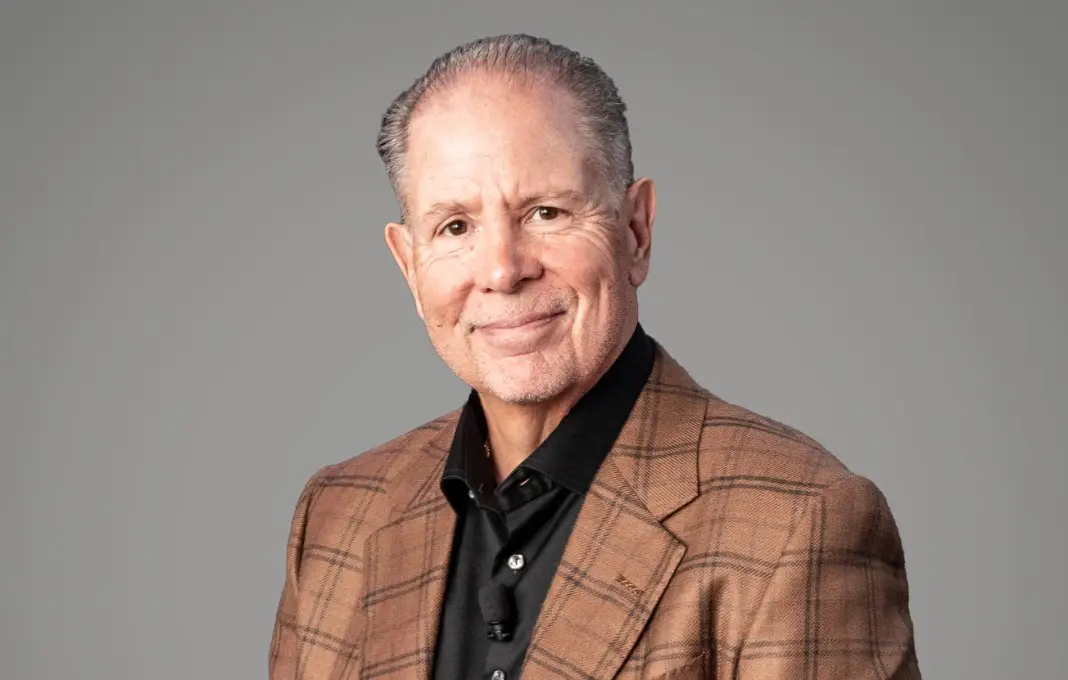
"Most job listings describe how work has been done, not how it will be done," observed Don Spear, CEO and co-founder of the workforce-learning platform OpenSesame. "That is becoming a real problem because AI can change the task mix inside a role in a matter of months." At OpenSesame’s AI Innovation Lab, AI agents assist with coding and testing, shifting engineers’ focus towards customer problems, product decisions, and release strategies. Spear noted, "We are not measuring the engineer’s contribution by the amount of code written. We care about whether we solved the right problem and produced something useful."
The broader integration of AI hinges on the deliberate redirection of resources freed by automation towards strategic capabilities. Matt Murray, CEO of Ember Technologies, frames this as disciplined allocation. "Managing and allocating resources has to be tied back to the company’s vision, or ‘North Star,’" Murray explained. "What are the company’s goals, and what are the resources needed to achieve them?" As AI has enhanced efficiency in back-office and support functions, Ember has increased investment in engineering and marketing, areas Murray identifies as crucial for future growth.
This strategic allocation fundamentally alters the hiring equation. Once companies define the capabilities they need to develop and the tasks AI can absorb, they must move beyond the traditional reliance on credentials and outdated job descriptions. Organizations that continue to hire primarily based on degrees, titles, and years of experience risk acquiring résumés for work that is already being reconfigured. Abhishek Shah, CEO of Testlify, advocates for a more granular approach to capability assessment. "You stop hiring against a title and start hiring against a capability map, which describes the task that has to get done rather than the degree or the years that suggest somebody might do it," Shah stated. "Managers have to interview for evidence, work samples, and structured scenarios, instead of reading pedigree."
The Premium on Practical AI Expertise
Nowhere is this hiring discipline more critical than in roles requiring genuine AI expertise, where market demand has already driven up costs. PwC’s 2026 Global AI Jobs Barometer found that jobs requiring specific AI skills are growing nearly eight times faster than the overall job market, with an average wage premium of 62%. In such a competitive environment, inflated credentials can lead to costly hiring mistakes.
"The hardest hires are people who have actually run AI in production—engineers who’ve had a model in front of real users, at real volume, with real consequences when it gets something wrong," said Shay Levi, CEO of Unframe, a managed AI platform for global enterprises. Levi’s simple test for distinguishing practical AI proficiency from theoretical knowledge is direct: "The way we tell the two groups apart is simple: ask them what broke. What shipped, what broke immediately, how they diagnosed it."
Assessing a candidate’s experience with AI failures typically takes minutes. However, fundamentally overhauling an organization’s evaluation processes is a more time-consuming endeavor. While an estimated 70% of employers claim to practice skills-based hiring, a Harvard Business School and Burning Glass Institute examination of companies that publicly removed degree requirements found that this change impacted fewer than one in 700 hires. A staggering 45% of these companies adopted the policy in name only, leaving their screening habits unchanged. The more challenging aspect lies with the individuals making the hiring decisions. "The platforms and the AI screening are the easy part," Shah remarked. "Changing how managers judge people takes time."
The Invaluable Asset of Human Judgment
The judgments required in an AI-enabled workplace increasingly depend on traits that defy simple quantification. Marne Martin, CEO of Emburse, emphasizes the importance of adaptability, agility, a learning mindset, and the ability to collaborate across traditional boundaries, alongside experience and past performance. In rapidly evolving environments, she noted, leaders must be adept at "finding clarity in the midst of ambiguity, thoughtfully challenging assumptions, and confidently navigating their teams through periods of change."
AI can rapidly generate analyses, code, research, and initial drafts, but it can also produce plausible yet incorrect outputs. The individuals who will deliver the greatest value in an AI-augmented organization will be those capable of scrutinizing AI-generated responses, identifying missing context, and taking ownership of the subsequent decisions.
The labor market is already recognizing this shift. PwC’s analysis of U.S. data indicates that entry-level roles most exposed to AI are seven times more likely to require traditionally senior-level skills such as judgment and leadership. These roles have grown by 35% since 2019, while other entry-level positions have declined by 10%. The work that remains resilient to automation is precisely that which demands a verdict. "Judgment of AI’s results, not AI prompting, is the key skill," Spear asserted. "AI can give you an answer that looks right, sounds right, and is still wrong in a way that matters."

Eric Vaughn actively seeks this discernment in his interviews. He believes anyone can prompt an AI, but "the people I want know when the model is confidently wrong and redirect it." He recounted an instance where an AI spent three hours on a fix that a competent developer would have identified in two minutes, simply because the correct approach had not been explicitly communicated. "The person who instinctively supplies that direction is showing me judgment, and judgment is what makes a leader," Vaughn stated.
In critical situations, a communications leader might leverage AI for analysis or a first draft, but the ultimate decision requires a human assessment of stakeholder expectations, organizational culture, trust, and risk. "Some of that is culture, some of it is instinct, some of it is AI-generated insight, some of it is debate with the right people in the room and looking at the analysis," explained Janice Kapner, founder and CEO of Kapner Perspective Group and former chief communications and corporate responsibility officer at T-Mobile. "Then place your bet on the right way forward."
Crucially, accountability for that bet must rest with a human, as AI cannot absorb the consequences of errors. Vince De Leon, CEO of Scrubbed, articulated this clearly: "If you review something and approve it, you own that approval." Technology cannot absolve individuals of responsibility.
Judgment also extends to portfolio-level decisions, not just individual actions. This underscores the necessity for CEOs to resist treating every AI use case as inherently strategic. Osborne advises leaders to first define their business objectives before determining where to deploy AI. "Go back to: What is our strategic plan? What are our objectives underneath or our actions underneath that strategic plan? Can you use AI to do those things?" he urged. Without this discipline, he warned, companies risk investing years in developing solutions for problems that don’t exist.
Addressing the Succession Pipeline Challenge
Entry-level positions have historically served as the crucible where employees learn fundamental business mechanics, observe decision-making processes of experienced professionals, and develop the judgment necessary for future management roles. Automating a significant portion of this work without adequately replacing the learning experience creates a succession risk that may not become apparent for years.
The entry-level job market has already contracted significantly. Data from Cadient, reported by Forbes in August, indicates a 73% drop in salaried job openings accepting candidates with no prior experience over the past four years, falling to approximately one opening in 50 from one in 15 in 2022. Unemployment among recent college graduates now stands at 5.6%, according to the Federal Reserve Bank of New York, exceeding the overall unemployment rate of 4.2%—an inversion that is uncommon.
Whether AI is the sole driver of this contraction is a subject of debate. Peter Cappelli, George W. Taylor Professor of Management and director of the Center for Human Resources at Wharton, argues that the hiring slowdown, beginning in 2025, was primarily due to pressure from Wall Street to curb perceived corporate complacency following the pandemic. He notes that consulting firms, highly reliant on junior hires to supervise new ones, have since re-entered the market. Cappelli remains unconvinced that a thinner junior layer will necessarily lead to the succession crisis feared by many CEOs, asserting that a difference of one or two years of experience is rarely critical. The issue, he suggests, arises only when employers collectively cease hiring, as occurred after 2009, a period from which the economy eventually recovered.
However, Osborne perceives a significant risk if CEOs are not deliberate about their talent strategies. "If you’re not careful, you could turn around and go, ‘Holy—I don’t have any succession planning for this organization. Like zero.’ I’ve got the highest level, but I don’t have anybody down here, and now I’ve got a talent problem."
The redesign of work is only part of the solution. As AI takes over aspects of junior-level tasks, the reasoning processes that juniors once absorbed through observation must now be explicitly articulated. "Managers need to plug that gap by making their reasoning visible, explaining the tradeoffs behind decisions, and giving junior employees opportunities to practice their judgment rather than simply handing them the final answer," advised Spear.

This presents a considerable demand on an already strained management layer. Gallup’s State of the Global Workplace 2026 report indicates a decline in manager engagement from 31% in 2022 to 22% in 2025, while engagement among individual contributors remained largely stagnant. Managers have lost the engagement premium they once held over their direct reports, a trend Gallup attributes to organizational flattening and expanded spans of control. This same management layer is pivotal in determining AI adoption rates; Gallup’s Q1 2026 U.S. workforce survey identified direct manager championship of AI as the strongest predictor of employee adoption, second only to technical integration.
Kapner acknowledges the trend toward flatter organizations but cautions that such structures require robust operating infrastructure, clear ownership, and defined decision-making authority. "Ambiguity kills and requires escalation. Thus, more senior management. So flatter is a goal, but other fundamentals need to be in place," she stated.
Managers are also absorbing employee anxiety about job security due to AI, a factor that most companies are not adequately addressing. Mercer’s findings reveal a sharp decline in employees reporting they are thriving at work, from 66% in 2024 to 44% in 2026—a rate lower than during the pandemic. Concurrently, concerns about job loss to AI increased from 28% to 40%. A manager tasked with developing the next generation of leaders, while navigating this anxiety and managing a wider span of control, faces unprecedented challenges with diminished support. Yet, this manager is also best positioned to identify potential successors.
Cultivating the Internal Bench for Future Leadership
Identifying future leaders should not be a reactive process triggered by an opening. Marne Martin emphasizes that strong indicators include demonstrated ownership and the desire of others to work with or for an individual. "Future senior leaders do not wait for a title or permission to lead," she asserted. "They take initiative when they see a problem by bringing the right people together to make progress on a solution and to take responsibility for the outcome."
Companies must foster internal mobility to leverage these emerging leaders. At Rayburn Electric Cooperative, CEO David Naylor has integrated internal mobility into the operational framework. "Thirty percent of our employees are working in jobs that they weren’t originally hired to do," he reported. The cooperative proactively reassigns employees to roles where they are a better fit, continuously assessing their growth potential.
Naylor recounted the case of a chemical engineer, returning to the workforce after raising three children, who was placed in charge of campus custodial and field operations at a utility with minimal chemical exposure. This individual became one of the company’s most effective managers. Naylor’s rationale for this seemingly unconventional move was simple: "She cares."
Naylor’s approach emphasizes creating opportunities for employees to demonstrate their capabilities before officially assuming new roles. "In a perfect world, we like to test them and let them have that responsibility before they actually get the title," he explained. "We’ll put them in those positions to say, ‘Hey, we think you can do this. Let’s try this out.’" This proactive approach ensures a ready internal bench, fulfilling Naylor’s philosophy of "making sure our bench is ready before the seat’s empty."
This strategy necessitates a more dynamic approach to succession planning than a mere annual exercise or a list of potential candidates for specific roles. Martin advocates for "an active and ongoing conversation about skills and capabilities, readiness, and future-looking experience tied to performance, interactions, tests, coaching, and observation."
Few organizations have achieved this level of talent velocity. LinkedIn data reveals that 86% of companies struggle to identify existing skills, develop new ones, or deploy personnel quickly enough to meet evolving demands. This gap has tangible consequences: employees remain 41% longer at companies with high internal mobility compared to those with low mobility.

Noelle London, founder and CEO of workforce-insights platform Illoominus, suggests that effective talent conversations require a foundational understanding of critical roles—those essential for business continuity and areas of vulnerability. This should be complemented by a comprehensive skills inventory, mapped to future needs, and an assessment of high-potential employees capable of filling those roles.
Cappelli contends that many companies overlook their existing talent, opting for external hires. He argues that resources allocated to external recruitment could be more effectively invested in internal development. He notes that while marginal salary increases may not retain top performers, offering more significant work, development opportunities, and internal promotions can be far more impactful. "If you have stars, give them more important work to do, develop them, promote them from within, and stop so much outside hiring."
The practical question for CEOs is whether their talent systems can identify individuals with adjacent skills and a demonstrated capacity for learning before the business is compelled to undertake costly external searches. Spear summarizes this dilemma: "Does someone inside the company already have the judgment, business knowledge, and adjacent skills to become proficient by the time we need the capability? If the answer is yes, develop that person. Hire externally when the expertise is truly new, highly specialized, or needed sooner than an internal candidate could reasonably be ready."
However, development initiatives are only effective if employees perceive a credible pathway for growth beyond traditional upward mobility within a shrinking hierarchy. Kim Lawton, co-founder and CEO of Inspira Marketing and Enthuse Marketing, emphasizes that growth must encompass more than just titles, promotions, or raises. "Growth is also showing up every day, feeling like you’re moving the needle, and knowing it matters." Her company fosters this by offering strengths-based development, peer learning, leadership-led sessions, and support for external learning opportunities.
For CEOs balancing numerous priorities, a final data point from Chief Executive‘s August survey warrants consideration: nearly 90% of CEOs who identified talent as a top priority anticipated revenue growth this year, compared to just 73% of those who did not. Furthermore, 63% expected to increase headcount, versus 44% of their counterparts. While causality may flow in both directions, and growing companies naturally focus more on talent, the pattern is compelling. Leaders who are actively planning for future leadership are, by current indicators, the ones with the most robust and expanding enterprises.