
The quest to understand and replicate organizational success often leads to a singular focus: the team. But what truly distinguishes a high-performing team from its counterparts? It’s a question that has long intrigued business leaders and researchers alike, revealing that assembling a group of talented individuals is merely the starting point. The true differentiator lies in the meticulous cultivation of specific characteristics, behaviors, and best practices that foster an environment of sustained excellence. This article delves into the multifaceted nature of high-performing teams, exploring their defining attributes, the strategic advantages they confer, and the actionable steps organizations can take to cultivate such powerhouses.
At its core, a high-performing team is a dynamic collective where individuals synergize their skills, perspectives, expertise, and complementary strengths to surmount formidable challenges and achieve extraordinary outcomes. These teams operate with an intense focus on clear, outstanding results, underpinned by a bedrock of trust, collaboration, and an unwavering shared sense of purpose. This synergy isn’t an accident of fate; it’s the direct result of strategic performance management, designed to empower individuals to collaborate, innovate, and collectively achieve their zenith.
The Essential Role of High-Performing Teams in Organizational Success
The bedrock of any thriving organization is its people. High-performing teams are the engines that drive innovation, execute complex projects, and relentlessly pursue ambitious goals. When teams are not only aligned in their mission but also benefit from consistent feedback, effective coaching, and the necessary resources, they possess the capacity to dismantle obstacles and deliver impactful results. The cascading effect of such teams extends beyond immediate deliverables, influencing organizational culture, employee engagement, and long-term strategic advantage. Research consistently indicates that highly engaged employees, often found within high-performing teams, are significantly more productive and invested in their work, contributing to a virtuous cycle of success.
Key Characteristics Defining High-Performing Teams

While the specific manifestations of high-performing teams can vary across industries and organizational contexts, a set of common characteristics consistently emerges, acting as the blueprints for their success.
-
Alignment with Organizational Mission: A fundamental hallmark of high-performing teams is their profound understanding of how their collective efforts contribute to the overarching mission and strategic objectives of the organization. When employees grasp the "why" behind their work, their engagement and productivity naturally escalate. This shared vision acts as a powerful motivator, ensuring that all team members are working in concert to support a unified purpose. This deep connection between individual roles and organizational goals fosters a sense of meaning and impact, driving commitment and discretionary effort.
-
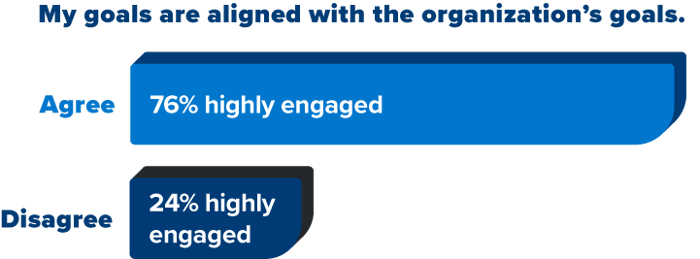
Clear, Aligned Goals: High-performing teams operate with an unambiguous focus, purpose, and set of priorities. They meticulously establish team and individual goals that directly support their shared vision. Crucially, these goals are not only aligned but also clearly defined, ensuring that every member understands their specific responsibilities and the path to achieving desired outcomes. Quantum Workplace research substantiates this, revealing that employees are over three times more likely to be engaged when their individual performance goals are strategically aligned with broader organizational objectives. This clarity minimizes ambiguity and maximizes efficient execution.
-
Defined Roles and Responsibilities: To mitigate unnecessary conflict and ensure smooth operations, high-performing teams meticulously define each member’s role and responsibilities. This clarity prevents overlap, clarifies accountability, and ensures that tasks are allocated to individuals best suited for them. By establishing clear boundaries and expectations, teams can focus their energy on productive collaboration rather than navigating interpersonal friction.
-
Clear and Respectful Communication: The absence of effective communication is a swift pathway to performance degradation. High-performing teams establish explicit expectations and cultivate robust communication channels. This ensures that team members know precisely when, where, and with whom to communicate, minimizing misunderstandings and fostering a collaborative environment. While conflict is an inherent part of team dynamics, these teams possess the adeptness to navigate disagreements constructively, transforming potential obstacles into opportunities for growth.
-
Embrace of Two-Way Feedback: A culture of continuous improvement is powered by open and constructive two-way feedback. Team members within high-performing units feel empowered to share their insights, concerns, and suggestions without apprehension. Managers actively solicit feedback, valuing employee perspectives and leveraging these insights to drive collective advancement. This feedback-driven approach not only enhances individual performance but also fortifies team cohesion, adaptability, and fosters a fertile ground for further development opportunities.
-
Strategic Management of Work and Deadlines: High-performing teams possess a keen ability to prioritize effectively, dedicating their efforts to tasks that yield the highest impact. They understand the nuanced differences between importance and urgency, adeptly managing projects based on their strategic value and alignment with organizational goals. This focus ensures that all work contributes directly to driving growth and achieving overarching objectives.
-
Manager-Employee Alignment and Connection: The cornerstone of high-performing teams is the strong connection between managers and employees, often facilitated through regular one-on-one meetings. These sessions transcend mere status updates, serving as dedicated spaces for in-depth discussions on goals, progress, and challenges. Managers leverage these interactions to understand employee aspirations, provide targeted guidance, and offer crucial support. This nurtured relationship cultivates a profound sense of belonging and commitment, vital for team success.
-
Mutual Trust and Respect: The high level of collaboration and teamwork essential for peak performance is inextricably linked to a foundation of trust and mutual respect. Members of high-performing teams value each other’s contributions and trust their colleagues to fulfill their duties. They embrace diversity of thought and experience, recognizing that these differences are a source of collective strength. This culture of trust enables open dialogue, psychological safety, and a willingness to take calculated risks.
-
Celebration of Success and Recognition of Contributions: Recognizing that collective effort drives success, high-performing teams actively celebrate their achievements and acknowledge each member’s contributions. This practice fosters a robust culture of collaboration, ensuring that individuals feel valued and connected to the team’s victories. Research consistently underscores that while ratings, rankings, and pay-for-performance metrics may not always drive engagement, genuine recognition demonstrably does. Highly engaged employees often report a strong belief that their contributions to organizational success will be acknowledged.
-
Commitment to Continuous Learning: Even the most accomplished teams recognize the imperative of continuous growth. High-performing teams actively seek feedback, learn from their missteps, and identify opportunities for development. By nurturing a feedback-rich environment and investing in employee development, they propel their own growth, enhance efficiency, and foster greater innovation.
-
Balancing Short-Term Priorities with Long-Term Growth: A critical differentiator for high-performing teams is their ability to strike a harmonious balance between achieving immediate objectives and investing in sustained long-term growth. While focused on delivering current results, they concurrently prioritize learning, skill development, and career progression to maintain a competitive edge. Strategic tools like talent reviews and succession planning are integral to this approach, ensuring a robust pipeline of future leaders. By prioritizing both immediate wins and sustainable expansion, these teams are exceptionally positioned to adapt, innovate, and excel in an ever-evolving business landscape.
What Sets High-Performing Teams Apart?
The pursuit of excellence compels high-performing teams to transcend conventional approaches. They consistently achieve remarkable results by differentiating themselves in several key areas:
-
Embracing Innovation and Adaptability: In an environment where change is the only constant, high-performing teams do not shy away from it. Instead, they actively challenge the status quo, seek novel ideas, champion innovation, and adapt swiftly to evolving circumstances. This inherent flexibility and openness to change enable them to remain agile, resilient, and adept at seizing emerging opportunities. To foster this environment, these teams require the autonomy, buy-in, tools, and technology to experiment, learn, and iterate, often measured by their organizational impact rather than arbitrary key performance indicators.
-
Cross-Functional Collaboration: Organizational silos are a formidable barrier to progress, but they are no match for high-performing teams. These teams are adept at dismantling silos, actively fostering collaboration across departments, disciplines, and functional areas. They cultivate environments where knowledge is freely shared, individual strengths are leveraged, and shared goals are pursued with unified purpose. This collaborative spirit amplifies the team’s collective impact and strengthens interdepartmental relationships.
-
Focus on Recognition and Achievements: High-performing teams understand that meaningful recognition can manifest differently for each individual. They utilize data to celebrate milestones, both significant and incremental, proactively and reactively acknowledging contributions to the broader team. This practice cultivates a pervasive culture of appreciation and motivation, driving individuals to perform at their best.
-
Leveraging Engaging Performance Processes and Technology: The efficacy of a high-performing team is intrinsically linked to the sophistication of its enabling processes and technologies. These teams are not hindered by fragmented systems or siloed data. To optimize their performance, they embrace tools that facilitate seamless collaboration, provide data-driven insights, and automate repetitive tasks, ensuring that their focus remains on strategic execution.
-
Mutual Accountability: High-performing teams operate on a principle of collective responsibility. They hold themselves and each other accountable for the team’s performance, fostering a supportive environment where mistakes are viewed as learning opportunities rather than grounds for blame. This shared accountability ensures that everyone is invested in the team’s success and committed to achieving its objectives.
Practical Strategies for Cultivating High-Performing Teams
Building a high-performing team is an ongoing journey, demanding commitment and investment in continuous growth and development. Organizations can adopt several practical strategies to foster such environments:
-
Forge a Shared Sense of Purpose: A unified purpose is paramount for team cohesion. This is achieved through clear goals and strategic team alignment. Managers must consistently evaluate priorities and team goals to ensure their effectiveness and alignment with organizational objectives, regularly communicating how individual work contributes to the larger vision. One-on-one meetings are crucial for checking in on progress, identifying priorities, and reinforcing this shared direction.
-
Streamline Communication Channels: For teams to remain agile and focused, clear and efficient communication is indispensable. Establishing defined processes and expectations for communication is key. This might involve utilizing platforms like Slack for informal updates and project management tools like Asana for detailed project data, responsibilities, and progress tracking. Such structured communication prevents misunderstandings, ensures information reaches the right people, and avoids critical tasks falling through the cracks. Furthermore, organizing workshops, team-building exercises, and knowledge-sharing sessions can encourage cross-functional collaboration, fostering creativity and camaraderie.
-
Empower Decision-Making at All Levels: High-performing teams empower their members to make decisions and assume ownership of their work. Managers should foster an environment where employees feel comfortable proposing new ideas and solutions. Recognizing that peak performance is often achieved by encouraging initiative, organizations should promote autonomy within defined areas of responsibility. This cultivates a sense of ownership, accountability, and trust. Regular recognition for contributions that benefit the larger organization further reinforces this positive feedback loop.
-
Recognize and Reward Achievements: Acknowledging and celebrating both individual and group achievements is vital for sustaining a high-performing team. Recognition not only boosts morale but also reinforces desired behaviors and motivates team members to excel. Appreciation can be expressed regularly, particularly during one-on-one meetings, and should extend beyond major wins to acknowledge steady performance and instances of going above and beyond. It’s important to understand individual preferences for recognition over time. Encouraging peer-to-peer recognition through channels like "team shoutout" Slack channels can foster a positive and engaging work environment at all levels.
-
Invest in Employee Development: A culture of continuous learning and improvement is essential for sustained outstanding results. High-performing teams are characterized by their curiosity, their willingness to ask questions, explore possibilities, and adapt based on new knowledge. By consistently building upon their expertise and learning from past experiences, teams become more effective, efficient, and innovative. Investing in employee growth and development, identifying opportunities aligned with team needs and individual goals, empowers employees, enhances their skills, and fosters a sense of motivation and commitment.
The Collective Responsibility for Building High-Performing Teams
Inspiring impactful employee contributions necessitates a human-centered approach to performance management. This involves every level of the organization:
-
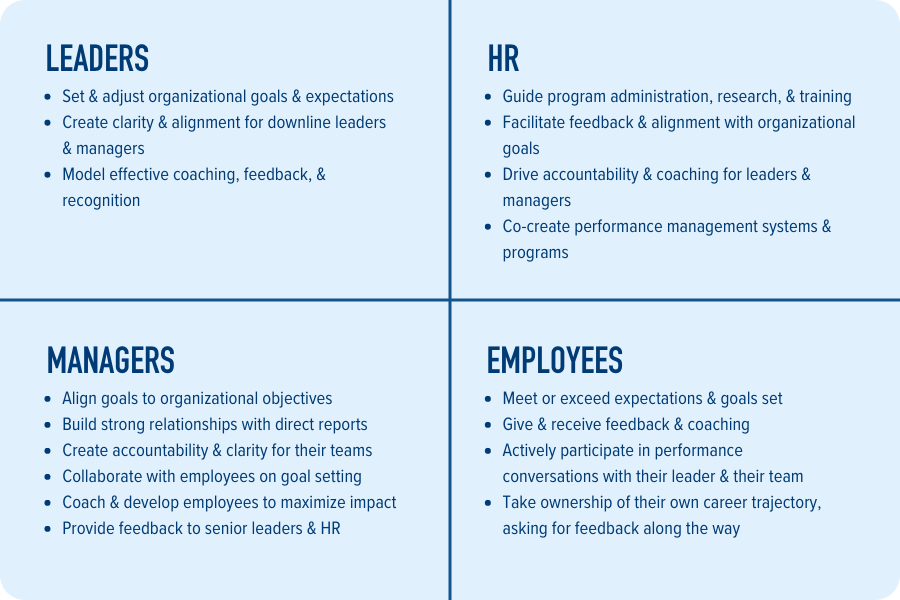
Senior Leaders: Responsible for setting strategic direction and adapting organizational goals, senior leaders must model high performance, effective coaching, and accountability, focusing on outcomes and impact.
-
Human Resources (HR): HR plays a pivotal role in orchestrating performance management initiatives, facilitating feedback, aligning metrics with organizational goals, and holding leaders accountable as coaches. By co-creating and adapting performance programs with stakeholders, HR builds dynamic systems that enhance employee impact, development, and overall business success.
-
Managers: Managers translate organizational objectives into team goals, foster employee growth, build strong relationships with direct reports, provide feedback, and ensure clarity of expectations. They are instrumental in setting goals, offering coaching, and allocating resources. Their feedback to senior leadership and HR is crucial for process improvement, and their ongoing development enhances their coaching capabilities.
-
Employees: While leadership and HR build the framework, employee participation is critical. Employees must actively engage in achieving goals, providing and receiving feedback and coaching, and taking ownership of their development and career trajectories, seeking support when needed.
The Transformative Power of Performance Management Software
Building a high-performing team is a long-term endeavor, but the rewards are substantial. Leveraging the right performance management tools can significantly accelerate this process. Quantum Workplace offers a suite of solutions designed to help organizations grow, manage, and scale their high-performing teams:
-
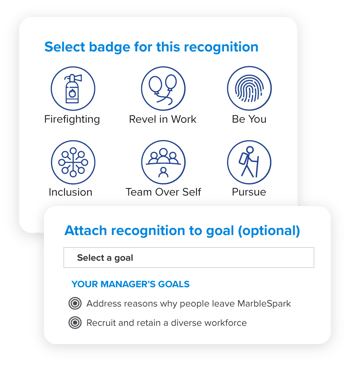
Clear and Aligned Goals: Quantum Workplace empowers teams to set, monitor, and achieve critical goals. Its platform facilitates goal cascading, progress tracking, and alignment with organizational objectives, enabling teams to stay focused and motivated.
-
Boosted Trust and Performance with Feedback: Through 360-degree, peer, and upward feedback mechanisms, Quantum Workplace fosters a culture of continuous improvement, enhances employee performance, and supports growth and development.
-
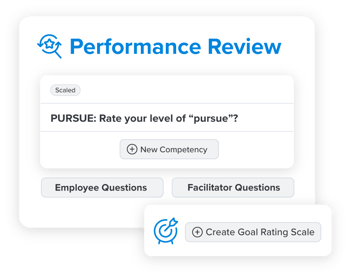
Effective Performance Reviews: Modern performance reviews are essential for alignment and engagement. Quantum Workplace’s tools simplify performance conversations, making them more effective and engaging, thereby driving performance improvements.
-
Real-Time Recognition: The platform facilitates real-time recognition, enabling the celebration of success and helping employees feel valued. It allows for easy sharing of achievements, fostering a culture of appreciation across the organization.
-
Clarity and Connection with 1-on-1 Meetings: Quantum Workplace’s 1-on-1 tools promote meaningful conversations, enhance communication, clarity, and engagement between managers and employees.
-
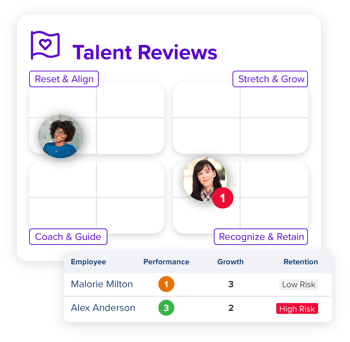
Talent Identification and Development: The talent review tools enable objective assessment of performance, identifying high-potential employees and potential talent risks, thereby supporting strategic talent decisions and development planning.
-
Sustained Performance with Succession Planning: Proactive succession planning tools help identify gaps and create development plans to prepare for the future, ensuring that the right successors are identified and developed for critical roles.
In conclusion, the creation of high-performing teams is not a matter of chance but a deliberate strategic imperative. By cultivating a culture of trust, clear communication, shared purpose, and continuous growth, organizations can unlock the extraordinary potential within their workforce, driving unparalleled success and sustainable competitive advantage.