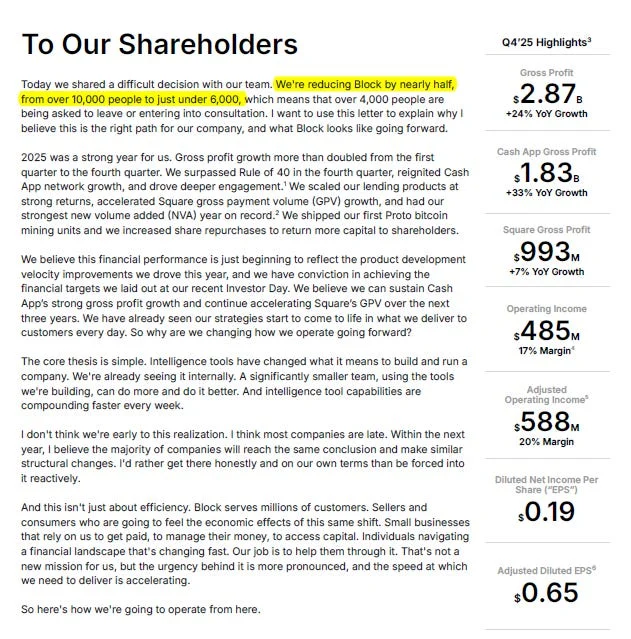
Last week, Jack Dorsey, the co-founder of Twitter and CEO of Block Inc., the parent company of financial technology giants Square and Cash App, made a significant announcement regarding a radical workforce restructuring. Dorsey declared plans to eliminate approximately 40% of Block’s workforce, equating to around 4,000 employees out of its total of over 10,000, with the stated intention of replacing these roles with artificial intelligence. The announcement, delivered with brevity and a notable lack of specific operational details, has sent ripples through the business and technology sectors, sparking widespread discussion about the future of work and the accelerating integration of AI into corporate strategy.
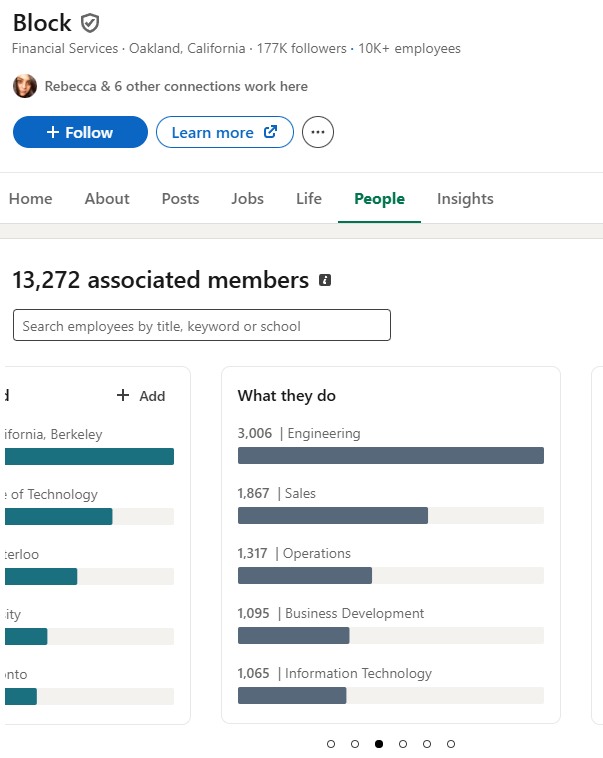
Block Inc., a company that has carved a significant niche in the digital payments and financial services landscape, employs a substantial workforce across various critical departments, including engineering, information technology, operations, and sales. LinkedIn data suggests a workforce closer to 13,000 individuals, underscoring the scale of the proposed transformation. This ambitious move by Block Inc. arrives at a time when the capabilities of AI are rapidly evolving, leading many to speculate about the potential for widespread job displacement across industries.

The Announcement and Initial Reactions
The initial announcement from Jack Dorsey was notably concise. While the broad strokes of replacing human capital with AI were clear, the precise mechanisms, the timeline for implementation, and the specific roles targeted for elimination remained largely undefined. This ambiguity has fueled considerable conjecture and concern among employees, industry analysts, and the broader public.
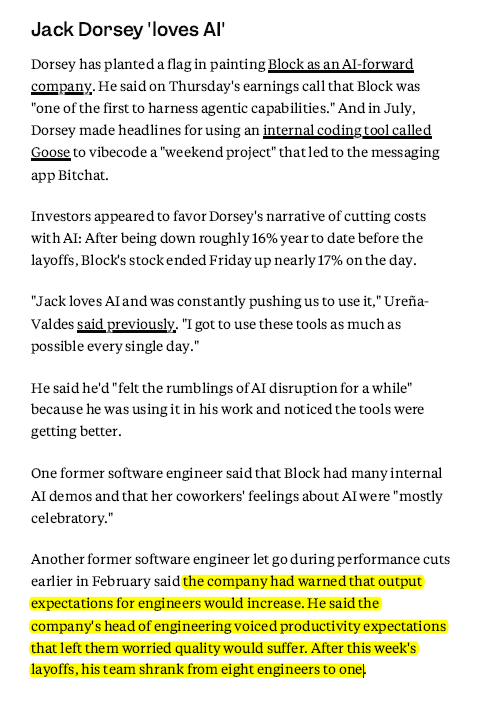
Sources close to the AI development community, such as individuals working at leading AI research labs like Anthropic, have characterized this announcement as a "big story," emphasizing the growing momentum of AI’s integration into the workforce and the potential for more widespread job losses. This sentiment is echoed by HR professionals who, according to anecdotal reports, have not witnessed such a drastic and wholesale workforce replacement strategy based on AI adoption.
Unpacking the Strategy: Beyond the Headlines
A closer examination of Block Inc.’s announcement reveals a complex interplay of technological ambition, operational efficiency, and market pressures. While the narrative of AI replacing human workers is compelling, several reports suggest that the internal clarity surrounding this transition may be less than what was presented externally.

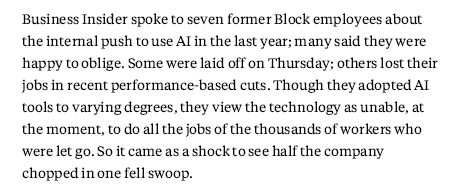
An article by Business Insider, which interviewed seven Block Inc. employees, highlighted a lack of precise understanding regarding how this "business transformation" would unfold. This suggests that the intricate details of integrating AI to such a significant degree across a large organization are still being formulated, or at least, have not been effectively communicated internally.
Jack Dorsey’s well-documented enthusiasm for artificial intelligence is a key contextual factor. His public pronouncements and the company’s strategic direction indicate a strong belief in AI’s potential to revolutionize business operations. However, the question arises whether this AI-centric approach is a genuine strategic imperative for efficiency or a more convenient rationale for other organizational objectives.
AI as a Catalyst for Performance Management?
One perspective gaining traction within HR circles is that AI is increasingly being used as a justification for performance management and organizational restructuring. In some instances, the pursuit of AI integration may serve as a cover for addressing inefficiencies, streamlining operations, or making difficult personnel decisions that might otherwise be perceived as purely cost-cutting measures.
The precedent set by Elon Musk’s acquisition and subsequent substantial layoffs at Twitter, where a significant bureaucracy was identified, offers a parallel. It is plausible that Block Inc., under Dorsey’s leadership, is leveraging the narrative of AI adoption to expedite a review and potential overhaul of its organizational structure, addressing perceived bloat or underperformance.
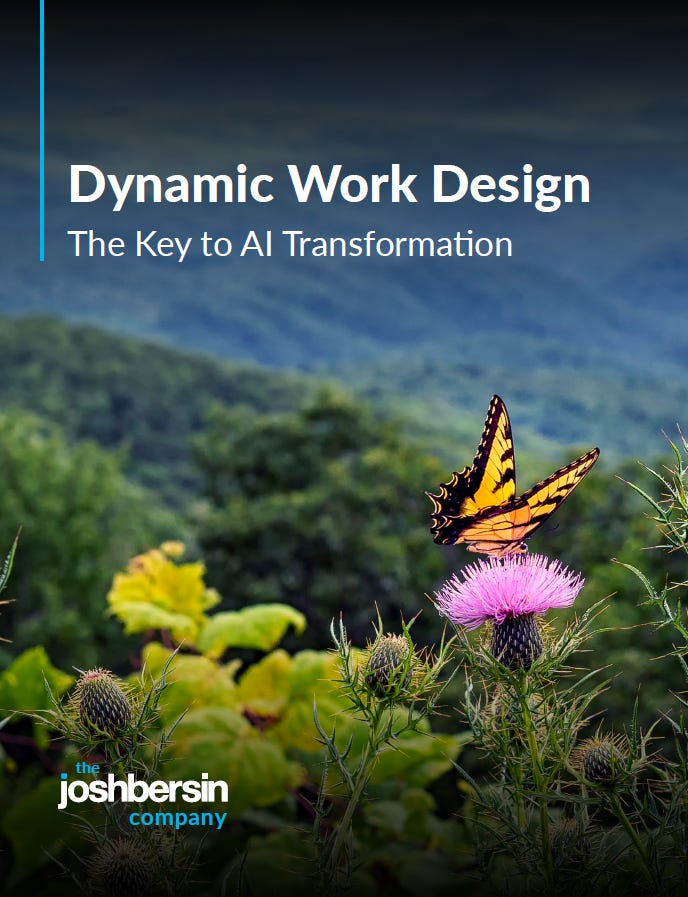
Research conducted on organizational redesigns around AI, including studies involving over 70 companies, has indicated that a direct correlation between AI adoption and significant job reduction is not always immediate. While AI excels at automating tasks, achieving the scale of job displacement that Block Inc. is projecting often requires a fundamental re-engineering of business processes, not merely the introduction of new technology. Reports such as "The Rise of the Superworker" and studies on "Dynamic Work Design" underscore that successful AI transformation hinges on strategic process redesign.
Financial Context and Operational Efficiency
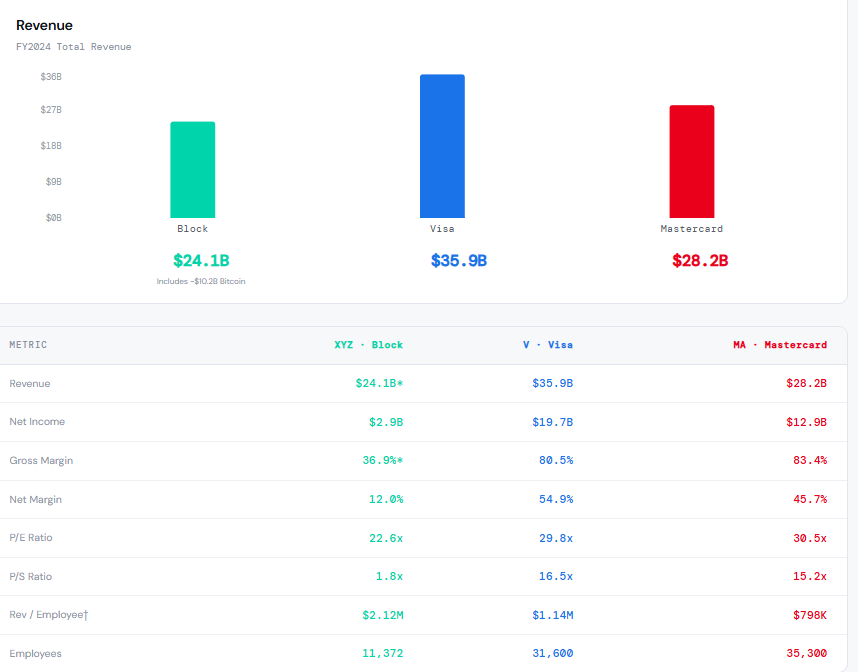
A deeper dive into Block Inc.’s financial performance provides additional context for the company’s strategic decisions. Comparative analysis of Block’s financials against entities like Visa, Mastercard, and Shopify, while acknowledging their differing business models, reveals a notable discrepancy. Block Inc. exhibits lower profitability and a significantly smaller gross margin compared to these peers. This suggests that the company may not be operating at optimal "scale" or efficiency.
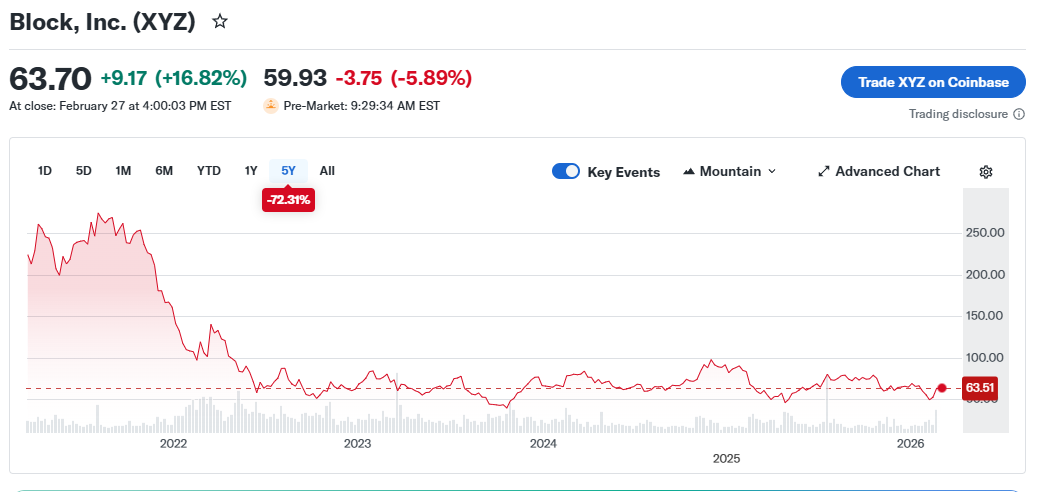
The market’s reaction to Block’s performance has also been a factor. Investors have expressed dissatisfaction with the company’s financial trajectory, placing pressure on leadership to demonstrate a clear path toward improved profitability and operational effectiveness. In this light, the ambitious AI-driven workforce reduction could be interpreted as a strategic move to enhance operating efficiency and address investor concerns, with AI serving as the chosen vehicle for achieving these goals.
The Realities of AI Transformation: Beyond Job Elimination
While the headline-grabbing announcement focuses on job elimination, a nuanced understanding of AI’s impact on the workforce is crucial. The notion that AI can unilaterally eliminate large swathes of jobs is often an oversimplification of a more complex process.
1. AI Transformation as a Short-Term Strategy:
Companies that view AI solely as a means to eliminate jobs may find this approach to be short-sighted. The development, implementation, and ongoing management of enterprise-level AI systems require significant human capital. Building sophisticated AI agents, managing their integration into existing workflows, and ensuring their continuous operation necessitates specialized skill sets. This includes roles in model development, data training, system verification, and oversight to ensure the AI’s outputs are accurate and aligned with business objectives. The non-deterministic nature of AI means that unexpected behaviors or errors can occur, requiring human intervention and robust monitoring systems.
2. The Substantial Cost of AI Implementation:
The financial investment in AI is not trivial. Even if AI could theoretically replace functions like online customer support – a probable target for some of the 4,000 roles at Block – the costs associated with building or acquiring these AI solutions, along with their ongoing operational expenses, are considerable. For instance, replacing a human customer support agent earning approximately $35,000 annually with an AI equivalent might seem cost-effective, with potential savings of 50-60%. However, the AI agent itself incurs costs, including development, maintenance, and operational compute power, which can range from $15,000 to $20,000 per year, even for a voice-enabled agent. These costs are expected to decrease, but the overall service delivery expense remains significant.
Furthermore, the costs extend beyond direct operational expenses. Training AI models, maintaining the complex AI ecosystem, and ensuring data governance add to the overall financial commitment. This suggests that the "layoffs" are not a simple 1:1 replacement of human labor with AI labor but involve substantial ongoing investment in the AI infrastructure itself.
The economic calculus becomes even more intricate when considering highly specialized fields like software engineering. While an engineer might earn $100,000 annually, the operating costs of AI tools designed to augment their work, such as generative AI for coding, can potentially exceed the cost of a human engineer. This is due to the high-context, non-linear nature of software development, where the "reasoning tokens" required for an AI to comprehend and contribute to complex codebases can be substantial.
Consider a hypothetical scenario with 100 software engineers earning $100,000 each, resulting in an annual payroll of $10 million. If AI could eliminate 80% of their manual coding time, this translates to a theoretical saving of $8 million in labor capacity. However, the actual cost of AI integration, including compute, licensing, and specialized oversight, must be factored in. Detailed analyses, such as those provided by Gemini, suggest that the capital and operating costs for AI solutions can still represent a significant portion, potentially one-third to one-half or more, of the cost of human staff. The underlying infrastructure for AI, including data centers, further contributes to these expenses.
3. The True ROI of AI: Re-engineering Processes:
The most impactful transformations driven by AI are not rooted in job displacement but in the fundamental re-engineering of business processes. Leading companies are demonstrating this by leveraging AI to enhance efficiency and innovation. For example, Allianz has implemented digital twins to optimize claims processing and knowledge sharing. Travelers utilizes AI to scale employee enablement and accelerate product development cycles. HubSpot is deploying AI to introduce new client services rather than reduce its workforce. Companies like Galileo are using AI to scale their operations exponentially, enabling them to serve a broader client base that would be unfeasible through traditional human-led interactions.
In Block Inc.’s case, while an initial layoff may occur, the long-term success of their AI strategy will likely depend on whether they can truly re-engineer their business operations around these new technologies. If this re-engineering is successful, investors should eventually see tangible results in terms of improved performance and profitability.
The question remains why companies, particularly those focused on talent density and employee productivity, are not already undertaking such profound re-engineering efforts. Progressive organizations continuously seek ways to optimize their workforce and avoid a "hire-to-grow" model that can dilute employee productivity. The hope is that Block Inc. has a comprehensive re-engineering project underway behind the scenes that goes beyond immediate workforce reductions.
Lessons for Businesses and Employees
The Block Inc. announcement serves as a crucial reminder for both businesses and employees. For organizations, it underscores that AI is not merely a tool for cutting headcount. It is an opportunity for fundamental business transformation, process optimization, and the creation of new value propositions. A strategy focused solely on job elimination risks being myopic and may fail to capture the full potential of AI.
For employees, the rise of AI necessitates a proactive approach to skill development and adaptability. The focus should shift towards acquiring skills that complement AI, such as critical thinking, complex problem-solving, creativity, and emotional intelligence – areas where human capabilities currently remain superior. Understanding how to leverage AI tools effectively and adapting to evolving work structures will be paramount for long-term career sustainability.
The ultimate success of Block Inc.’s ambitious AI-driven workforce transformation remains to be seen. Whether it heralds a new era of AI-powered operational efficiency or proves to be a more complex undertaking than initially presented, the move undeniably highlights the accelerating and transformative impact of artificial intelligence on the global economy and the future of work. The coming months and years will reveal whether Block Inc. can indeed leverage AI to achieve the profound re-engineering it has alluded to, or if the announcement will be remembered as a stark, yet perhaps incomplete, illustration of AI’s disruptive potential.