The rapid evolution of artificial intelligence, marked by the widespread adoption of intelligent chatbots, sophisticated video generation tools, and AI-driven capabilities in research, content creation, and simulation, has paved the way for another transformative concept: the "digital twin." While the term itself may sound futuristic, its origins trace back to the ambitious endeavors of NASA engineers in the 1960s, who pioneered the creation of digital replicas for critical missions. Now, in 2025, this groundbreaking technology is being adapted to replicate not just complex machinery, but human beings themselves, promising to redefine how we work, collaborate, and leverage organizational knowledge.
From Spacecraft to the Human Psyche: A Historical Perspective
The genesis of the digital twin concept can be firmly placed during the Apollo 13 mission. Following a critical oxygen tank explosion, NASA engineers ingeniously constructed a digital replica of the beleaguered spacecraft. This virtual model, encompassing the intricate details of the ship’s electronics and power systems, served as an indispensable tool for simulating the catastrophic events, enabling engineers to troubleshoot and devise solutions under immense pressure. This early application demonstrated the profound potential of digital replicas for understanding, diagnosing, and predicting the behavior of complex systems.
Following this pioneering effort, the concept of digital twins found traction in various high-stakes engineering fields. Companies like Boeing, Dassault, GE, and Siemens have employed digital twins to simulate and optimize intricate systems such as aircraft and complex train networks. By 2010, NASA formalized the definition of a digital twin as "an integrated multi-physics, multi-scale, probabilistic simulation of an as-built vehicle or system that uses the best available physical models, sensor updates, and fleet history." This definition underscored the dynamic and data-rich nature of these virtual counterparts.
The Human Element: Viven.ai Unveils a New Frontier
Fast forward to the present, and the confluence of advanced AI technologies—including sophisticated avatar creation, natural language processing for voice generation, and nuanced text comprehension—available at increasingly accessible price points, has made the replication of human digital selves a tangible reality. This technological maturation has culminated in the recent launch of Viven.ai, a company founded by a team of AI experts spun off from Eightfold. Viven.ai has successfully brought to market a platform that creates "human digital twins," a concept that has been undergoing rigorous testing within their own organization for the past six months, yielding what the company describes as "groundbreaking" applications of AI.
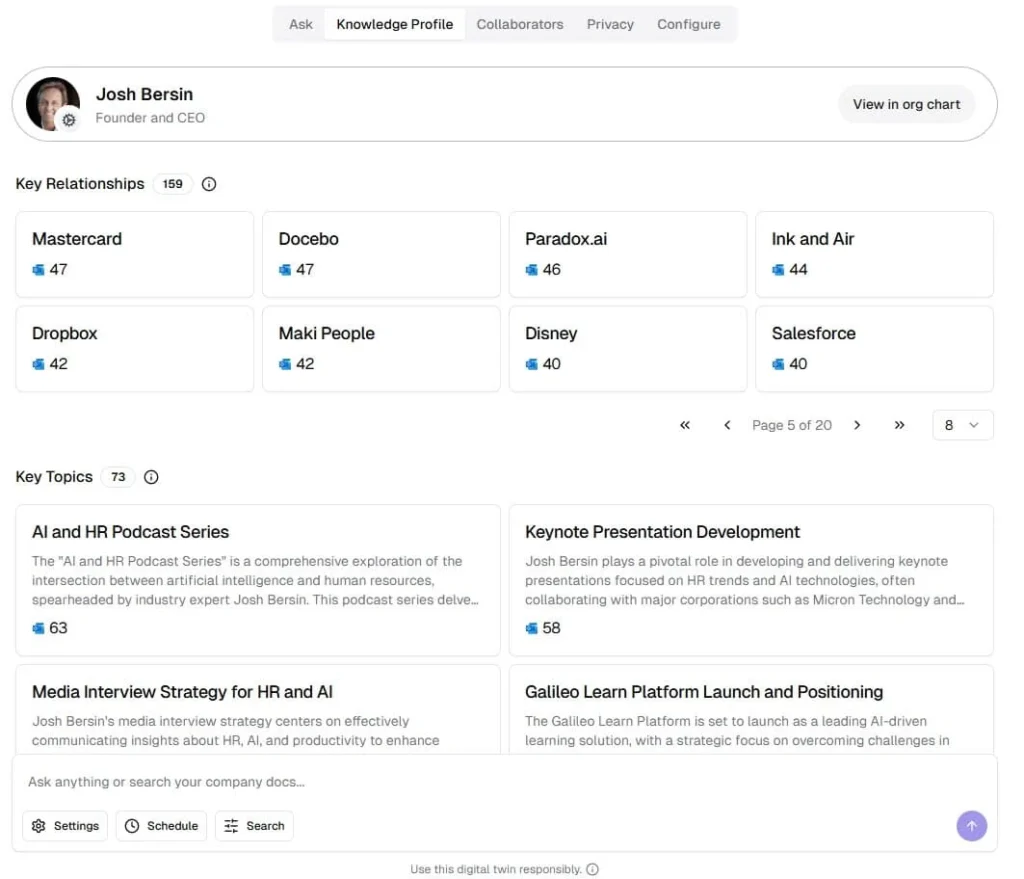
The Viven.ai platform operates by ingesting virtually every digital facet of an individual’s professional life. This includes a comprehensive sweep of emails, meeting transcripts, instant messages, documents, and a broad spectrum of activity data from platforms like Microsoft Graph and Google Workspace. The system then synthesizes this information, presenting a dynamic online representation that highlights key relationships, organizational structures, current project focuses, schedules, and a rich tapestry of context surrounding an individual’s projects, professional relationships, activities, and overall persona. Crucially, Viven.ai has implemented a highly configurable security framework designed to empower users to meticulously control which information is included, allowing for the exclusion of personal emails, family matters, or any other non-work-related data.
Unlocking Collective Intelligence: The Power of Digital Twins in Practice
The implications of having a digital twin for every employee within an organization are profound and far-reaching. For instance, within Viven.ai’s own operations, a colleague could query the digital twin of a co-founder, Bill Pelster, asking about his action items for the following day or seeking the latest status update on a specific corporate relationship. Similarly, the CFO, Ashley, could be queried via her digital twin about the company’s accounts receivable or the progress of a significant client contract. This immediate access to information, irrespective of the individual’s physical availability, streamlines communication and decision-making processes.
In a "talent-dense" environment like Viven.ai, where employees often wear multiple hats and engage directly with clients, the digital twin offers unprecedented visibility. A manager could, for example, query the collective digital twins to identify which team members have recently interacted with a specific client, such as Liberty Mutual, and retrieve the details of those conversations. Alternatively, they could ascertain who performed the most recent demonstration of a product like Galileo and access the script utilized.
On a personal level, each digital twin mirrors the individual’s unique knowledge base and communication style. For the author of the original piece, Josh Bersin, whose digital twin has access to fifteen years of archived emails, inquiries could delve into the historical context of meetings with specific companies like Workday, extracting long-term insights. Research-oriented questions, such as requesting feedback on a new learning and development research document, could also be posed, with the digital twin providing a synthesized response based on the individual’s accumulated knowledge and analytical capabilities.
Essentially, each digital twin functions as a sophisticated digital embodiment of an individual’s expertise and professional persona. This presents immense value for roles in customer service, technical support, and training, providing immediate access to subject matter experts without the need to interrupt their current tasks. The Viven.ai platform also offers transparency, allowing individuals to see which of their digital twin’s interactions are initiated by colleagues, revealing patterns of inquiry and highlighting areas where their expertise is frequently sought. This can lead to significant time savings, as direct phone calls or interruptions become less necessary.

The potential applications extend to scenarios where immediate access to specialized knowledge is critical, but direct contact with an expert might be inconvenient or impossible due to time zone differences or urgent demands on their attention. Imagine needing information from legal, engineering, marketing, or contracts departments during a critical project. With digital twins, one could pose a question and receive a timely and informed response, significantly accelerating problem-solving.
The Rise of "Collective Intelligence"
One of the most compelling applications of this technology, as highlighted by Viven.ai’s early adopters, lies in the realm of "Collective Intelligence." In research and advisory firms, constant interactions with clients, partners, vendors, and the press are the norm. Traditionally, coordinating and disseminating information from these numerous touchpoints would necessitate conference calls or extensive internal communication. However, with integrated digital twins, organizations can gain immediate, real-time visibility into the status of each relationship and the insights derived from these interactions.
This concept envisions the aggregated intelligence of an entire team functioning as a single, cohesive entity. When digital twins are interconnected and synchronized, an organization can operate as a highly integrated and responsive unit. The potential to link these digital twins with advanced platforms, such as Galileo, further amplifies their utility. For example, a client could pose a question to any staff member’s digital twin, receiving an immediate and contextually relevant answer as if the individual were present. The cumulative effect of eliminating the need for frequent meetings and minimizing interruptions promises substantial time and efficiency gains across the organization.
Navigating the Complexities: Security, Privacy, and Intellectual Property
The introduction of human digital twins, while offering immense potential, also brings to the forefront critical considerations regarding security, privacy, and intellectual property protection. Viven.ai has reportedly placed a significant emphasis on addressing these concerns within its platform’s design.
Key privacy considerations include:
- Data Access Controls: Ensuring that only authorized individuals can access specific data points within a digital twin. This involves granular permissions and role-based access.
- Data Anonymization and Aggregation: For certain analytical purposes, sensitive information might need to be anonymized or aggregated to protect individual privacy.
- User Consent and Transparency: Clearly informing individuals about what data is being collected, how it will be used, and obtaining their explicit consent.
- Data Deletion and Retention Policies: Establishing clear policies for the secure deletion of data when it is no longer needed or when an individual leaves the organization.
Beyond privacy, a significant legal and ethical challenge emerges when an employee departs from a company. The question arises: who owns the digital twin and the vast repository of information it contains? While the legal landscape surrounding digital assets and employee departures is still evolving, it is widely understood that intellectual property, inventions, and work product created during employment are typically owned by the employing company. Therefore, the digital twin can serve as a crucial mechanism for retaining and preserving valuable institutional knowledge and expertise from departing employees, safeguarding the company’s intellectual capital.
The Future Trajectory: Continuous Advancement and Integration
The technology underpinning human digital twins is still in its nascent stages, but its trajectory is one of rapid and exponential improvement. Given the relentless pace of AI advancement, it is reasonable to anticipate that within the next year, we will see sophisticated digital replicas of key personnel becoming commonplace. These "digital interview agents" are already emerging, capable of engaging in conversations and even interacting with each other.
The potential for these interconnected digital twins is virtually limitless. For instance, an executive could instruct their VP of Research’s digital twin to consult with the broader research team to identify individuals most interested in a new project. This level of automated knowledge aggregation and dissemination could fundamentally transform project management, talent allocation, and strategic planning.
The innovators at Viven.ai deserve commendation for their pioneering work in this domain. As this technology matures, its integration into the fabric of daily work life is inevitable, promising to unlock new levels of efficiency, collaboration, and collective intelligence. Organizations and professionals interested in exploring these transformative capabilities are encouraged to engage with Viven.ai to witness firsthand the practical applications of this revolutionary technology. The era of the human digital twin has officially begun, ushering in a new paradigm for the future of work.