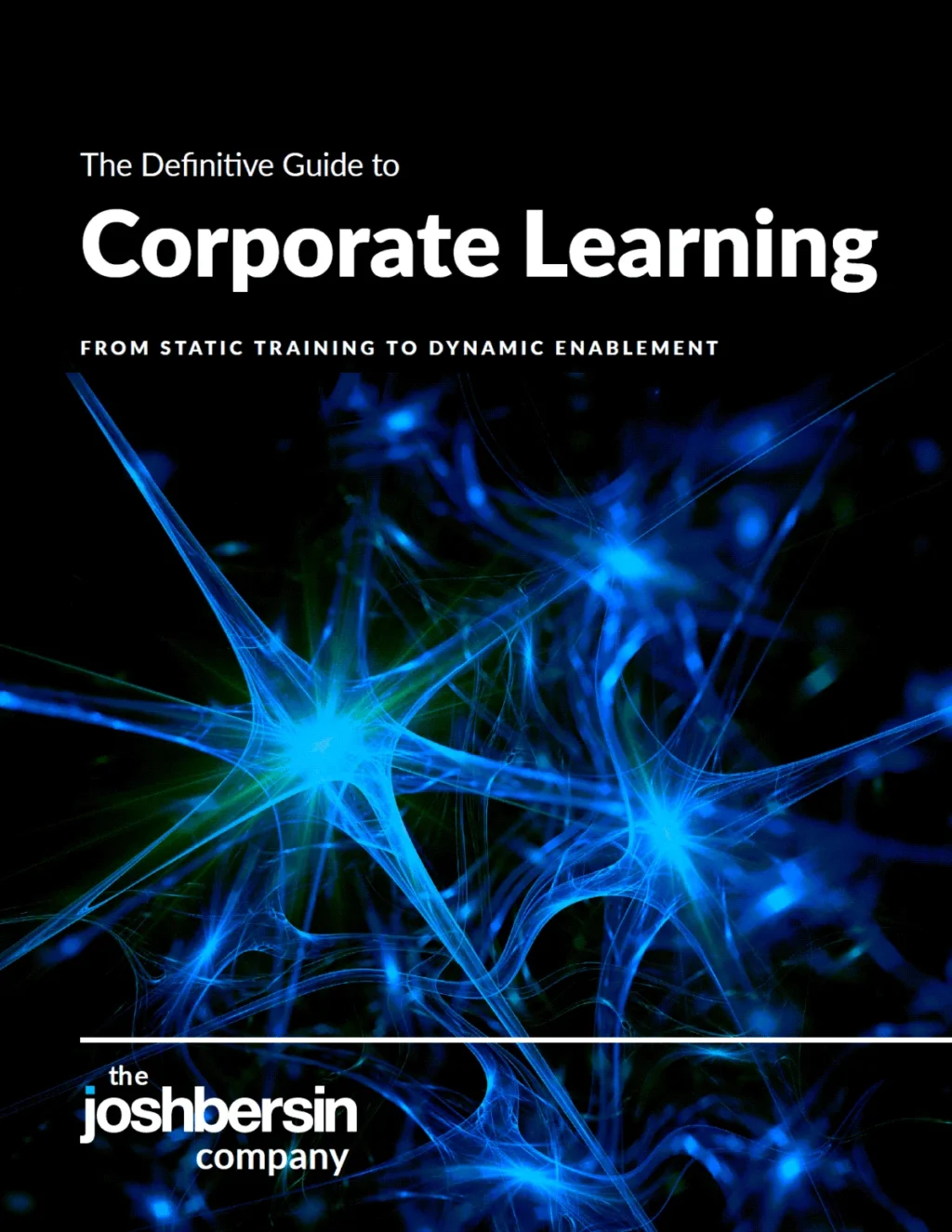
The corporate learning landscape is undergoing a profound transformation, shifting from traditional, static training modules to dynamic, AI-powered content and enablement solutions. This paradigm shift, detailed in the recent publication "The Definitive Guide to Corporate Learning," is rapidly reshaping the vendor market, presenting both opportunities and challenges for HR leaders and Chief Learning Officers (CLOs). The integration of Artificial Intelligence into learning and development (L&D) is not a future concept; it is a present reality, driving innovation across multiple facets of employee education and performance enhancement.
The core use cases for AI in corporate training are becoming increasingly clear and actionable. These include: dynamic content generation, where AI can create tailored learning materials on demand; AI-powered coaches and scenarios, offering personalized guidance and simulated environments for skill development; AI-fueled needs analysis, identifying skill gaps and learning requirements with unprecedented precision; AI-generated skills models, providing structured frameworks for employee competencies; AI-powered skills assessments, offering more adaptive and accurate evaluations; and AI-centric learning experiences through sophisticated interfaces like "Supertutors," chatbots, and conversational agents that deliver personalized learning journeys.
In essence, the domain of learning and enablement is proving to be a near-perfect environment for AI implementation. Organizations can leverage these advanced tools today to create a highly personalized and continuously evolving learning experience for every employee. Imagine a dedicated AI agent, intimately familiar with an individual’s role, seniority, and experience, constantly available to impart knowledge and updated with the latest information relevant to their job, career trajectory, and the organization’s strategic direction. This vision of a ubiquitous, intelligent learning companion is no longer science fiction; it is becoming accessible.
However, this rapid evolution is occurring against a backdrop of significant investment in legacy systems. An estimated $4 billion has been invested in traditional Learning Management Systems (LMS), established content libraries, and outdated content development tools. Furthermore, millions of professionals are deeply entrenched in methodologies designed for a pre-AI era of training delivery. This inertia presents a considerable hurdle for widespread adoption of AI-driven learning solutions.
The Evolving Vendor Landscape
The market is responding with a surge of new offerings and adaptations from established players. Understanding this evolving ecosystem is crucial for L&D professionals seeking to navigate the future of corporate learning. The vendor landscape can be broadly categorized into several key areas: End-to-End Learning Platforms, AI-Powered Content Solutions, AI-Powered Assessments, AI-Powered Skills Intelligence, and Employee Enablement and AI-Search tools.
End-to-End Learning Platforms: The AI-Native LMS
The traditional LMS is at the forefront of this AI-driven reinvention. Several vendors are emerging with AI-native platforms, designed from the ground up to leverage artificial intelligence. Sana, a partner with Galileo and Galileo Learn, is one such example, focusing on a modern, AI-enhanced learning experience. Docebo has demonstrably integrated AI across its entire suite, encompassing content development, coaching, simulations, and administrative functions, signifying a comprehensive AI adoption strategy. Cornerstone OnDemand has launched "Galaxy," an AI-fueled system designed around skills-based learning and talent management, with further AI enhancements anticipated.

Arist, a rapidly growing vendor, is distinguishing itself by its ability to generate content directly from AI-driven needs assessments and other inputs. Uplimit offers an AI-native platform tailored for highly engaging technical and other critical training programs, featuring numerous AI-scalable functionalities. 360Learning is actively incorporating AI for content generation, providing AI companions for learners, creating AI-generated assessments, and enabling adaptive learning pathways. Disprz positions itself as an AI-native, end-to-end learning platform with robust dynamic content development capabilities.
The implications for organizations are significant. Any existing LMS that has not transitioned to a dynamic, post-SCORM content model should be re-evaluated. Many smaller LMS vendors may lack the resources or strategic focus to execute this architectural shift. However, the pace of change is accelerating, and once organizations experience the benefits of AI-native platforms, a return to older systems is unlikely. While integrations between platforms like OpenAI and established players like Coursera exist, these are often viewed as supplementary rather than core corporate learning solutions.
AI-Powered Content: Beyond Static Libraries
The second major frontier in this transformation is the creation and delivery of courseware, content, and instructional materials. Leading content providers, including LinkedIn Learning, Coursera, Udemy, Skillsoft, Pluralsight, and Degreed, are now embedding AI capabilities. These advancements manifest as AI-powered course summarization, live Q&A sessions integrated with content libraries, and the deployment of "CoPilot" features that act as intelligent assistants to legacy content, improving access and ease of use.
This integration of AI is a key enabler of the "Learning in the Flow of Work" philosophy. Even organizations not yet ready to overhaul their entire course libraries with AI-generated content can now access existing materials through intelligent AI interfaces. The future of the content market is likely to see a shift towards "content intelligence platforms." Companies like Galileo are at the forefront of this trend, enabling customers to access a vast array of learning materials through vendor-specific agents, personalized AI agents, or even a consolidated "agent of agents." The arduous process of manual course building is being automated by AI, allowing vendors to concentrate on curating world-class content, refining metadata, and developing robust competency models.
The rapid evolution of AI as a code generation system and the capabilities of tools like Google’s NotebookLM in authoring instructional content highlight this shift. Companies that previously focused on "course building" must now reframe themselves as "expertise curators," with their platforms serving as the conduits for unlocking this curated knowledge. Emerging providers such as Attensi, offering an end-to-end AI-assisted training and content creation platform, and companies specializing in AI-powered avatars like Colossyan, are also gaining prominence. Furthermore, foundational AI tools like HeyGen, which excel in image, video, and audio generation, are increasingly being adapted for the L&D market.
AI-Powered Assessments: Revolutionizing Evaluation
A third wave of innovation is centered on AI-fueled assessment methodologies. Platforms like CodeSignal are leveraging AI to develop dynamic assessments for skills evaluation, targeted learning interventions, and recruitment purposes. This emerging market holds the potential to fundamentally alter traditional certification and pre-hire assessment processes. CodeSignal can be trained to understand specific company products, internal processes, or specialized knowledge, subsequently generating customized evaluation experiences that include tests, exercises, simulations, and immediate feedback to guide individuals toward proficiency.
Pluralsight is extending its "Skill IQ" assessment capabilities with AI, and Skillable, a leader in learning labs, is also enhancing its offerings. Other platforms, including Hackerrank, are moving in a similar direction, with many large language models (LLMs) possessing inherent assessment capabilities. This trend extends to pre-hire and developmental assessments, where companies like SHL, a recognized leader in the field, are well-positioned to capitalize on AI’s ability to interpret, understand, and repurpose their extensive testing models. SHL’s partnership with Galileo, leveraging their Universal Competency Framework, exemplifies this integration.

Galileo itself, when trained on comprehensive research and maturity models, can engage users in "agentic prompts" to assess individual or organizational maturity, generate personalized development plans, and benchmark skills against a vast repository of job, skills, and HR-related data. This represents a significant leap forward in personalized and data-driven employee evaluation.
AI-Powered Skills Intelligence: Mapping the Future of Work
The complex domain of skills intelligence is another area ripe for AI-driven disruption. While numerous skills vendors exist, the market is consolidating around sophisticated AI-powered solutions. Providers such as Eightfold, Findem, Maki People, Seekout, Lightcast, and Draup, alongside established recruiting platforms, are capable of assessing employee skills at a granular level. Their initial focus on recruitment and internal mobility has paved the way for specialized talent solutions from companies like Gloat, Fuel50, and 365 Talents. Vendors like Skyhive (now integrated into Cornerstone Galaxy) and Techwolf utilize AI to infer skills by analyzing both internal and external data sources, with increasing connectivity to learning platforms.
Docebo’s recent acquisition of 365 Talents highlights the strategic imperative for integrating skills assessment with learning delivery. Large enterprises can now assess organizational skill gaps and immediately align them with relevant learning offerings. Cornerstone’s integration of Skyhive and Sana’s AI-native approach also enable real-time skill proficiency analysis based on user activity.
Furthermore, AI-powered career development platforms are leveraging their static career models to create dynamic, AI-enabled pathways. Guild, with its recent "Guild Navigator" product, is a leader in this space. Gloat, Fuel50, SAP, Workday, and Eightfold also offer capabilities that infer skills from resumes and present AI-updated career opportunities. The development of AI-driven "Career Navigators" for HR is becoming a critical tool for talent management.
Employee Enablement and AI-Search: The Power of Instant Answers
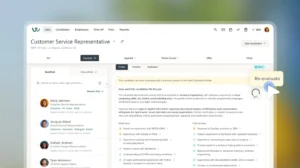
Perhaps one of the most significant opportunities lies in dynamic employee enablement. Consider a customer service representative facing an unfamiliar issue. Instead of navigating through a labyrinth of courses, the ideal scenario is to simply ask a question and receive an immediate, accurate answer, potentially accompanied by a visual aid. This "dynamic enablement" is becoming remarkably accessible.
With an AI-native platform and a sophisticated AI-powered search function, organizations can now curate videos, call recordings, and other problem-solving content. This allows for the dynamic enablement of employees, particularly in areas like sales training, new company rollouts, product launches, and real-time information dissemination. Sana, Arist, and Docebo are at the forefront of enabling such capabilities.
Historically, employee enablement has often fallen outside the purview of L&D, residing within IT, Sales, or Support departments. However, AI-powered learning platforms can now serve as central repositories for all company documents, business-relevant recordings, and critical information, empowering local business teams to manage their own enablement resources. This decentralization liberates L&D from localized support tasks and contributes to the development of what could be termed a "digital twin" of organizational knowledge, making individual expertise accessible to all authorized personnel.
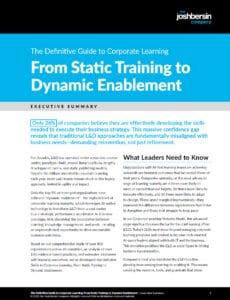
The concept of a "digital twin" for organizational knowledge, while still nascent and in need of a definitive name, encompasses the aggregation of company emails, internal documents, meeting recordings, sales calls, and customer interactions. When integrated into an AI platform, this vast data corpus can provide answers to virtually any query. Tools like Glean are already achieving this in the IT sector, and L&D leaders can leverage platforms like Sana or Docebo to achieve similar outcomes for their organizations. The traditional time lag in creating training content for new developments is being eliminated; knowledge can become instantly accessible. Microsoft and Google are actively investing in these areas, indicating that the "enablement" model is poised to fundamentally reshape L&D.
The Enduring Relevance of Foundational Learning Principles
Despite the rapid advancements in AI-driven learning, fundamental principles of employee development remain crucial. Compliance training, while increasingly personalized through AI, will continue to be a necessity. Onboarding for new hires, leadership development programs, and initial training for individuals new to specific roles will still require structured, formal instruction. The expertise of learning designers in creating effective learning experiences remains highly valuable.
However, the toolset available to L&D professionals is expanding dramatically. Dynamic development, personalized delivery mechanisms, and powerful enterprise search platforms represent a quantum leap in capabilities. Organizations are strongly advised to engage with their current L&D vendors to understand their strategic roadmaps regarding AI integration. A lack of demonstrable speed, agility, and a clear vision for AI adoption may necessitate exploring alternative solutions in the market.
For organizations embarking on this transformation, seeking expert guidance can accelerate the process. Many consultancies now offer services to help companies reimagine their L&D strategies and navigate the complexities of AI integration. Similarly, vendors seeking to refine their strategies or enhance their market positioning are finding valuable support from industry experts.
The corporate learning landscape is at an inflection point. The integration of AI is not merely an upgrade; it represents a fundamental reinvention of how organizations educate, empower, and enable their workforces. The vendors and technologies discussed are indicative of a broader trend towards more intelligent, personalized, and accessible learning experiences that will define the future of work.