The artificial intelligence industry is currently captivated by the potential public offerings of OpenAI and Anthropic, two prominent companies whose rivalries are fueling much of the sector’s drama. As these AI titans navigate the complex path toward becoming publicly traded entities, the market eagerly anticipates how their respective strategies will shape the competitive landscape. This unfolding narrative, however, may obscure a different, yet potentially more significant, development: Microsoft’s ascendance as a dominant force in the enterprise AI arena.

While the enterprise AI market is a crowded field featuring giants like Google, Amazon, Nvidia, and Oracle, alongside the aforementioned OpenAI and Anthropic, and the consumer market is largely shaped by players like Apple, the ultimate beneficiary of this intense innovation could very well be Microsoft. This analysis delves into the multi-faceted nature of enterprise AI and explores how Microsoft’s strategic positioning and robust ecosystem are poised to deliver a decisive advantage.
The Pillars of Enterprise AI: Models, Surfaces, and Ecosystems
The enterprise market for artificial intelligence can be broadly categorized into three interconnected pillars: the foundational AI models, the user-facing "surfaces" or applications, and the overarching ecosystem that supports and integrates these components.
1. The AI Model: Specialization Over Generalization
The first pillar is the AI model itself, and the critical challenge of determining which specific applications each model is best suited to serve. The initial promise of a single, all-encompassing AI model has given way to a more nuanced understanding: different tasks require specialized AI capabilities.
- Application-Specific Models: The question is no longer if one model can do everything, but rather which model excels at specific tasks. Should coding and analytical applications leverage Anthropic’s Claude? Are OpenAI’s models best for narrative and document-centric tasks? Will Google’s Gemini dominate in areas requiring deep analysis and scientific inquiry? And where will models like Grok or Nvidia’s future world models fit in the emerging landscape of robotics, motion control, and physical world applications?
- The Nuances of Model Training: The development of these specialized models is far more intricate than simply allocating computing power. It involves extensive data collection, meticulous labeling, and continuous refinement of algorithms. For instance, a pharmaceutical company seeking an AI model with deep understanding of proteins and advanced genetics will require a platform specifically trained in that domain. This domain-specific training is crucial for achieving optimal performance and accuracy.
- Evolving Market Demands: Today, Anthropic has set a benchmark for code generation, a foundational capability for many AI-driven applications. However, the question remains: will OpenAI pivot to focus on healthcare, or will Google delve deeper into biology? Which model will become the standard for optimizing physical world applications, such as robotics, manufacturing, and transportation? The current market dynamics suggest that business buyers will likely require a portfolio of specialized AI models, rendering claims of a singular, all-encompassing AI less credible.
- The Power of Focused Expertise: The success of specialized AI platforms, such as AI Galileo, underscores the value of deep domain focus. By concentrating on HR, labor markets, skills, and management, Galileo has evolved into an indispensable resource, capable of providing consultancy-level insights for a wide array of human capital challenges. This demonstrates that vertical specialization, coupled with continuous learning, can yield exceptional results.
The enterprise demand for AI is not monolithic. Businesses are increasingly recognizing that a "one-size-fits-all" approach to AI models is insufficient. The complexity of modern business operations necessitates tailored solutions, driving the development and adoption of specialized AI models.
2. The AI Surface: The Application Experience
The second critical pillar is the "surface" – the application experience that surrounds and interacts with the AI model. This layer encompasses the user interface, toolsets, integration capabilities, and development tools that make AI accessible and functional for end-users and developers alike. These are not merely models; they are sophisticated applications built upon AI.
- The Importance of User Experience: The success of an AI solution hinges on its ease of use, personalization, and seamless integration with existing workflows. Apple’s potential success with an intelligent and user-friendly Siri illustrates this point; widespread adoption would depend less on the underlying AI model and more on the overall user experience.
- Microsoft’s Historical Precedent: Microsoft’s dominance in the personal computing market offers a compelling parallel. While early competitors developed groundbreaking technologies, Microsoft’s triumph was largely attributed to its relentless focus on the application experience of products like Excel, PowerPoint, and Outlook, coupled with its strategic licensing of graphical user interfaces. The enduring success of the Microsoft 365 suite, with its 450 million paying users, is a testament to the power of a polished and integrated application layer.
- The "AI Harness": This surrounding software layer, often referred to as the "AI Harness," is paramount for business developers and IT departments. They require more than just an AI model; they need a comprehensive solution that includes:
- User Interface and Experience: Intuitive design, efficient workflows, and engaging interactions.
- Integration Capabilities: Seamless connectivity with existing enterprise systems such as SAP, Oracle, Workday, Salesforce, ServiceNow, QuickBooks, and HubSpot.
- Development Tools: Robust platforms for customizing, extending, and building AI-powered applications.
- Data Connectivity: The ability to access and process data from diverse sources, including internal databases and cloud services.
- Security and Governance: Robust frameworks to ensure data privacy, compliance, and responsible AI deployment.
The failure of an AI integration, such as the author’s experience with Claude’s integration with HubSpot, highlights the critical importance of the "surface" layer. When an AI fails to accurately retrieve or process data, or times out due to poor context management, the issue lies with the application experience, not necessarily the underlying model’s generative capabilities. Companies like Anthropic and OpenAI are reliant on third-party developers and partners to build these essential "surfaces," and a subpar integration can reflect negatively on the core AI platform.

3. The Ecosystem: A Network of Support and Innovation
The third pillar is the ecosystem, a vital component for enterprise AI adoption. Businesses seek AI platforms that are supported by a broad network of applications, integrations, tools, and third-party developers.
- The Power of Connectivity: As demonstrated by the development of AI Galileo, customers frequently inquire about integrating AI solutions with their existing infrastructure and data sources. This demand for connectivity extends to policy databases, leadership models, and compliance training systems, underscoring the need for platforms that can bridge the gap between AI and a company’s unique operational environment.
- Partnering for Profit: In the enterprise space, where significant AI profits are anticipated, vendors must cultivate ecosystems of partners who can build and monetize solutions on their platforms. This symbiotic relationship fosters innovation and expands the reach of the core AI offering.
- The Enterprise Mandate: HR and IT leaders consistently articulate a dual need: readily available, packaged AI tools for immediate employee use, and a robust platform for building, acquiring, and managing "agentic" applications. This platform approach is crucial for complementing and eventually replacing existing enterprise systems without locking businesses into single vendors in a rapidly evolving market.
The current focus in enterprise AI is shifting from the raw "engine" of AI models to the "surface" and the broader ecosystem that enables widespread adoption and utility.
The Rise of Microsoft: Building the Dominant AI Surface
The ongoing discussion about OpenAI and Anthropic’s potential IPOs often centers on their projected revenues. However, a closer examination of these figures reveals a crucial distinction: who is generating revenue from the AI "surface"?
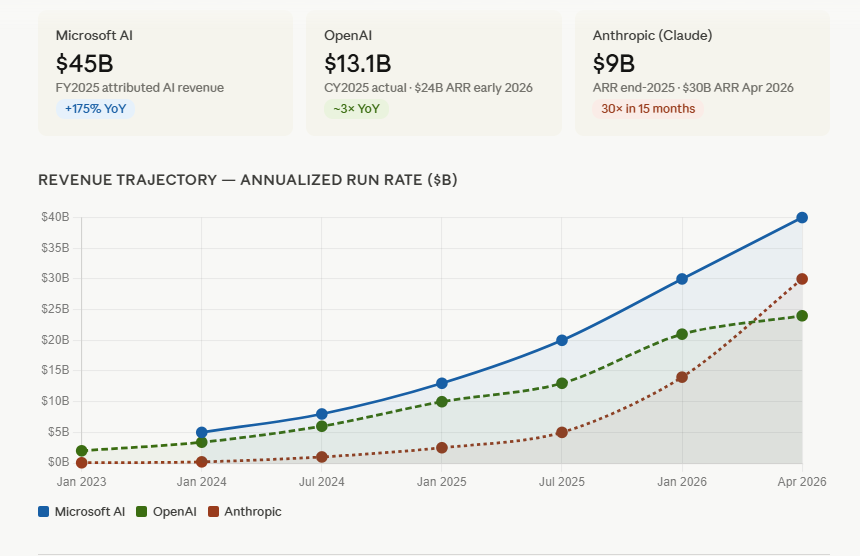
- Revenue Streams of AI Leaders: Current estimates suggest that a significant portion of OpenAI’s revenue stems from consumer subscriptions, while Anthropic’s revenue is largely derived from providing AI compute capacity to other providers. This indicates that neither company is yet dominating the direct enterprise application layer.
- Microsoft’s Strategic Advantage: Microsoft appears to be the primary beneficiary of the enterprise AI "surface" revenue. The company has invested heavily in integrating AI capabilities across its extensive product suite and developing a comprehensive ecosystem.
Copilot: From Plugin to Integrated Platform
Microsoft’s Copilot strategy has undergone a significant evolution, transforming from a collection of individual AI integrations into a cohesive and powerful platform.
- Early Days (2022): The initial phase of Copilot was heavily influenced by the OpenAI partnership, with Microsoft licensing ChatGPT for Bing and exploring AI integration within its existing products. Early iterations of Copilot for M365, and within applications like Dynamics, Excel, and GitHub, often felt like advanced plugins.
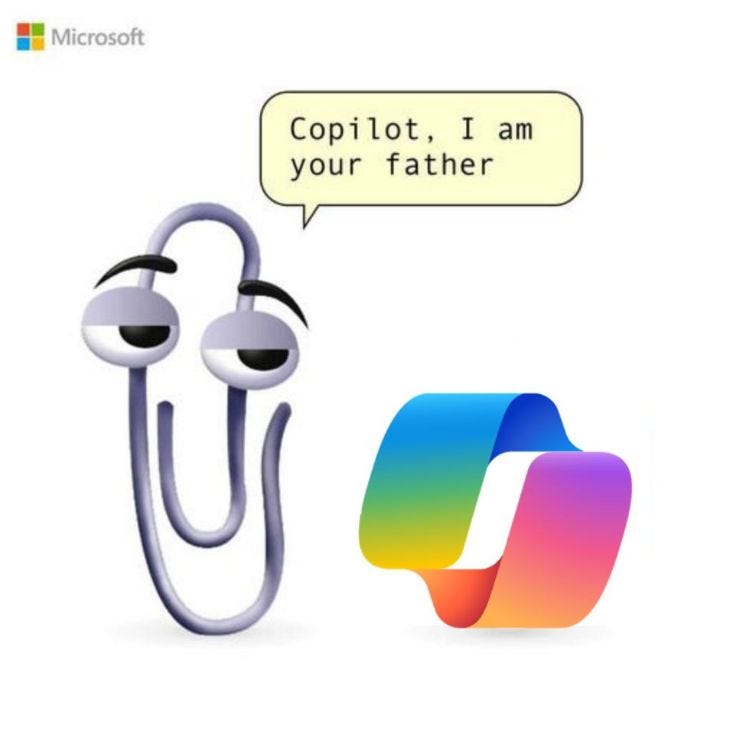
- The "Clippy" Era and Beyond: The initial vision of Copilot was sometimes likened to an intelligent version of Microsoft’s long-standing "Clippy" assistant, raising questions about its practical utility. However, Microsoft’s product teams rapidly expanded the scope of Copilot, developing numerous "surfaces" that extended its capabilities across its software portfolio.
- Expansion and Integration: The introduction of Copilot Studio, Agent 365, Work IQ, and numerous other Copilot-powered "surfaces" demonstrated Microsoft’s ambitious strategy to create a unified AI experience. Simultaneously, the company invested in foundational technologies like M365 Graph Connectors and fine-tuning capabilities to enhance Copilot’s access to and utilization of corporate data.
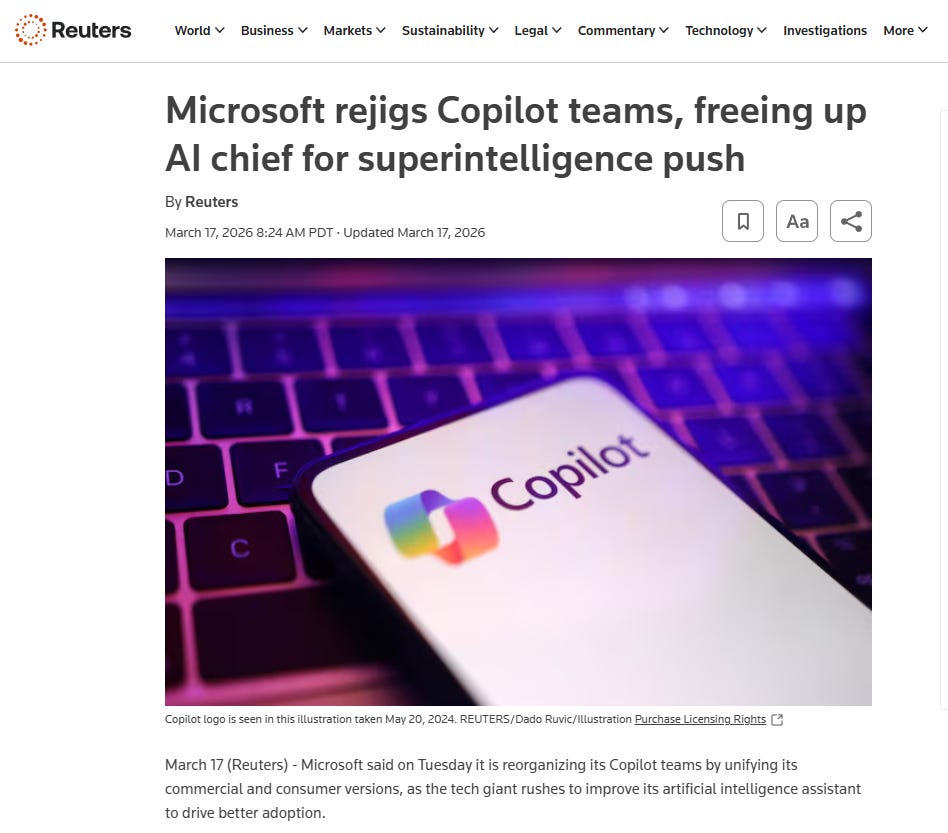
- Strategic Realignment: Recognizing potential user confusion amidst this rapid development, Microsoft undertook a significant strategic reorganization. Under CEO Satya Nadella, the disparate Copilot product teams were consolidated into a single, unified product organization. This move, spearheaded by leaders like Jacob Andreou (leading Copilot growth), Ryan Roslansky (leading LinkedIn), Perry Clarke (leading Copilot Core), and Charles Lamanna (leading Agents and Apps), aims to create a more integrated and streamlined AI experience for both corporate and consumer users. This organizational shift allows Microsoft to operate with a strategic coherence akin to Nvidia’s integrated engineering approach.
The Evolving Copilot Landscape
The recent reorganization of Microsoft’s Copilot product teams into a singular entity signals a pivotal shift in strategy. This consolidation enables the company to:
- Unified AI Strategy: Develop a singular "surface" strategy for both enterprise and consumer markets, optimizing the user experience across all touchpoints.
- Internal Model Development: Empower Microsoft’s AI engineering group to focus on developing its own proprietary AI models, complementing its reliance on external providers like OpenAI.
- Enhanced Agent Enablement: Foster a holistic approach to agent development and deployment, focusing on delivering tangible value to corporate users.
- Streamlined Integration: Simplify the integration of AI capabilities across Microsoft’s vast software ecosystem, creating a more cohesive and user-friendly experience.
- Accelerated Innovation: Facilitate faster iteration and innovation by aligning development efforts and resources under a single leadership team.
This integrated approach positions Microsoft to effectively compete by offering a comprehensive AI solution that goes beyond individual models to encompass the entire user experience and supporting ecosystem.
Microsoft’s Growing Market Share and Value Proposition
Microsoft’s strategic focus on the AI "surface" and its integrated ecosystem are driving significant market traction and revenue growth.
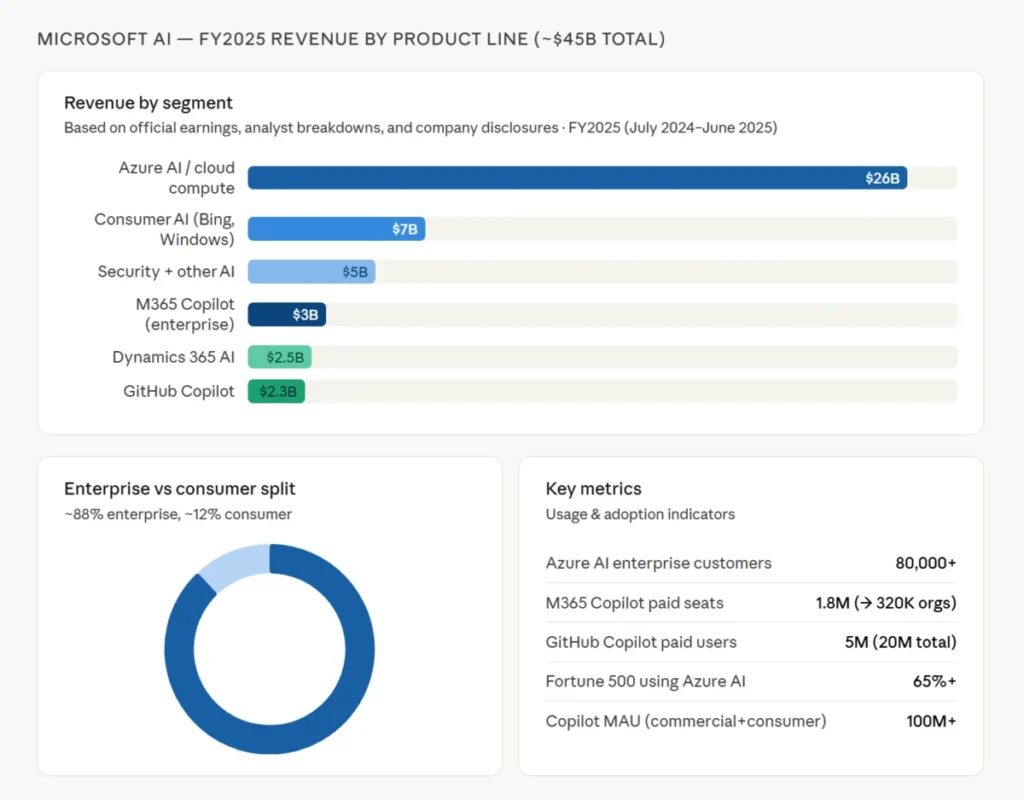
- Copilot Adoption and Revenue: Microsoft reports over 15 million licensed users of Copilot, generating an estimated $4.5 to $5 billion annually based on an average subscription price of $25 per month. This figure, when combined with Azure API service fees and other AI-driven offerings, contributes to an estimated $25 billion or more in AI-related revenue, with AI revenue growing at a substantial 39%.
- Projected Growth: Microsoft itself projects over $100 billion in new AI revenue within the next three years, with some analysts suggesting this target could be achieved even faster. This aggressive projection underscores the company’s confidence in its AI strategy and market position.
- Key Drivers of Microsoft’s Success:
- Integrated Enterprise Solution: The corporate market prioritizes integrated toolsets that combine desktop applications, development tools, IT management capabilities, and connectivity to legacy systems. Microsoft, through its Copilot strategy and partnerships, is uniquely positioned to deliver this comprehensive solution.
- Developer Ecosystem: The vast application development community is increasingly seeking integrated tools and APIs to build within the Copilot ecosystem. This includes ERP, financial, productivity, and analytics vendors, all of whom are looking to leverage AI to enhance their offerings and avoid being displaced by autonomous agents.
- User-Centric Design: Microsoft’s commitment to improving the Copilot user experience, with a focus on intuitive design and seamless integration into the familiar Microsoft desktop environment, is crucial for widespread adoption. While the current interface may appear somewhat fragmented, ongoing UI design efforts are expected to refine its aesthetics and usability over time.
- Partner Network Expansion: Microsoft’s extensive partner network is a critical asset. As new APIs and tools, such as Work IQ, become available, a growing number of corporate cloud vendors are expected to integrate with the Copilot platform, creating a powerful network effect.
The Value-Add of Microsoft’s AI Platform
Microsoft’s AI platform offers several key value-adds that differentiate it from standalone AI models:
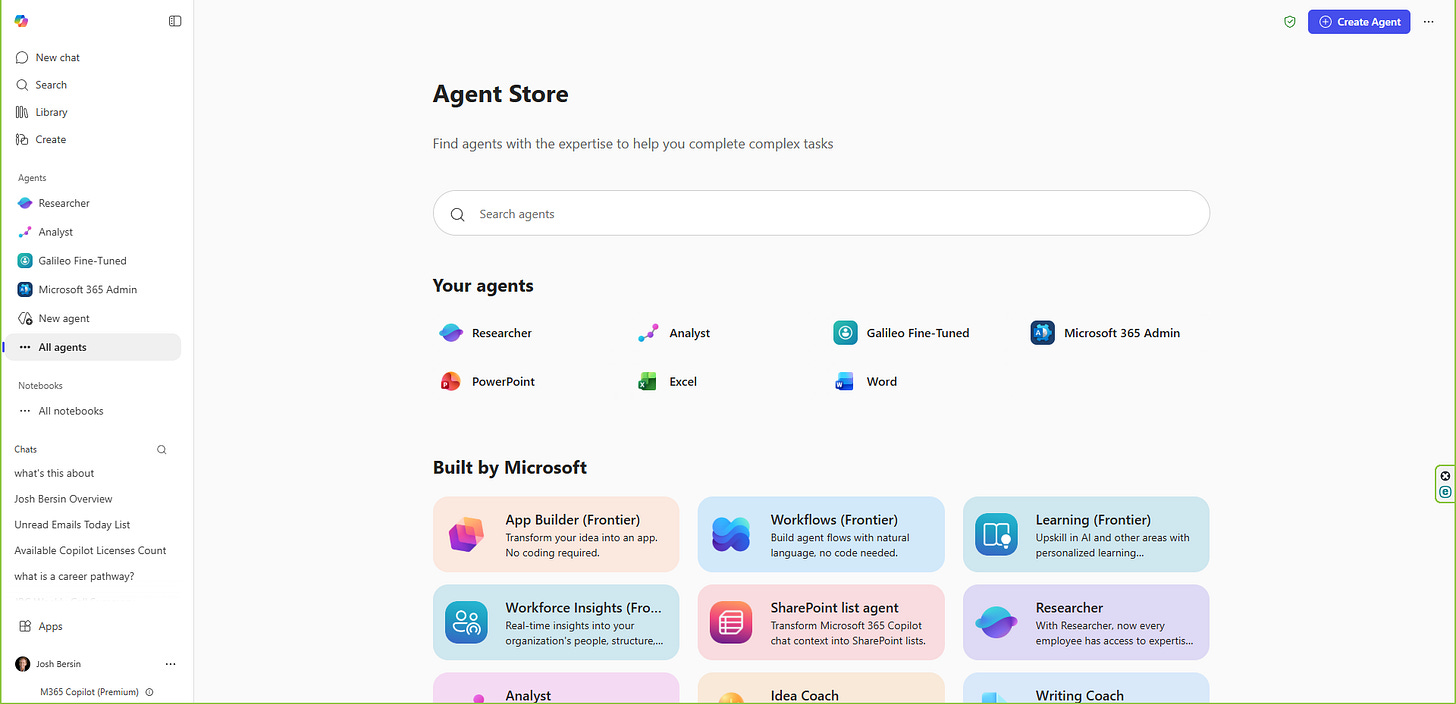
- Deep Research Capabilities: Features like the "Researcher" button, which leverages the Microsoft Graph, enable deep dives into user data (calendars, emails, etc.) to provide context-aware advice and insights. As these capabilities evolve with enhanced memory and context, they offer significant value to individuals and leaders.
- Intelligent Routing and Optimization: New Microsoft Agents are being developed to compare queries against different AI models, helping users optimize performance and cost. Over time, these agents will be able to decompose complex AI tasks and distribute them across various specialized models.
- Agentic Interface for Core Applications: The ability to interact with complex documents, run reports, and create graphs within applications like Excel, PowerPoint, and Word via Copilot offers a powerful new way to engage with productivity tools. This extends the "in-app" Copilot experience across the entire Microsoft suite.
- Intelligent Context Layer: The upcoming Work IQ APIs will allow companies to import and build custom "context" into Copilot, enabling true agentic capabilities in areas like HR, finance, and sales. This opens the door for deep integration with corporate-specific data and workflows.
As demonstrated by the integration of AI Galileo through the Graph connector and as a fine-tuned model, the expanding API capabilities of Microsoft’s platform allow for the development of even more sophisticated use-cases, transforming tools into world-class advisors for employees.
In conclusion, while the market is captivated by the IPO prospects of OpenAI and Anthropic, Microsoft’s strategic focus on building a comprehensive AI "surface" and a robust ecosystem positions it as a formidable contender, and potentially the ultimate winner, in the enterprise AI race. By prioritizing user experience, integration, and a vast network of support, Microsoft is creating a platform that not only leverages advanced AI models but also makes them accessible, functional, and indispensable for businesses worldwide.