The stark reality facing American workers, families, and retirees is a deepening chasm between soaring costs of living and stagnant wage growth. Fuel, transportation, housing, and food prices have surged, creating an affordability crisis that is far from episodic. This pervasive economic challenge, rooted in decades of policy and corporate decisions, is reshaping the American landscape and forcing a re-evaluation of how businesses approach compensation and employee value.
The Unfolding Crisis: A Stark Financial Picture

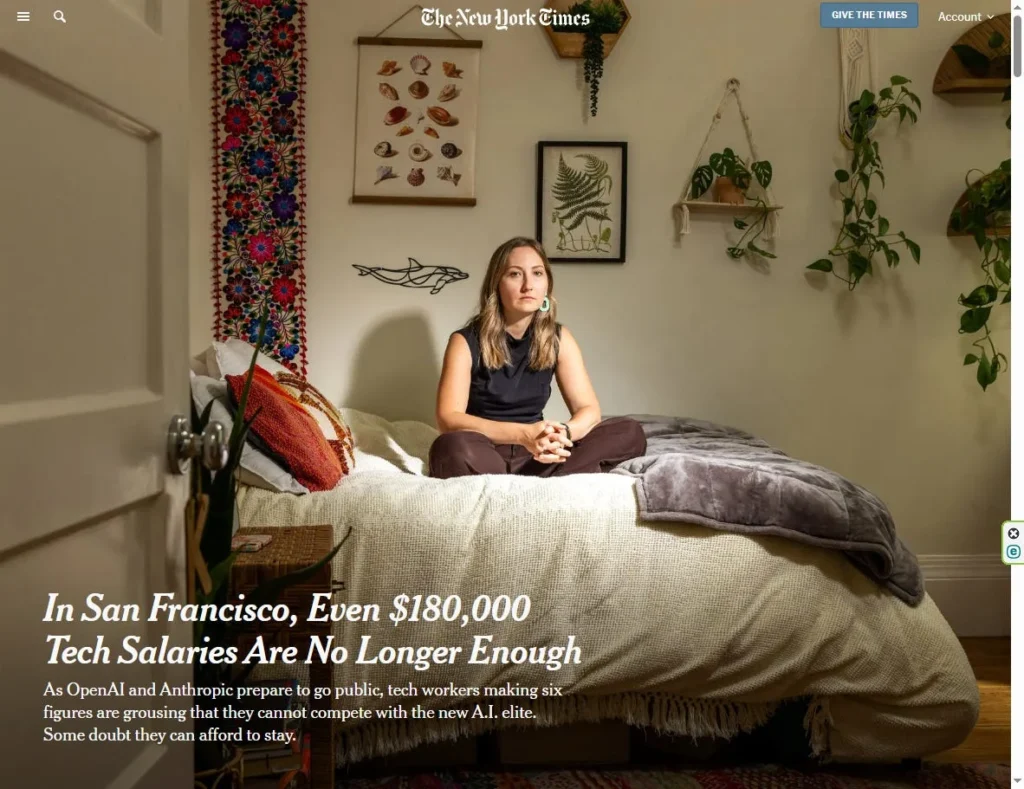
Recent data paints a grim picture of declining purchasing power. A New York Times report highlighted the extraordinary situation in San Francisco, where a combined household income of $370,000 is reportedly insufficient to secure a "nice apartment," underscoring the severity of housing costs in major economic hubs. This is not an isolated incident but a national trend. As of early 2026, year-to-date increases in key living expenses have been substantial: gas prices have risen by 24%, energy costs by 27%, airline fares by 26%, and even essential food items like fruits and vegetables have seen a 5% increase. In stark contrast, average private sector wages have only climbed by a modest 3.5% during the same period.
This disparity has tangible consequences, forcing individuals to make difficult financial choices. The phenomenon of "unretirement" has emerged as a direct response to these pressures. AARP research indicates that a significant portion of retirees are returning to the workforce, with 7% of all retirees unretiring and 12% of seniors re-entering employment in 2026. The primary drivers for this trend are the escalating costs of healthcare, food, and energy, which retirees, reliant on fixed incomes, can no longer comfortably afford.
Historical Roots of the Affordability Gap
The current economic climate is not a sudden shock but rather the culmination of a trend that has been developing for nearly half a century. The seeds of this crisis were sown in the early 1980s, a period marked by significant policy shifts and evolving corporate priorities.
-
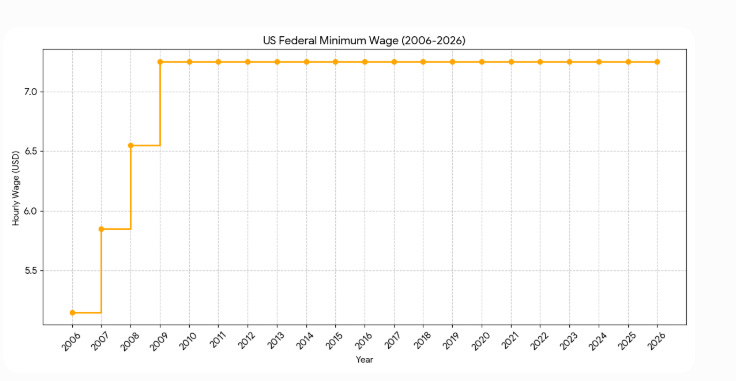
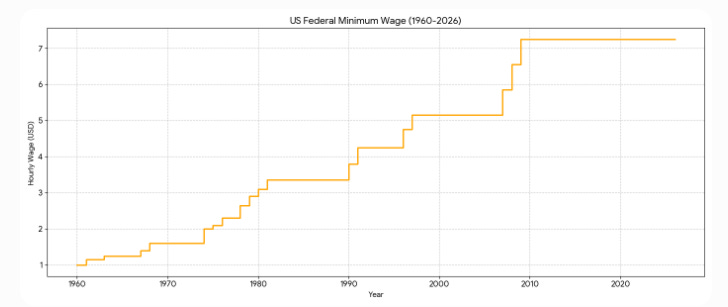
The Reagan Era and Disinflationary Policies: The early 1980s saw a deliberate policy shift aimed at combating the high inflation of the 1970s. President Ronald Reagan’s administration pursued aggressive monetary policies and a broader economic philosophy that emphasized deregulation and a reduced role for government intervention. While successful in taming inflation, these policies also coincided with a slowdown in the growth of the federal minimum wage. Prior to 1980, the minimum wage had generally kept pace with inflation, allowing low-wage workers to maintain their purchasing power. However, under Reagan and subsequent administrations (until recently), the federal minimum wage remained largely stagnant, failing to keep pace with the rising cost of goods and services. This stagnation effectively began to erode the real value of wages for millions of Americans.
-
The Decline of Labor Unions: Concurrently, the influence and participation rate of labor unions began a significant decline. Unionized workforces historically served as a powerful counterbalance, advocating for better wages, benefits, and working conditions. The anti-union sentiment that permeated political and corporate discourse during this period, coupled with legislative and economic shifts, led to a dramatic drop in union membership. This weakened the collective bargaining power of workers, making it more challenging to negotiate for wage increases that matched productivity gains or the rising cost of living.
-
The Rise of Shareholder Primacy: The late 20th and early 21st centuries witnessed a growing emphasis on shareholder value as the primary objective of publicly traded corporations. This "shareholder primacy" model, often championed by business schools and financial institutions, encouraged companies to prioritize returns to investors above other stakeholders, including employees. The focus shifted towards cost-cutting measures, including labor expenses, and maximizing profits through capital investments, automation, and stock buybacks, rather than investing in employee compensation and benefits.
Economic Data Revealing the Disconnect
The macroeconomic data provides compelling evidence of this widening gap between economic growth and worker compensation.
-
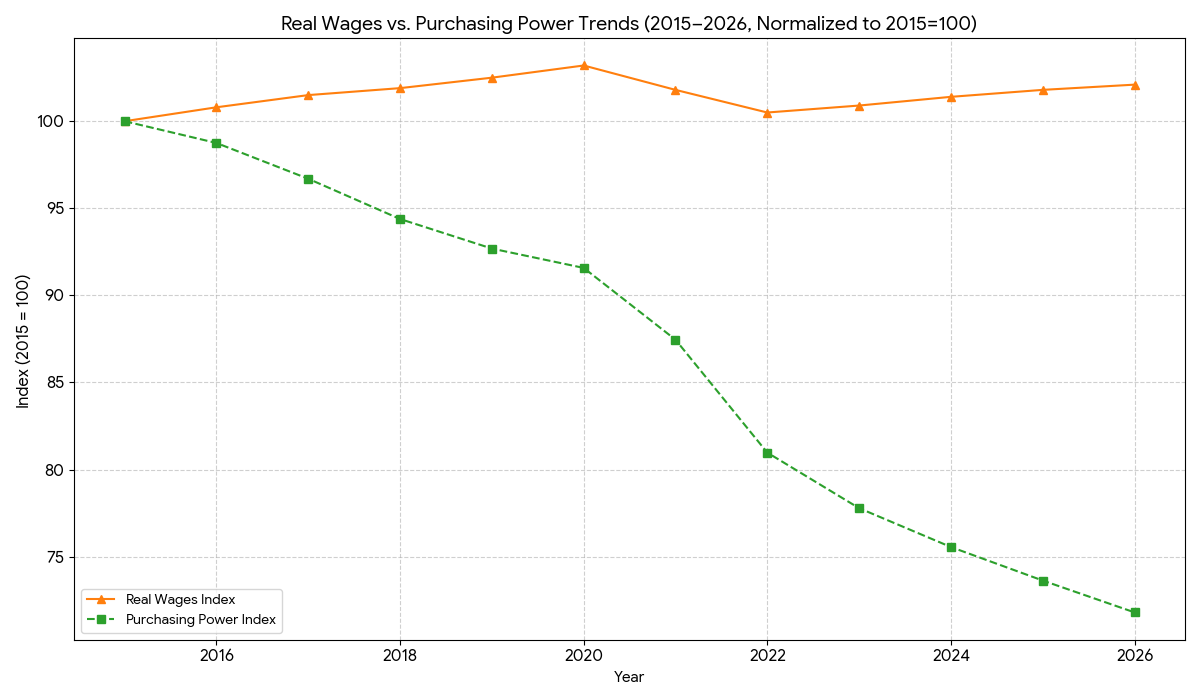
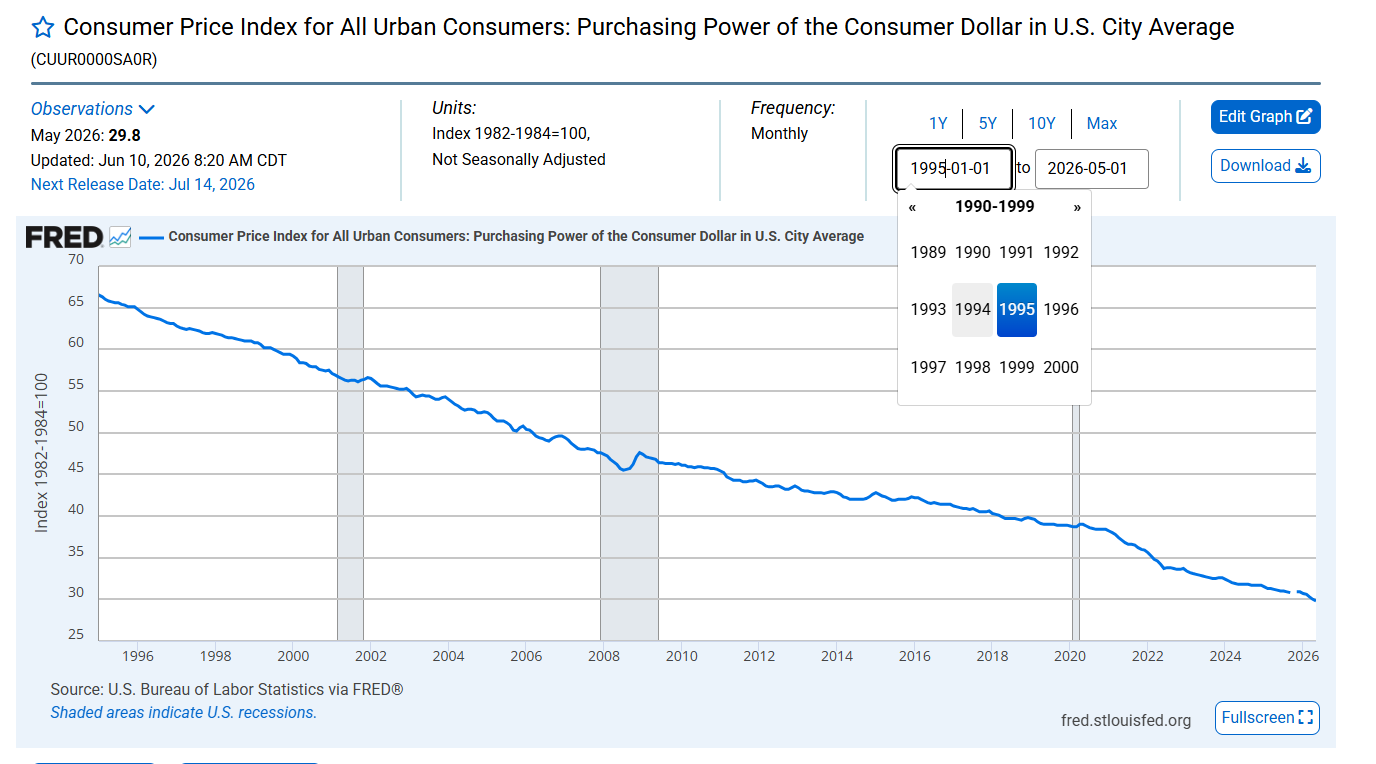
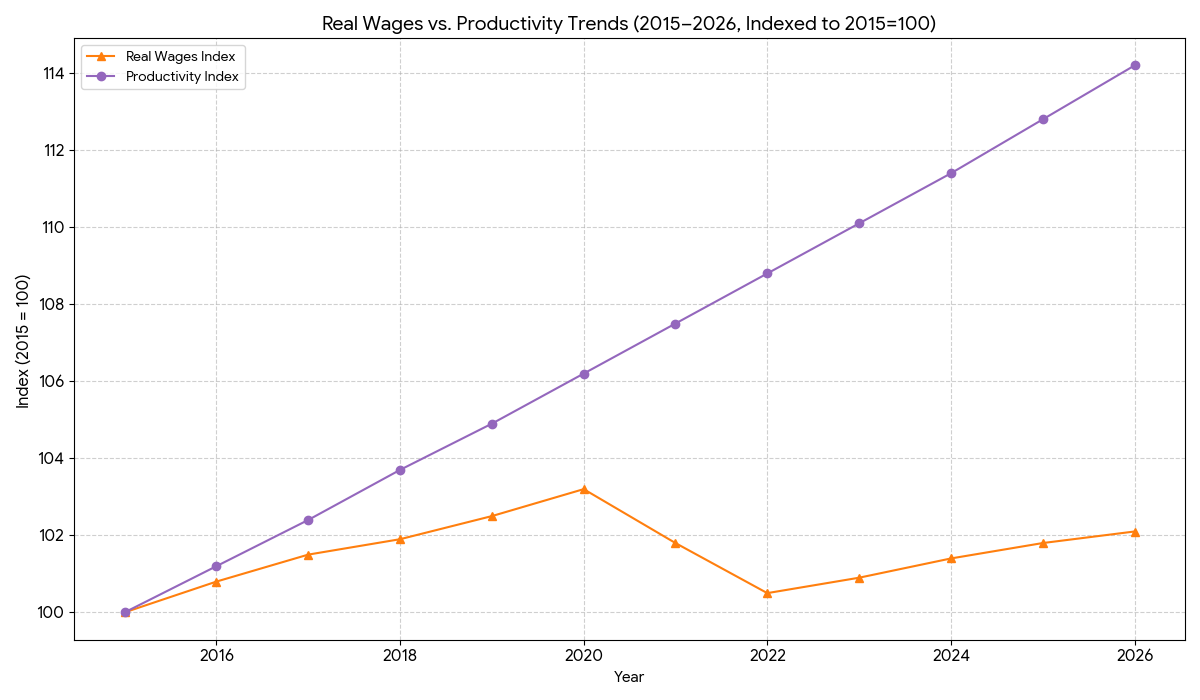
Stagnant Real Wages: Analysis of wage growth versus inflation over the past two to three decades reveals a consistent decline in real purchasing power. While nominal wages may have seen some increases, when adjusted for inflation, the gains have been minimal, with some periods showing actual decreases. Data from sources like the St. Louis Fed illustrates a significant drop in purchasing power over time, with real wages showing only marginal increases in the last ten years, while inflation has steadily climbed.
-
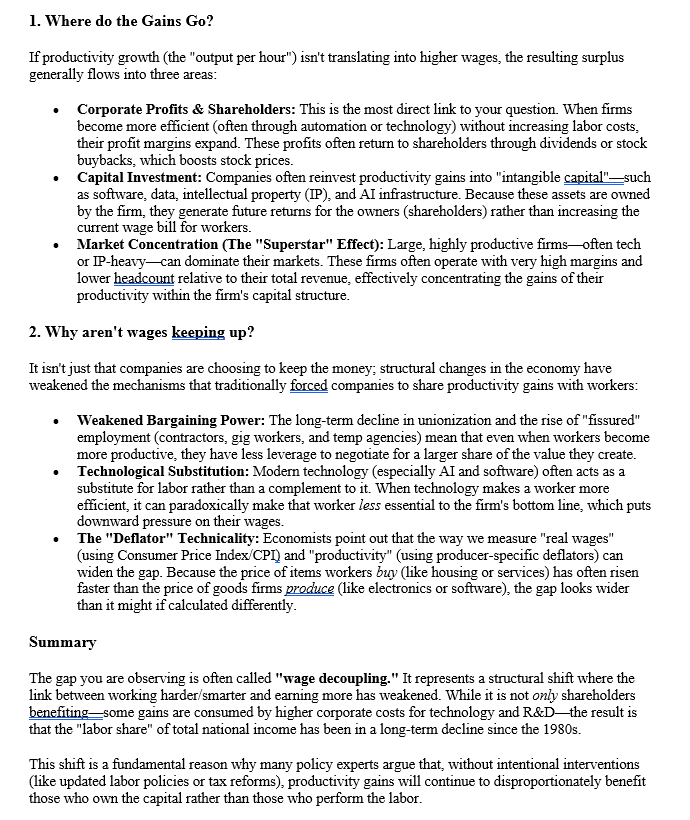
Productivity Gains Not Reaching Workers: A striking disconnect exists between U.S. productivity growth and wage increases. Over the last 30 years, technological advancements and process improvements have led to substantial gains in productivity. For instance, in the tech sector, where the author of the original piece operates, innovations have driven efficiency. However, data indicates that a significant portion of these productivity gains have not been passed on to employees in the form of higher wages. One analysis suggests that productivity has increased by approximately 14% over a certain period, while wages have only risen by about 2%, leaving a substantial 12% of economic productivity unaccounted for in employee compensation.
-
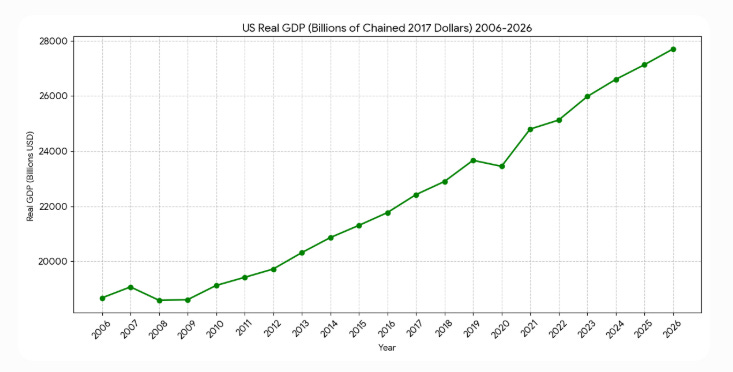
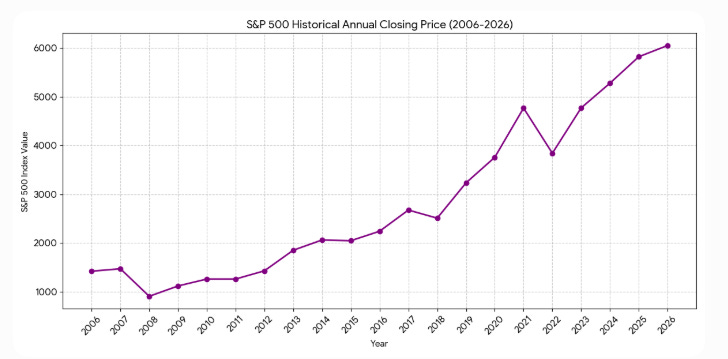
GDP Growth and Shareholder Returns: Gross Domestic Product (GDP), a measure of the total value of goods and services produced in an economy, has also continued to rise over the years. This overall economic expansion, coupled with productivity improvements, has generated substantial wealth. However, the beneficiaries of this growth have predominantly been shareholders and corporate executives, rather than the broader workforce. The "non-wage" economic growth has largely translated into increased stock market valuations, dividends, and executive compensation, further exacerbating income inequality.
-
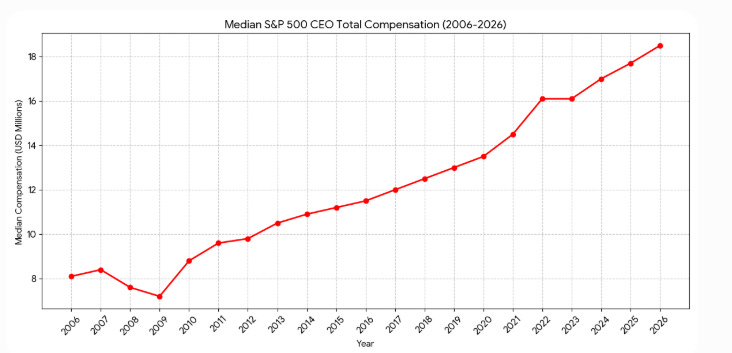
Soaring Executive Compensation: The divergence in compensation is starkly illustrated by the pay of top executives. Reports indicate that the average compensation for Chief Human Resources Officers (CHROs) has reached approximately $3.7 million, with average CEO pay often being two to three times higher. This trend suggests that while the average worker struggles to keep pace with inflation, top corporate leadership has seen its compensation skyrocket, often tied to stock performance and shareholder returns.
The Impact of Inflationary Expectations
Compounding these systemic issues is the current inflationary environment. While various factors contribute to inflation, including supply chain disruptions, geopolitical events, and increased government spending, the persistent rise in prices since 2021 has become a deeply ingrained expectation.
-
Shifting Consumer Norms: Consumers have become accustomed to continuous price increases for essential goods and services. What was once considered a significant price hike for a bag of groceries, for example, is now becoming the norm. This "inflationary expectation" is fueled by ongoing capital spending, particularly in areas like AI, shortages of critical components such as semiconductors, and a general increase in the cost of doing business across various sectors.
-
Employee Dissatisfaction: The consequence of these rising costs and lagging wages is a palpable decline in employee satisfaction with their pay. Surveys from institutions like the Federal Reserve Bank of New York indicate that employee satisfaction with compensation is at its lowest point since 2014. This dissatisfaction can lead to decreased morale, reduced productivity, and increased employee turnover.
What Can Businesses Do? A Path Forward
While external factors like government policy and global economic conditions play a role, businesses have a significant responsibility and the agency to address the affordability crisis for their employees. The author, drawing on experience in advising companies on leadership and HR, proposes several actionable strategies:
1. Rethinking Labor as an Investment, Not an Expense
A fundamental shift in perspective is required: viewing labor not as a cost to be minimized, but as a crucial investment for long-term success.
-
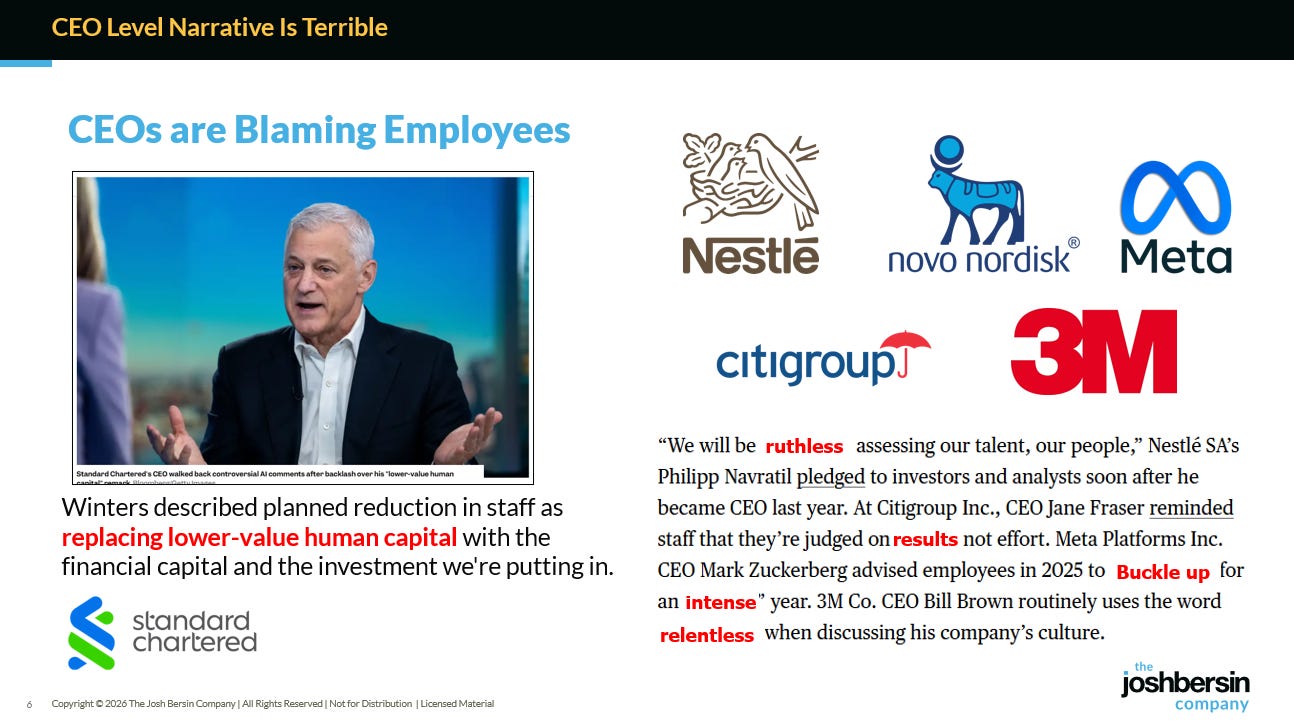
Valuing Human Capital: Companies must move away from the traditional accounting approach of labor as a mere expense. Instead, employees should be recognized as the primary "appreciating asset" of any organization. Investing in their training, development, and well-being directly enhances their capabilities, customer service, and overall contribution to the business.
-
The "Irresistible" Advantage: Research, including findings from the author’s book "Irresistible: Secrets to Enduring Employee-Focused Organizations," demonstrates a strong correlation between employee-centric practices, including fair compensation, and superior business growth and outperformance. Companies that prioritize their people tend to achieve greater success.
2. Focusing on Internal Capability Development
Rather than relying heavily on constant external hiring, organizations should prioritize enhancing the skills and capabilities of their existing workforce.
-
AI as a Supercharger, Not a Replacement: While Artificial Intelligence is transforming industries, its primary benefit lies not in headcount reduction but in augmenting human capabilities, increasing speed, and enabling scale. AI tools can empower existing employees to become "superworkers," enabling them to achieve more. The cost savings from AI should be reinvested in employees, not solely used to cut jobs.
-
Cultivating Talent Density: The concept of "Talent Density" emphasizes the importance of having highly skilled and engaged individuals within an organization. Instead of viewing employees as interchangeable cogs, companies should focus on fostering an environment where each individual is a skilled, learning asset. This involves continuous training, role redesign, and a commitment to internal growth. The "4R model" (Recruit, Retain, Reskill, Redesign) provides a framework for achieving this, promoting stability and enabling wage growth.
3. Recognizing Higher Wages as a Strategic Advantage
Investing in higher wages can yield significant returns for businesses.
-
Attracting and Retaining Top Talent: Competitive compensation is a primary driver for attracting and retaining the most skilled and ambitious individuals. This creates a robust talent pipeline and reduces the high costs associated with employee turnover, which can range from 50% to over two times an employee’s annual salary when accounting for lost knowledge, customer relationships, and the expenses of recruitment and onboarding.
-
Boosting Employee Engagement and Productivity: Fair compensation fosters loyalty and encourages employees to embrace new roles and reskill when necessary. This leads to a more dynamic and engaged workforce, capable of adapting to changing business needs and driving higher levels of productivity.
4. Prioritizing Internal Mobility
Creating pathways for employees to move within the organization is essential for long-term success and financial health.
-
Reducing Churn and Opportunity Cost: High employee turnover is not only expensive but also results in significant opportunity costs. By fostering a culture of internal mobility, companies can fill open positions more efficiently, reduce recruitment expenses, and retain valuable institutional knowledge.
-
Driving Profitability: Studies, such as PwC’s 2026 CEO study, indicate that companies with strong internal talent redeployment programs (over 20% of the workforce annually) are substantially more profitable over the long term. This practice creates human capital that can be reinvested in employee compensation and development.
The Employer’s Responsibility
Ultimately, the responsibility for addressing the wage-price disparity does not rest solely on government policy or external economic forces. Employers play a critical role. Companies that proactively offer fair, above-average wages, like Costco, demonstrate that prioritizing employee well-being can lead to enhanced profitability and a more stable, productive workforce. The example of Costco cashiers becoming millionaires through competitive pay and benefits serves as a powerful testament to this approach.
The current economic environment demands a fundamental reevaluation of corporate priorities. By embracing a philosophy that values labor as an investment, fosters internal growth, and offers competitive compensation, businesses can not only contribute to a more equitable economy but also secure their own long-term success and resilience. The economic landscape is shifting, and companies that adapt by prioritizing their people are best positioned to thrive.