
Digital performance management systems have fundamentally reshaped how organizations approach employee evaluation, development, and overall productivity. These sophisticated software solutions are designed to streamline the multifaceted performance management lifecycle, benefiting administrators, managers, and employees by simplifying processes and fostering a more transparent and effective work environment. The current landscape of performance management technology is characterized by a crowded marketplace, making the selection of the right system a critical decision for any forward-thinking company. This comprehensive guide delves into the essential considerations for evaluating and choosing performance management tools that align with an organization’s unique needs and strategic objectives.
Defining the Modern Performance Management System
At its core, a performance management system encompasses a suite of processes and technological tools dedicated to facilitating employee growth, gathering constructive feedback, and ultimately, driving improvements in both individual and organizational performance. A robust system is instrumental in boosting employee engagement and maximizing their impact within the company. It empowers managers with the insights and capabilities needed for continuous dialogue, coaching, and performance enhancement through regular feedback loops. The primary objectives of contemporary employee performance management software include fostering clear communication, aligning individual contributions with company-wide goals, and creating a culture of continuous learning and development.
The Compelling Case for Performance Management Software
In today’s competitive business environment, achieving and sustaining employee success is a paramount concern for most organizations. This pursuit extends beyond mere task completion; it involves cultivating an environment that nurtures high-performing teams. Companies that continue to rely solely on outdated annual performance reviews are increasingly falling behind. The modern imperative is to move beyond perfunctory, check-the-box exercises towards a streamlined, engaging, and actionable performance management process. A continuous performance management approach, supported by effective software, cultivates several key benefits:

- Enhanced Employee Engagement: Regular feedback and development opportunities foster a sense of value and investment in employees.
- Improved Productivity: Clear goal alignment and ongoing coaching help employees focus their efforts on impactful activities.
- Proactive Problem-Solving: Continuous monitoring allows for early identification and resolution of performance issues, preventing them from escalating.
- Data-Driven Decision-Making: Performance data provides valuable insights for talent development, succession planning, and organizational strategy.
A cutting-edge employee performance management system transcends being a mere evaluation tool; it serves as the foundational architecture upon which HR managers and their organizations can adapt, innovate, and improve, driving performance at every organizational tier.
Key Drivers for Adopting Performance Management Software
The strategic adoption of performance management software is no longer a luxury but a necessity for organizations aiming for sustained success. Leaders are increasingly recognizing the tangible benefits that these systems bring to their operations and workforce.
1. Accurate Performance Measurement
The ability to accurately measure employee performance is foundational. However, a significant gap exists in employee understanding of expectations. According to Lighthouse Research & Advisory, only 36% of employees report a clear understanding of their job responsibilities and performance benchmarks. A well-implemented performance management system provides essential clarity, ensuring that individual efforts are directly aligned with overarching organizational objectives. This alignment is not only crucial for effective performance but also for fostering a shared sense of purpose.
2. Bridging Employee Skill Gaps
Many employees actively seek more feedback and coaching opportunities. Research indicates that as many as 50% of employees desire additional feedback to guide their professional growth. Performance management systems empower leaders to identify and address skill gaps effectively. They facilitate the creation of thoughtful employee development plans, equipping individuals with the necessary tools and support to excel in their roles and advance their careers.
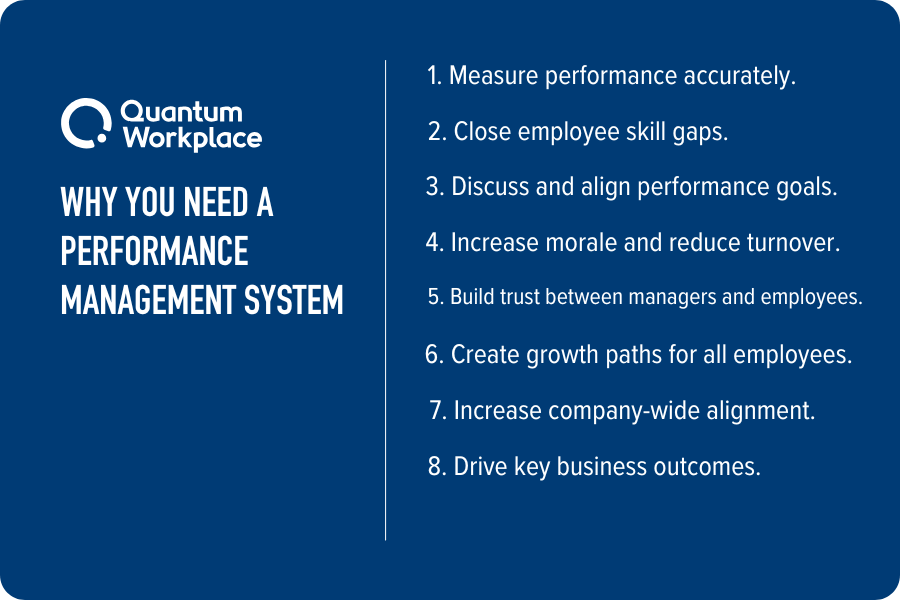
3. Goal Alignment and Engagement
Clearly defined and communicated performance goals are potent drivers of employee engagement. When employees understand how their individual objectives contribute to the larger organizational vision, their participation and commitment increase significantly. Research by Quantum Workplace has shown that employees who have clearly defined individual goals are twice as likely to be engaged. Performance management systems excel at harmonizing personal aspirations with strategic company objectives.
4. Boosting Morale and Reducing Turnover
Recognition and appreciation are deeply valued by employees. Disturbingly, only 20% of employees feel consistently recognized and appreciated for their contributions, while a substantial half of all employees across all levels desire more recognition. A performance management system provides a structured framework for recognizing and celebrating employee achievements, which directly boosts morale and significantly reduces costly employee turnover.
5. Cultivating Manager-Employee Trust
Trust is the bedrock of any thriving workplace. Effective performance management systems foster an environment of transparency and fairness, which are crucial for building a strong foundation of trust between managers and their teams. Organizations that prioritize providing consistent feedback, facilitating meaningful manager-employee connections, and ensuring clear visibility into performance metrics are more likely to cultivate a high-trust culture.
6. Establishing Clear Growth Pathways
Every employee deserves a transparent and well-defined path for career growth within their organization. Performance management systems are integral to bringing talent development strategies to life. The right system transforms talent development from an aspirational concept into a structured, actionable process, ensuring that employees have clear avenues for advancement.
7. Driving Company-Wide Alignment
Quantum Workplace’s research consistently highlights the profound impact of performance management on organizational culture. Effective systems are instrumental in aligning team members with the company’s mission, core values, and overarching strategic goals, creating a cohesive and purpose-driven workforce.
8. Achieving Key Business Outcomes
Ultimately, a performance management system is a strategic lever for driving tangible business results. Brandon Hall Group research indicates that a concerning 62% of organizations believe their current performance management processes do not effectively enhance performance. Modern systems are designed to deliver the critical outcomes and key results that are essential for business growth and sustainability.
Essential Elements of High-Performing Performance Management Software
The ideal performance management system should comprehensively support the entire performance lifecycle, encompassing planning, monitoring, reviewing, and recognizing employee contributions.
1. Strategic Planning
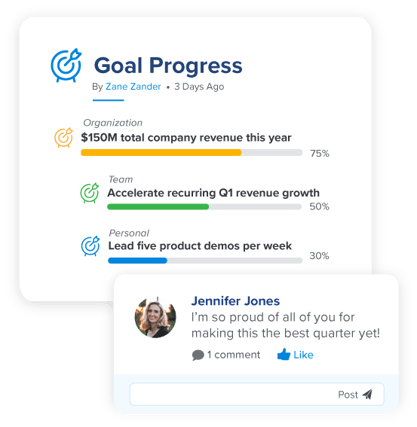
Effective performance management begins with meticulous planning. A robust platform should facilitate the definition and alignment of employee goals with organizational objectives. Transparent and clearly articulated goals contribute to:
- Focused Effort: Employees understand what is expected of them and can prioritize tasks accordingly.
- Motivation: Achieving defined milestones provides a sense of accomplishment and drives further effort.
- Alignment: Individual goals directly support and contribute to broader team and company objectives.
- Accountability: Clear goals establish a basis for accountability and performance tracking.
2. Continuous Monitoring
To effectively monitor performance, access to accurate, real-time data and actionable insights is paramount. The right system enables the tracking of key performance indicators (KPIs) and provides visibility into progress toward established goals. A continuous monitoring approach empowers teams to:
- Identify Obstacles Early: Proactively address challenges that may hinder progress.
- Provide Timely Support: Offer guidance and resources when employees need them most.
- Maintain Momentum: Keep employees motivated and focused on achieving their objectives.
- Celebrate Milestones: Acknowledge and celebrate incremental successes along the way.
The overarching goal of monitoring is to promptly address performance issues and sustain high levels of productivity.
3. Meaningful Reviewing
The review phase is a critical juncture for employee development and performance recalibration. An effective performance management system should streamline the process of conducting efficient and impactful employee performance reviews. These reviews should extend beyond mere historical appraisals, serving as a platform for constructive dialogue between managers and employees. Key aspects include:
- Constructive Feedback: Providing actionable insights for improvement and growth.
- Developmental Planning: Identifying areas for skill enhancement and career progression.
- Goal Refinement: Adjusting goals based on performance trends and evolving business needs.
- Recognition: Acknowledging achievements and contributions.
Furthermore, a comprehensive system should support 360-degree feedback, offering a holistic view of an employee’s performance from multiple perspectives. The system should simplify feedback documentation, enabling easy retrieval of historical conversations and insights.
4. Consistent Recognition
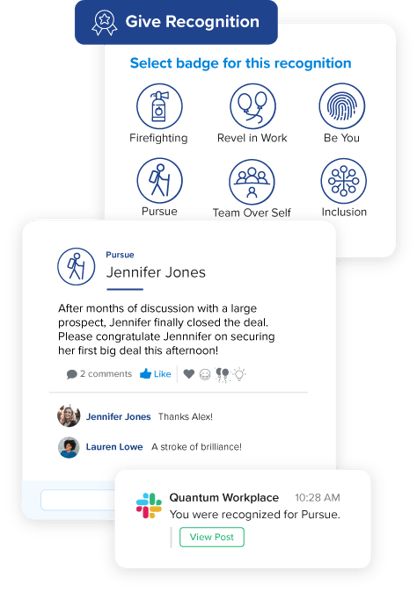
Employee recognition is a powerful catalyst for motivation and sustained high performance. The system should equip leaders with tools to acknowledge and appreciate employee efforts. Effective employee recognition:
- Boosts Morale: Employees feel valued and appreciated, leading to increased job satisfaction.
- Reinforces Positive Behavior: Highlights and encourages the actions and behaviors that contribute to success.
- Fosters a Positive Culture: Creates an environment where appreciation is a regular occurrence.
- Improves Retention: Employees who feel recognized are less likely to seek opportunities elsewhere.
Publicly acknowledging outstanding contributions and expressing appreciation cultivates a culture of excellence and continuous improvement throughout the organization.
Essential Features for Performance Management Tools
When selecting performance management software, it’s crucial to look for features that support the entire performance management cycle.
1. Goal Setting, Tracking, and Collaboration
Performance goals are instrumental in driving organizational achievement efficiently. Clear, aligned, and shared goals guide employees, ensuring their work remains synchronized with the overarching organizational strategy. This fosters accountability, motivation, and strategic alignment. Key goal management features include:
- Goal Cascading: Ability to align individual goals with team and organizational objectives.
- Progress Tracking: Real-time visibility into goal attainment.
- Collaboration Tools: Features enabling discussion and alignment on goals between managers and employees.
- Performance Metrics Integration: Linking goals to measurable outcomes.
2. Ongoing One-on-One Meetings and Performance Reviews
Regular, documented performance conversations provide a comprehensive understanding of employee performance and significantly boost engagement. One-on-one meetings are ideal for discussing performance, providing feedback, and fostering a forward-looking perspective. Essential features for one-on-one meeting software include:
- Meeting Agendas: Tools for structuring conversations and ensuring key topics are covered.
- Action Item Tracking: Ability to assign and monitor follow-up tasks.
- Feedback Capture: Facilitating immediate documentation of discussions and feedback.
- Developmental Focus: Encouraging conversations centered on growth and career progression.
Performance reviews should offer valuable context, focusing on engagement and growth. Actionable advice is consistently cited as a highly valued component of employee reviews. Performance review software should enable accurate, straightforward, and actionable evaluations, featuring:
- Customizable Templates: Ability to tailor review forms to specific roles and organizational needs.
- Multi-Rater Feedback: Support for collecting input from peers, direct reports, and other stakeholders.
- Calibration Tools: Features to ensure fairness and consistency in ratings across the organization.
- Historical Data Access: Easy retrieval of past reviews for trend analysis.
3. Real-Time Employee Recognition
A significant majority of employees (69%) report they would work harder if they received more effective recognition. Publicly acknowledging and praising employees yields numerous benefits:
- Boosts Morale and Motivation: Employees feel valued and appreciated, leading to increased job satisfaction and productivity.
- Reinforces Desired Behaviors: Highlights and celebrates the actions and contributions that align with organizational values and goals.
- Enhances Team Cohesion: Fosters a positive and supportive work environment where team members celebrate each other’s successes.
- Improves Employee Retention: Employees who feel recognized and appreciated are more likely to remain with the organization.
However, only 37% of employees nationwide express satisfaction with recognition and appreciation at work. Recognition software can bridge this gap by facilitating timely and impactful celebrations of success across the organization. Key features to look for in employee recognition software include:
.png?width=900&height=600&name=Essential-elements-of-employee-engagement-software_blog-image%20(2).png)
- Peer-to-Peer Recognition: Enabling employees to recognize each other.
- Public and Private Recognition Options: Flexibility in how recognition is shared.
- Integration with Company Values: Linking recognition to specific company principles.
- Gamification Elements: Incorporating badges, points, or leaderboards to enhance engagement.
4. Feedback Collection and Sharing
Trusting cultures are built on effective feedback mechanisms. A strong feedback culture correlates directly with a highly engaged workforce. The right software ensures teams receive the necessary feedback for success, emphasizing individualized, constructive, and unbiased communication. Continuous feedback should be an integrated part of the workflow, enabling:
- Real-Time Feedback: Allowing for immediate input on performance and behavior.
- 360-Degree Feedback: Gathering perspectives from all levels of the organization.
- Sentiment Analysis: Tools to gauge the overall tone and impact of feedback.
- Feedback Tracking: Documenting feedback for performance discussions and development planning.
A feedback tool that promotes a company-wide feedback culture should offer:
- Anonymous Feedback Options: Encouraging honest and candid input.
- Structured Feedback Forms: Guiding users to provide specific and actionable feedback.
- Feedback Request Features: Allowing employees and managers to solicit feedback proactively.
- Integration with Performance Reviews: Seamlessly incorporating feedback into formal evaluation processes.
5. Vital Talent Metrics Tracking
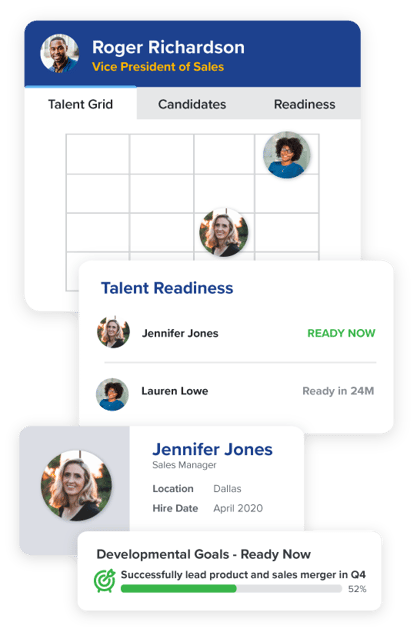
Talent reviews are essential for informed, data-driven talent management decisions. They should be frequent, unbiased, and grounded in quantifiable data. Leaders need clear visibility into who is performing exceptionally, who is ready for promotion, and who may be at risk of departure. Talent reviews help:
- Identify High Potentials: Pinpoint employees with the aptitude and ambition for leadership roles.
- Assess Development Needs: Uncover skill gaps and training requirements for individuals and teams.
- Inform Succession Planning: Build a robust pipeline of qualified candidates for critical positions.
- Optimize Workforce Planning: Make strategic decisions about talent acquisition and development.
Talent review tools can streamline the tracking of these vital metrics, simplifying the process through features such as:

- Talent Mapping: Visualizing employee performance and potential.
- Skills Inventory: Maintaining a comprehensive database of employee skills and competencies.
- Performance Trend Analysis: Identifying patterns and trajectories in employee performance over time.
- Data Export Capabilities: Allowing for further analysis and integration with other HR systems.
6. Identifying Top Talent and Developing Successors
Proactively identifying talent gaps is crucial for minimizing business disruption and fostering a culture of continuous growth. Visibility into critical roles and potential successors is the first step toward a comprehensive succession planning strategy. This involves:
- Critical Role Identification: Defining positions essential for business continuity and strategic execution.
- Talent Pipeline Development: Cultivating a pool of ready candidates for key roles.
- Targeted Development Plans: Creating personalized growth pathways for identified talent.
- Risk Assessment: Identifying potential flight risks and implementing retention strategies.
Succession planning tools integrated within a performance management system can provide actionable reports on talent pipeline strength, readiness, and associated risks, enabling a deeper understanding of:
- Readiness for Key Roles: Assessing the preparedness of identified successors.
- Talent Gaps: Highlighting areas where the talent pipeline is weak.
- Development Needs: Pinpointing specific training and experiences required for advancement.
- Employee Engagement and Retention: Understanding how these factors influence succession readiness.
Key Questions for Evaluating Performance Management Solutions
Selecting the right performance management system requires a thorough evaluation process, addressing both strategic and functional needs.
Big-Picture Evaluation Questions
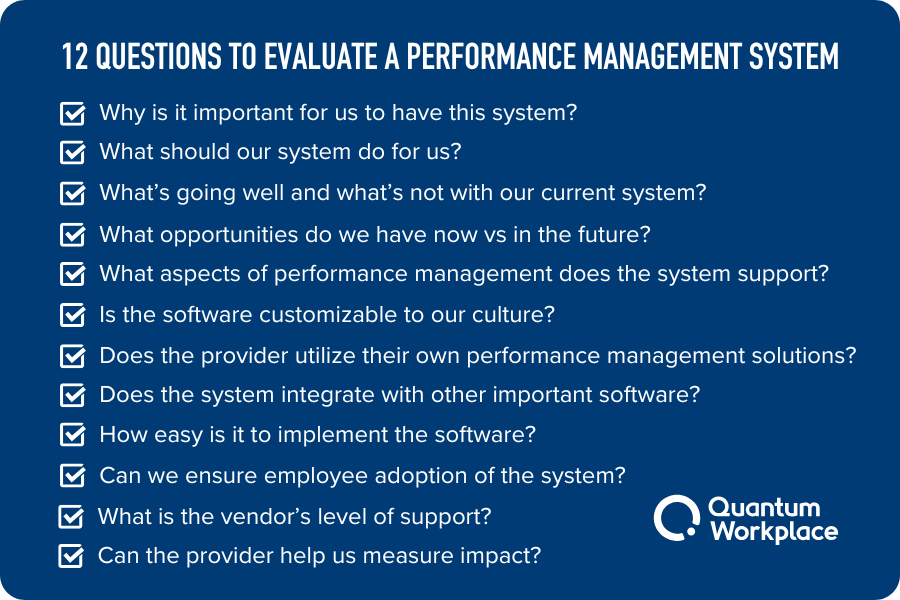
- Why is staff performance management software essential for our organization? Understanding the core motivations behind investing in performance management software is crucial. It helps articulate the business case and guides decision-making. A system should streamline administrative burdens, enhance communication, and provide data-driven insights to improve overall workforce effectiveness.
- What specific outcomes should our performance management system deliver? Beyond generic improvements, organizations must define tangible results. This might include reducing employee turnover by X%, increasing employee engagement scores by Y%, or improving the success rate of internal promotions.
- What is currently working well, and what are the pain points in our existing system? A candid assessment of current processes is vital. Employee engagement surveys can provide invaluable insights into what employees and managers find effective and where improvements are most needed.
- What are our immediate and long-term opportunities for leveraging performance management? A forward-looking perspective is essential. While short-term gains might focus on optimizing existing processes (e.g., transitioning to continuous feedback), long-term opportunities could involve building a robust leadership pipeline or fostering a data-driven talent culture.
Software Evaluation Questions
- What specific aspects of performance management does the system support? Managers are on the front lines of performance. Their input on what tools would best support their teams is invaluable in identifying functional requirements and potential pain points.
- Is the performance management software customizable to our organizational culture? While structure is beneficial, flexibility is key. The software should adapt to your unique company culture, values, and evolving needs, allowing for personalization in areas like goal setting, feedback templates, and recognition programs.
- Does the developer utilize their own performance management software? A vendor that uses its own tools demonstrates confidence in their product and provides practical insights into its usability and effectiveness.
- Does the performance management software integrate with our existing systems? Seamless integration, particularly with HRIS platforms, is critical to avoid data silos and reduce administrative burden. The ability to connect with other essential business tools enhances workflow efficiency.
Service Evaluation Questions
- How straightforward is the implementation process? A smooth implementation process, supported by strong customer service, is crucial for widespread adoption. Look for vendors who offer comprehensive onboarding, training, and ongoing support.
- Can we ensure manager and employee adoption of the system? The most advanced software is ineffective if not used. Vendors should demonstrate how they facilitate adoption through intuitive design, effective training, and clear communication strategies. Ultimately, a system’s inherent value and user experience should drive organic adoption.
- What is the vendor’s level of ongoing support? Beyond initial setup, reliable and responsive support is paramount. Vendors should offer continuous assistance, from technical troubleshooting to strategic guidance on maximizing the platform’s potential.
- Can the software provider help us measure the impact of the system? A truly effective performance management system should be able to demonstrate its value. The provider should offer tools and reporting capabilities to measure key metrics and demonstrate ROI.
Comparing Performance Management Solution Types
Understanding the different categories of performance management solutions available can help organizations make a more informed choice.

- HRIS Solutions: While offering broad HR functionalities, HRIS systems often have limited depth in specialized areas like performance management. They may be cost-effective for basic needs but lack the advanced features required for comprehensive strategies.
- Point Solutions: These are dedicated performance management tools designed with advanced features for goal setting, continuous feedback, and detailed analytics, enabling organizations to effectively monitor and enhance employee performance.
- Basic Office / Google Tools: While free and accessible, these tools lack the sophisticated features, automation, and analytics of dedicated platforms, making them unsuitable for robust, long-term performance management.
- Manual Spreadsheets: Although low-cost, spreadsheets are time-consuming, prone to errors, and difficult to scale for effective performance tracking and insightful analysis.
Leading Performance Management Systems for 2026
The market for performance management software is dynamic, with several providers offering robust solutions.
Quantum Workplace
Quantum Workplace positions itself as a talent management platform designed to provide leaders with clarity and confidence in building thriving teams. It excels at consolidating critical talent signals, making them accessible to leaders for immediate action on employee experience gaps. Their performance management tools empower managers to coach effectively and drive business impact through features such as:
- Goal Management: Facilitating the setting, tracking, and alignment of individual and team objectives.
- Continuous Feedback: Enabling real-time input and dialogue between managers and employees.
- Performance Reviews: Streamlining the evaluation process with customizable templates and multi-rater feedback.
- 1-on-1 Meeting Support: Providing structure and tools for productive manager-employee conversations.
- Employee Recognition: Encouraging appreciation and acknowledgment of contributions.
Quantum Workplace also offers an employee engagement suite, providing tools for surveys, pulse checks, and lifecycle assessments to gather comprehensive employee insights. Their employee development tools offer real-time data and actionable steps for team development, aligned with learning and development strategies. With over two decades in the talent management space and a strong reputation for customer satisfaction, Quantum Workplace is recognized for its comprehensive approach and supportive service model. However, some users have noted challenges with navigation and a desire for greater administrative control.
Lattice
Lattice is an AI-powered people platform aimed at enhancing manager effectiveness, streamlining HR operations, and leveraging workforce insights for business success. Users often praise its intuitive interface, goal-tracking capabilities, and seamless integration with other systems. The company is also noted for its responsive customer support. Areas for improvement, as noted by some users, include limitations in customization and potential complexities in features like OKR goal setting. Concerns regarding privacy due to occasional bugs have also been raised.

Culture Amp
Culture Amp provides a platform for collecting and analyzing employee feedback, developing high-performing teams, recognizing success, driving employee development, and retaining talent. Its user-friendly interface and ability to gather and analyze feedback are highly regarded, along with seamless HRIS integration. However, some users have pointed out navigation limitations, restricted customization, and a steep learning curve due to the platform’s extensive features. Slower support response times have also been mentioned.
15Five
15Five’s performance management platform combines generative AI, custom analytics, and human-centered principles to help businesses and employees thrive. It enables HR leaders to boost engagement, performance, and retention through features like 360 reviews, engagement surveys, goal tracking, and manager development programs. Regular feedback is facilitated through guided one-on-ones and check-ins. While effective, some users have found customer support could be more responsive, and the platform’s extensive features can initially be overwhelming to set up.
PerformYard
PerformYard is a performance management tool designed for small businesses, focusing on professional development and social empowerment. It serves as a centralized hub for managing reviews, goals, and feedback. Users appreciate its intuitive interface, customizable options, and straightforward review process. Potential drawbacks noted by some users include navigation challenges and a perception that the platform may be overly generic for some organizational needs.
Leapsome
Leapsome is a people enablement platform that integrates performance management, employee engagement, and learning. It offers tools for goals and OKRs, performance reviews, employee development, engagement surveys, feedback, and compensation. Users commend its user-friendly interface, public and private praise features, and emphasis on feedback anonymity. However, some have reported a steep learning curve, navigation complexities, limited reporting customization, and occasional slow load times.

The Transition to Continuous Performance Management
Performance management typically falls into two broad categories: traditional and continuous. While each organization is unique and a one-size-fits-all solution is rarely effective, many companies are finding value in striking a balance between the two. Traditional performance management, characterized by annual or semi-annual reviews focused on past performance, is increasingly being supplemented or replaced by continuous performance management. This approach emphasizes regular feedback, ongoing dialogue, and positions managers as coaches rather than solely evaluators.
The shift towards a more continuous model doesn’t require an abrupt overhaul. Organizations can adopt a phased approach, gradually integrating more frequent feedback loops and development conversations. Key steps in this transition include:
- Prioritizing Frequent Check-ins: Implementing regular, informal conversations between managers and employees.
- Encouraging Real-Time Feedback: Fostering a culture where feedback is given and received promptly.
- Focusing on Development: Shifting the emphasis from past performance to future growth.
- Training Managers: Equipping managers with the skills to effectively coach and provide feedback.
For many organizations, performance management is an evolving journey. Continuous iteration and building upon successful practices are key to long-term effectiveness.
Quantum Workplace’s Performance Pathways
Recognizing that a universal approach to performance management is often ineffective, Quantum Workplace offers "Performance Pathways." This framework is designed to help organizations develop a performance management process that suits their unique characteristics and maturity level. These customizable frameworks enable companies to launch effective programs without starting from scratch, providing a structured yet adaptable approach to performance management.
Frequently Asked Questions About Performance Management Systems
What is a performance management system?
A performance management system is a structured approach and technological framework used by organizations to monitor, evaluate, and enhance employee performance. It aligns individual goals with organizational objectives to improve productivity and foster development.
Why is implementing a performance management tool important?
Implementing performance management software ensures employees receive regular feedback, understand expectations, and have clear development paths. This alignment boosts motivation and contributes to achieving organizational goals.
What are the key components of effective performance management?
An effective system typically includes goal setting, continuous feedback, performance reviews and one-on-one meetings, employee growth and development programs, employee recognition and rewards, talent reviews, and succession planning.
How does a performance management system differ from a traditional performance appraisal?
Traditional performance appraisals are often annual reviews focused on past performance. In contrast, a performance management system is an ongoing process emphasizing continuous improvement, regular feedback, and future development.

What challenges might organizations face when implementing a performance management system?
Challenges can include resistance to change, inadequate training for managers, lack of clear objectives, and potential biases in evaluations. Careful planning and communication are essential to address these issues.
How can technology enhance the effectiveness of performance management?
Technology streamlines processes by providing platforms for real-time feedback, progress tracking, evaluation reminders, and performance data analysis. Ideally, these integrated processes reduce administrative burdens and surface actionable insights for teams and the business.
What role do employees play in the performance management process?
Employees are active participants; they set personal goals aligned with organizational objectives, engage in self-assessment, seek feedback, and take initiative in their professional development.