The landscape of talent acquisition technology is undergoing a profound transformation, driven by evolving candidate expectations and advancements in artificial intelligence. For over a decade, recorded, one-way video interviews have been a cornerstone of AI-driven hiring, offering scalability and asynchronous assessment capabilities. However, this approach is increasingly being perceived by candidates as a relic of the past, prompting a demand for more interactive and responsive interview experiences. This paradigm shift is compelling companies to re-evaluate their recruitment tools, with solutions like Eightfold AI Interviewer emerging to address the gap between legacy technology and modern candidate desires.
The foundational model of AI-powered interviews, popularized by companies like HireVue, involved candidates recording their responses to a pre-set list of questions. While this offered a significant improvement over manual phone screenings at scale, its static, one-way nature no longer aligns with what today’s job seekers anticipate. The expectation has moved beyond simply being assessed asynchronously to engaging in genuine, responsive conversations that can occur at any time and in the candidate’s preferred language. This evolution signals a move from a transactional assessment of skills to a more holistic evaluation of a candidate’s ability to communicate, problem-solve, and adapt in real-time.
Eightfold AI Interviewer is positioned as a direct response to this evolving demand, aiming to bridge the chasm between outdated asynchronous video interviews and the interactive dialogues that candidates now expect. The core distinction lies in the fundamental approach to candidate engagement. Traditional systems, such as those that pair one-way video recordings with separate, validated assessments, require recruiters to review the recorded responses after the fact. This creates a delay and lacks the immediacy of a live interaction. In contrast, Eightfold AI Interviewer facilitates a real-time, dynamic conversation, mirroring the nuances of a human-led interview.
From Static Playback to Dynamic Dialogue
The operational difference between legacy one-way video interviews and Eightfold’s AI Interviewer is significant. In the former, a candidate records answers to a fixed set of questions. Recruiters then review these recordings later, often in batches. This process, while scalable, lacks the ability to probe deeper or clarify ambiguities in real-time. If a candidate’s initial response is incomplete or lacks the desired depth, the system simply moves on to the next predetermined question.
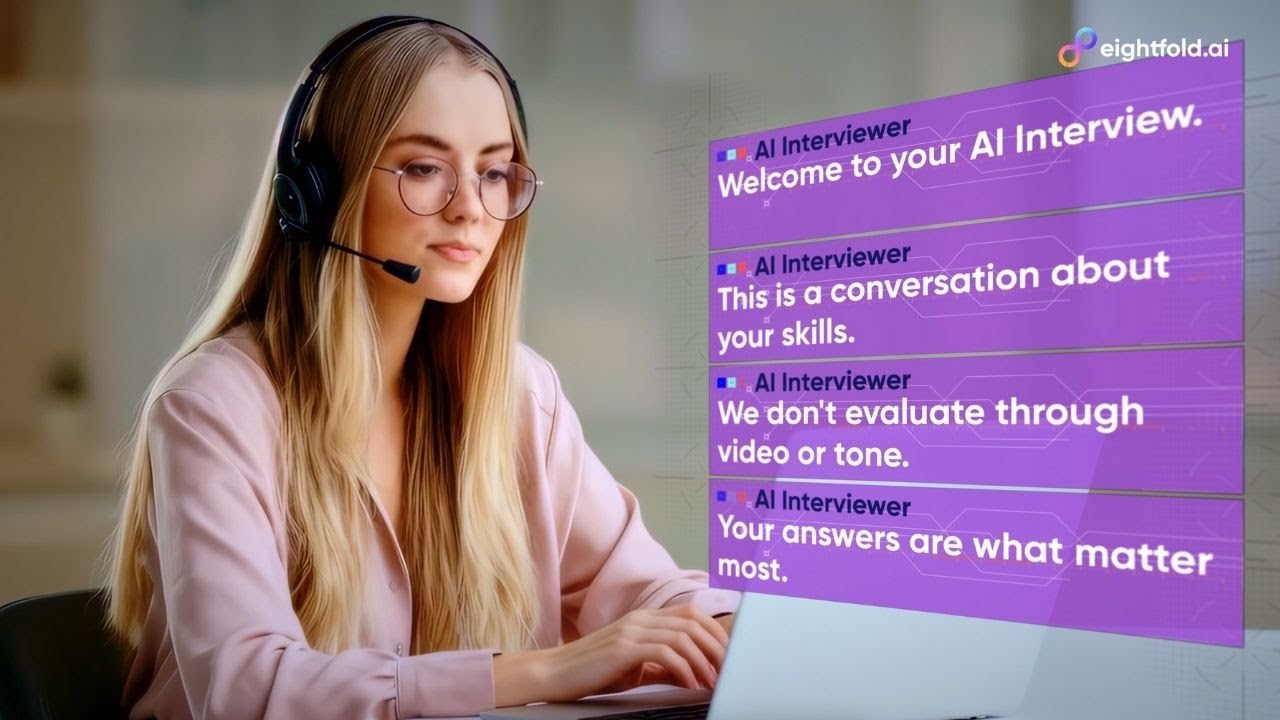
Eightfold AI Interviewer, on the other hand, operates with a more sophisticated, agentic AI. When a candidate provides a response that is partial or doesn’t fully address the prompt, the AI is designed to dynamically generate follow-up questions. This adaptive questioning aims to elicit a more comprehensive answer, ensuring that the candidate has the opportunity to fully articulate their thoughts and qualifications. This conversational fluidity allows the AI to seamlessly transition between assessing technical knowledge, functional understanding, and critical reasoning skills within a single, cohesive interaction. The underlying intelligence powering this capability is the same sophisticated engine that drives Eightfold’s broader platform, which includes talent matching and internal mobility solutions, built upon a vast dataset of over one billion career profiles. This integration ensures a consistent and intelligent approach to candidate evaluation across the entire talent lifecycle.
Tailoring the Interview Experience for Diverse Roles
The impact of this shift towards conversational AI interviews is particularly pronounced across various hiring scenarios. For high-volume and hourly roles, the ability to conduct interviews 24/7, in over 22 languages, with built-in CEFR-based language proficiency assessment, is a game-changer. Unlike one-way video interviews, which rely on candidates remembering to return and complete a recording, the immediate and accessible nature of a conversational AI interview significantly boosts completion rates. Candidates can engage with the process the moment they apply, reducing friction and accelerating the time-to-hire, which is often critical in fast-paced hourly hiring environments.

In the realm of early-career and campus hiring, students often juggle demanding academic schedules and multiple job applications. The flexibility offered by conversational AI allows them to interview on their own terms, without the constraints of rigid recruiter availability or campus event schedules. Furthermore, the adaptive nature of the conversation provides a more equitable platform for entry-level candidates who may have limited experience to showcase on their resumes. The AI can guide them through questions designed to elicit their potential, problem-solving abilities, and learning agility, offering a richer assessment than a simple résumé review.
For technical hiring, the integration of coding, reasoning, and functional knowledge assessment within a single adaptive conversation offers a more holistic and efficient evaluation. Instead of separate, disconnected testing phases, candidates can demonstrate their technical acumen in a dialogue that feels more natural and less like a series of isolated tests. This approach can provide a more nuanced understanding of a candidate’s problem-solving process and their ability to articulate technical concepts.
Integration with Enterprise Systems: The Oracle Recruiting Cloud Advantage
The modernization of the interview stack is further streamlined for organizations already leveraging enterprise resource planning (ERP) and human capital management (HCM) systems. For companies utilizing Oracle Recruiting Cloud, Eightfold AI Interviewer offers a particularly seamless integration. Rather than operating as a standalone add-on, the AI Interviewer is embedded directly within Oracle Recruiting Cloud workflows. This native integration simplifies deployment and enhances user experience.
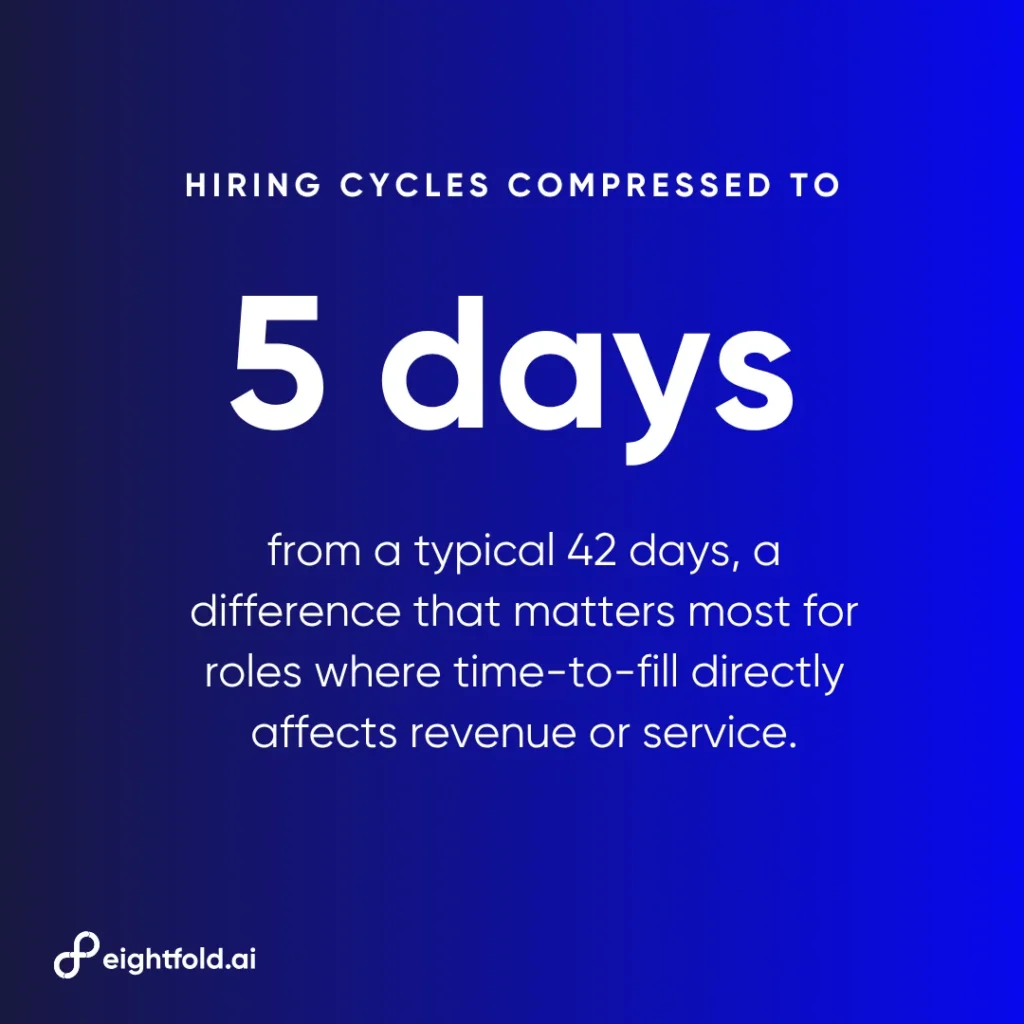
Moreover, the procurement process is facilitated through the Oracle Cloud Marketplace, allowing organizations to utilize existing Oracle Universal Credits. This eliminates the need to establish new budget lines, accelerating adoption and reducing administrative overhead. The impact on hiring speed has been demonstrably significant for early enterprise adopters. Hiring cycles that traditionally spanned around 42 days have been compressed to as few as five days. This dramatic reduction in time-to-fill is critical for roles where swift hiring directly influences revenue generation, service delivery, or competitive advantage. The ability to quickly secure top talent in a competitive market can have a profound impact on an organization’s bottom line.
Addressing Evolving Competitive Landscapes: The HireVue Voice AI Context
The competitive landscape for AI-powered interviewing technology is dynamic. HireVue, a long-standing player in the asynchronous video interview space, has also introduced its own voice AI interviewing capabilities following its acquisition of Hireguide in March 2026. HireVue positions its new voice interviewer as a tool for early-stage candidate qualification, aiming to streamline the funnel before the first human recruiter interaction.
However, Eightfold highlights a distinction in the maturity and integration of their respective offerings. While HireVue’s new capability focuses on voice, Eightfold’s AI Interviewer has been established in the market as a full, multimodal interviewer. It’s integrated with broader talent intelligence capabilities, encompassing matching and assessment across the entire hiring lifecycle. For organizations evaluating these solutions, the critical question becomes not just the existence of a feature, but the depth of its integration and the proven track record of the underlying AI agent. The emphasis is on the intelligence and adaptability of the system, rather than solely on the modality of interaction.
Eightfold’s Strategic Advancements in AI Interviewing
Eightfold asserts its leadership in several key areas that differentiate its AI Interviewer. While validated, static assessments remain a valuable component for measuring specific skills, Eightfold argues that they are insufficient on their own. The company’s innovation lies in layering a live, adaptive conversation onto these assessments. This conversation is powered by a continuously learning engine that draws insights from a corpus of over one billion career profiles. This holistic approach aims to provide talent teams with a more comprehensive understanding of a candidate’s potential and fit than either a static test or a recorded video can offer individually.
Language support is another area where Eightfold emphasizes depth over breadth. While covering numerous languages is important, the true value lies in the depth of engagement within those languages. A genuinely adaptive, two-way conversation, regardless of the number of languages it supports, can reveal far more about a candidate’s communication skills and overall suitability for a role than a one-way recorded monologue, even if that monologue is available in multiple languages.
Governance and responsible AI practices are also central to Eightfold’s strategy. The company holds ISO 42001 certification for AI management systems, underscoring its commitment to ethical and secure AI deployment. For enterprise clients, this translates into robust control mechanisms. Integrations with identity verification partners like CLEAR, coupled with the ability to capture interview signals that can detect potential cheating, such as tab-switching, provide a layer of security and integrity essential for high-stakes hiring processes. These controls are designed to meet the rigorous demands and scrutiny of modern enterprise recruitment.
The Bottom Line: A New Era of Conversational Talent Acquisition
Recorded video interviews served a critical purpose at a particular juncture in the evolution of hiring processes, offering a scalable solution to a growing need for efficient candidate screening. However, the hiring landscape has shifted, and candidate expectations have moved in tandem. Today’s job seekers are increasingly seeking interactions that approximate real conversations, offering a more engaging and informative experience. Talent teams, in turn, require systems that can deliver this level of responsiveness and insight.
This fundamental shift is prompting enterprise organizations that are currently reliant on legacy systems to re-examine the capabilities of real-time, conversational interviewers. The potential for enhanced candidate experience, improved assessment accuracy, and significantly accelerated hiring cycles is driving this re-evaluation. For companies looking to modernize their talent acquisition stack, exploring solutions like Eightfold AI Interviewer offers a pathway to align their recruitment practices with contemporary demands and gain a competitive edge in attracting and securing top talent. The move from recorded monologues to fluid, adaptive conversations represents the next frontier in AI-powered hiring, promising a more effective and candidate-centric approach to talent acquisition.
Organizations considering an upgrade to their current talent acquisition technology are encouraged to engage with solution providers to understand the tangible impact a transition to a conversational AI interviewer could have on their hiring volume and overall recruitment timelines. The ability to offer a more dynamic, responsive, and personalized interview experience is no longer a luxury but a necessity in attracting and securing the talent needed to thrive in today’s competitive business environment. Requesting a demonstration of AI Interviewer in action can provide a clear picture of how this technology can transform the hiring process.