The contemporary business environment presents a formidable challenge for leaders, characterized by the relentless acceleration of artificial intelligence and significant shifts in the global political arena. These transformative forces necessitate a critical examination of what truly defines effective leadership today. This article delves into the fundamental changes reshaping leadership paradigms, drawing upon extensive research and industry analysis.
The Decoupling of Employee and Organization: Leading a "Voluntary Army"
Perhaps the most profound alteration in the leadership landscape over the past half-century is the "decoupling" of the employee from the traditional organizational structure. Historically, leadership was often synonymous with a command-and-control model, where directives were issued and largely followed. This industrial-age dynamic, deeply embedded in corporate culture and human resources practices, is rapidly becoming obsolete.
Today’s workforce, comprising full-time employees, contingent workers, and increasingly, AI-powered "Superworkers," operates under a different set of expectations and motivations. The traditional employer-employee contract, where loyalty and obedience were often assumed in exchange for stability, has been replaced by a more fluid arrangement. Individuals now "opt in" daily, seeking roles and environments that align with their personal needs, career aspirations, and values. This shift transforms the leader’s role from a commander to a facilitator, requiring a new foundation built not on authority, but on trust.
Building this trust is paramount. It hinges on clearly articulating a compelling mission, empowering individuals to contribute their unique skills, and fostering an environment where diverse perspectives are not only heard but actively encouraged. In an era of hyper-specialization, where individuals with specific expertise can often surpass the knowledge of their superiors, embracing their insights is no longer optional but essential for organizational agility and innovation. This principle is particularly relevant as AI integration accelerates. A single innovative engineer or a highly skilled professional, armed with advanced tools and insights, possesses the potential to redefine business models. Consequently, leaders must cultivate an inclusive culture that actively solicits and values input from all levels.
This evolution can be traced back to the late 20th century, with seminal works like Peter Drucker’s "The Effective Executive" emphasizing intellectual capital and organizational effectiveness. Later, figures like Jack Welch championed a more aggressive, performance-driven approach. However, the late 2010s and early 2020s saw a resurgence of interest in servant leadership, as exemplified by Howard Schultz’s vision for Starbucks, and a focus on first-principles thinking, notably associated with Elon Musk’s ventures. These historical shifts underscore a continuous, albeit sometimes rapid, evolution in what constitutes successful leadership. The current era, however, demands a leadership style that is more adaptive, human-centric, and technologically fluent than ever before.
The Imperative of Iteration: Embracing Imperfection in the AI Age
A second significant transformation in leadership is the shift from a pursuit of perfection to a commitment to continuous iteration. In the past, particularly during the industrial era, product development and organizational change followed a linear path, with rigorous testing and refinement before any release. The expectation was for a flawless "1.0" version. This approach, while fostering quality, often led to prolonged development cycles and missed market opportunities.

The advent of AI has fundamentally altered this dynamic. AI technologies are often new, powerful, and inherently non-deterministic, meaning their outcomes can be unpredictable. Leaders are under immense pressure to adopt AI to remain competitive, leading to a natural inclination to "figure it out and do it right" before implementation. However, as observed in recent engagements with major organizations such as IBM, Standard Chartered, and Mastercard, this quest for a "perfect" AI solution can be a significant impediment to progress.
In the current environment, leaders must cultivate comfort with imperfection. Companies like IBM, for instance, have demonstrated this by implementing new HR systems like SuccessFactors within an accelerated timeframe, acknowledging that the initial deployment would not be flawless. Similarly, Microsoft’s rapid deployment of Copilot agents across various functions, even as new use cases are continually discovered, exemplifies this iterative approach. The prevailing reality is that "waiting until it’s done" is no longer a viable strategy in a rapidly evolving technological landscape.
The leader’s role in this iterative process is to maintain a clear focus on the overarching problem or customer need while granting teams the autonomy to experiment, learn from failures, and adapt. The journey from "point A to point B" is rarely a straight line; it is a complex series of iterations, setbacks, and incremental improvements. Effective leaders foster an environment that supports this dynamic, recognizing that agility and responsiveness are critical for navigating uncertainty.
A Renewed Focus on Trust, Ethics, and Inclusion
The third critical change is a reinforced emphasis on core values, ethics, and morality in leadership. The current socio-political climate, marked by instances of disinformation and the erosion of truth, underscores the increasing importance of ethical leadership. The prevalence of "alternative facts," often amplified by AI-generated content, makes it more challenging than ever to discern genuine information. Leaders are tasked with actively counteracting this trend.
The fundamental reason for this renewed focus lies in human nature. Most individuals possess an innate ethical compass and a desire to align themselves with organizations that demonstrate integrity. When leaders compromise ethical standards or treat individuals unfairly, the consequences extend far beyond legal ramifications; they inflict profound damage on employee morale and the organizational spirit. As highlighted in research on "Irresistible" organizations, the unyielding power of the human spirit is a cornerstone of enduring business success. Leaders who foster an environment of trust and fairness tap into this powerful force.
The Plummeting Trust in Institutions and the Leader’s Role
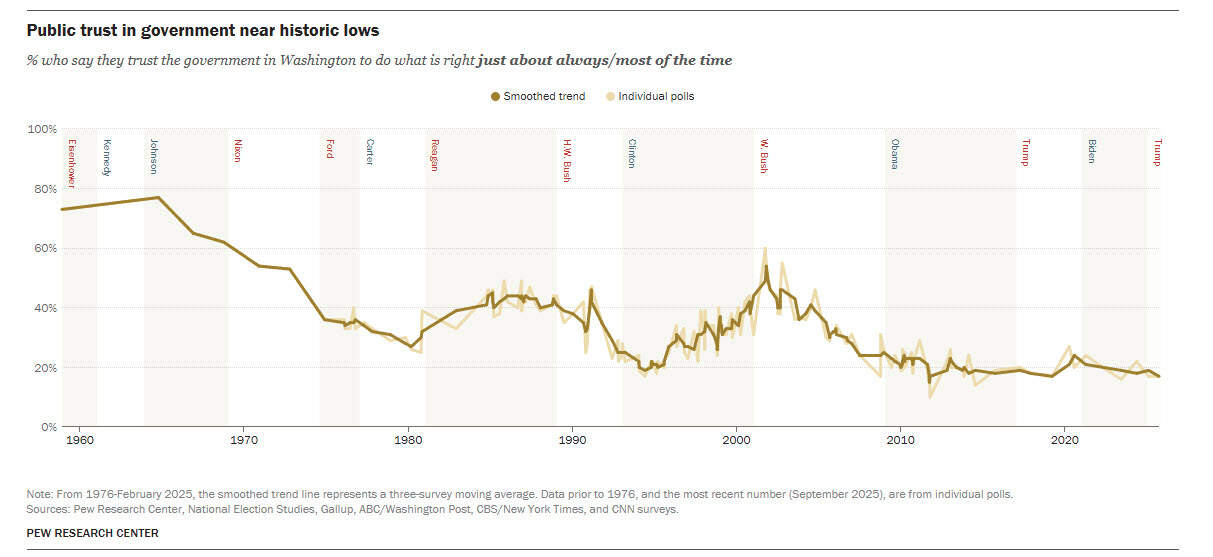
Compounding these challenges is a significant decline in public trust across various institutions. In the United States, for example, trust in government has seen a dramatic decrease, falling from approximately 80% in the 1960s to a mere 17% in recent surveys. This erosion of faith creates a void that leaders are increasingly expected to fill.
The implications of this trust deficit are far-reaching. In a volatile and uncertain world, employees and stakeholders seek anchors of stability and integrity. Leaders who can bridge this gap by demonstrating unwavering commitment to their values, fostering transparency, and engaging in open communication are better positioned to build resilient and high-performing organizations.
How can leaders effectively address this trust deficit? The answer lies in actively listening to their people, grounding decisions in ethical principles, and exercising common sense. This involves speaking truth to power, taking principled stances on significant issues, and embracing diverse perspectives, even in the face of potential controversy. The demonization of initiatives like Diversity, Equity, and Inclusion (DEI) in some quarters notwithstanding, the underlying values of fairness, respect, and equal opportunity remain critical for building trust and fostering a positive organizational culture.
The Enduring Importance of Leadership Development
In conclusion, the contemporary business environment demands a fundamental reassessment of leadership models. The ability of an organization to adapt and thrive is intrinsically linked to the quality of its leadership. Leaders who can effectively drive change, ignite passion, and uphold core values are not merely assets; they are indispensable to organizational survival and success.
The research underscores that the rise of the "Supermanager" – a leader adept at navigating complexity, fostering collaboration, and empowering teams – is becoming increasingly vital. These leaders are characterized by their ability to integrate technological advancements with human potential, fostering environments where both individuals and the organization can flourish.
Organizations are increasingly leveraging advanced tools and frameworks to assess and develop their leadership capabilities. AI-powered platforms, trained on extensive datasets of leadership research and case studies, offer personalized guidance and development pathways. These platforms can help identify leadership gaps, provide targeted training, and equip leaders with the skills necessary to navigate the challenges of the current era.
Furthermore, annual research conferences and specialized workshops are becoming crucial venues for sharing insights and best practices in leadership development. These events bring together thought leaders, practitioners, and researchers to explore emerging trends, launch new leadership offerings, and foster a community dedicated to advancing the art and science of leadership.
The path forward for leaders is one of continuous learning, adaptation, and a steadfast commitment to ethical principles. By embracing the evolving demands of the modern workforce and the rapid advancements in technology, leaders can cultivate organizations that are not only resilient and competitive but also deeply human and trustworthy. The future of leadership hinges on this ability to balance innovation with integrity, and ambition with empathy.