
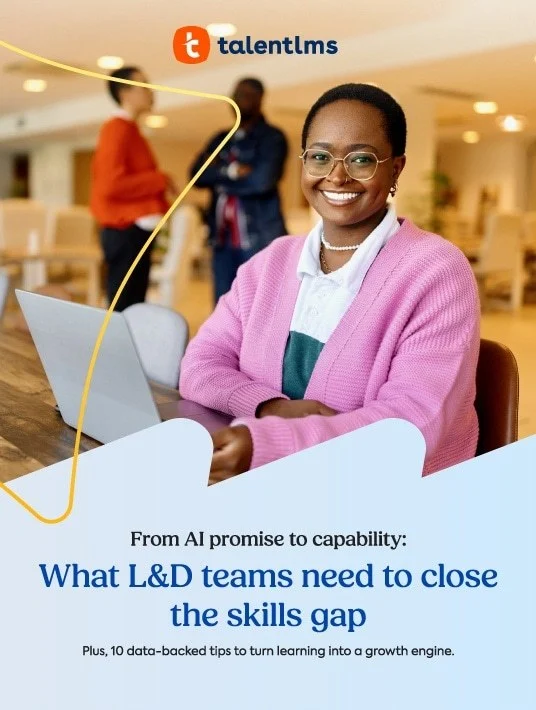
The rapid proliferation of artificial intelligence within the corporate landscape has reached a critical inflection point as organizations pivot from experimental pilot programs to full-scale enterprise integration. While the technological infrastructure for AI is being deployed at an unprecedented rate, a significant disparity has emerged between the availability of these tools and the workforce’s ability to utilize them effectively. To address this widening divide, TalentLMS has announced the release of a comprehensive new guide titled "From AI Promise To Capability: What L&D Teams Need To Close The Skills Gap." This eBook serves as a strategic roadmap for Learning and Development (L&D) professionals tasked with transforming the theoretical potential of AI into measurable organizational growth and tangible employee competence.
The Evolution of the AI Skills Crisis
The current landscape of workplace learning is defined by a paradoxical "productivity tax." Since the initial surge of generative AI in 2023, companies have invested billions in software licenses and platform integrations. However, the anticipated surge in efficiency has often been hampered by a lack of structured pedagogical support. According to the data presented in the new TalentLMS guide, which draws from the 2026 Annual L&D Benchmark Report, organizations are developing AI training programs rapidly, yet the fundamental conditions required for deep learning—such as dedicated time, cognitive focus, and expert guidance—have not kept pace with technical deployment.
Chronologically, the journey of AI in the workplace can be categorized into three distinct phases. The first phase, spanning late 2022 through 2023, was characterized by "AI Awareness," where the focus was primarily on understanding the capabilities of Large Language Models (LLMs). The second phase, throughout 2024 and 2025, saw "Widespread Adoption," where tools were integrated into standard workflows, often without formal training. We have now entered the third phase: "The Capability Era." In this current stage, the mere presence of AI is no longer a competitive advantage; instead, the advantage lies in the proficiency of the human workforce to orchestrate these tools.
Analyzing the Research: A Disconnect in Perception
At the heart of the new eBook is an analysis of a survey involving over 1,100 U.S. professionals. The findings highlight a troubling "perception gap" between those who design training programs and those who consume them. While L&D leaders often report high levels of satisfaction with their AI curricula, employees frequently express feelings of being overwhelmed and undersupported.
The data suggests that while training modules are being delivered, they are often viewed as a "check-the-box" exercise rather than a meaningful skill-building endeavor. Employees report that while they have access to videos and documentation, they lack the "protected time" necessary to experiment with AI tools in their specific job contexts. This lack of practical application leads to a phenomenon known as "knowledge decay," where the information learned in a training session is lost because it is not immediately applied to daily tasks.
![From AI Promise To Capability: What L&D Teams Need To Close The Skills Gap [eBook Launch]](https://cdn.elearningindustry.com/wp-content/uploads/2026/05/From-AI-Promise-To-Capability_-What-LD-Teams-Need-To-Close-The-Skills-Gap-eBook-Launch.jpg)
Structural Barriers to Effective AI Learning
The TalentLMS guide identifies several key inhibitors that prevent organizations from closing the skills gap. Chief among these is the "Immediacy Trap"—the expectation that employees can maintain their full traditional workload while simultaneously mastering complex new AI workflows.
- Cognitive Overload: As AI tools change weekly, employees are suffering from "update fatigue." The eBook argues that L&D teams must move away from static training and toward a model of continuous, bite-sized learning.
- Lack of Psychological Safety: Many employees still view AI as a threat to job security. Without a culture that encourages experimentation and guarantees that AI is a tool for augmentation rather than replacement, learning engagement remains low.
- The Guidance Deficit: Automated training platforms often lack the nuance of human mentorship. The research indicates that employees value peer-to-peer learning and expert-led workshops over generic, pre-recorded content.
Strategic Interventions for L&D Teams
To bridge the gap between "AI promise" and "AI capability," the TalentLMS playbook suggests several high-impact interventions. These strategies are designed to move beyond the delivery of information and toward the cultivation of true competency.
Redefining Learning Design
The guide emphasizes that AI is not just a subject to be learned, but a tool that is fundamentally transforming the design of learning itself. L&D teams are encouraged to use AI to personalize training paths, ensuring that a marketing professional receives different AI training than a software engineer or a human resources specialist.
Closing the Feedback Loop
A critical component of the new eBook is the focus on measurable growth. TalentLMS advocates for the implementation of "capability metrics" rather than "completion metrics." Instead of tracking how many employees finished a course, organizations are urged to measure how AI adoption has affected specific Key Performance Indicators (KPIs), such as time-to-market for new products or the reduction of administrative overhead.
Addressing the Workforce Readiness Gap
Workforce readiness is not a static state but a dynamic capability. The guide outlines how L&D teams can act as internal consultants, helping department heads identify specific tasks that are ripe for AI augmentation and then building targeted training around those high-value areas.
Industry Implications and the Future of Work
The launch of this eBook comes at a time when the stakes for workforce development have never been higher. Industry analysts suggest that by 2027, the ability to effectively collaborate with AI will be a core requirement for nearly 70% of all professional roles. Organizations that fail to address the skills gap risk not only a loss of productivity but also a decline in employee retention, as high-performers seek out employers who offer superior professional development opportunities.
![From AI Promise To Capability: What L&D Teams Need To Close The Skills Gap [eBook Launch]](https://cdn.elearningindustry.com/wp-content/uploads/2026/05/From-AI-Promise-To-Capability_-What-LD-Teams-Need-To-Close-The-Skills-Gap-eBook-Launch-768x431.jpg)
Furthermore, the "From AI Promise To Capability" guide touches upon the ethical implications of AI training. As AI systems become more integrated into decision-making processes, the need for "AI Literacy"—including an understanding of bias, data privacy, and ethical prompt engineering—becomes a critical component of corporate governance.
Official Context and Access
The eBook is a collaborative effort drawing on the extensive database of TalentLMS, a leading Learning Management System provider known for its annual benchmark reports. The 2026 report, which serves as the foundation for this guide, is considered one of the most comprehensive studies of its kind, offering a snapshot of the current state of professional development in the United States.
Industry experts have noted that the release of this guide is timely. "We are seeing a shift from ‘AI hype’ to ‘AI reality,’" says one analyst familiar with the report. "The organizations that win in the next five years won’t be the ones with the best algorithms, but the ones with the best-trained people. This eBook provides the framework for that training."
For L&D professionals, HR leaders, and organizational strategists, the guide offers a blend of high-level theory and practical "on-the-ground" tactics. It includes case studies of organizations that have successfully bridged the gap, as well as checklists for evaluating current training programs.
Conclusion
The transition from AI as a promise to AI as a capability requires a fundamental shift in how organizations approach learning. As the TalentLMS eBook illustrates, the "skills gap" is not merely a lack of knowledge, but a lack of structured opportunity and strategic alignment. By focusing on the human element of the technological revolution, L&D teams can ensure that their organizations are not just equipped with the latest tools, but are truly capable of using them to drive innovation.
The full guide, "From AI Promise To Capability: What L&D Teams Need To Close The Skills Gap," is now available for download via the eLearning Industry platform. It stands as an essential resource for any organization looking to navigate the complexities of the modern digital workplace and turn the potential of artificial intelligence into a sustainable competitive advantage.






