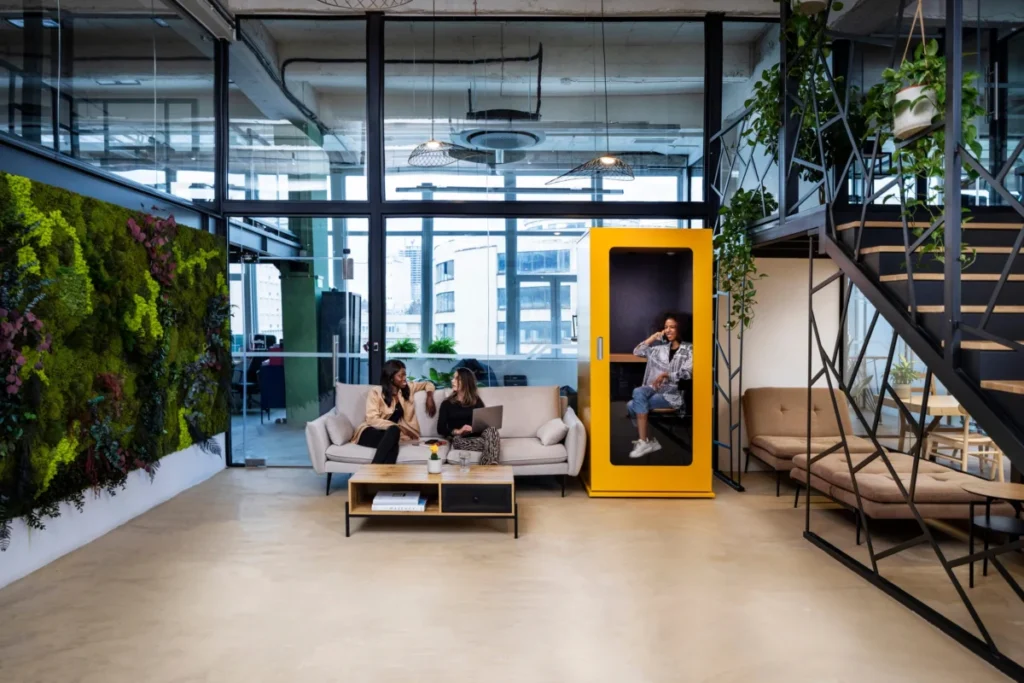
The hybrid office model has transitioned from an experimental phase to a structured operational reality, with businesses increasingly recognizing the need for versatile and purpose-built spaces within their physical footprints. As employee attendance rises and predictability solidifies, organizations are re-evaluating how every square foot of their office is utilized. Meeting rooms, once the default for any enclosed conversation, are now being scrutinized for their efficiency in accommodating a spectrum of activities, from critical client presentations to brief, individual video calls. The advent of acoustic office pods, exemplified by designs from MEAVO, presents a flexible and scalable solution, offering dedicated, private havens for every type of interaction, thereby fostering a more organized and productive work environment.
The Resurgence of the Office: Data Points to Increased In-Person Presence
Recent industry reports paint a clear picture of a renewed commitment to the physical office. JLL’s Global Occupancy Planning Benchmark Report 2026 indicates a significant uptick in employee engagement with the office, with 55% of employees now commuting three to four days a week – a substantial 19 percentage point increase within a single year. Furthermore, 62% of organizations have implemented fixed office days, signaling a move towards greater predictability in workspace utilization. This trend is mirrored globally, with overall office utilization climbing to 56%, a figure inching closer to pre-pandemic benchmarks.
Complementing these findings, CBRE’s 2026 Global Workplace and Occupancy Insights reveal a similar pattern, noting that average peak office utilization has reached an impressive 80%. This surge in physical presence underscores a fundamental shift: employees are not only returning to the office but are actively choosing to do so, valuing the collaborative and social aspects of in-person work. This resurgence, while positive for fostering team cohesion and innovation, introduces a logistical challenge: how to adequately accommodate a workforce that is increasingly present and engaged within a finite physical space. The prevailing answer suggests a strategic reallocation of existing space rather than a wholesale expansion of real estate.
Optimizing Space Allocation: Aligning Every Area with its Intended Function
The operationalization of the hybrid work model has fundamentally reshaped the daily routines within offices. Video conferencing, once a supplementary tool, has become an indispensable component of nearly every role, frequently involving individuals or small groups connecting with remote colleagues. These interactions, along with brief one-on-one discussions, quick team check-ins, and periods of deep, focused work, inherently require environments that are both quiet and private. In the absence of dedicated facilities, larger meeting rooms often become the default, leading to their underutilization for activities that demand far less space and resources.
The strategic deployment of acoustic pods addresses this disconnect by providing spaces precisely tailored to these diverse needs. By offering individual phone booths for private calls, small meeting pods for collaborative huddles, and larger enclosed spaces for more formal engagements, organizations can ensure that each activity finds its appropriate setting. This granular approach benefits individuals by providing comfortable and confidential spaces for their specific tasks, while simultaneously ensuring that larger, more resource-intensive meeting rooms remain available for high-impact activities such as workshops, team-wide strategy sessions, and crucial client meetings – the very reasons that often necessitate a physical office presence.
A Spectrum of Solutions: Acoustic Pods for Every Workspace Scenario
The contemporary market offers a sophisticated array of acoustic pods and booths, enabling organizations to curate a workspace ecosystem that accurately reflects their unique operational dynamics. These solutions are designed with versatility and user experience at their core.
Single-Person Phone Booths: The Sanctuary for Individual Communication
Engineered for privacy and acoustic integrity, single-person phone booths are specifically designed to facilitate individual phone calls and video conferences. Their compact footprint and advanced soundproofing capabilities ensure that conversations remain confidential, free from the distractions of the open office, and without being overheard. This makes them indispensable for roles that require frequent, private communication.
Meeting Pods for Small Teams: Facilitating Intimate Collaboration
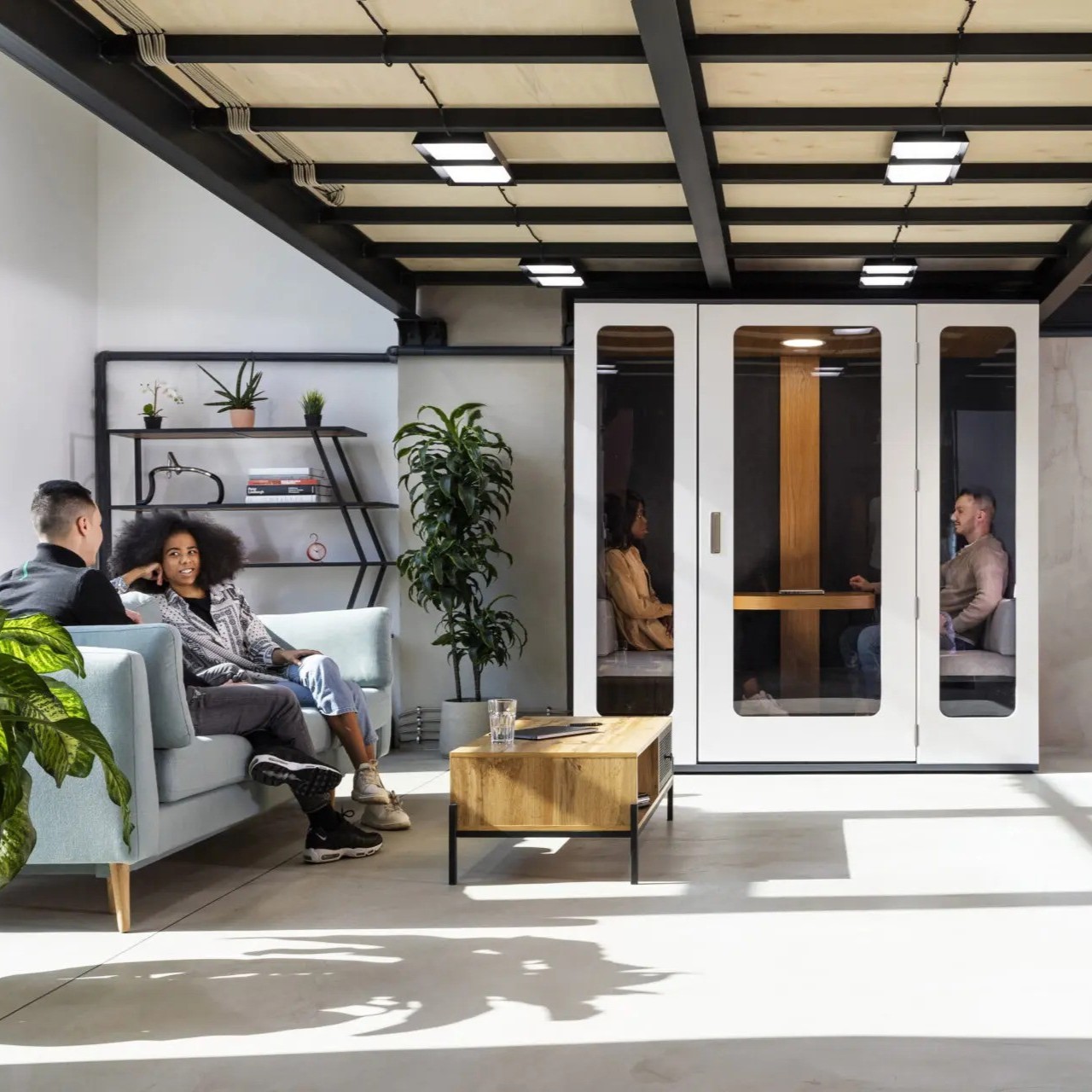
Designed to accommodate up to four individuals, meeting pods offer a dedicated space for small team huddles, brainstorming sessions, and hybrid meetings. Equipped with integrated seating, tables, and often video conferencing capabilities, these pods provide a contained environment conducive to focused group interaction and efficient communication.
These modular units collectively form a flexible and adaptable toolkit for workspace design. A modern office floor plan might strategically integrate multiple single-person phone booths in high-traffic areas, interspersed with a few focus booths in quieter zones for concentrated work. Adjacent to team neighborhoods, a selection of meeting pods can provide immediate spaces for spontaneous collaboration and swift problem-solving. The key lies in right-sizing each space to the intended activity, thereby maximizing utility and minimizing wasted real estate.
Maximizing Real Estate Value: Cost-Effectiveness and Scalability
Office space represents one of the most significant capital expenditures for any organization. Every square foot incurs ongoing costs, including rent, business rates, service charges, energy consumption, and initial fit-out expenses. Lambert Smith Hampton’s Total Office Cost Survey, which analyzes occupancy costs across numerous UK locations, uses 100 square feet as a benchmark for a single workstation. In stark contrast, a single-person phone booth typically occupies little more than one square meter, approximately one-tenth of that benchmark.
This substantial difference in footprint translates directly into significant cost savings. When private calls and small team discussions are relocated to dedicated booths and pods, traditional meeting rooms are freed up for their intended, larger-scale purposes. This effectively increases meeting capacity without necessitating the acquisition of additional floor space. For organizations undergoing expansion or reviewing their lease agreements, this strategic use of space can enable them to accommodate a greater number of employees and a higher volume of activity within their existing footprint, deferring or even eliminating the need for costly real estate expansion.
Beyond immediate cost savings, the modular nature of booths and pods offers a level of flexibility that fixed, built-in rooms cannot match. These units are freestanding, allowing for rapid installation without the need for disruptive partitioning or extensive building works. Crucially, they can be easily repositioned as team structures evolve or as workspace needs change. Moreover, when an organization relocates, these pods can be taken along, preserving the initial investment and ensuring continued utility in a new environment. This adaptability represents a smart, sustainable, and future-proof approach to workspace investment, maintaining value over the long term.
The financial implications are clear: by creating essential meeting and communication capacity through the adoption of booths and pods, organizations can circumvent the substantial costs associated with new construction, additional rental agreements, and the ongoing overheads of expanded floor space. Furthermore, the portability of these units ensures that the initial investment continues to yield returns across multiple office moves. For many businesses, the adoption of acoustic phone booths and meeting pods is not merely an improvement in space utilization but a demonstrably more cost-effective strategy for managing their office footprint.
A Strategic Approach to Implementation: Laying the Groundwork for Success
The most effective implementations of acoustic pod solutions begin with a thorough understanding of current office usage patterns. A systematic approach ensures that the deployed solutions align with actual needs and user preferences.
Understanding Meeting Dynamics
A crucial first step involves analyzing how meeting rooms are currently utilized. This can be achieved by reviewing booking systems and conducting direct observations over a defined period, noting the typical number of attendees for various meeting types and the frequency with which rooms are occupied for solo calls or brief discussions. This data provides a quantitative basis for understanding the demand for different types of enclosed spaces.
Planning for Peak Demand
In hybrid work environments, office attendance often exhibits a predictable ebb and flow, frequently peaking midweek. Workspace planning should therefore be designed around these anticipated busy days, rather than relying on weekly averages. This proactive approach ensures that the office is optimally equipped to handle periods of high occupancy.
Piloting and Iteration
Introducing a pilot program is an effective strategy for testing the efficacy of a mix of phone booths and meeting pods. Deploying these units in frequently used areas allows for real-time observation of their usage patterns and provides an invaluable opportunity to gather direct feedback from employees regarding their functionality and user experience.
Continuous Improvement
Insights gleaned from the pilot phase should inform refinements to the mix and placement of pods. This iterative process allows organizations to adapt their workspace strategy based on empirical data and user feedback. Furthermore, as meeting rooms are freed up by the adoption of pods, their reimagining as enhanced collaboration zones or flexible team spaces can be explored, further optimizing the overall office environment.
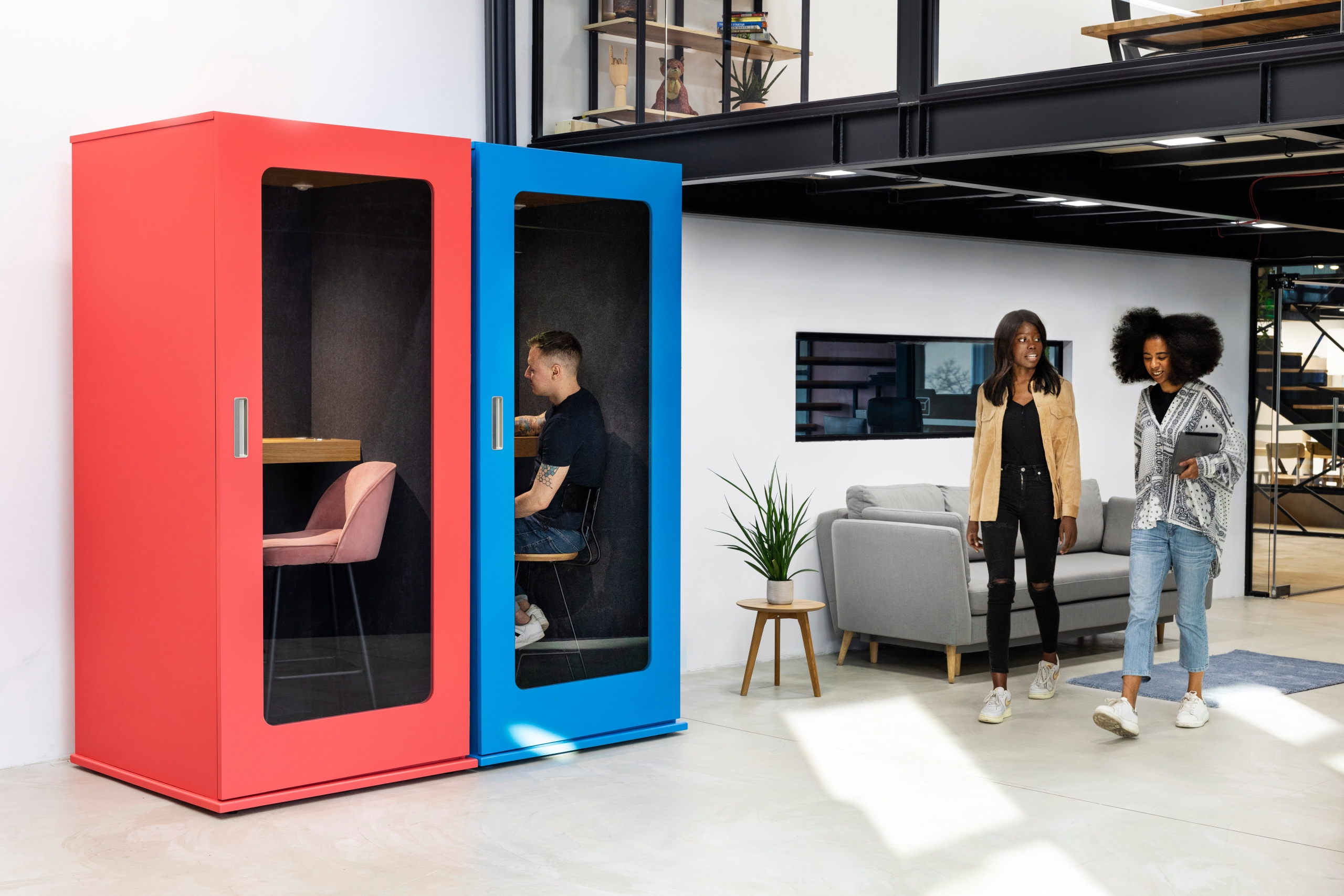
The quality of the chosen pods is paramount. Selecting units with verified acoustic performance, efficient and quiet ventilation systems, and well-designed lighting ensures that they become genuinely desirable and comfortable spaces for employees to utilize, thereby maximizing their adoption and impact.
Charting a Course for a More Agile Office Future
Acoustic phone booths and meeting pods offer a pragmatic and elegant solution to one of the hybrid office’s most pressing design challenges: ensuring that every type of work activity is accommodated by a setting that is fit for purpose. By establishing dedicated, acoustically controlled environments for individual calls, focused work, and small team interactions, organizations can liberate valuable meeting room space for its intended collaborative functions. This strategic reallocation fosters a more serene and productive open-plan environment, ultimately enabling every square foot of the office to deliver enhanced value. As the operational landscape of offices continues to evolve towards greater intentionality and purpose, the flexibility and adaptability offered by these modular solutions are precisely what businesses require to thrive in the modern work era.
The implications of this shift extend beyond mere space optimization. In an era where employee well-being and productivity are intrinsically linked to the quality of the work environment, the provision of such dedicated spaces can significantly contribute to job satisfaction and a sense of organizational care. Furthermore, for companies grappling with the escalating costs of commercial real estate, the ability to enhance workspace functionality without commensurate increases in physical footprint presents a compelling economic advantage. The long-term sustainability of this approach, particularly the reusability of modular components, aligns with growing corporate commitments to environmental responsibility and resource efficiency. As businesses continue to refine their hybrid strategies, the role of acoustic pods is set to expand, becoming an integral component of the intelligent, responsive, and human-centric office of the future.