Organizations worldwide are increasingly recognizing a critical operational challenge that extends far beyond mere recruitment logistics: the persistent shortage of qualified interviewers. What was once dismissed as an administrative hurdle is now emerging as a significant strategic risk, impacting an organization’s ability to scale, attract top talent, and maintain a competitive edge. This widespread issue, often relegated to the back pages of operational reports, is now demanding the attention of C-suite executives as it directly impedes growth agendas and impacts crucial business outcomes.
The fundamental math of interviewing reveals a systemic problem. In most companies, the responsibility of conducting interviews falls upon senior contributors and managers. These individuals are already accountable for team output, project delivery, and their own performance metrics. Interviewing, therefore, is not their primary function but an additional duty they undertake. When hiring demand surges – driven by expansion phases, product launches, or organizational restructuring – the availability of these key personnel does not scale proportionally. The finite hours in a workday remain constant, creating a structural mismatch between the escalating demand for interviews and the limited supply of available interviewers.
This imbalance manifests in predictable and detrimental ways. Candidate pipelines stagnate as positions remain unfilled due to a lack of interview capacity. The candidate experience deteriorates as delays and postponements frustrate potential hires, signaling an inefficient and potentially disorganized organizational culture. Critical roles remain vacant for extended periods, directly impacting productivity and project timelines. Furthermore, the extended time-to-fill escalates recruitment costs, encompassing lost productivity, ongoing recruiting resources, and the cumulative time managers spend managing prolonged hiring processes.
While the symptoms of interviewer fatigue and scheduling bottlenecks have been recognized for years, the scale of the problem has dramatically intensified. In today’s fiercely competitive labor market, characterized by distributed workforces and global talent acquisition needs, this capacity gap has transitioned from a minor friction point to a genuine strategic constraint. The implications are far-reaching, affecting not only the speed of hiring but also employee retention, employer brand reputation, and an organization’s overall competitive positioning.
The strategic implications of an interviewer capacity shortage are profound and directly influence key business objectives. When a Chief Human Resources Officer (CHRO) addresses leadership, they are expected to align people strategy with tangible business outcomes. An interviewer deficit undermines this connection in several critical ways:
Inability to Scale During Growth Phases
The engine of business expansion, market entry, or new capability development is often fueled by strategic hiring. If the interview process cannot scale to meet the increased demand, growth strategies can falter. Business objectives may not be met not due to flawed vision, but because the organization is fundamentally incapable of acquiring the necessary talent at the required pace. This talent bottleneck can halt expansion plans in their tracks, leading to missed market opportunities and stalled revenue growth. For instance, a technology company aiming to launch a groundbreaking new product might find its timeline severely delayed if it cannot interview and onboard the specialized engineers needed to bring the product to market. The opportunity cost of such delays can be substantial, allowing competitors to gain market share.
Loss of Competitive Talent to Faster-Moving Organizations
In high-demand sectors, particularly for roles in technology, leadership, and specialized fields, top-tier candidates are rarely interviewing with just one company. They are actively fielding multiple offers. A slow, cumbersome, and inefficient interview process does more than just inconvenience these candidates; it sends a clear message about the organization’s operational efficiency and culture. When a more agile and responsive competitor extends an offer first, the organization not only loses a valuable candidate but also exacerbates the existing talent gap. This creates a compounding effect, making it even harder to fill subsequent roles. Data from industry reports consistently shows that candidates are willing to accept offers from companies with a more streamlined and positive hiring experience, even if the compensation is marginally lower.
Increased Cost-Per-Hire at Scale
The financial implications of prolonged hiring cycles are significant. Each week a position remains unfilled incurs costs associated with lost productivity, the ongoing expenditure of recruiting resources, and the valuable time of hiring managers who must repeatedly engage with the hiring process. When interviewer capacity is the primary constraint, the time-to-fill metric stretches, amplifying these costs across an entire portfolio of open positions. A study by an HR analytics firm indicated that each day a critical role remains vacant can cost a company upwards of $500-$1000 in lost productivity, with the total cost escalating significantly for senior or specialized positions. This financial drain can impact profitability and necessitate budget reallocations away from strategic initiatives.
Risk of Inconsistent or Non-Compliant Evaluations
When interviews are conducted without standardized criteria or consistent evaluation frameworks, the process becomes susceptible to individual biases and subjective interpretations. This can lead to hiring decisions that do not accurately reflect the requirements of the role. In highly regulated industries, or in jurisdictions with evolving legislation surrounding AI and hiring practices, such inconsistencies pose a substantial legal and reputational risk. For example, a financial services firm might face regulatory scrutiny if its interview process for compliance officers is found to be inconsistent, leading to potentially unqualified hires or discriminatory practices. The rise of algorithmic bias regulations, such as New York City’s Local Law 144, underscores the critical need for standardized and defensible evaluation methods.
Chronology of the Evolving Challenge
The recognition of interviewer fatigue is not new. For decades, HR departments have grappled with the challenges of scheduling interviews and managing interviewer workloads. However, the landscape has shifted dramatically in recent years:
- Pre-2010s: Interviewer capacity was primarily a concern during periods of rapid company growth or specific project ramp-ups. Solutions often involved ad-hoc training and incentivizing managers to dedicate more time to interviews.
- 2010s: The rise of sophisticated applicant tracking systems (ATS) improved scheduling efficiency, but the core bottleneck remained the availability of human interviewers. The increasing complexity of roles and the demand for specialized skills began to strain existing interviewer pools.
- Late 2010s – Present: The COVID-19 pandemic accelerated remote work and global hiring, exponentially increasing the demand for talent across dispersed teams. Simultaneously, a highly competitive labor market, fueled by technological advancements and a growing awareness of employee well-being, placed unprecedented pressure on organizations to hire quickly and effectively. This period marked the transition of interviewer capacity from an operational inconvenience to a critical strategic imperative.
Traditional Solutions and Their Limitations
Organizations have historically relied on several common strategies to address interviewer capacity issues. Training more interviewers, reducing the number of interview rounds, and increasing recruiting headcount are familiar tactics. While each can offer marginal improvements in isolation, they often fall short of addressing the fundamental structural constraint.
Training additional interviewers requires significant time and resources. Moreover, as these newly trained individuals take on more senior or delivery-focused responsibilities, their availability for interviewing inevitably diminishes, returning the problem to its original state. Reducing the number of interview rounds can expedite the hiring timeline but often comes at the expense of thorough candidate assessment, potentially leading to higher turnover rates and the need to re-open positions. Increasing the size of the recruiting team can streamline coordination and candidate communication but does not alleviate the core burden on those who conduct the actual interviews – the hiring managers and senior team members.
The underlying issue is that the demand for interviews consistently outstrips the supply of qualified and available human interviewers. This is not merely a training or headcount problem; it is a structural capacity challenge that necessitates a more fundamental, structural solution.
AI Interviewing as a Strategic Capacity Multiplier
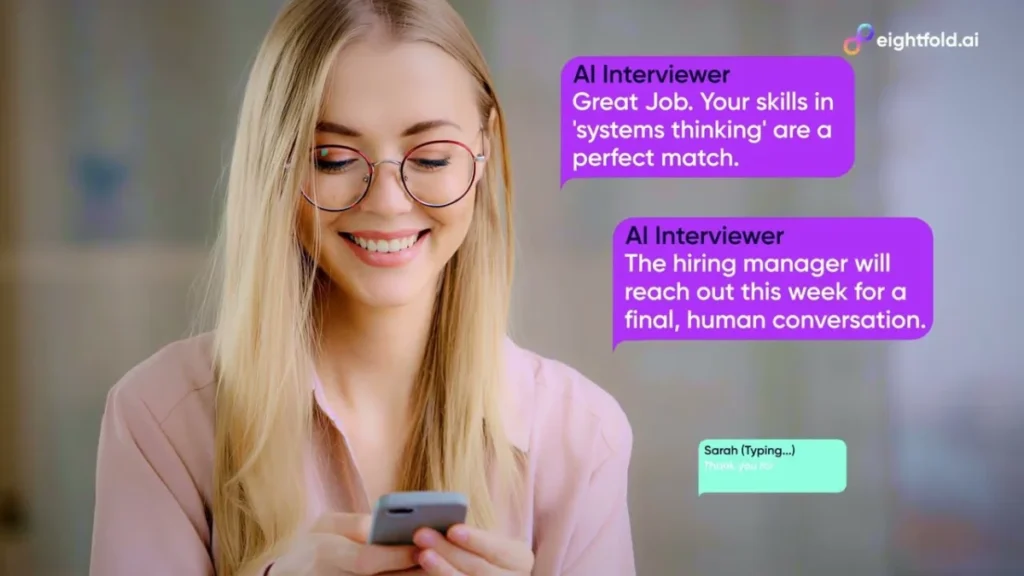
The advent of Artificial Intelligence (AI) in recruitment presents a powerful solution to the interviewer capacity crisis. AI interviewing’s strategic value lies not in replacing human judgment but in exponentially extending an organization’s interviewing capacity without requiring additional human resources. Crucially, it achieves this at a level of quality and consistency that structured human screening often struggles to maintain.
Leading AI interviewing platforms operate autonomously, often 24/7, and can support candidates across multiple languages. This enables candidates to undergo initial screening interviews immediately upon application, eliminating scheduling delays and the need for recruiter intervention in this early stage. Thousands of candidates can simultaneously progress through a standardized, consistent screening process, significantly accelerating the initial stages of talent acquisition. These AI systems are designed to conduct functional interviews, including STAR-based behavioral assessments and technical evaluations with real-time reasoning checks. Advanced AI platforms are often powered by extensive talent intelligence engines, built on vast datasets of career trajectories, which inform the assessment criteria and ensure alignment with real-world job requirements.
The true benefit of this AI-driven approach is the liberation of human interviewers. Senior contributors, hiring managers, and functional leaders can redirect their valuable time and expertise to the stages of the hiring process that truly demand their nuanced judgment. This includes final-round interviews, culture and leadership assessments, and high-stakes evaluations where interpersonal dynamics and deep understanding are paramount. The AI handles the volume and initial assessment, while humans focus on depth and critical decision-making.
A critical aspect of modern AI interviewing is its adherence to fairness and compliance. These systems are designed to evaluate candidates based on their spoken responses, experiences, and demonstrated capabilities, rather than on subjective factors like facial expressions or tone of voice. This content-based evaluation approach not only advances fairness and aligns with regulations such as New York City’s Local Law 144 and Illinois’ Biometric Information Privacy Act (BIPA) but also generates more consistent and actionable data for hiring decision-makers. This objective data can significantly reduce bias and improve the quality of hiring decisions.
Tangible Business Outcomes of AI-Enhanced Interviewing
When AI interviewing is strategically integrated as a capacity layer, the impact on business outcomes is direct and measurable:
- Accelerated Time-to-Hire: By automating initial screenings and removing scheduling bottlenecks, AI can reduce the overall time it takes to fill open positions by as much as 50% or more. This speed is crucial for securing top talent in competitive markets.
- Reduced Cost-Per-Hire: A faster hiring process directly translates to lower costs. By minimizing the duration of vacancies, organizations reduce expenses related to lost productivity, prolonged recruiter engagement, and manager time.
- Enhanced Candidate Experience: Immediate engagement and a streamlined process significantly improve the candidate experience, fostering positive brand perception and increasing offer acceptance rates. Candidates no longer face frustrating delays or unanswered applications.
- Improved Quality of Hire: AI-driven, standardized assessments ensure that candidates are evaluated on relevant skills and competencies, leading to more informed hiring decisions and a higher quality of talent entering the organization.
- Increased Interviewer Productivity: By offloading repetitive initial screening tasks, AI empowers human interviewers to focus on higher-value interactions, leading to greater job satisfaction and more effective use of their expertise.
Addressing the Interviewer Shortage: A Strategic Imperative
The interviewer shortage is not a problem that can be solved with better calendar management tools or minor adjustments to scheduling processes. It is a fundamental structural capacity constraint that directly limits an organization’s ability to hire effectively, grow sustainably, and compete in the global marketplace. As hiring volumes continue to rise and candidate expectations escalate, this challenge will only intensify.
Treating interviewer capacity as the strategic risk it truly is requires a commitment to investing in scalable infrastructure for interviewing. This means moving beyond incremental fixes and adopting solutions that augment, rather than simply tax, human capabilities. AI Interviewer represents this essential infrastructure. It does not aim to replace the critical human conversations that define a successful hiring process. Instead, it ensures that those conversations can occur more rapidly, with greater fairness, and without placing an unsustainable burden on the very people an organization relies upon for its success.
For organizations ready to confront this critical challenge, exploring the strategic advantages of AI interviewing is a necessary step. Engaging with AI solution providers for demonstrations, reviewing relevant case studies, and seeking tailored executive briefings can illuminate how this technology can be integrated to expand hiring capacity, enhance efficiency, and ultimately drive business growth. The future of competitive talent acquisition hinges on addressing the interviewer capacity crisis with the strategic rigor it demands.